How Well a Birman Copes With a Cold House
One of the most common assumptions about long-haired cats is that they must be naturally resilient to cold weather, but for Birman owners, this isn't always the case. Despite their luxurious, silky coats, Birmans don't actually possess the dense, insulating undercoat that many other long-haired breeds rely on to stay toasty. This guide will explore exactly why your Birman might feel the chill more than you expect and what practical steps you can take to ensure their comfort during colder months.
The Birman's Unique Coat and Cold Tolerance
It's easy to look at a beautiful Birman with its flowing ruff and plume-like tail and imagine it's perfectly equipped for icy temperatures. However, the reality is a bit more nuanced. Their coat, while stunning, is quite different from that of a Siberian or a Maine Coon, and these differences directly impact how well they handle the cold.
The Single Coat Advantage and Disadvantage
The Birman's coat is famously silky and low-maintenance, a dream for many owners who have struggled with the matting woes of other long-haired breeds. This ease of care comes from its single-coat structure, meaning it lacks a dense, woolly undercoat. As we've discussed before, No Undercoat Is What Makes a Birman Easy to Groom, which is fantastic for grooming sessions, but it's a trade-off when it comes to insulation.
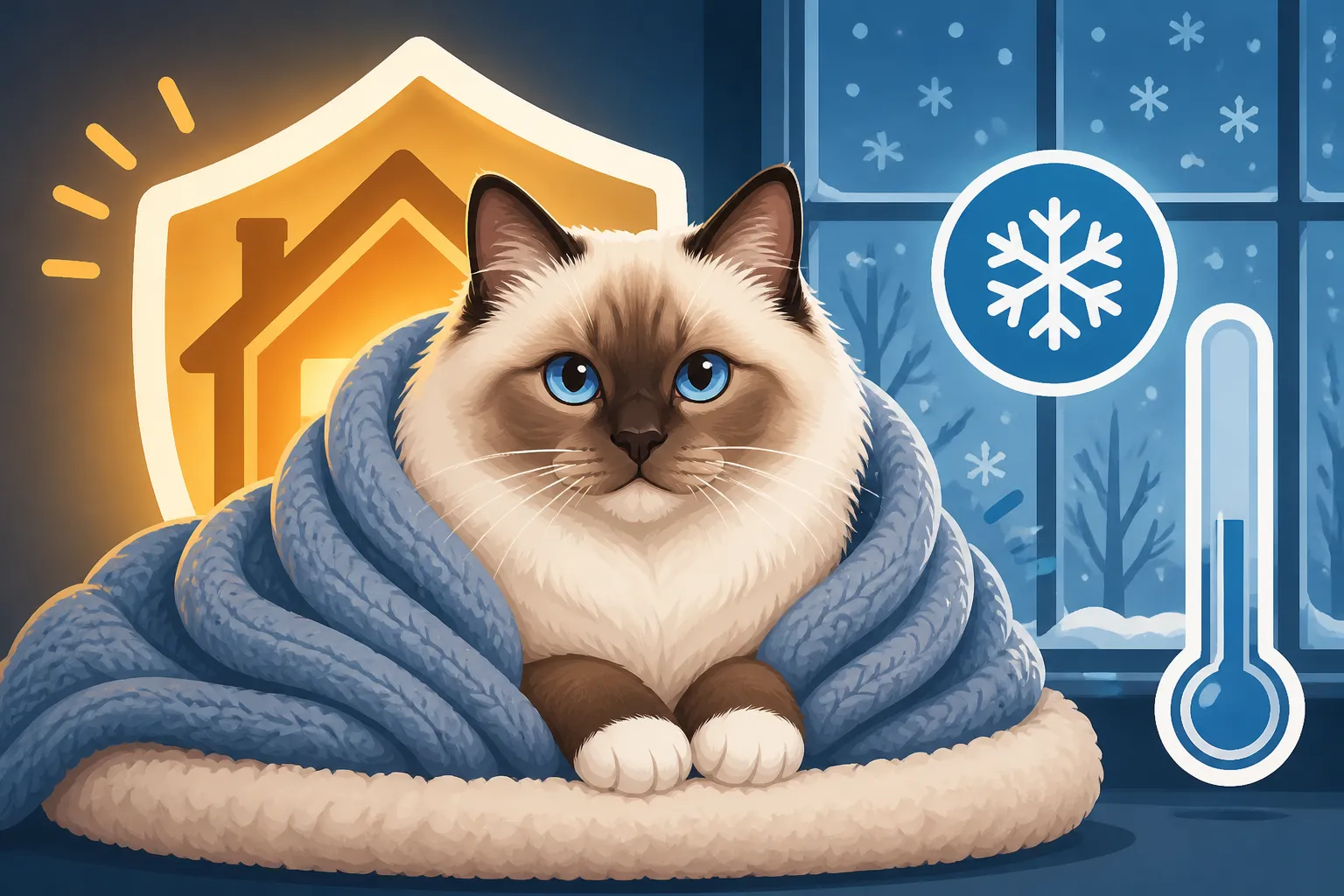
Think of it this way: a single-layer blanket is cozy, but it's not going to keep you as warm as a multi-layered comforter on a freezing night. The Birman's fine guard hairs simply don't trap as much warm air against their body as a thick undercoat would. This means that while they might look warm, they don't have that extra layer of natural defense against a drop in temperature. It's truly Why a Birman's Single Coat Never Developed a Woolly Layer, setting them apart from many other cold-weather cat breeds. You might find your Birman seeking out warmer spots in your home even when you feel perfectly comfortable, a clear sign their built-in thermostat operates a little differently. This isn't to say they're delicate, but rather that their physiological design simply doesn't prioritize extreme cold tolerance in the same way nature designed, say, a Norwegian Forest Cat.
How a Birman's Points Darken with Cold
Another fascinating aspect of the Birman's unique physiology directly relates to temperature: their point coloration. Birmans, like Siamese cats, are "pointed" breeds, meaning their color is concentrated on the cooler parts of their body – their ears, face, paws, and tail. This is due to a form of temperature-sensitive albinism; the enzyme responsible for color pigment production only functions effectively at lower temperatures.
What does this mean for cold tolerance? Well, it's not a direct measure of how warm they feel, but it's a visible indicator of temperature's effect on their body. If your house tends to be on the cooler side, or if your Birman consistently seeks out chilly spots, you might notice their points deepening in color over time. It's a charming quirk, but it also serves as a subtle, visual reminder of how their body reacts to ambient temperatures. The phenomenon is so noticeable that breeders and owners often observe Why a Birman Living Somewhere Cold Gets Darker. While a darker point coloration doesn't cause discomfort, it signifies that the cooler environment is indeed having a physical effect, showcasing the unique interplay between their genetics and their surroundings.
Behavioral Cues and Seeking Warmth
Your Birman might not be able to tell you directly that they're feeling a bit nippy, but their behavior will certainly give you clues. Observing these subtle shifts is key to understanding their comfort levels and ensuring they have access to warm, cozy spots when needed.
Where a Birman Seeks Out Warmth
When a Birman feels the chill, they instinctively become little heat-seeking missiles. They won't usually shiver like a small dog might, but you'll notice a distinct change in where they choose to settle down. Suddenly, that sunny patch on the rug becomes prime real estate, followed closely by any spot near a radiator, a warm vent, or even snuggled against your laptop. They are experts at finding the warmest microclimates in your home.
You might find your Birman draped across a warm cable box or tucked tightly into a laundry basket filled with freshly dried clothes. They'll gravitate towards any nook or cranny that offers a hint of warmth. It's often where you'll find them when Where a Birman Goes When the Heating Goes Off, a clear indicator that their internal thermostat is asking for a boost. Don't be surprised if they've suddenly claimed your favorite armchair, especially if it's been recently vacated and still holds your body warmth. My own Birman, Luna, has a knack for knowing exactly where the sunbeam will hit the sofa at any given time of day, and she'll shift her napping spot accordingly. They're also quite content to nap next to you, soaking up your body heat, demonstrating Why a Birman Sleeps Wherever You Last Sat. This preference for shared warmth extends to other pets in the house too; a Birman might cozy up to a dog or another cat, not just for companionship, but for the added warmth.
The Placid Nature and Hidden Discomfort
Birmans are renowned for their incredibly gentle and placid temperament. They are not typically vocal or demanding cats, which is one of their most endearing qualities. However, this calm demeanor can sometimes make it challenging to gauge their discomfort. A Birman is far more likely to quietly suffer in silence than to loudly complain. They won't usually pace or meow incessantly if they're cold; instead, they'll simply withdraw or find a less-than-ideal spot to try and get warm.
This is where keen observation comes in. A Birman might seem "just quiet" when in fact, they're feeling quite uncomfortable. They might appear less engaged in play, or simply spend more time curled up, rather than stretching out in their usual relaxed positions. It's a crucial point that Why a Placid Birman Hides Pain, and this extends to thermal discomfort too. You have to be their advocate, paying close attention to their habits and offering warmth proactively. If you notice your Birman is spending an unusual amount of time huddled in a tight ball, or consistently choosing sheltered, enclosed spaces over their usual open lounging spots, it's a good sign they might be feeling too cold. Never assume their quiet nature means they're content with the ambient temperature; always check for these subtle signs of seeking warmth.
Practical Ways to Keep Your Birman Warm
Knowing your Birman's coat characteristics and behavioral cues is only half the battle. The other half is taking proactive steps to create a warm and comfortable environment for them, especially during the colder months.
Optimizing Indoor Temperature and Comfort Zones
Maintaining a consistent, comfortable indoor temperature is paramount for a Birman. While you don't need to turn your home into a sauna, avoiding drafts and sudden drops in temperature is important. A good rule of thumb is to keep your living spaces at a temperature you find comfortable in light clothing – typically between 68-72°F (20-22°C).
However, even with general heating, providing localized warmth can make a huge difference. Heated cat beds are a fantastic investment, especially for older Birmans or those who tend to feel the cold more keenly. They offer a constant, gentle warmth that your Birman will adore. You can find excellent options on Chewy or Amazon, ranging from self-warming mats that reflect body heat to electrically heated beds with timers. It’s definitely worth considering Whether a Heated Bed Is Worth It for a Birman – many owners find they are! Beyond heated beds, consider providing soft, fleecy blankets or covered cat caves in various spots around the house. These give your Birman a private, insulated retreat where they can burrow and conserve body heat. Placing these near windows (away from drafts) or in quiet corners can create inviting havens. Avoid placing cat beds directly in front of powerful heating vents, as the direct, dry heat can be too much and potentially irritating for their skin and respiratory system. Instead, aim for cozy spots where ambient warmth can gather.
Nutrition and Hydration for Cold Weather
Believe it or not, diet plays a role in your Birman's ability to cope with cold. A healthy, well-nourished cat is better equipped to regulate its body temperature. Ensure your Birman is receiving a high-quality diet rich in essential nutrients, particularly fats, which contribute to a healthy coat and overall energy.
A diet that supports a glossy, full coat actually helps in mild insulation, even if it's not a dense undercoat. Look for foods with good sources of Omega-3 and Omega-6 fatty acids. Why a Birman's Coat Needs Fat in the Diet is not just about aesthetics; it's about supporting skin health and a healthy hair shaft, which provides what little insulation their single coat offers. Beyond food, hydration is always critical, but it becomes even more so for Birmans given their predisposition to kidney issues through their Persian ancestry. Which Wet Food Suits a Birman's Kidney History is a topic often discussed, and the higher moisture content of wet food is hugely beneficial for kidney health. Adequate hydration helps with overall bodily functions, including circulation and temperature regulation. Ensure fresh water is always available in multiple locations, and consider a water fountain to encourage more drinking. A well-hydrated cat with a balanced diet is simply better equipped to handle environmental stressors, including temperature fluctuations.
Common Misconceptions and Outdoor Safety
It’s easy to make assumptions about cats, especially those with such striking appearances. However, when it comes to Birmans and cold weather, some common ideas can lead owners astray. Understanding these distinctions is vital for their well-being.
Why Their Long Hair Isn't Enough
Many people see a long-haired cat and immediately assume it's built for chilly conditions. This is a significant misconception, especially for Birmans. While they do have long, beautiful hair, it fundamentally differs from the insulating fur of breeds truly adapted to cold climates. As we've discussed, the Birman lacks the dense, woolly undercoat found in breeds like the Siberian or Norwegian Forest Cat. These breeds have a double coat: an outer layer of guard hairs that sheds water and snow, and a thick, soft undercoat that traps a layer of warm air close to the body, acting like a natural down jacket.
The Birman's coat, on the other hand, is single-layered and fine. It's incredibly soft and sheds less than a double coat, which is a huge plus for owners, but it's simply not designed for robust thermal insulation. Why a Coat With No Undercoat Is Not Warm is a key point to remember. Their long, flowing hair offers some protection, of course, but it's more about elegance than extreme utility in cold weather. Therefore, relying solely on their visible long hair to keep them warm outdoors or in a very cool indoor environment is a mistake. They need your help to maintain their core body temperature, especially when the mercury drops.
Outdoor Exposure in Cold Climates
Given their unique coat structure, it should come as no surprise that Birmans are strictly indoor cats, especially in cold climates. Letting a Birman roam outdoors, particularly in freezing temperatures, is not only dangerous for their health but also exposes them to other significant risks. Their single coat offers minimal protection against frostbite on their sensitive paws and ears, and hypothermia can set in surprisingly quickly.
Beyond the cold, allowing a Birman outdoors opens them up to a host of other dangers. Their calm, trusting nature makes them less equipped to handle outdoor threats like traffic, predators, or unfriendly animals. Furthermore, their stunning appearance and docile personality unfortunately make them targets for theft, a concerning reality addressed in topics like Why a Birman Would Be Stolen Outdoors. Therefore, it's crucial to understand Whether a Birman Should Ever Go Outside in Snow – the answer is a resounding no. While a supervised visit to an enclosed catio on a mild, sunny day might be acceptable for some, any prolonged exposure to cold, wet, or snowy conditions is simply unsafe and goes against responsible Birman care. Their well-being depends on a warm, secure indoor environment where their unique needs are met.
Here's a quick comparison of Birman coat characteristics versus a typical double-coated cat:
| Feature | Birman Cat (Single Coat) | Double-Coated Cat (e.g., Siberian, Maine Coon) |
|---|---|---|
| Undercoat | Absent | Present, dense, and woolly |
| Insulation | Minimal | High |
| Matting Tendency | Low | Moderate to High |
| Shedding | Moderate, long, fine hairs | Moderate to High, dense undercoat shedding |
| Water Resistance | Low | Moderate to High |
| Cold Tolerance | Low to Moderate, prefers warmth | High, adapted to cold climates |
| Grooming Difficulty | Easy | Moderate to Difficult |
This article is for general informational purposes only and does not constitute professional advice. Laws, prices and regulations vary by location and change over time. Consult a qualified professional for guidance on your specific situation.