Where a Birman’s Few Mats Form
Birman cat coat grooming spots explain where hidden tangles form behind the ears, under the chin, and on high friction zones.

Birman cat coat grooming spots explain where hidden tangles form behind the ears, under the chin, and on high friction zones.
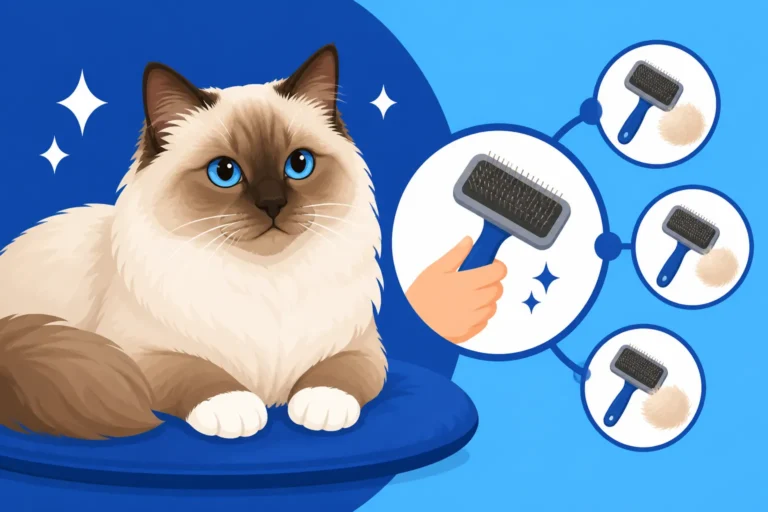
Birman grooming requires only three combings weekly because this breed possesses a single coat without a dense undercoat.
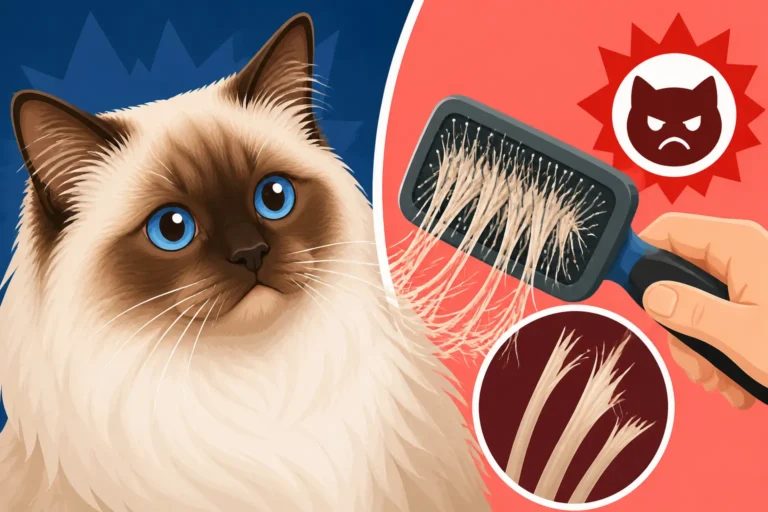
Slicker brushes damage a Birman cat silky guard hair because this unique single coat lacks any dense undercoat.

Birman cat grooming techniques help owners select specific tools for the single silky coat, preventing painful pulling on neck ruffs.

Birman cat shedding and unique single coat structure explain why this specific breed drops fur and how to manage the hair.
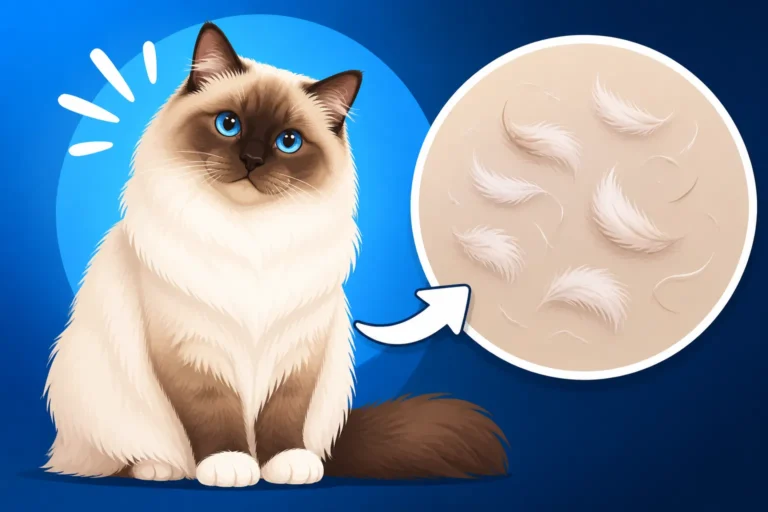
Birman shedding remains manageable because this long-coated cat lacks a dense woolly undercoat beneath outer guard hairs.

Genetics, evolution, and selective breeding explain why a Birman cat grows the longest and most luxurious fur on its ruff.
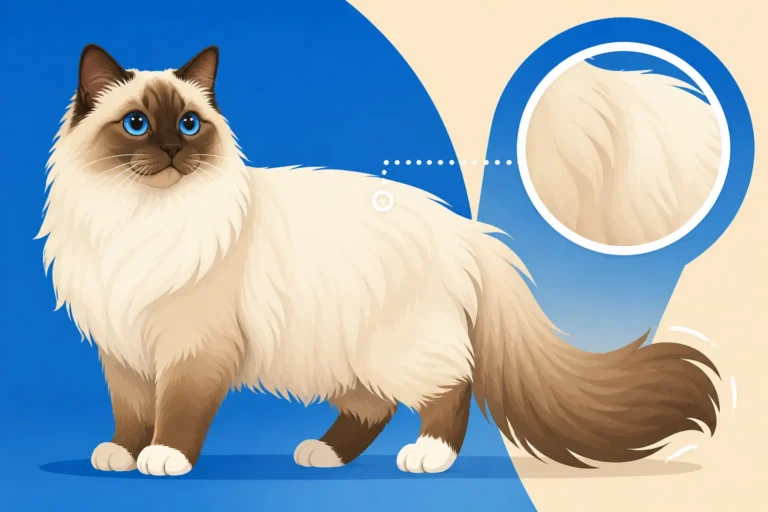
Birman cat coat length and single-layered texture explained, showing how this fur lacks a dense undercoat for easy grooming.

The Birman single coat lacks a woolly underlayer, resulting in silky fur that avoids stubborn mats and complex grooming routines.
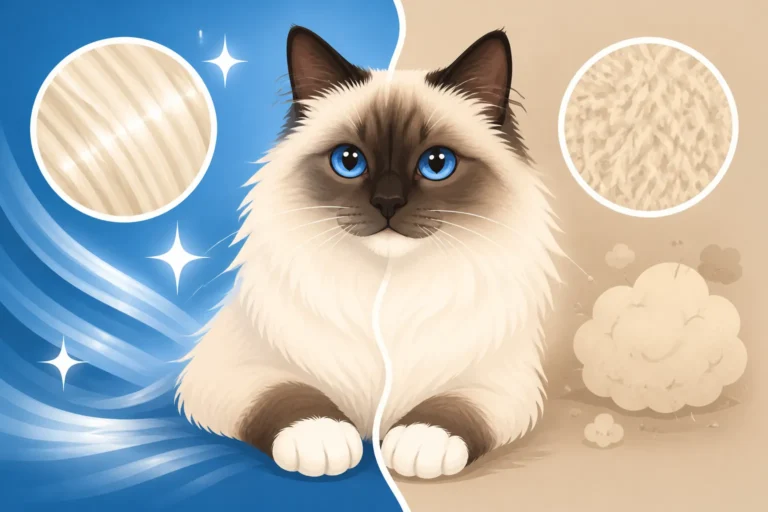
The absence of a dense undercoat in Birman cats creates a uniquely silky fur structure and keeps shedding remarkably low.