How to Slow a Fast Eating Birman
Wild ancestral instincts, boredom, anxiety, and health issues explain why a Birman eats quickly, and practical solutions help slow mealtime.
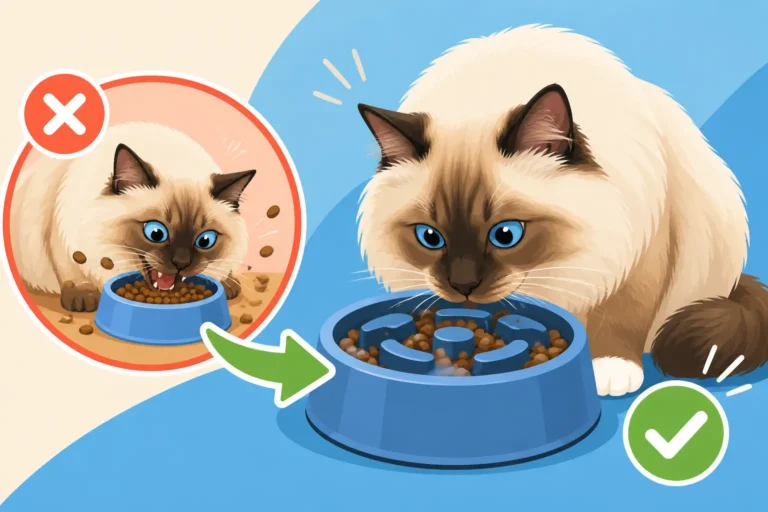
Wild ancestral instincts, boredom, anxiety, and health issues explain why a Birman eats quickly, and practical solutions help slow mealtime.

Birman cats use their calm intelligence and gentle problem-solving skills to successfully investigate and solve treat balls.

Puzzle feeders matched to a gentle Birman support quiet intelligence and prevent stress behaviors like overgrooming in sensitive cats.

Birman cats respond better to heartfelt praise and gentle affection than treats due to their affectionate, people-oriented nature.
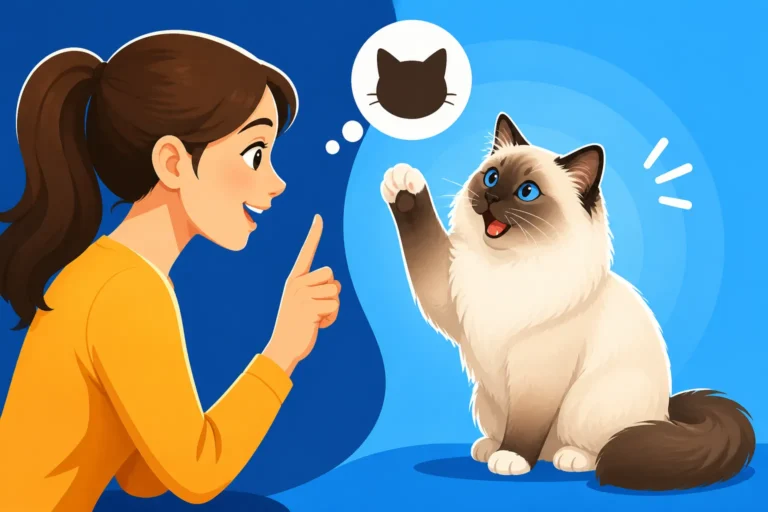
Teaching a Birman cat to recognize its name requires understanding subtle communication cues and maintaining consistent naming habits.
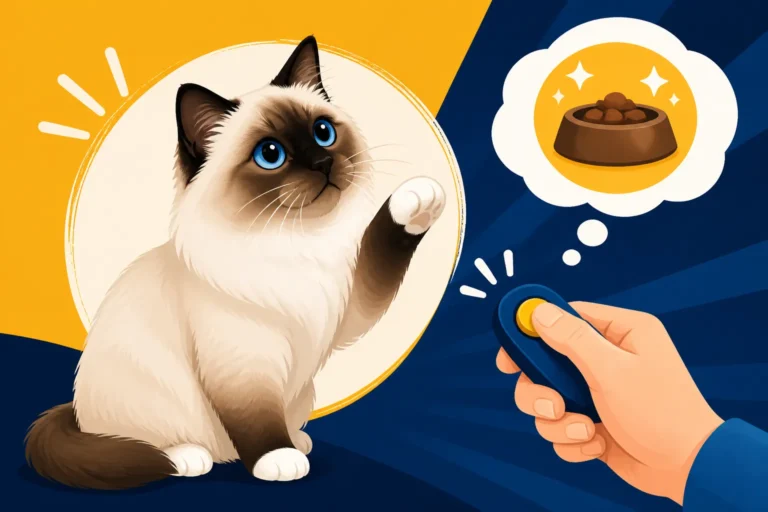
Birman cat intelligence and calm temperament enable them to master clicker training through observation and gentle positive reinforcement.
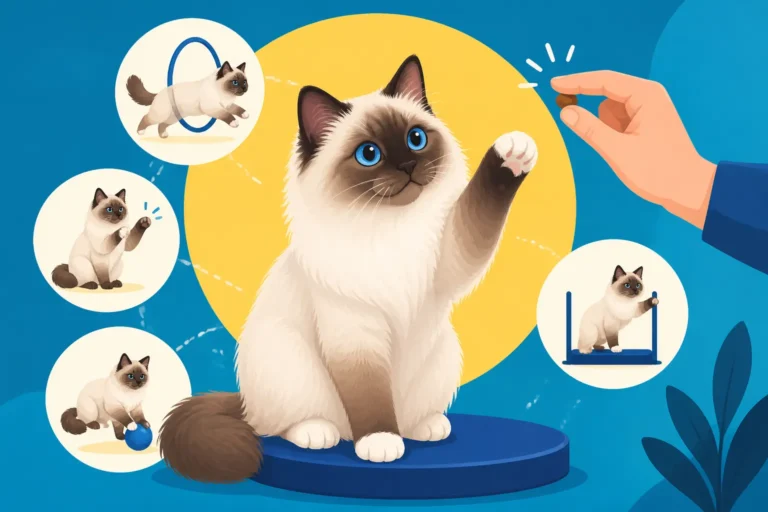
Birman trick training uses praise and high-value treats so these intelligent cats master fun behaviors and gentle actions.
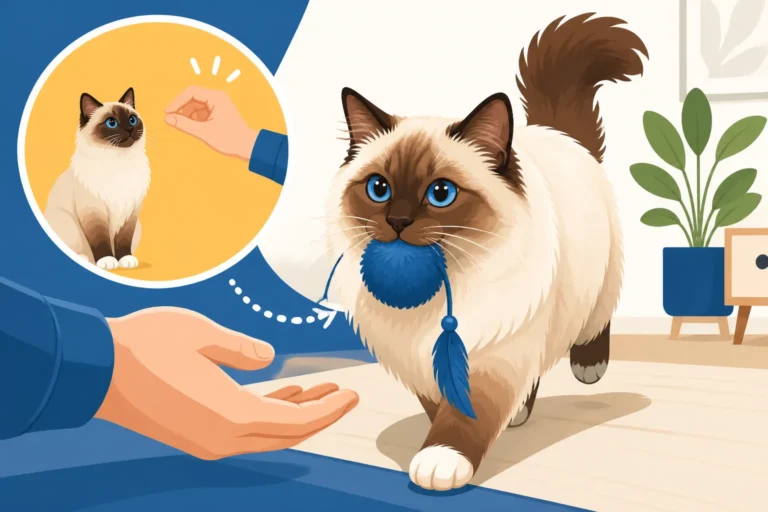
Teaching a Birman cat to retrieve toys offers a rewarding way to deepen your bond through gentle, shared interactive play.

Whether a Birman carries a toy around, since this gentle breed prefers soft batting, slow stalking and graceful pouncing to fetching and carrying.

Birman cat responses to catnip explain nepetalactone sensitivity and why seventy to eighty percent of cats experience a brief euphoria.