Why a Birman Line With No Echo History Is a Risk
Unscreened Birman breeding lines lacking echocardiogram history pose serious health risks regarding feline hypertrophic cardiomyopathy.

Unscreened Birman breeding lines lacking echocardiogram history pose serious health risks regarding feline hypertrophic cardiomyopathy.
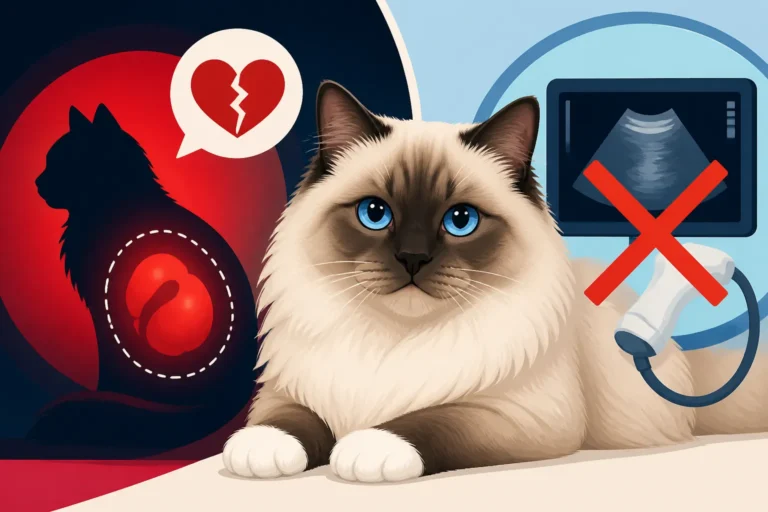
Hypertrophic Cardiomyopathy in Birman cats without echo scans, explaining silent heart disease risks and screening methods.

Blue-eyed Birman cats are not at a higher risk of deafness because their eye color is linked to the colorpoint gene instead of the dominant white gene.

Senior Birman cats need fewer calories because lower activity, slower metabolism, and age-related muscle loss reduce energy needs.

An aging Birman cat develops darker points approaching black due to temperature sensitive genes and a slower metabolism.

Safe pain relief options for older Birmans with kidney disease help veterinarians protect fragile feline kidney function.
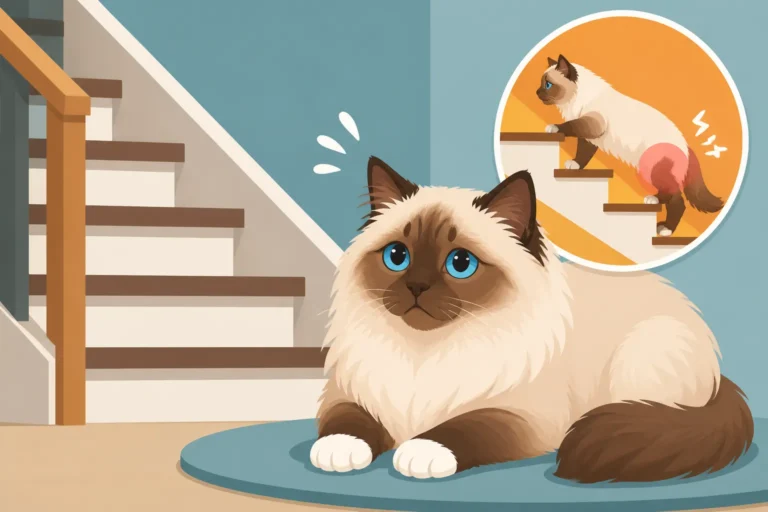
Aging Birmans often stop using stairs because reduced agility, stiff joints, and lower energy make climbing difficult and taxing.
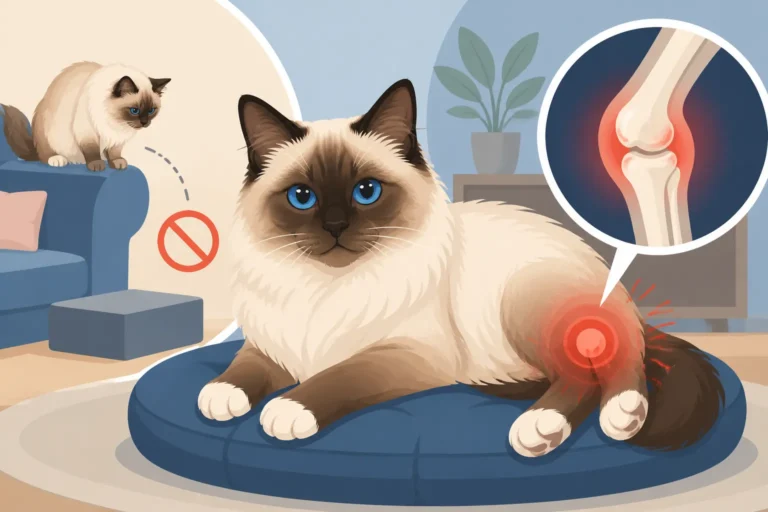
Arthritis in Birmans develops even in low-activity cats, showing subtle signs like hesitation, reduced grooming, and altered habits.

Senior Birmans losing weight while constantly eating need a vet physical exam and thyroid test to check for hyperthyroidism.
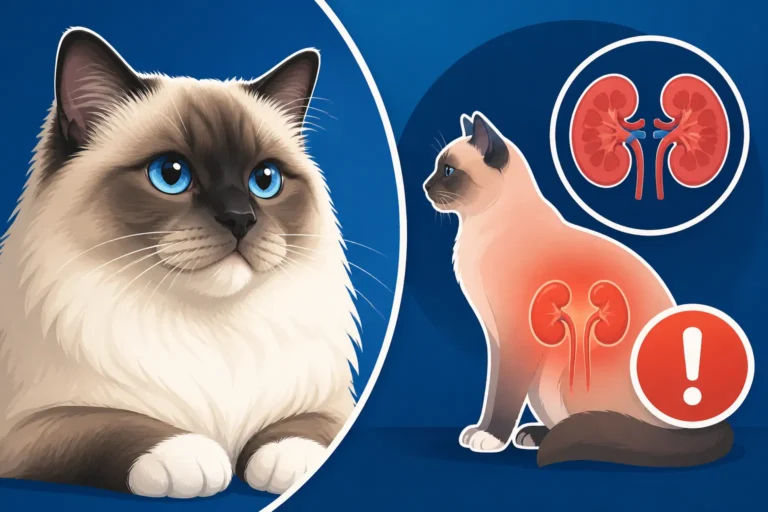
Senior Birman kidney failure manifests through increased thirst, larger urination clumps, decreased appetite, and dull coat conditions.