Whether the Birman Is a Siamese and Persian Cross
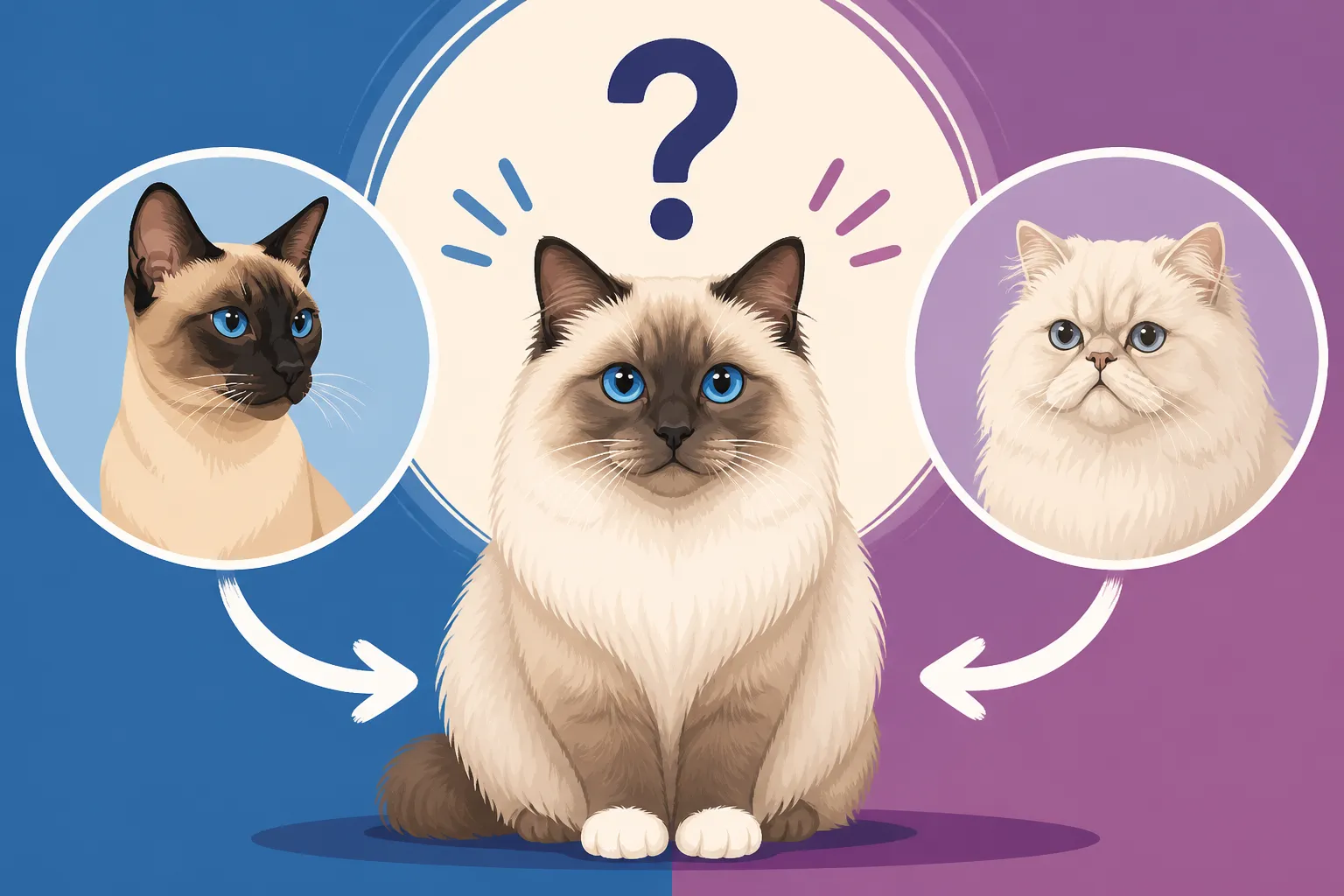
The origins of the Birman cat are often shrouded in a beautiful mystique, leading many to wonder about their ancestral roots. One of the most persistent questions I hear from fellow Birman lovers and those curious about the breed is whether these stunning felines are simply a direct cross between a Siamese and a Persian. It's an understandable assumption, given their point coloration and luxurious long coats, but the truth is a little more nuanced and, dare I say, even more fascinating. Let's dig into the historical tales and genetic realities that define our beloved Birman.
The Birman's Mysterious Origins: Legend and Early History
For generations, the Birman's origin was steeped in a captivating legend that spoke of sacred temple cats in Burma (now Myanmar). This tale, often associated with the Temple of Lao-Tsun, describes how a goddess transformed a white temple cat named Sinh, turning its eyes sapphire blue and its body golden, while its paws remained pure white as a symbol of its purity. This beautiful narrative attempts to explain the Birman's distinctive appearance: the striking blue eyes, the pointed color pattern, and, crucially, the immaculate white "gloves" on all four paws. It’s a lovely story, but as wonderful as it is, it offers little in the way of scientific ancestry.
Historically, the Birman breed as we know it today truly began to take shape in Europe, specifically France, in the early 20th century. While the legend claims an ancient lineage from Burma, the reality is that the breed was developed and stabilized through careful breeding programs. The very first recorded Birmans to arrive in the Western world, allegedly smuggled out of Burma, faced a perilous journey, with often only one surviving out of a pair. It's a testament to their resilience, but also highlights the scarcity of true "founding" stock. This scarcity would later play a significant role in the breed's development, necessitating outcrossing. You might be interested to know more about The Birman Was Rebuilt From Two Cats and It Shows, which goes into detail about the post-war efforts.
The initial stock for these early European Birmans was indeed somewhat mysterious, and records from that tumultuous period are patchy. The idea of a Siamese and Persian cross gained traction because these were two well-established breeds with traits that, when combined, visually approximated the Birman. The Siamese offered the striking point coloration and blue eyes, while the Persian contributed the long, silky coat. It was a logical conclusion for many, even if not entirely accurate in terms of direct, foundational crossbreeding for the initial development.
Unpacking the "Siamese and Persian Cross" Theory
The persistent theory that the Birman is a straightforward cross between a Siamese and a Persian is more of an educated guess based on appearances rather than a factual account of its initial creation. While these two breeds certainly influenced the reconstruction of the Birman later on, they aren't believed to be its direct, original parents.
Why the Idea of Siamese and Persian Ancestry Took Hold
It's easy to see why people connect the dots. Take a look at a Birman, and you immediately notice that gorgeous colorpoint pattern—darker points on the ears, face, paws, and tail, contrasted with a lighter body. Where else do we see such a distinctive pattern? The Siamese, of course! Then there's the coat: long, flowing, and luxurious. Which breed is famous for its plush long fur? The Persian. So, the leap to "Siamese + Persian = Birman" felt incredibly natural and logical to breeders and enthusiasts alike, especially in the early days when genetic understanding was not what it is today. It provided a convenient mental model for understanding the Birman's unique combination of traits.
Furthermore, these were two prominent and popular breeds in Europe during the time the Birman was being established. If you needed to introduce specific traits to solidify a new breed, turning to known quantities like the Siamese for points and the Persian for long hair would be a common-sense approach. This often led to what we call "outcrossing" later in the breed's history, but not necessarily at its very inception from Burma.
What Genetics Say About the Birman's True Origin
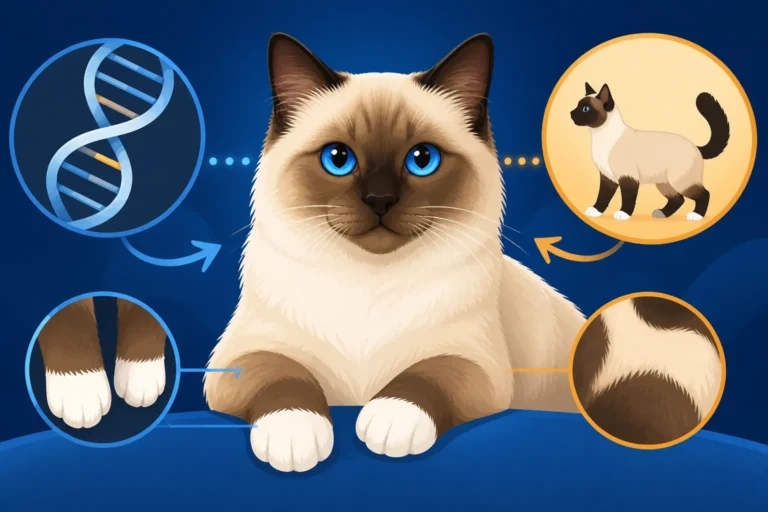
Modern genetic studies have shed a lot of light on the ancestry of many cat breeds, and the Birman is no exception. While we can confirm that our lovely Birman carries the genes for the colorpoint pattern (similar to the Siamese) and the long-hair gene (similar to the Persian), the story isn't as simple as a direct 50/50 cross in its foundational history. The genetic markers don't point to a singular, clear-cut hybridization event between just these two specific breeds as the origin. Instead, the Birman's genetic signature suggests a more complex, perhaps even ancient, origin with later influences from various long-haired and pointed cats. For a deeper dive, check out What Genetics Say About the Birman's Origin.
The unique combination of traits, particularly the white "gloving" gene, is what truly sets the Birman apart. This specific gene, responsible for their iconic white paws, is not found in either the traditional Siamese or Persian breeds. It's a defining characteristic that strongly supports the idea of the Birman having its own distinct genetic lineage, rather than being a simple blend of the two. This makes the Birman genetically unique, even if its appearance has echoes of other well-known breeds.
Consider this table comparing key genetic traits:
| Trait | Birman | Siamese | Persian |
|---|---|---|---|
| Colorpoint Gene | Present | Present | Present (Himalayan) |
| Long-Hair Gene | Present | Absent | Present |
| White Gloving Gene | Present (Unique) | Absent | Absent |
| Body Type | Medium, semi-cobby | Sleek, oriental | Cobby, heavy-boned |
| Facial Structure | Round, medium nose | Wedge, long nose | Brachycephalic (flat) |
This table visually demonstrates that while Birmans share some genetic components with Siamese and Persians, they also possess a unique trait (the gloving gene) that distinguishes them, suggesting they aren't just a simple mix.
The Role of Outcrossing in the Birman's Survival
The "Siamese and Persian cross" idea gets more complicated when we talk about the post-World War II period. The Birman breed faced a near-catastrophic decline during the war years, with very few individuals surviving. It’s a heartbreaking chapter in their history, and the efforts to save them were truly heroic. After the war, with the breed's numbers dangerously low—reportedly down to just two breeding cats—breeders had to introduce other breeds into the gene pool to prevent extinction and re-establish genetic diversity. This process is called outcrossing.
During this critical time, it is indeed believed that Which Breeds Were Crossed In to Save the Birman included both Persian and Siamese cats, or at least cats with strong genetic links to these breeds. The goal was to reintroduce the necessary traits (long hair, point coloration) that defined the Birman, along with a broader genetic base. Over subsequent generations, these outcrossed lines were then selectively bred back to "Birman type," gradually reducing the influence of the introduced breeds and solidifying the Birman's distinctive characteristics again. So, while not originating as a Siamese and Persian cross, these breeds played a vital role in its reconstruction. You can explore Whether Persian Blood Is in Every Modern Birman and Whether Siamese Blood Is in Every Modern Birman for more details on this period.
Physical and Temperamental Traits: A Blended Influence?
Even if the Birman isn't a direct 50/50 Siamese and Persian mix from the get-go, it’s undeniable that certain physical and temperamental traits might remind you of both. This isn't necessarily proof of direct ancestry but rather a testament to shared genetic components or the careful selection during its reconstruction.
Comparing Physical Characteristics
When you look at a Birman, the striking blue eyes and the point coloration are instantly reminiscent of the Siamese. These are hallmark traits of both breeds, though the Birman's points tend to be a softer shade, blending more gently into the body. The long, silky coat, on the other hand, is definitely a nod to the Persian side of the spectrum. However, a crucial difference lies in the Birman's coat texture: it has no dense undercoat, making it less prone to matting than a Persian's luxurious, high-maintenance fur. This means a Birman's grooming needs, while still present, are generally less demanding than a Persian's. You'll find a wide array of grooming tools and nutritious foods suitable for a Birman's unique coat, even from trusted brands like Chewy, ensuring their fur stays beautiful without excessive effort.
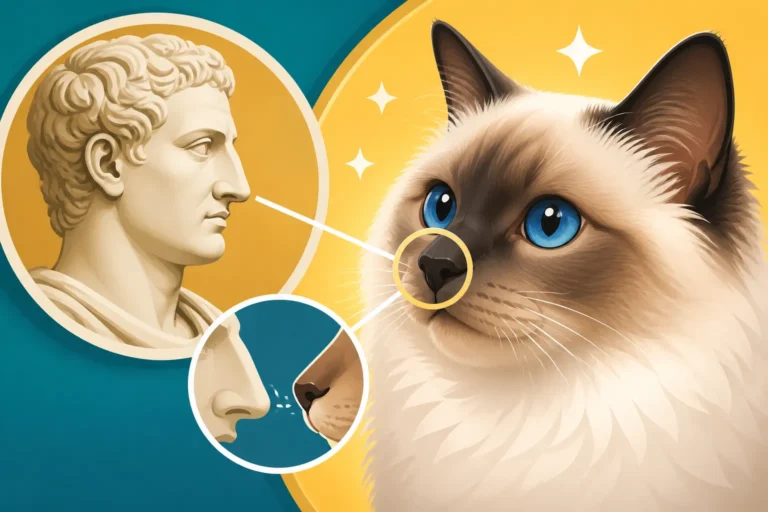
The Birman's body type is often described as semi-cobby—a medium-sized cat with a sturdy, long body, falling somewhere between the lithe, oriental Siamese and the stocky, cobby Persian. Their facial structure is rounder than a Siamese, but lacks the extreme brachycephalic (flattened) features often seen in modern show Persians. Instead, they have a gentler, more open expression, often with a distinct "Roman nose" profile, which is part of their breed standard. You can learn more about Why a Himalayan's Face Is Flat and a Birman's Is Not if you're curious about the differences in facial structure between these pointed breeds.
Exploring Temperamental Nuances
In terms of personality, the Birman truly embodies a wonderful "middle ground" that makes them so beloved. They possess a friendly, affectionate nature that can be seen as a blend of the Siamese's engaging personality and the Persian's calm demeanor. Birmans are known for being incredibly gentle and devoted companions. They often follow their humans from room to room, preferring to be in the same space without necessarily demanding constant attention. This is a delightful trait for those who want a constant companion without an overly vocal or demanding presence.
Compared to a Siamese, a Birman is notably quieter. While a Siamese might "talk" to you with a robust voice, a Birman typically has a soft, melodic trill or a very gentle meow. They communicate their needs more subtly, perhaps by sitting patiently near you or giving a soft nudge. For a closer look at this, read Why the Birman Never Inherited the Siamese Voice. On the flip side, they are more interactive and playful than many Persians, who are often content with long naps in a quiet corner. Birmans enjoy a good play session, often carrying toys around, but they aren't hyperactive. They strike a balance that makes them adaptable to many households, including those with children and other pets. The article The Birman Sits Between the Siamese and the Persian delves deeper into these behavioral comparisons.
Modern Birman Breeding and Genetic Purity
Today, the Birman breed is well-established, with strict breed standards maintained by cat registries worldwide. The goal of modern Birman breeding is to produce cats that conform to this standard, maintaining the unique physical traits—especially the white gloves—and the gentle temperament that defines the breed.
Maintaining Breed Standards and Health
Breeders today focus on health screening and genetic testing to ensure the well-being of Birman lines. This includes testing for conditions that might have inadvertently been introduced during the outcrossing period or are simply prevalent in certain cat populations. For instance, reputable breeders will screen for Polycystic Kidney Disease (PKD1) and Hypertrophic Cardiomyopathy (HCM), even though the Birman is not inherently more prone to these than other breeds. Genetic testing for FOXN1 (Birman Hypotrichosis) is also crucial. These health considerations ensure that while the breed thrives, it does so on a healthy foundation.
The emphasis is on ethical breeding practices, which means carefully selecting breeding pairs to maintain the Birman's distinct characteristics while preserving genetic diversity within the breed itself. This includes careful attention to the development of the "gloves" and "laces" on their paws, which are central to the Birman standard and still remarkably difficult to breed for perfect symmetry.
The Birman as a Unique and Cherished Companion
Ultimately, whether or not the Birman was directly "created" from a Siamese and a Persian, the result is a truly unique and cherished feline companion. Their blend of striking appearance, gentle nature, and relatively easy-care coat makes them a fantastic addition to many homes. They offer the beauty of a long-haired, pointed cat without the extreme grooming demands of some breeds, and a loving personality that makes them a joy to live with.
If you're considering welcoming a Birman into your family, focusing on breeders who prioritize health testing and adherence to breed standards will help ensure you get a happy, healthy companion. And when it comes to their care, from high-quality food to interactive toys, resources from places like Chewy are readily available to meet their specific needs. Understanding their full history, including the influences of other breeds in their development and reconstruction, only deepens our appreciation for these beautiful, sacred cats.
Disclaimer
This article is for general informational purposes only and does not constitute professional advice. Laws, prices and regulations vary by location and change over time. Consult a qualified professional for guidance on your specific situation.