Why a White Gloved Cat Should Never Be Let Out
There's a natural instinct that many of us feel, a desire to let our beloved feline friends roam free, explore the sun-dappled garden, and truly embrace their inner wild cat. It feels like we're giving them the best life, doesn't it? But for us Birman owners, especially those of us who adore those distinctive white gloves, that instinct needs a serious reality check. Letting a Birman, particularly one with those prized white paws, venture outdoors unsupervised isn't just a slight risk; it's practically an open invitation to disaster. This guide will meticulously break down exactly why your beautiful, placid Birman is best kept safely indoors, protecting them from a world they simply aren't equipped to navigate.
The Birman's Unique Vulnerabilities in an Outdoor Environment
It's heartbreaking to think about, but the very qualities that make our Birmans so enchanting indoors become significant liabilities the moment they step outside. Their stunning looks and gentle disposition, which we cherish, are unfortunately exactly what make them so vulnerable in the big, wide world.
The Striking Appearance: A Magnet for Attention and Trouble
Let's be honest, a Birman is not a subtle cat. Their captivating sapphire blue eyes, that luxurious, silky coat, and those signature white "gloves" on all four paws make them undeniably striking. They are works of art, living, breathing embodiments of beauty. But this distinctiveness, which we admire so much, can turn into a serious problem when they are out and about. A Birman wandering unsupervised is not just "a cat" to the wrong person; it's an easily identifiable, valuable purebred.
Imagine for a moment: you're walking down the street, and you see a gorgeous, friendly Birman trotting along. Your first thought might be, "Oh, what a stunning cat!" Unfortunately, for someone with less admirable intentions, their first thought might be, "Easy pickings." The unique markings, especially those pristine white gloves and deep blue eyes, make a Birman instantly recognizable. This isn't some generic tabby; this is a cat that commands attention, and regrettably, for some, it commands a price. The market for purebred cats, even one acquired illicitly, is a sad reality. A Birman seen regularly outdoors, seemingly unattended, becomes an easy target for theft. It's a truly gut-wrenching thought, but it happens. They can be scooped up and gone in a flash, and without a reliable way to identify who they belong to if found, they might never make it back home.
The Placid Temperament: Not Built for the Wild
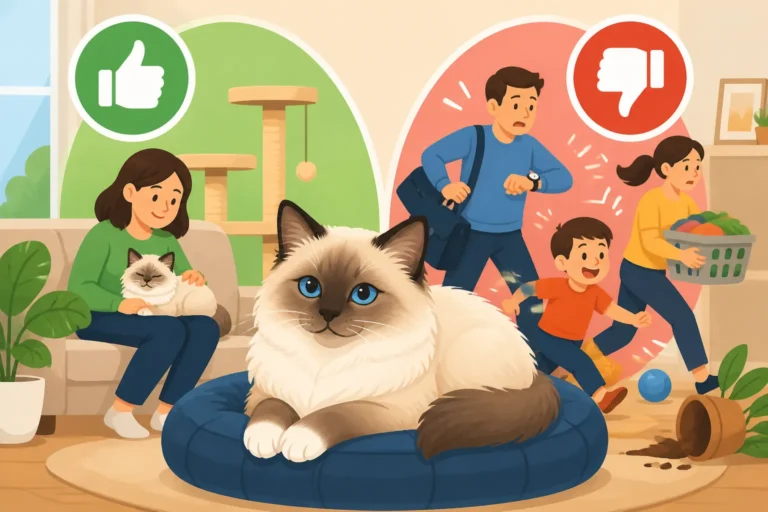
One of the most endearing traits of the Birman is their wonderfully placid and trusting nature. They are known for being gentle souls, preferring to observe and softly engage rather than get into confrontations. They are the epitome of a "velcro cat" indoors, often content to follow you from room to room, sitting quietly nearby. Why a Birman Follows You Without Demanding Anything This sweet, non-aggressive demeanor is precisely what makes them so ill-suited for the harsh realities of outdoor life.
Outdoors, a cat needs to be street-smart, quick, and sometimes even a little bit fierce to survive. They need to understand territorial boundaries, recognize threats instantly, and be prepared to defend themselves. Our Birmans, with their calm and trusting disposition, are simply not wired this way. They are more likely to walk away from a territorial skirmish with a stray cat, leaving them vulnerable to bites and scratches that can lead to painful abscesses and serious infections. Even worse, their trusting nature can lead them directly into danger with aggressive dogs or other wildlife that might see a gentle cat as an easy meal. They investigate rather than flee, which can lead them into busy roads, strange yards, or even inside open garages or sheds where they could get trapped. Their quiet curiosity, so charming indoors, becomes a grave disadvantage when facing real-world dangers.
Navigating the Perils of the Great Outdoors for a White-Gloved Birman
The world beyond your front door is a tapestry of wonders, but for a delicate, home-loving Birman, it's also a minefield of potential disasters. From unseen dangers to outright disease, the risks multiply exponentially the moment they step outside.
The Silent Threats: Traffic, Predators, and Environmental Hazards
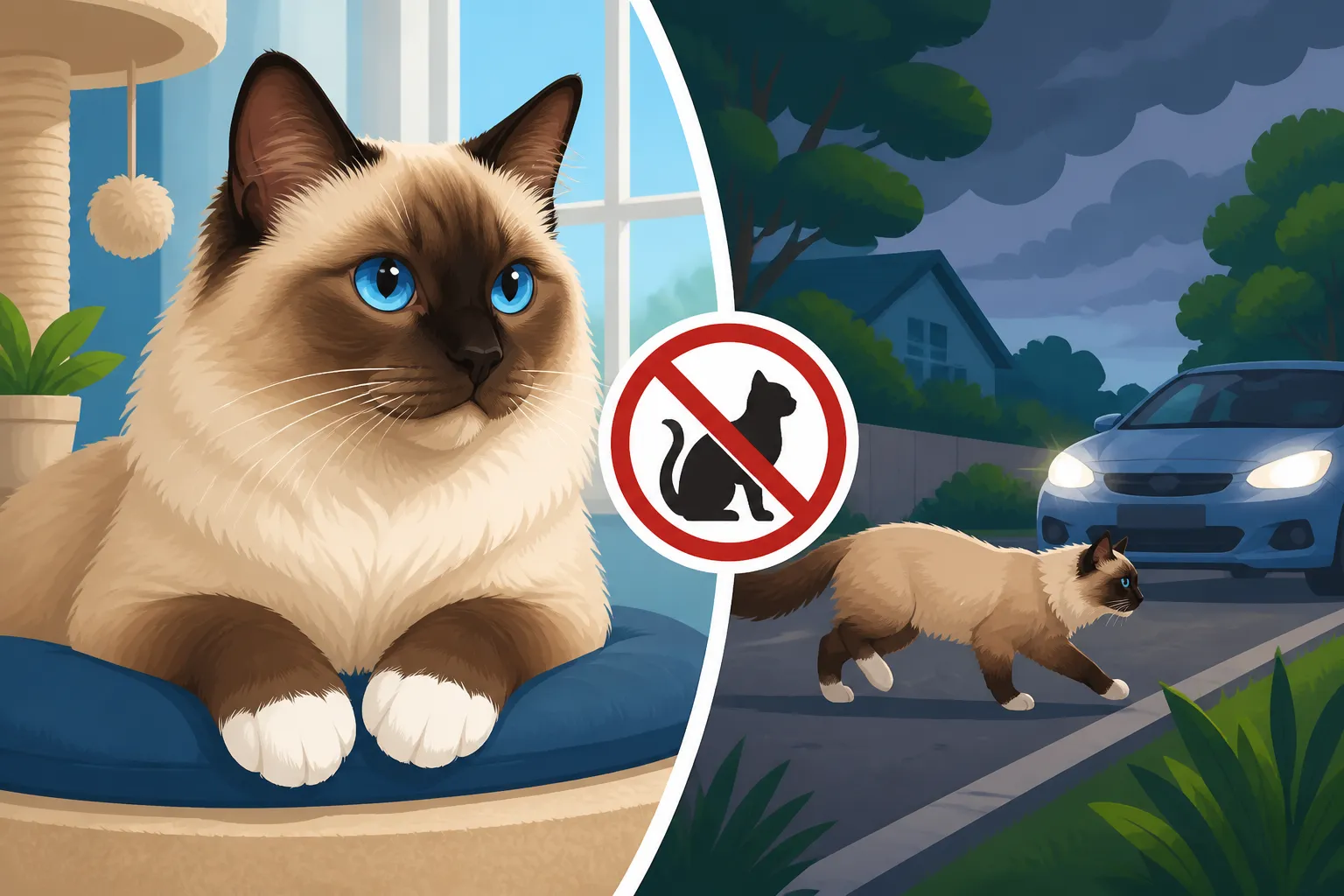
One of the most immediate and terrifying threats to any outdoor cat is traffic. While some cats learn to be "road smart," a Birman's inherent calm and less reactive nature can be a severe disadvantage. They are not typically quick, darting, or overly skittish. This means they might not react fast enough to a speeding car or an oblivious driver. A sudden noise or an unfamiliar vehicle could easily catch them off guard, leading to devastating consequences. Even quiet residential streets hold immense danger for a cat unaccustomed to the unpredictable movement of cars, bicycles, and even distracted pedestrians.
Beyond the immediate danger of vehicles, the natural world holds its own array of silent threats. Predatory birds like hawks and owls are always on the lookout for small, vulnerable prey. A Birman's light point coloration and, particularly, those stark white gloves, make them stand out against many natural backgrounds, essentially making them a visible target. While adult Birmans might be too large for some smaller birds of prey, kittens or younger, smaller Birmans could be at significant risk. Then there are the environmental hazards that lurk in every garden and alleyway: toxic chemicals like antifreeze (which cats find enticingly sweet), rat bait, slug pellets, and various pesticides. These are silent killers, often ingested unknowingly by curious cats. There's also the risk of sharp objects, discarded food waste that could be poisonous or cause internal damage, and the simple danger of getting trapped in a neighbor's garage, shed, or even a vehicle. These dangers aren't always visible, making them incredibly difficult for a cat – or an owner – to anticipate or avoid.
Fights, Injuries, and the Spread of Disease
It's a harsh truth that outdoor cats often lead a life marked by injury and illness. Cat fights are an unfortunate reality of the feline world, driven by territorial instincts and competition. Birmans, as we've discussed, are not natural fighters. This means they are almost always on the losing end of a skirmish, resulting in painful bite wounds and scratches that can quickly become infected, leading to abscesses requiring veterinary intervention. These injuries are not only costly to treat but also deeply distressing for your gentle companion.
Even more insidious is the risk of contracting serious diseases. Outdoor cat populations are hotbeds for infectious agents. Viruses like Feline Leukemia Virus (FeLV) and Feline Immunodeficiency Virus (FIV) are commonly spread through bites during fights. These are lifelong, often fatal, conditions that can devastate a cat's immune system. Then there are the myriad parasites: fleas, ticks, and various internal worms are rampant outdoors. While indoor cats can still get these, the exposure risk is exponentially higher for outdoor cats, requiring constant, vigilant preventative treatment. Imagine the constant worry, the regular de-worming, the flea baths – it's a never-ending battle to keep an outdoor Birman free from these pervasive threats. Which Diseases Survived the Birman's Post War Bottleneck Your indoor Birman enjoys a relatively sterile, controlled environment, dramatically reducing their exposure to these debilitating and potentially deadly health challenges.
The Practicalities: Preserving Health, Coat, and Home Harmony
Beyond the dangers to life and limb, letting your Birman roam free introduces a host of practical headaches for you, the owner, impacting their health, appearance, and the cleanliness of your home.
Keeping Those Prized White Gloves Pristine
The Birman's "gloves" – those beautiful, pure white markings on their paws – are not just pretty; they are a defining characteristic of the breed, carefully described in every breed standard. They are part of what makes a Birman, a Birman. Indoors, with clean litter and a watchful eye, you can generally keep these gloves looking immaculate. Keeping a Birman's White Gloves White
Outdoors? That's a different story entirely. Mud, dirt, grass stains, asphalt grime, even natural elements like pollen and sap will relentlessly attack those pristine white paws. What starts as a brilliant white will quickly become a dull, discolored mess. Imagine your beautiful Birman trotting in after a rainy day, tracking mud across your clean floors with those once-white paws. You'd be constantly wiping, cleaning, and perhaps even bathing them, which, while Birmans are generally tolerant, isn't ideal for their coat oils or your precious time. We carefully choose low-dust litter specifically to prevent staining their delicate white feet. Which Litter Suits a White Gloved Cat Sending them outside completely negates all that effort and care, turning a defining feature into a perpetual cleaning challenge. It's a constant battle against nature to maintain the very characteristic that makes them so special.
Maintaining the Birman's Unique Coat Condition
The Birman's coat is another marvel of the breed. It's single-layered, silky, and relatively easy to manage compared to other longhairs, precisely because it lacks a dense undercoat. No Undercoat Is What Makes a Birman Easy to Groom This means fewer mats and less shedding than you might expect for such a luxurious-looking cat. But this low-maintenance nature is predicated on an indoor lifestyle.
Take that same silky coat outdoors, and suddenly it's a different beast. It will pick up every burr, every twig, every leaf, and every bit of debris it encounters. The fine hairs can tangle and mat with surprising speed when exposed to wind, rain, and friction against bushes and fences. Mats aren't just unsightly; they can be incredibly painful, pulling on the skin and potentially leading to skin infections underneath. Instead of a quick, enjoyable combing session a few times a week, you'd be engaged in a daily battle against knots and dirt, potentially having to cut out stubborn mats. Beyond the debris, constant exposure to the elements can dry out the coat, stripping it of its characteristic luster and softness. This means more work for you, and a less comfortable, potentially itchy experience for your Birman. The outdoor environment simply isn't conducive to preserving the exquisite quality of their unique fur.
The Lifespan and Quality of Life Equation
Ultimately, the decision to let a Birman outside boils down to a fundamental question: what kind of life do you want for your beloved companion, and how long do you want them to live? The stark data on outdoor vs. indoor cat lifespans paints a very clear picture.
The Stark Reality of a Shorter Outdoor Lifespan
This is perhaps the most sobering point of all. The difference in lifespan between an indoor cat and an outdoor cat is dramatic, and for a purebred like the Birman, it's even more pronounced. On average, indoor cats can live for 12 to 16 years, often even longer. The Twelve to Sixteen Years a Birman Usually Gets Outdoor cats, however, face a dramatically reduced average lifespan, often only living for 2 to 5 years.
Think about that for a moment: potentially losing a decade or more with your cherished Birman. This isn't just about tragic accidents; it's the accumulated effect of all the risks we've discussed. Every time they step outside, they roll the dice. One wrong turn into traffic, one encounter with a poisoned bait, one serious cat fight leading to a debilitating illness, one moment of bad luck with an aggressive dog or human – any of these can cut a beautiful life tragically short. For a breed that bonds so deeply with its family and thrives on companionship, depriving them of years of love and comfort simply isn't worth the perceived "freedom" of outdoor exploration. Providing a safe, enriched indoor environment is not just an act of protection; it's an investment in a long, healthy, and joy-filled life together.
| Risk Category | Indoor Birman Experience | Outdoor Birman Experience | Impact on Lifespan & Quality of Life |
|---|---|---|---|
| Theft/Abduction | Virtually none. Secure in home. | High risk due to distinctive appearance and trusting nature. | Severe, potentially immediate loss. |
| Traffic Accidents | Zero risk. | High risk due to placid temperament and lack of street smarts. | Severe, often fatal injuries. Drastically reduced lifespan. |
| Predators/Fights | Zero risk from wildlife. Minimal risk from other household pets (if properly introduced). | High risk from dogs, other cats, and predatory birds. | Injuries, infections, stress, and potential fatality. |
| Disease Exposure | Minimal risk, protected by vaccinations and controlled environment. | High risk of FeLV, FIV, parasites from other cats/wildlife. | Chronic illness, costly treatments, compromised immune system, early death. |
| Environmental Toxins | Low risk, controlled by owner. | High risk from antifreeze, rat bait, pesticides, discarded food. | Acute illness, organ damage, often fatal. |
| Coat Condition | Easy to maintain, soft, shiny, minimal matting. | Discolored, dirty, matted, dried out, constant grooming need. | Discomfort, pain, increased grooming efforts, loss of aesthetic appeal. |
| Overall Lifespan | Typically 12-16+ years. | Typically 2-5 years. | Profoundly impacted, significantly shortened. |
Mitigating the Desire for Outdoor Exploration
We understand that you want your Birman to be happy and stimulated. The good news is that you can absolutely provide a rich, fulfilling life for your Birman indoors without exposing them to unnecessary risks. They are, after all, a breed known for preferring companionship and comfort over grand adventures.
One of the best solutions for those who truly want to give their Birman a taste of the outdoors is a "catio" – a secure, enclosed outdoor space. This allows them to feel the sun, breathe fresh air, and observe the world without any of the inherent dangers. Depending on its size, a catio can provide a safe and stimulating environment. How Much Catio a Birman Needs to Be Content For some Birmans, harness training and supervised walks in a very quiet, safe area can also be an option, but this requires immense patience and a careful assessment of your cat's comfort level and surroundings. Whether a Birman Will Walk on a Leash at All Remember, not every Birman will take to a harness, and forcing it can cause stress.
Indoor enrichment is paramount. Birmans might not be thrill-seekers, but they do appreciate interaction and mental stimulation. Provide plenty of scratching posts, interactive toys (many fantastic options can be found on Amazon, from wand toys to puzzle feeders), and dedicated play sessions with you. Which Toys Suit a Birman That Plays Quietly Vertical space, like cat trees or shelves, can satisfy their instinct to perch and observe, even if they aren't the highest climbers. Puzzle feeders can engage their minds, and simply having access to a window where they can watch birds and squirrels provides endless entertainment. The key is understanding that your Birman's happiness comes from being with you and feeling secure in their environment, far more than from wandering an unsafe world. Why a Birman Needs Company More Than Stimulation
Disclaimer
This article is for general informational purposes only and does not constitute professional advice. Laws, prices and regulations vary by location and change over time. Consult a qualified professional for guidance on your specific situation.