Whether a Birman Prefers Another Longhair
When you're welcoming a second furry friend into your home, especially when you already have a Birman, it’s completely natural to wonder if certain characteristics in a companion cat might make for a smoother, happier household. Many Birman parents, myself included, have pondered whether another longhaired cat would inherently be a better fit for their exquisitely coated feline. This guide will delve into whether coat length plays any real role in a Birman's choice of friends, and what truly matters for a harmonious multi-cat home.
Understanding the Birman's Companionable Nature
Birmans are, without a doubt, one of the most wonderfully affectionate and easygoing cat breeds out there. They're often described as the "middle ground" in the cat world, not as demanding as a Siamese but more interactive than a traditional Persian. This unique blend profoundly shapes their preferences for companionship.
The Birman's Need for Company, Not Demands
If you live with a Birman, you've experienced their particular brand of companionship. They aren't usually the type to constantly demand to be in your lap, though they certainly enjoy a good cuddle on their own terms. Instead, they’re known for being your shadow, following you from room to room, content just to be in the same space. They'll often sit quietly nearby, observing, and offering a gentle head-butt or a soft trill to let you know they're there. This is why many people say The Birman Sits Between the Siamese and the Persian. Their communication style is subtle; a quiet gaze or a soft rub against your leg is often How a Birman Asks Without Ever Raising Its Voice.
This inherent desire for companionship is precisely why Birmans often don't thrive as single cats. They genuinely enjoy the presence of others, whether human or feline. If you've ever felt a pang of guilt leaving your Birman alone for long stretches, you're not alone. They really do better with a friend. This isn't about constant play or high-energy antics; it's about shared space, quiet presence, and the comforting rhythm of another being nearby. They need company, but not necessarily overstimulation, which is a crucial distinction. Why a Birman Needs Company More Than Stimulation. This fundamental aspect of their personality is a key factor when considering any companion for them. It’s also Why a Birman Does Badly as an Only Cat.
Patience and Acceptance in Introductions
One of the Birman's most charming traits is their placid temperament, and this extends wonderfully to how they handle new situations and new companions. Unlike some breeds that might be territorial or standoffish with newcomers, Birmans are generally known for their patience and acceptance. They're less likely to react with aggression and more likely to observe cautiously, slowly warming up to a new presence in their home.
This means that a Birman is typically an excellent candidate for a multi-pet household. They're often quite good with respectful children and even dogs, showing a remarkable adaptability that comes from their calm nature. The key, as with any pet introduction, lies in patience and a structured approach from the owner. You won't typically see a Birman challenging a new cat or dog; instead, they’ll generally keep a polite distance, sniffing and assessing on their own timeline. This gentle approach is a huge advantage when you're looking to bring another animal into their world. Their ability to adapt makes Bringing a Second Cat Home to a Birman That Wants One a much smoother process than it might be with other breeds.
Does Coat Length Actually Influence Feline Friendships?
It’s easy for us humans to project our preferences onto our pets. We might think two long-haired cats would look beautiful together or that they'd have "more in common" because of their flowing coats. But when it comes down to actual feline interaction, coat length is surprisingly low on the list of priorities for a cat.
Instincts Over Aesthetics
Cats are creatures of instinct, driven by scent, sound, and subtle body language. When one cat meets another, it's not analyzing the length of their fur or the striking contrast of their points. Instead, it's processing a complex array of information: "What does this cat smell like? Is its posture threatening or submissive? Does it respond positively or negatively to my signals?" These are the fundamental questions cats ask each other.
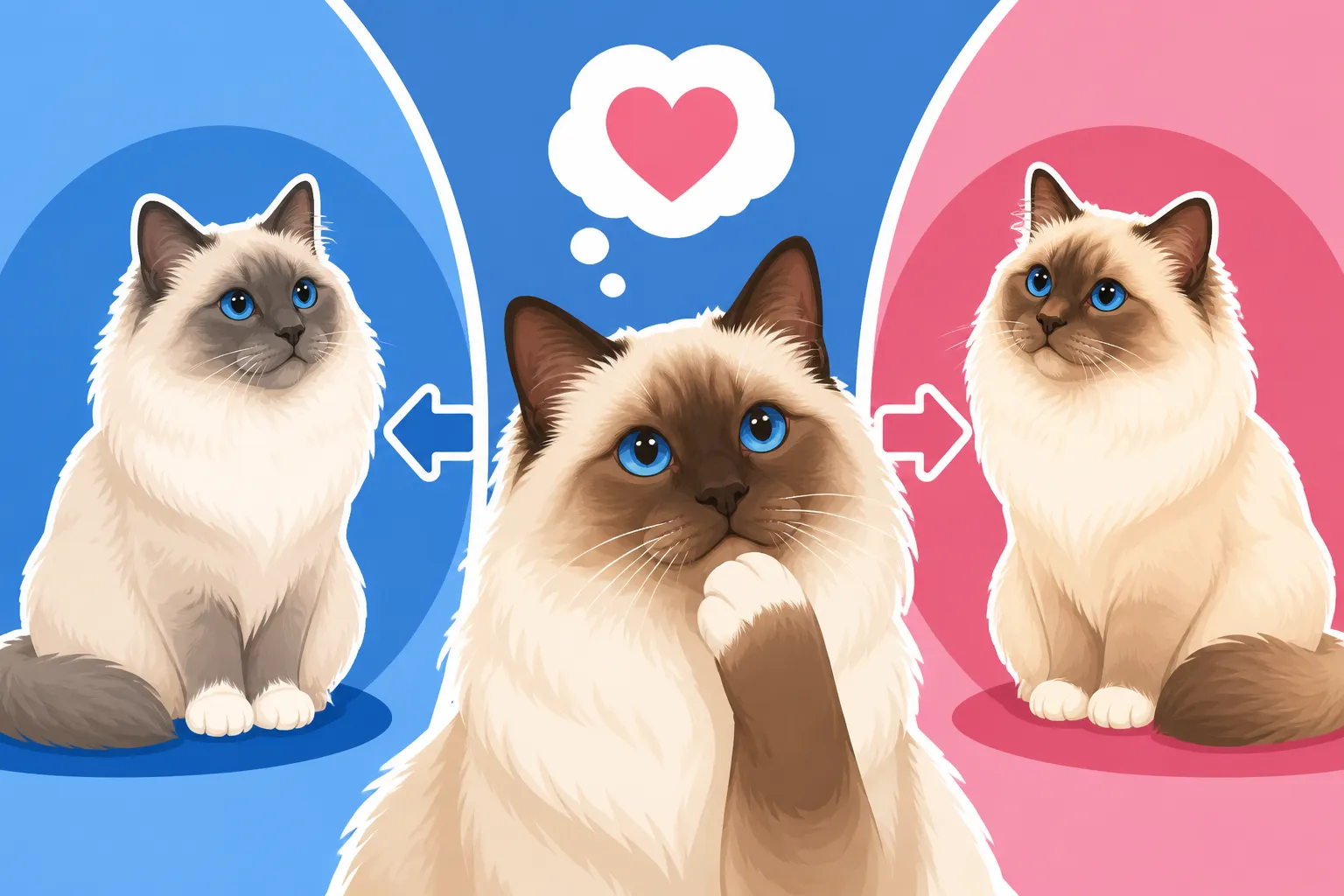
Imagine two Birmans, one a deep seal point and the other a striking blue point. Their friendship isn't built on their matching, luxurious coats or their complementary colors. It's built on shared experiences – a favorite sunbeam, a game of chase, mutual grooming, or simply existing peacefully in the same room. The exact same dynamics apply if one cat has a sleek, short coat. A cat's "preference" for another is rooted in mutual comfort, a compatible play style, and a sense of security, not whether their fur is similar in length. Their world revolves around territory, resources, and social hierarchies, not fashion.
Play Styles and Energy Levels
What does matter far more than how long a cat's fur is, is its inherent energy level and preferred play style. This is where breed-specific temperaments or individual personalities come into play, regardless of coat type. A Birman, as we've discussed, tends to be gentle, playful but not overly boisterous, and generally laid-back.
If you pair a Birman with a highly energetic, constantly-on-the-go breed like a Bengal or an Abyssinian, you might find a mismatch. The Birman could become overwhelmed or simply retreat, while the other cat might feel frustrated by the Birman's less intense play. Conversely, a very shy or timid cat might find a Birman's gentle, watchful presence comforting rather than intimidating. A more sedate breed, perhaps another Persian or even a calm domestic shorthair, might be a fantastic match for your Birman’s pace. It's truly about finding Which Cats Match a Birman's Middle of the Road Pace. This compatibility in activity levels and social interaction styles is the bedrock of a successful multi-cat household, making their physical appearance largely irrelevant to the cats themselves.
Grooming Considerations for the Owner, Not the Cat
While your Birman won't care about the coat length of its companion, you, as the owner, certainly might! Bringing a second longhaired cat into the home does mean doubling your grooming efforts, at least in theory. However, the Birman has a wonderfully low-maintenance long coat. It's a single coat, meaning it lacks a dense undercoat, which is No Undercoat Is What Makes a Birman Easy to Groom. This is a huge bonus.
If you were to add another Persian, for example, known for its extremely thick, double coat, your grooming routine would become significantly more involved. But with another Birman, or a similar single-coated longhair like a Ragdoll (though Ragdolls can have denser coats), the additional grooming might not be as daunting as you initially imagine. You'll still need quality grooming tools, like a good slicker brush or a wide-toothed comb, which are readily available on platforms like Amazon. Regular combing, perhaps three times a week for each long-haired cat, would likely keep mats at bay and their coats silky smooth. So, while it's a practical consideration for you, it's not a deal-breaker for your Birman's happiness with its companion. Getting your Birman used to grooming from an early age will also make any additional grooming much easier. How to Get a Birman Used to Grooming.
Pairing Your Birman: Focus on Temperament and Compatibility
Given that coat length isn't a determining factor for your Birman, how should you approach finding the perfect feline friend? The answer lies in focusing on the deeper, more intrinsic qualities that truly foster a loving bond.
The Ideal Companion Traits
When searching for a companion for your Birman, think about what makes your Birman tick. They are affectionate, gentle, peaceful, and derive comfort from presence rather than constant interaction. Therefore, an ideal companion would share these traits or, at the very least, be respectful of them. Look for a cat that is:
- Calm and Gentle: A cat that isn't prone to aggression, over-the-top antics, or intense territorial behavior.
- Social but Not Demanding: One that enjoys feline company and can appreciate a shared nap or a quiet moment, without constantly initiating boisterous play.
- Adaptable: A cat that can settle into a new environment and accept existing routines with relative ease.
- Similar Play Style: If your Birman enjoys a gentle game with a wand toy, a companion that appreciates similar low-key play will be a better fit than one that wants to wrestle constantly.
Individual personality is paramount. While breed characteristics give us a good starting point, every cat is unique. Spending time observing a potential companion, if possible, or discussing their personality in depth with a rescue organization or breeder, will give you the best insights. Remember, a Birman's innate kindness is often Why a Birman is the cat families are told to get, and this kindness extends to their potential companions too.
Short-Haired vs. Long-Haired Companions
To reiterate, the length of a potential companion's fur is genuinely irrelevant to your Birman. A domestic shorthair with a sweet, placid disposition can be just as wonderful a friend as another pedigree longhair. What matters is the individual cat's temperament, how well it's been socialized, and its general energy level.
For example, a rescue organization might have a lovely adult shorthair cat whose personality is already well-known – perhaps a shy but sweet feline who thrives on quiet companionship. This cat could be a far better match for your Birman than a long-haired kitten from a high-energy breed, simply because their core temperaments align better.
When introducing any new cat, ensuring that each feline has its own set of essential resources is vital. This includes separate food bowls, enough litter boxes (the general rule is one per cat plus one extra), and individual cozy sleeping spots. Having multiple scratching posts and a variety of toys, easily found on Amazon, can also help prevent any resource-related squabbles, regardless of coat length. It helps create a sense of security and belonging for both cats.
Introducing a Companion Safely
No matter if you choose a short-haired tabby or another beautifully gloved Birman, the introduction process is absolutely critical. Rushing an introduction is one of the most common mistakes owners make, leading to unnecessary stress and potential long-term issues between pets. A slow, patient, and structured approach is key to forging a lasting bond.
Start by setting up a separate "sanctuary" room for the new cat, complete with food, water, litter box, and a comfortable bed. This allows the new cat to decompress and your existing Birman to get used to its scent from under the door. Gradual scent swapping (exchanging blankets, rubbing a cloth on each cat and then letting the other smell it) helps both cats become accustomed to each other's presence. Follow this with short, supervised visual introductions, perhaps through a baby gate, always ending on a positive note with treats or playtime. Over days or even weeks, slowly increase the interaction time, always reading your cats' body language. Positive reinforcement and patience will be your best allies.
Many Birman breeders often recommend getting two kittens from the same litter because they are already bonded. This highlights the importance of companionship for the breed, and indeed, Why two Birmans cost less than twice one – not in monetary cost, but in the sheer joy and mutual comfort they bring to each other. Ultimately, whether your Birman's new friend has short, sleek fur or a glorious, flowing coat, their personality, and your thoughtful introduction, will determine the success of their friendship.
| Factor for Birman Companionship | Matters for Harmony? | Why or Why Not? |
|---|---|---|
| Coat Length | No | Cats prioritize scent, body language, and shared space over aesthetics. |
| Energy Level | Yes | A mismatched energy level can lead to stress or boredom for one or both cats. |
| Temperament | Yes | Birmans are gentle; a similarly calm cat prevents conflict and encourages bonding. |
| Play Style | Yes | Compatible play means neither cat is overwhelmed or ignored during interaction. |
| Socialization | Yes | A well-socialized cat is more likely to adapt to a new feline friend. |
| Age (Relative) | Potentially | A very young kitten might annoy an older, calmer Birman; similar age often helps. |
Disclaimer
This article is for general informational purposes only and does not constitute professional advice. Laws, prices and regulations vary by location and change over time. Consult a qualified professional for guidance on your specific situation.