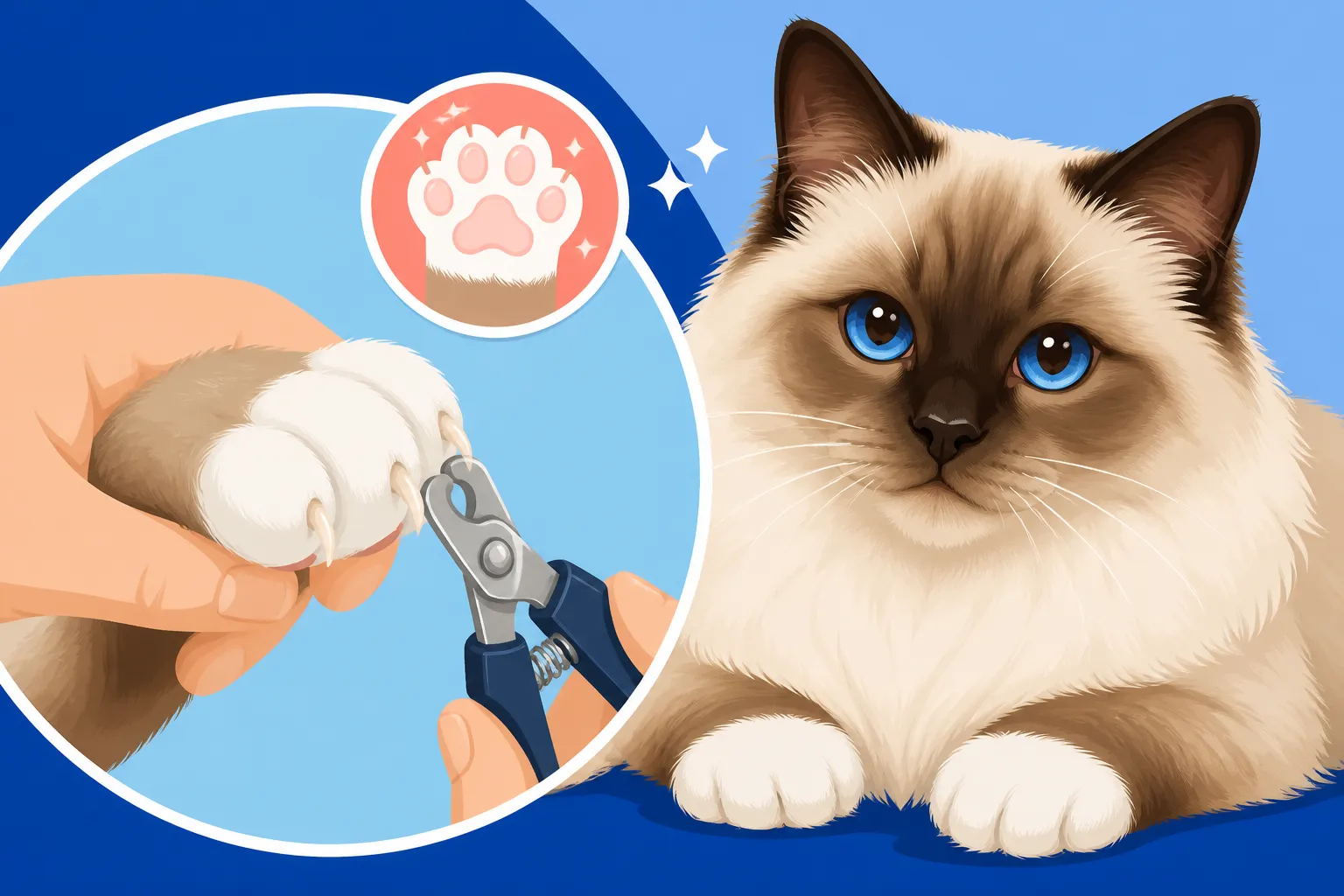
Trimming the Claws Inside a Birman’s White Gloves
Trimming your Birman's claws can feel like a high-stakes operation, especially when those pristine white gloves are involved. It’s easy to feel nervous, worried you might snip too far or cause discomfort, and the stark contrast of those white paws against the pink quick can make every move feel magnified. But don’t worry, this guide will walk you through everything you need to know to make claw trimming a calm, confident, and ultimately successful part of your Birman’s regular care routine.
Understanding the Birman's Unique Paws and Claws
Before we even think about picking up a clipper, it’s helpful to understand what makes your Birman's paws and claws a bit special. They're not just beautiful; they have characteristics that influence how we approach their grooming.
The Birman's White Gloves: A Double-Edged Sword
Ah, those iconic white gloves! They are truly the hallmark of the Birman breed, giving them that elegant, ethereal appearance. And while we adore them, they certainly add a unique dimension to nail care. Unlike cats with darker paw pads and claws, where the quick can be almost invisible against the nail, the Birman’s white gloves often mean transparent or very pale claws. This should make the quick easier to spot, right? Well, sometimes it does, but other times the paleness itself can make it harder to differentiate. The goal is always to avoid cutting into the quick, which is the sensitive part of the claw containing blood vessels and nerves. A miss here can cause pain and bleeding, making your Birman much less cooperative for future sessions. Plus, there's the added pressure of keeping those white areas clean, especially if there's any accidental bleeding.
These white markings are genetically determined, a beautiful quirk of the breed. But from a practical grooming perspective, they require a bit more visual precision and a steady hand. You're not just trimming a nail; you're safeguarding a signature trait. It's a bit like trying to perform delicate surgery on a snowdrift – everything is bright, and you want to keep it that way.
Why Birman Claws Grow So Fast
Have you ever noticed how quickly those little claws seem to sprout back after a trim? It's not just your imagination! Cat claws, including those of our beloved Birmans, are designed to grow continuously, much like human fingernails. In the wild, cats naturally wear down their claws through climbing, hunting, and scratching on various surfaces. Our indoor Birman companions, however, don't get the same kind of wear and tear. Even with scratching posts galore, indoor life typically means less natural abrasion.
Factors like diet and overall health can also play a subtle role. A Birman on a high-quality, nutritious diet tends to have healthy, strong claws that grow at their optimal rate. This isn't a bad thing at all – it just means we, as their dedicated caregivers, need to step in and provide regular trims. Think of it as a small trade-off for their pampered indoor existence and the safety of your furniture. Consistent trimming prevents overgrowth, which can lead to painful ingrown claws, difficulty walking, and even snagging on carpets or upholstery.
The Anatomy of a Birman's Paw for Clipping
Taking a moment to understand the structure of your Birman's paw can really boost your confidence. Each paw has five digits on the front and four on the back, and each digit ends in a claw. The crucial part for us is the claw itself. It's composed of a hard outer sheath and, inside that, the quick. The quick runs partway down the claw and appears as a pinkish area in lighter claws, or a darker, opaque core in darker claws. Since most Birmans have relatively light claws, you should be able to see this fairly well.
To properly expose the claw for clipping, you'll need to gently press on the top of the paw (just above the nail) and the bottom paw pad simultaneously. This action extends the claw fully, making it easier to see the tip and, more importantly, the quick. It's a bit like squeezing a tube of toothpaste to get the last bit out. The Birman's paw pads are generally soft and well-cushioned, and they tend to have lovely tufts of fur between their toes, which you might need to gently part to get a clear view. Understanding this anatomy not only helps you clip safely but also makes your Birman more comfortable with the process, as you're not fumbling or causing unnecessary pressure. How Often to Check Between a Birman's Toes can offer more insights into general paw health.
Essential Tools for a Stress-Free Claw Trimming Session
Having the right tools is half the battle when it comes to any grooming task, and claw trimming is no exception. Don't underestimate the power of a good pair of clippers and the right supportive accessories.
Choosing the Right Clippers for a Birman's Still Nature
Given how placid and generally cooperative Birmans tend to be, choosing the right clippers can make a significant difference. You want something sharp, precise, and easy to handle. There are generally two main types of cat nail clippers: scissor-style and guillotine-style.
Scissor-style clippers are often favored by many cat owners, especially for smaller cats or those with finer nails, because they operate much like a pair of tiny scissors, offering good control and visibility. Guillotine-style clippers have a small hole where you insert the tip of the claw, and then a blade slices it off. While effective, some find them a bit bulkier and prefer the clearer view offered by the scissor-style. For a Birman, with their often serene demeanor, a sharp scissor-style clipper usually works wonderfully, allowing for precise cuts without crushing the nail. You'll find a wide array of options on platforms like Amazon or Chewy, with various handle designs for comfort.
| Clipper Type | Pros | Cons | Best For |
|---|---|---|---|
| Scissor Style | Good visibility, precise cut, ergonomic | Can feel less robust than guillotine, requires sharp blades | Birmans, small to medium cats, finer nails |
| Guillotine Style | Strong cut, often preferred for larger cats | Less visibility of the quick, can be bulky | Larger cats, thicker nails, experienced users |
Regardless of the style, ensure the blades are sharp. Dull clippers can crush the nail, causing pain and splintering, which is exactly what we want to avoid. Look for clippers made specifically for cats, not dogs, as dog clippers are usually too large and robust for feline claws. Which Clippers Suit a Cat as Still as a Birman might give you more specific recommendations.
Beyond Clippers: Styptic Powder and Treats
Claw trimming isn't just about the clippers; it's also about preparedness and positive reinforcement. Always, and I mean always, have styptic powder on hand before you begin. This is a crucial safety net. Even the most experienced groomer can accidentally nick the quick, and styptic powder will quickly stop the bleeding. It’s readily available at most pet stores and online retailers like Chewy. Just a tiny pinch applied to the tip of a bleeding claw will usually do the trick. Don't panic if you need to use it; it happens!
Equally important are treats. Your Birman's placid temperament makes them excellent candidates for positive reinforcement. High-value treats are your secret weapon. Think freeze-dried chicken, a tiny dollop of tuna paste, or even just their favorite dry kibble. The moment a claw is clipped, or even just for tolerating the paw handling, offer a treat. This builds a positive association with the experience. You can find a huge variety of enticing cat treats on Amazon or specialized pet food sites. Many Birman owners find that their cats are very food-motivated, which makes this step particularly effective.
Creating a Calm Environment for Your Birman
Cats are incredibly sensitive to their environment, and Birmans, despite their calm nature, are no exception. A chaotic or noisy setting will instantly make your trimming session more difficult. Choose a quiet time of day when your Birman is naturally relaxed, perhaps after a nap or a meal. Find a comfortable, well-lit spot where you can sit with your cat, away from distractions like barking dogs, loud children, or blaring televisions.
Some people find success wrapping their Birman in a soft towel, leaving one paw exposed at a time, especially if their cat is a bit squirmy or if it’s a new experience. This "purrito" technique can make them feel secure and limit sudden movements. Gentle, soothing talk, soft music, or even a pheromone diffuser (you can find these at pet stores or online) can contribute to a calmer atmosphere. The goal is to make this a predictable, low-stress routine, rather than an adversarial battle. Remember, your Birman picks up on your emotions, so if you're stressed, they'll be stressed too. Take a deep breath!
The Step-by-Step Guide to Trimming Your Birman's Claws
Now that you're armed with the right tools and a calm environment, let's get down to the actual trimming. Patience and gentleness are your best friends here.
Gentle Handling and Positioning Your Birman
The first step is to get your Birman comfortable with you handling their paws. Start this process long before you introduce the clippers. Gently stroke their legs, massage their paw pads, and extend their claws one by one, releasing them immediately. Do this often, offering treats and praise. This desensitization is key to a calm Birman. How to Get a Birman Used to a Comb shares similar principles that apply here.
When it's time for the trim, sit comfortably with your Birman in your lap, or on a table with a non-slip mat if they're more cooperative there. Some prefer to have their Birman facing away from them, cradled in their arm, while others find a side-by-side position works best. The key is to support their body gently but firmly, making them feel secure without restraining them too tightly. Extend one paw at a time. Use your thumb on top of the paw, just above the nail, and your index finger on the bottom paw pad. Gently squeeze to extend a single claw fully. Speak in a soft, reassuring voice throughout. Remember, a Birman often tolerates handling exceptionally well, so lean into their nature. Why a Birman Rarely Fights Handling is a testament to their temperament.
Identifying the Quick in White and Pointed Claws
This is arguably the most critical part of the process. For Birmans, with their light-colored claws, the quick often appears as a pinkish or reddish area within the transparent part of the nail. It's usually easiest to see when the light hits it just right. The very tip of the claw, beyond the quick, will be clear or white. That's the part you want to trim.
Hold the paw up to a good light source. You'll see the translucent claw, and then, if you look closely, the pink quick inside. Your goal is to cut only the clear, sharp tip, staying a millimeter or two away from the visible quick. If your Birman has darker points, some of their claws might be darker too, making the quick harder to see. In such cases, err on the side of caution: take off only the very sharpest tip, or just enough to blunt it. It’s always better to take off too little and trim again in a few days than to take off too much and cause pain. If you're unsure, imagine where the quick would be if it were visible and aim for a safe distance.
The Art of the Perfect Snip and Rewarding Good Behavior
Once you've identified your target, position the clippers. Hold them perpendicular to the claw, ensuring you're only cutting the very tip. Make a quick, decisive snip. Don't dither or squeeze slowly, as this can cause discomfort even if you don't hit the quick. A clean, fast cut is best.
The moment you make a successful snip, immediately offer a treat and praise. "Good kitty! What a clever girl!" Even if you only manage one claw per paw, or even just one claw in total for the first session, consider it a victory. The goal is to make the experience positive, building trust and cooperation. Repeat this process for each claw you intend to trim. Most cats have five claws on their front paws (including the dewclaw, which is often higher up on the inner side of the leg and often the longest as it gets no wear) and four on their back paws. Don't forget those dewclaws! They don't touch the ground and therefore don't wear down naturally, making them very prone to overgrowth and ingrown issues. Many Birman owners find it easier to tackle a few claws at a time over several days rather than attempting all twenty in one go. Consistency, even in small doses, is key. What a Birman Will Work For During Grooming highlights how effective positive reinforcement can be with this breed.
Common Challenges and Troubleshooting
Even with the best intentions and preparation, things don't always go perfectly. Knowing how to handle common issues can save a lot of stress for both you and your Birman.
When Your Birman Resists: Strategies for Reluctant Clippers
While Birmans are generally known for their docile nature, even the most patient cat can have an off day or develop an aversion to claw trims if previous experiences were negative. If your Birman starts to resist, don't force it. Pushing too hard will only create a stronger negative association.
Instead, try these strategies:
- Short Sessions: If they resist after one or two claws, stop. Try again later that day or the next. Breaking it into tiny, manageable chunks can be much less intimidating.
- Distraction: Some cats respond well to distractions. Have a second person offer treats or a favorite toy (like a wand toy they can bat at) while you quickly snip a nail.
- The "Purrito" Method: As mentioned, gently wrapping your Birman in a towel, leaving only the paw you're working on exposed, can make them feel more secure and limit their ability to squirm away. Just ensure it's not too tight.
- Change Location: Sometimes, simply moving to a different room or a different surface can help reset their mindset.
- Positive Association, Re-do: If they're truly fearful, take a step back. Spend a few days or a week simply handling their paws, massaging them, and offering treats without clippers. Reintroduce the clippers slowly, letting them sniff them, and then slowly build back up to a trim.
Remember, consistency in gentle handling will win out in the long run. How to Tell a Quiet Birman From an Unwell One can remind you that sometimes resistance is more than just moodiness.
Dealing with Accidental Nicks and Bleeding
It's every cat owner's nightmare, but it happens: you accidentally cut the quick. The most important thing is not to panic. Your Birman might yelp, pull away, and there might be a bit of blood, which looks much more dramatic on those white gloves.
Immediately apply styptic powder. You can use a cotton swab or your finger to press a small amount directly onto the bleeding tip of the claw. Hold it there with gentle pressure for a minute or two until the bleeding stops. If you don't have styptic powder, cornstarch or flour can work in a pinch, though not as effectively. Keep your Birman calm, offer comfort, and if they'll take it, a treat. Try to keep them from licking the paw excessively for a few minutes. Avoid any further trimming for that session, or even for a day or two, to let them recover and regain trust.
While an accidental quicking is unpleasant, it's rarely serious. The quick will heal, and with careful attention next time, your Birman will likely forgive you. This is a common part of the learning curve for many pet owners, so don't beat yourself up about it.
Maintaining Claw Health Between Trims
Trimming is a key part of claw care, but it's not the only piece of the puzzle. Regular maintenance between trims helps keep claws healthy and strong.
- Scratching Posts: Provide plenty of appropriate scratching surfaces. Birmans typically love tall, sturdy posts covered in sisal or corrugated cardboard. This allows them to naturally shed the outer layers of their claws and stretch their muscles. Have multiple types and in multiple locations. Where to Put a Post a Birman Will Actually Use offers good advice on placement.
- Regular Checks: Even if you're not trimming, take a few moments each week to gently inspect your Birman's paws and claws. Look for any signs of overgrowth, splitting, discoloration, or tenderness. Check between their toes for any trapped debris or mats, especially with their lovely toe tufts.
- Diet: A balanced diet rich in essential fatty acids and protein supports overall skin and coat health, which includes healthy claws. Ensure your Birman is getting good nutrition.
- Play: Engaging in regular play that involves batting at toys or chasing string can also help naturally wear down the tips of their claws, though it's not a substitute for trimming.
By combining regular trimming with good preventative care, you'll ensure your Birman's paws remain healthy and comfortable, ready for gentle kneading and quiet companionship.
Long-Term Claw Care and Professional Assistance
Claw trimming is a lifelong commitment for your Birman, so developing a sustainable routine is incredibly important. Thinking ahead and knowing when to ask for help can make all the difference.
The Importance of Regularity and Early Training
The best way to ensure successful claw trims throughout your Birman's life is to start early and maintain a consistent schedule. When your Birman is a kitten, begin handling their paws and gently pressing their claws out daily, even if you’re not trimming them. Offer tiny treats and lavish praise. This early desensitization makes them much more accepting of the process as adults. How to Introduce a Toothbrush to a Birman Kitten applies similar principles of early, gentle introduction to grooming tools.
Aim to trim your Birman's claws every 2-4 weeks. The exact frequency will depend on how quickly their claws grow and how much natural wear they get from scratching posts. A good indicator is when you start hearing their claws click on hard floors, or when they feel noticeably sharp to the touch. Establishing a regular rhythm helps your Birman anticipate the routine, making them less anxious. Consistency also means you're only taking off a small, safe amount each time, further reducing the risk of hitting the quick. Think of it like brushing your teeth – it’s a non-negotiable part of daily hygiene that keeps bigger problems at bay.
When to Call in the Professionals
While many Birman owners become adept at at-home claw trimming, there's absolutely no shame in seeking professional help. In fact, for some cats and situations, it's the safest and least stressful option.
Consider a professional groomer or your veterinarian's office if:
- Extreme Resistance: Your Birman becomes highly stressed, aggressive, or utterly uncooperative, making trimming impossible or dangerous for both of you.
- Overgrown or Ingrown Claws: If a claw has become severely overgrown, curved back into the paw pad, or is otherwise causing pain or infection, a vet can safely address it, sometimes requiring sedation.
- Medical Conditions: If your Birman has a medical condition that makes handling painful or difficult, or if you're concerned about a paw injury, a vet should be involved.
- Lack of Confidence: If you simply don't feel confident enough to do it yourself, or you're consistently hitting the quick, a professional can provide the service. Many vet techs are excellent at quick, stress-free trims.
- Demonstration: Your vet or a professional groomer can often give you a hands-on demonstration and tips tailored to your specific Birman's temperament and claw structure, building your confidence for future attempts.
Remember, your Birman’s well-being is the top priority. If professional help ensures a calmer, safer experience for them, it's money well spent. Many practices offer nail trims as a standalone service for a reasonable fee.
Understanding the Birman's Nail Health in Broader Care
Claw health isn't just about sharp tips; it's a reflection of your Birman's overall health. Changes in claw texture, color, or growth patterns can sometimes be indicators of underlying issues. Brittle nails, excessive flaking, or unusual thickening might warrant a conversation with your vet.
For example, a sudden change in how quickly nails grow, or if they become extremely brittle, could point to nutritional deficiencies or even certain metabolic conditions. While rare, persistent infections around the nail bed could indicate immune system issues. When you take your Birman for their annual check-up, your vet will always perform a physical exam that includes checking their paws and claws. This is a great opportunity to ask any questions you have about their nail health and ensure everything looks normal. By being attuned to the state of your Birman's claws, you're not just performing a grooming task; you're also being a proactive observer of their general health and well-being. It's all part of the holistic care we provide for these beautiful, gentle companions. Why a Birman's Third Eyelid Should Not Show is another example of how small physical details can hint at bigger health pictures.
Disclaimer
This article is for general informational purposes only and does not constitute professional advice. Laws, prices and regulations vary by location and change over time. Consult a qualified professional for guidance on your specific situation.