Why Every Birman Has Two Copies of the Gloving Gene
It can be incredibly confusing when you hear about specific genetic traits in cat breeds, especially when those traits define the breed so clearly. Many Birman enthusiasts, and even experienced owners, wonder why every single Birman they encounter proudly displays those characteristic white "gloves" on all four paws. It’s not just a lucky happenstance; it's a deep-seated part of their genetic makeup, a unique signature that tells the story of their lineage. This guide will delve into the fascinating genetics behind the Birman's iconic gloving gene, exploring why it's a fixed trait and what that means for every Birman cat.
Understanding the Birman's Unique Appearance
The Birman cat is truly a sight to behold, a harmonious blend of grace and mystique. Their striking appearance is what often draws people in, from the deep blue eyes that gaze out with serene wisdom to the luxurious, medium-long coat that feels like silk to the touch. But beyond these general traits, there's one defining characteristic that stands out above all others: their pristine white paws.
The Hallmarks of the Sacred Cat of Burma
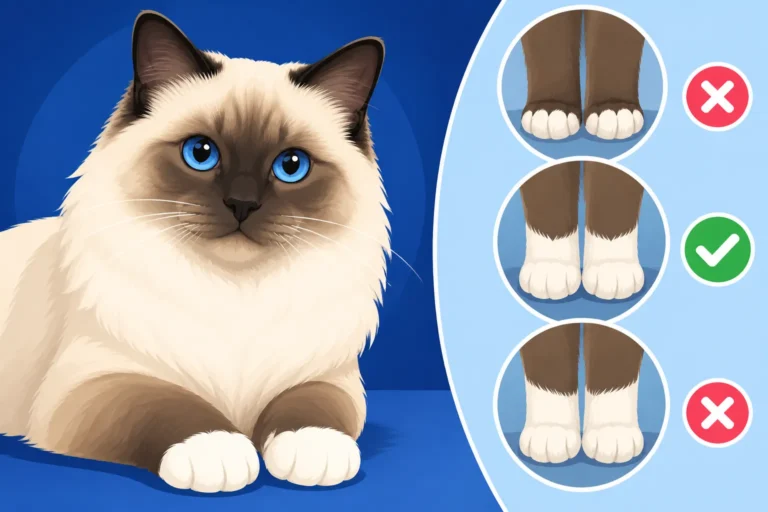
When you first lay eyes on a Birman, you're immediately captivated by the contrast of their pointed color pattern—darker ears, face, paws, and tail—against a much lighter body. This color distribution, similar to that seen in Siamese cats, gives them a refined elegance. However, it's the peculiar white markings on their feet, often referred to as "gloves" on the front paws and "laces" on the back, that truly make them distinct. These markings are not merely aesthetic preferences; they are an integral part of the breed standard, so much so that judging a Birman often begins with an assessment of these very features. The Birman Is the Sacred Cat of Burma, and the Story Is a Legend tells a beautiful tale that intertwines this unique physical trait with the breed's mythical origins, offering a romantic explanation for why these cats bear such distinct markings.
These white paws are more than just pretty; they are a genetic marvel. Unlike many other breeds where white spotting can appear in various random patterns, the Birman's white markings are incredibly specific and consistently placed. This consistency hints at a very particular genetic mechanism at play, one that has been carefully preserved and selected for within the breed for generations. It’s this uniformity that separates the Birman from other color-pointed breeds that might have occasional white feet but without the precise definition and expectation.
The Mystery of the White "Gloves"
For centuries, the specific white markings on the Birman's paws were a source of fascination and a key identifying feature. Early breeders and enthusiasts instinctively knew that a true Birman had these "gloves," but the underlying genetic reason remained something of a mystery. It wasn't until advances in feline genetics that scientists were able to pinpoint the exact gene responsible for this exquisite trait. This discovery shed light on why, without fail, every Birman exhibits this pattern.
The "mystery" wasn't that the gloves existed, but rather how they were so consistently produced. It wasn't a random splash of white, but a precise genetic instruction. This consistency is paramount to the breed's identity. Imagine a Birman without its gloves – it would still be a beautiful cat, perhaps, but it wouldn't quite be a Birman in the traditional sense, losing that iconic visual cue that breeders have strived to maintain. What a Birman Would Look Like Without Its Gloves helps paint a picture of just how fundamental these markings are to the breed's visual identity.
The Science Behind the Birman's Gloving Gene
Delving into the genetic blueprints of the Birman reveals a fascinating story about how specific traits become a permanent fixture within a breed. The white gloves are not simply a matter of chance; they are the result of a particular gene variant that has been fixed through generations of careful breeding.
What the KIT Gloving Variant Does
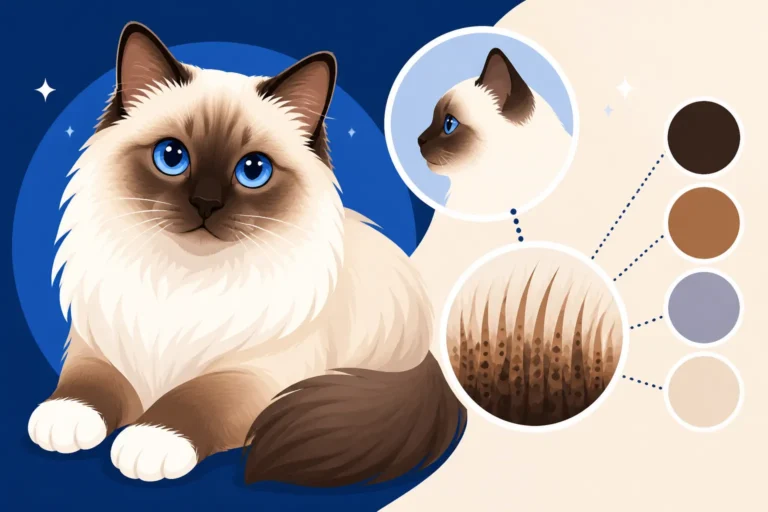
At the heart of the Birman's unique white paws is a specific genetic mutation, known scientifically as the KIT gloving variant. This isn't just a hypothetical gene; it's a tangible, identifiable segment of DNA that dictates where and how white fur appears on the cat's body. Specifically, this variant affects the migration and survival of melanocytes, the cells responsible for producing pigment, during embryonic development. In cats, this process is particularly intricate, and a disruption at a specific point can lead to white areas.
The KIT gene itself is involved in cell development, including the development of melanocytes. When the Birman's specific variant of the KIT gene is present, it causes these pigment-producing cells to fail to migrate all the way to the extremities of the paws. As a result, those areas are left without pigment, appearing white. This is why the white is so localized and consistent, rather than producing random white patches across the body like other white spotting genes might. What the KIT Gloving Variant Does delves deeper into the precise biological mechanism, explaining the science in more detail.
How the Gloving Variant Is Fixed in the Birman
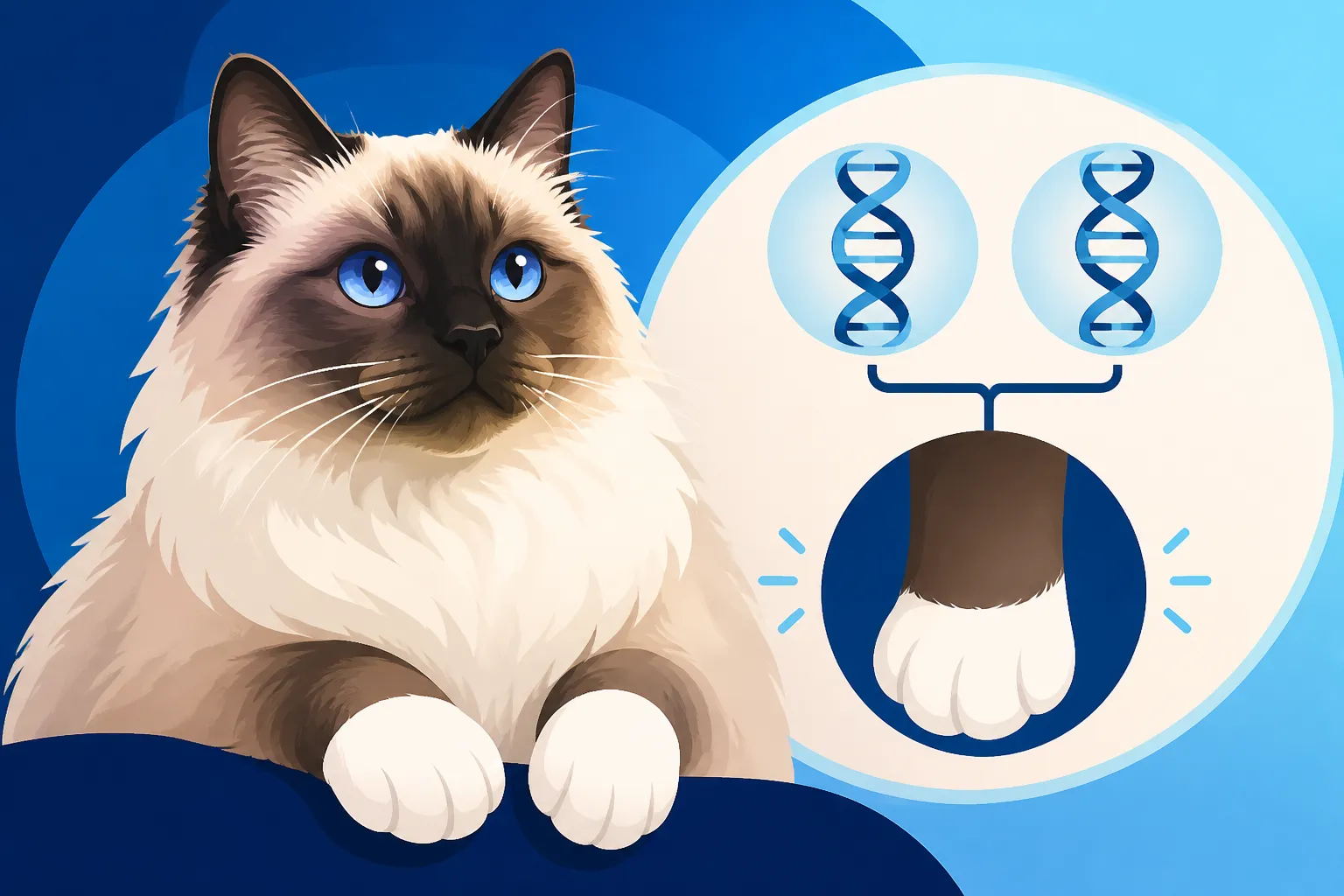
What makes the Birman's gloving unique isn't just the presence of this KIT variant, but the fact that every Birman cat possesses two copies of it. This means the gene is "fixed" within the breed's gene pool. In genetics, a fixed gene refers to a gene that has only one allele (variant) present in a population. For the gloving gene in Birmans, this means that every Birman has inherited this specific gloving allele from both of its parents. They are homozygous for this trait.
This fixation wasn't accidental. It's the result of intensive selective breeding by dedicated Birman fanciers over many decades. Early breeders, often before the scientific understanding of genetics was widespread, would consistently choose cats that displayed the desired white gloves for their breeding programs. Through successive generations, individuals without the gloving trait were excluded, eventually leading to a point where only cats carrying two copies of the gloving variant were reproducing. This process effectively removed any alternative alleles for the gloving gene from the Birman population, ensuring that every kitten born to two Birman parents would inherently carry two copies of the gene and thus display the iconic white paws. How the Gloving Variant Is Fixed in the Birman explores the historical breeding practices that led to this genetic uniformity.
The Birman's Genetic History and the Gloving Gene
To truly understand why the gloving gene is so deeply ingrained in every Birman, we need to look back at the breed's challenging origins and its subsequent rebuilding efforts. The history of the Birman is one of resilience, and genetic bottlenecks played a crucial role in shaping its present-day traits.
What a Narrow Founder Base Left in the Birman
The Birman breed faced a perilous existence, particularly after the devastation of World War II. During this period, the breed population dwindled to dangerously low numbers, with some accounts suggesting only a handful of true Birmans survived. This created what is known as a "founder effect" or a "genetic bottleneck." When a population is reduced to such a small number of individuals, the genetic diversity of the entire breed that descends from them becomes severely limited.
In the case of the Birman, this narrow founder base meant that only the genetic traits present in those few surviving cats could be passed on. If all of those surviving cats carried the gloving gene (which they did, as it was a defining characteristic of the breed even then), then it became an inevitable trait for future generations. This wasn't necessarily a disadvantage for the gloving gene, as it was highly desired, but it highlights how the genetic landscape of the breed was shaped by sheer survival. What a Narrow Founder Base Left in the Birman expands on the genetic implications of this historical period.
Why Post War Outcrossing Was Unavoidable for the Birman
Following the war, the dire situation necessitated outcrossing – breeding the surviving Birmans with other breeds – to rebuild the population and increase genetic diversity. This was a critical, albeit controversial, step to prevent the breed from dying out entirely. While breeders meticulously selected for cats that resembled the Birman standard, including the white gloves, the introduction of new bloodlines meant that the purity of some traits was temporarily diluted.
However, the gloving gene was so central to the Birman identity that efforts were made to re-establish its dominance quickly. Breeders carefully selected offspring from these outcrosses that still displayed the white gloves, and then continued to breed these back to Birman-type cats. Over time, through diligent selection, the desired traits, including the gloving, were re-established as homozygous within the population. This period of careful reconstruction solidified the gloving gene as a universal trait among Birmans, ensuring that even with new genetics introduced, the core identity of the Birman, particularly its paws, remained intact. Why Post War Outcrossing Was Unavoidable for the Birman delves into the difficult decisions breeders faced during this time.
Implications for Breeding and Understanding the Breed Standard
Understanding the genetic underpinnings of the gloving gene has significant implications for Birman breeding practices and how we interpret the breed standard. It’s not just about what the gene does, but what its consistent presence means for the future of the breed.
Whether Two Birmans Can Produce an Ungloved Kitten
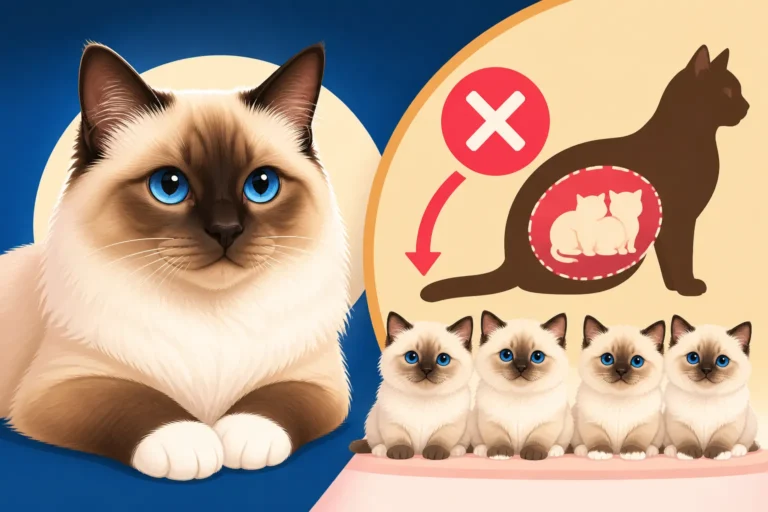
Given that every Birman carries two copies of the gloving gene (is homozygous), the answer to whether two Birmans can produce an ungloved kitten is a resounding no. Since there is no "non-gloving" allele left in the established Birman gene pool, and each parent passes one copy of the gloving gene to every kitten, all offspring will inherit two copies and therefore display the characteristic white gloves. This makes the trait highly predictable in Birman-to-Birman matings.
This genetic certainty is a huge advantage for breeders. They don't have to worry about the unpredictable appearance of "mismarked" kittens without gloves when breeding purebred Birmans. It simplifies the selection process for this particular trait, allowing them to focus on other aspects of the breed standard, such as color points, head shape, and coat quality. However, while the presence of gloves is guaranteed, their quality can still vary, which is a different matter entirely. Whether Two Birmans Can Produce an Ungloved Kitten further explains the genetic impossibility of gloveless Birmans from purebred pairings.
Why Birman Gloves Vary Despite the Fixed Gene
Even though every Birman inherits two copies of the gloving gene, you might notice that not all Birmans have perfect gloves. Some might have slightly uneven lines, or their "laces" on the back paws might extend a bit too high or be asymmetrical. This might seem contradictory if the gene is fixed, but it points to the subtle yet powerful influence of other genes. The KIT gloving variant ensures the presence of white on the paws, but it doesn't strictly define the precise pattern or extent of that white.
Think of it like eye color: you might inherit genes for blue eyes, but the exact shade of blue can vary due to other genetic factors. Similarly, in Birmans, modifier genes influence the exact expression of the white gloving. These are secondary genes that can subtly alter how the primary gloving gene manifests. Things like the crispness of the white line, the symmetry between paws, and the exact height of the "laces" on the hocks are all subject to these modifier genes, as well as environmental factors during development. This is why careful breeding, even with a fixed gloving gene, still requires an understanding of how to select for the ideal glove presentation according to the breed standard. Why Birman Gloves Vary Despite the Fixed Gene goes into more detail about these fascinating variations.
| Trait Aspect | Core Gloving Gene (KIT Variant) | Modifier Genes |
|---|---|---|
| Primary Effect | Presence of white fur on all four paws | Refinement of the white pattern's appearance |
| Inheritance | Fixed, all Birmans have two copies (homozygous) | Can vary, contributing to individual differences |
| Result | Guarantees white gloves are present | Determines symmetry, length, and crispness |
| Predictability | Highly predictable (gloves will appear) | Less predictable (fine details can vary) |
| Breed Impact | Defines the Birman as a gloved breed | Influences show quality and aesthetic appeal |
The Role of Modifier Genes in Glove Expression
The concept of modifier genes is crucial for Birman breeders striving for perfection according to the breed standard. These genes don't turn the gloves on or off, but they act like fine-tuning dials, adjusting the exact boundaries and symmetry of the white markings. A breeder might have two Birmans, both with the fixed gloving gene, but one consistently produces kittens with impeccably even, perfectly placed gloves, while the other's offspring show more variability in glove quality. This difference is largely attributable to the modifier genes inherited from each parent.
Breeders, therefore, carefully evaluate not just the presence of gloves but their adherence to the specific criteria outlined in the breed standard. This includes the desired length of the front paw "gloves" and the specific V-shaped "laces" on the back paws. By selecting breeding pairs that not only carry the primary gloving gene but also possess favorable modifier genes, breeders work to enhance the consistency and quality of these iconic markings over generations. It's a testament to the intricate dance of genetics and the dedication of breeders that such a specific and beautiful trait remains a hallmark of the Birman cat. When you're looking for high-quality grooming tools to maintain those pristine white paws, or even specialized low-dust litter, sites like Chewy offer a wide range of products tailored for delicate coats and sensitive skin that can help keep those beautiful gloves looking their best. Which Modifier Genes Affect a Birman's Gloves provides further insight into these secondary genetic influences.
The Enduring Charm of the Birman's Genetic Legacy
The story of the Birman's gloving gene is more than just a biological fact; it's a testament to the breed's history, its identity, and the passion of the people who have safeguarded its unique characteristics for over a century. This genetic legacy is what makes the Birman instantly recognizable and endlessly captivating.
What a Birman Would Look Like Without Its Gloves
It's almost impossible to imagine a Birman without its distinctive white gloves and laces, precisely because the trait is so fundamental to its identity. If, hypothetically, a Birman were born without these markings, it would profoundly alter its appearance. It would still possess the gorgeous color-pointed pattern, the stunning blue eyes, and the silky, non-matting coat, but it would lack that signature elegance on its paws. The contrast between the dark points and the white gloves is part of what gives the Birman its serene and almost otherworldly aura.
Without the gloves, a Birman might bear a stronger resemblance to other color-pointed breeds, potentially losing some of its visual distinctiveness. The "Sacred Cat of Burma" legend, which attributes the white paws to divine intervention, highlights how deeply ingrained this trait is in the breed's lore and identity. It would simply be a different cat, albeit still beautiful. The very idea of a gloveless Birman underscores just how successful breeders have been in fixing this gene, making it an unchangeable part of the Birman's genetic blueprint.
Celebrating the Birman's Distinctive Traits
The genetic fixation of the gloving gene is a cause for celebration among Birman enthusiasts. It means that every Birman kitten, from birth, will carry the promise of those iconic white paws, a consistent and beautiful feature that connects them directly to their ancestors and the breed's mystical origins. This predictability allows breeders to focus on maintaining other crucial aspects of the Birman standard, knowing that the foundation of its most famous trait is secure.
The gloving gene is a perfect example of how specific genetic selection can create and maintain a highly desired characteristic within a breed. It's a reminder of the dedication of generations of Birman breeders who, through careful observation and selective breeding, have ensured that the Birman remains a truly unique and unmistakable feline companion. Whether you're a long-time owner or simply admire these majestic creatures, understanding their genetic makeup deepens our appreciation for the enduring charm and thoughtful preservation of the Birman cat. And for everything you need to keep those precious paws looking their best, from gentle shampoos to a variety of scratch posts that might prevent rough play with their delicate feet, browsing options at retailers like Chewy can be a great starting point for any Birman owner. What a Century Has Not Changed About the Birman reflects on how core traits like this have stood the test of time.
Disclaimer
This article is for general informational purposes only and does not constitute professional advice. Laws, prices and regulations vary by location and change over time. Consult a qualified professional for guidance on your specific situation.