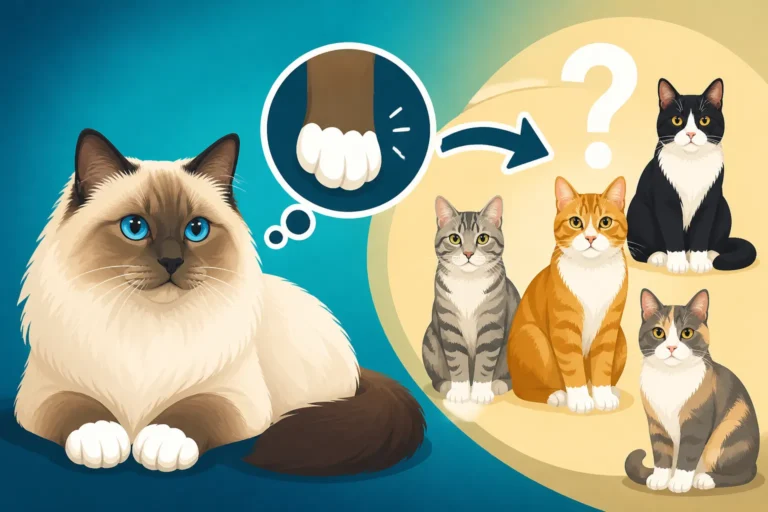
Which Eye Color a Birman Must Have
One of the most captivating features of the Birman cat, often sparking curiosity and questions among new and prospective owners, is their stunning eye color. It's a hallmark trait that truly sets them apart, and while we all love those piercing blue gazes, sometimes people wonder if there are variations, or even if another color is acceptable. This guide is here to unravel the mystery of the Birman's eyes, exploring not just the color, but why it's so important to the breed standard and what it means for the health and beauty of your beloved companion.
The Unmistakable Blue of the Birman Eye
When you gaze into the eyes of a Birman cat, you're immediately struck by a deep, unwavering blue. This isn't just a preference; it's a fundamental characteristic of the breed, enshrined in every major Birman standard around the world. Unlike some other breeds that allow for a spectrum of eye colors, the Birman is singularly devoted to blue. It’s part of their magic, tied deeply to their unique genetics and the very definition of what makes a Birman, well, a Birman.
This isn't a random occurrence. The genetic factors that give Birmans their gorgeous point coloration—those darker hues on their ears, face, paws, and tail—are also intricately linked to their blue eyes. It's a package deal, so to speak, stemming from the same genetic mutation that causes albinism, but in a modified form. This gene, often referred to as the "Siamese gene" or colorpoint gene, restricts pigment production to cooler areas of the body, leading to the striking contrast we adore.
For anyone considering bringing a Birman into their home, understanding this blue eye requirement is crucial. It’s not just an aesthetic detail; it speaks to the purity of the lineage and adherence to the breed's historical development. A Birman with any other eye color simply isn't a Birman according to the breed standard, and you'd typically find that such a cat either has a different heritage or a genetic anomaly that deviates from the expected.
Why Every Birman Must Have Blue Eyes
The striking blue eye color of the Birman is intrinsically linked to its "pointed" coat pattern. This pattern, also seen in Siamese and Himalayan cats, is a form of temperature-sensitive albinism. The gene responsible for this, often called the Himalayan gene, causes pigment to only develop in cooler parts of the cat's body – the "points." The warmer core body stays lighter. This same genetic mechanism also affects eye pigmentation.
In cats with this gene, the iris lacks the melanin that would produce green, yellow, or copper eye colors. Instead, the structure of the eye reflects light in a way that appears blue. Think of it like the sky or deep water; the blue isn't a pigment, but rather a structural color, an optical effect. Therefore, genetically speaking, any cat expressing the pointed pattern will have blue eyes. It's an unyielding rule of their genetic makeup.
This tight genetic linkage means that if you have a genuine Birman, with its distinctive gloves and pointed body, those mesmerizing blue eyes are a given. If you encounter a cat described as a Birman with green or yellow eyes, it’s a clear indication that it’s either not a purebred Birman, or it has a significant genetic deviation. Reputable breeders would never present such a cat as a standard Birman, as it would be considered a major fault.
Shades of Blue: What the Standard Looks For
While "blue" is the only acceptable eye color, there's a spectrum within that blue that breeders and judges consider. The ideal Birman eye color is described in breed standards as a clear, deep sapphire blue. Imagine the rich, jewel-like quality of a precious stone – that’s the depth they’re striving for. A pale or watery blue, while still undeniably blue, isn't considered ideal and may result in point deductions in a show ring.
Judges are looking for intensity and brilliance. They want eyes that are vibrant and captivating, not dull or faded. Think of the difference between a pale sky blue and the deep indigo of a twilight sky. The deeper, more saturated blues are highly prized. This depth often contributes to the overall impression of wisdom and serenity that Birmans exude, enhancing their already beautiful facial features.
It's also worth noting that a Birman's eye color can subtly shift in intensity as they age, much like their point coloration. Kittens often have a lighter, almost sky blue that deepens as they mature. However, the underlying genetic predisposition for that deep blue remains. Environmental factors, like light exposure, can sometimes affect how the color appears at a given moment, but the intrinsic shade is determined by genetics. A truly well-bred Birman will always possess that stunning, deep blue hue.
The Relationship Between Eye Color and Point Color
It’s often fascinating for new Birman enthusiasts to learn how deeply connected their cat’s eye color is to their distinctive point coloration. It’s not just a coincidence that they both appear together; they are two sides of the same genetic coin, both governed by the same "colorpoint" gene. This means that whether you have a classic Seal Point, a striking Blue Point, or a rarer Lilac Point Birman, their eyes will always be blue.
This genetic bond is what makes the Birman such a visually consistent breed. You never see a Birman with green eyes and dark points, or yellow eyes with light points. The package is always complete: pointed coat, white gloves, and brilliant blue eyes. This consistency is a testament to the meticulous breeding efforts over generations to maintain the breed's unique characteristics.
Understanding this connection can help you appreciate the intricacies of Birman genetics. It means that when you're admiring a Birman kitten, you can already anticipate the stunning blue eyes they will develop, regardless of whether their points are just beginning to show or are already quite distinct. How a Birman Kitten's Points Come In is a journey that often parallels the development of their eye color intensity, starting pale and deepening over time.
How Genetics Dictate Blue Eyes in Pointed Cats
The science behind the Birman's blue eyes lies in the same gene that creates their pointed coat pattern. This gene is a variant of the tyrosinase gene, which is crucial for melanin production. Melanin is the pigment responsible for skin, hair, and eye color. In pointed cats, this variant gene is temperature-sensitive. It functions properly at cooler body temperatures, allowing pigment to develop in the extremities (the "points"), but is inactive at warmer body temperatures, resulting in lighter fur on the main body.
Crucially, this gene also impacts the iris of the eye. The unique structure of the cat's eye, combined with the lack of melanin produced by this specific gene variant, results in the scattering of light that we perceive as blue. It's not a blue pigment in the iris, but rather the way light interacts with the layers and lack of pigment within the eye itself. This is why all pointed cats, including Birmans, Siamese, Ragdolls, and Himalayans, consistently have blue eyes.
So, when you look at those captivating blue eyes, you're essentially seeing a beautiful side effect of their unique temperature-sensitive pigmentation. It's a genetic marker that tells you, without a doubt, that you're looking at a cat with the colorpoint trait. This genetic uniformity in eye color is a defining feature that has been carefully preserved throughout the Birman's breeding history, ensuring that every genuine Birman exhibits this signature look.
Point Colors and Eye Hue Variations
While all Birmans have blue eyes, the intensity or specific shade of blue can sometimes appear to vary subtly depending on the cat's overall point color. A Seal Point Birman, with its deep brown points, might have eyes that appear a richer, almost sapphire blue due to the contrast. Conversely, a Lilac Point, with its softer, warmer gray points, might seem to have a slightly lighter, though still vibrant, blue eye color.
These perceived variations are often more about optical illusion and contrast than an actual difference in the genetic blue. The surrounding fur color influences how our eyes interpret the shade of blue. However, regardless of the point color, the goal for breeders is always that deep, vivid blue. A paler blue, often described as "watery," is generally considered less desirable in any point color variant. How Many Point Colors a Birman Is Registered In showcases the beautiful array of coat colors, yet the constant remains the eyes.
It's also worth noting that environmental factors, such as lighting conditions when you're observing your cat, can temporarily alter how the blue appears. In bright sunlight, the eyes might seem lighter, while in dimmer indoor light, they could appear darker and more intense. However, a consistent, deep blue is what defines the breed, and breeders actively select for this trait to maintain the stunning beauty of the Birman.
When Eye Color Raises a Red Flag
While the standard for Birman eye color is straightforward – always blue – there are rare instances where deviations, or even certain qualities within the blue, might indicate underlying health concerns or simply a departure from breed ideals. It's important for any Birman owner to be aware of these potential issues, not to cause undue worry, but to ensure they can advocate for their cat's health and well-being.
One of the primary red flags, as mentioned, would be any eye color other than blue. If you encounter a cat being sold as a purebred Birman with green, yellow, or even mismatched eyes, it’s a clear sign that something isn’t right with its lineage or health. This is often the quickest way to How to Spot a Birman Breeder Selling Untested Kittens or those with questionable practices. Such a cat should not be considered a standard Birman, and caution is warranted regarding its overall health and genetic background.
Beyond the basic color, issues with clarity or the general appearance of the eye can also be indicators of problems. Cloudiness, excessive tearing, or even a visible third eyelid (haw) can point to infections, injuries, or other medical conditions that require veterinary attention. The Birman's placid temperament means they often hide discomfort, so being observant of their eyes is just one way to stay ahead of potential issues.
Pale or Watery Blue Eyes and Breed Standards
As much as we adore all shades of blue, the Birman breed standard is quite specific about the ideal depth of blue. A pale, weak, or "watery" blue eye color, while still technically blue, is generally considered a fault in the show ring. Judges are looking for that intense, deep sapphire or brilliant blue that truly stands out. Why a Pale Eyed Birman Is Penalized in competition isn't about personal preference; it's about adhering to the established aesthetic of the breed.
This preference for deep blue reflects the historical and genetic development of the Birman. It suggests a strong expression of the colorpoint gene that results in the desired intensity. Pale eyes might occasionally appear in litters, but they are not the ideal and typically indicate a lesser quality in terms of adherence to the breed standard. It doesn’t necessarily mean a health problem for a pet Birman, but it’s certainly not what a breeder aims for.
For a pet owner, a Birman with lighter blue eyes will still be a wonderfully affectionate and beautiful companion. However, if you are looking for a show-quality cat or considering breeding, this would be a significant consideration. Always discuss eye color expectations with your breeder and look at the parents' eyes, as eye color depth is a hereditary trait that good breeders work hard to maintain in their lines.
Health Concerns vs. Aesthetic Variations
While eye color deviations like non-blue eyes are clear genetic indicators, other eye conditions can affect Birmans regardless of their blue hue. It’s important to distinguish between aesthetic variations and genuine health concerns. For example, some Birmans might have slightly differing shades of blue, perhaps one eye appears a touch lighter than the other under certain lighting. This is usually an aesthetic quirk and not a health issue. However, any sudden change in eye color, cloudiness, discharge, or apparent pain would immediately warrant a vet visit.
One specific concern that can affect cat eyes, including Birmans, is a corneal dermoid. This is a rare, benign growth of skin or hair on the surface of the eye. While it doesn't change the color of the iris, it certainly affects the appearance and can cause irritation or vision problems. What a Corneal Dermoid Is on a Birman is something to be aware of, as its presence could necessitate surgical removal. Regular vet checks are crucial for catching such conditions early.
Another important point to understand is that having blue eyes in Birmans is not associated with deafness, a common misconception often linked to white cats with blue eyes. The specific genetic pathway for the Birman's blue eyes is different from the one that causes deafness in some non-pointed white cats. So, you can rest assured that Why a Birman's Blue Eyes Are Not a Health Risk in terms of hearing loss is a well-established fact. Their blue eyes are purely a feature of their colorpoint genetics, not an indicator of sensory impairment.
Caring for Those Beautiful Blue Eyes
The Birman's captivating blue eyes are not just a point of beauty; they are also delicate organs that require regular attention and care to ensure they remain healthy throughout your cat's life. While Birmans are generally a robust breed, like all cats, they can be susceptible to eye irritations, infections, or other issues if not properly monitored. Integrating eye care into your regular grooming routine is a fantastic way to stay on top of any potential problems.
This doesn't mean you need to be a feline ophthalmologist, but rather a diligent observer. Small changes can often be the first sign of a larger problem. For instance, noticing a slight increase in tearing or a minor redness can be an early indicator of something brewing. Catching these things early can save your cat discomfort and potentially prevent more serious conditions from developing.
Beyond daily observation, providing a clean living environment and a balanced diet contribute significantly to overall eye health. Dust, allergens, and poor nutrition can all indirectly impact the health of your Birman's eyes. Choosing low-dust litter, like some excellent options you can find on Chewy, can minimize airborne irritants that might bother sensitive eyes.
Routine Eye Checks and Cleaning
Integrating routine eye checks into your weekly or even daily interactions with your Birman is surprisingly easy. A quick glance while you're petting them, or during their regular combings, is often all it takes. You're looking for clear, bright eyes with no excessive tearing, redness, cloudiness, or discharge. The pupils should be equal in size, and your cat shouldn't be squinting or batting at their eyes.
If you notice a small amount of clear discharge or "sleep" in the corners of their eyes, it's usually normal and can be gently wiped away with a soft, damp cloth or a cotton ball. Always use a fresh cloth or cotton ball for each eye to prevent cross-contamination. Make sure the cloth is lukewarm water, not hot, and avoid using harsh chemicals or human eye drops unless directed by a vet. If the discharge is colored (yellow, green), thick, or excessive, or if the eye itself looks red or swollen, it's time for a trip to the vet.
During these checks, pay attention to the area around the eyes. The fur in this area can sometimes get stained, especially on light-colored Birmans. While usually cosmetic, persistent staining can sometimes indicate underlying issues with tear ducts or allergies. Keeping the fur clean and dry in this area can help prevent irritation.
Diet and Environmental Factors for Eye Health
What your Birman eats and the environment they live in can significantly impact their overall health, including the health of their eyes. A high-quality, balanced diet rich in essential fatty acids, vitamins, and antioxidants supports healthy vision and reduces inflammation throughout the body. Omega-3 fatty acids, often found in fish oils, are particularly beneficial for ocular health. Many premium cat foods, available through retailers like Chewy, formulate their diets with these crucial nutrients in mind.
Consider talking to your vet about specific dietary supplements if your Birman has a history of eye issues or as they age. However, always consult a professional before adding supplements, as too much of a good thing can sometimes be detrimental. Which Blood Values a Birman's Kidney History Makes Important also touches upon general health, and kidney health, for example, can have broader implications that might indirectly affect eye vitality over time.
Beyond diet, the immediate environment plays a big role. Keep your home free from excessive dust, smoke, and strong chemical odors, all of which can irritate a cat’s eyes. As mentioned, using low-dust cat litter is a simple but effective step. Also, ensure your Birman has access to fresh, clean water at all times. Hydration is key to overall health, and surprisingly, good tear production. A clean and calm environment reduces stress, which in turn supports a healthy immune system and overall well-being, contributing to bright, clear eyes.
Birman Eye Shape and Appearance
Beyond the captivating blue color, the shape and overall appearance of a Birman's eyes are also distinct and contribute significantly to their breed-specific look. The eyes are often described as slightly oval, set well apart, and moderately full, giving the Birman a sweet, open, and intelligent expression. They shouldn't be too round or too almond-shaped; it's a perfect balance that gives them that characteristic Birman gaze.
The placement of the eyes is also important. They should not be deep-set or protruding, but rather well-placed on the face, contributing to the gentle and harmonious expression that Birmans are so famous for. When you look at a Birman head-on, their eyes should draw you in with their serene and captivating quality, reflecting the breed's generally calm and affectionate nature.
This specific eye shape is a carefully bred trait, complementing the Birman's sturdy, semi-longhaired body and their distinctive Roman nose profile. It's all part of the overall picture of feline elegance and charm that the breed embodies. A Birman's eyes are truly a window to their soul, and their unique structure enhances the allure of their striking blue color.
The Ideal Eye Shape for a Birman
The breed standard for the Birman cat is quite particular when it comes to eye shape. They should be "almost round," or more accurately, a slightly flattened oval, avoiding both the extreme roundness you might see in some breeds and the overly almond shape found in others. This specific shape, combined with their deep blue color, creates that quintessential Birman expression—often described as sweet, intelligent, and even somewhat mournful or serene.
Their eyes should be set wide apart on the face, giving a broad appearance to the head and complementing the Birman's strong bone structure. They should also be well-open and full, not squinted or small. This open set allows the beautiful blue color to be fully appreciated and contributes to the cat's generally placid and approachable demeanor. Which Eye Shape a Birman Should Have is a key component of their breed identity.
When looking at a Birman, the harmony of their facial features, including the eyes, is paramount. The eyes should not appear slanted or angled excessively, but rather relatively level. This careful balance ensures that the Birman maintains its distinctive appearance, which is a blend of power and grace, all underscored by those captivating blue eyes.
How Eye Depth and Placement Affect Expression
The depth and placement of a Birman's eyes play a crucial role in defining their overall facial expression. Eyes that are too deeply set can make a cat appear guarded or intense, sometimes even a bit fierce, which goes against the Birman's gentle nature. Conversely, eyes that protrude too much can give a startled or anxious look. The ideal is a harmonious balance – eyes that are moderately full, neither recessed nor bulging.
This balanced placement ensures that the Birman maintains its soft and kind expression. The eyes are set far enough apart to give a broad look to the face, but not so wide as to appear disproportionate. The overall effect is one of quiet attentiveness, a cat that watches its surroundings with a calm curiosity rather than intense vigilance. This contributes to Why a Birman Follows You Without Demanding Anything and appears so content in its environment.
Breeders pay close attention to these subtle nuances because they fundamentally shape the Birman's characterful appearance. The way light catches those perfectly set, deep blue eyes can convey a wealth of emotion, even in a breed known for its quiet disposition. It's a testament to the careful selection over generations that the Birman's eyes so perfectly complement its gentle temperament and beautiful aesthetic.
Common Misconceptions About Birman Eyes
There are a few myths and misunderstandings that sometimes circulate about Birman eyes, often stemming from general cat lore or confusion with other breeds. Addressing these can help potential owners appreciate their Birman truly for what they are, without unnecessary worries or incorrect expectations. It’s always best to get information from reliable sources and experienced breeders.
One common misconception, as touched on earlier, is the belief that all blue-eyed white cats are deaf. While certain genetic combinations leading to white coats and blue eyes can indeed be linked to deafness in some breeds, this is not the case for Birmans. Their blue eyes are a result of the colorpoint gene, not the dominant white gene, and therefore, Birmans with blue eyes are not predisposed to hearing loss. Whether a Blue Eyed Birman Is at Risk of Deafness is a common question, and thankfully, the answer is generally no for this breed.
Another point of confusion can be the expectation of varying blue shades that change dramatically. While the depth of blue can vary from one Birman to another, and even subtle shifts can occur with age or light, a Birman's eyes will always remain within the blue spectrum. You won't see them turn green, yellow, or amber at any point in their lives, unlike some other breeds where eye color can undergo more significant transformations.
Blue Eyes and Deafness in Birmans
It's a persistent myth that blue-eyed cats are always deaf. This concern often arises because some solid white cats with blue eyes are indeed prone to deafness due to a specific gene (the W gene for dominant white) that affects both pigment and inner ear development. However, this genetic link does not apply to Birmans. Their blue eyes are a result of the colorpoint gene, which is entirely different and has no known association with deafness.
The genetic mechanism that gives Birmans their striking blue eyes is purely about pigment distribution (or lack thereof) in the iris, not about developmental issues in the auditory system. Therefore, a blue-eyed Birman has the same likelihood of being deaf as any other cat, which is generally very low unless there's an injury, infection, or a separate, unrelated genetic condition at play. Whether a Blue Eyed Birman Is at Risk of Deafness is a question that can truly put a new owner's mind at ease.
So, when you admire your Birman's beautiful blue eyes, you can do so without the worry of an inherent hearing impairment. This is one area where the Birman's unique genetic heritage blesses them with beauty without such a challenging trade-off, setting them apart from those specific populations of white, blue-eyed cats where deafness is a real concern.
Expectations vs. Reality of Eye Color Depth
When looking at photos of Birmans online or in books, you might be captivated by intensely deep, vibrant sapphire blue eyes. While this is the ideal and what breeders strive for, it's important for prospective owners to have realistic expectations. Not every Birman will have eyes of that exact, picture-perfect, darkest shade of blue. There can be a natural range within the acceptable "blue" spectrum.
Some Birmans might have a slightly lighter, clearer blue, while others might lean towards a medium blue. These variations are still beautiful and perfectly normal for a Birman; they just might not be the absolute darkest shade favored in championship rings. The key is clarity, brightness, and a consistent blue hue. A dull, murky, or uneven blue is generally less desirable than a lighter but brilliant blue.
It's also worth remembering that lighting conditions, photography, and even the cat's mood can affect how their eyes appear. What looks like a super deep sapphire in one photo might look a bit lighter in natural daylight. When choosing a Birman kitten, look at the parents and ask to see the kitten in various lights. A reputable breeder will be transparent about these subtle differences and can explain what to expect as your kitten matures. They understand that eye depth can be influenced by many factors, even if the genetic blueprint is always blue.
Disclaimer
This article is for general informational purposes only and does not constitute professional advice. Laws, prices and regulations vary by location and change over time. Consult a qualified professional for guidance on your specific situation.