What Sinh the Temple Cat Is Said to Have Done
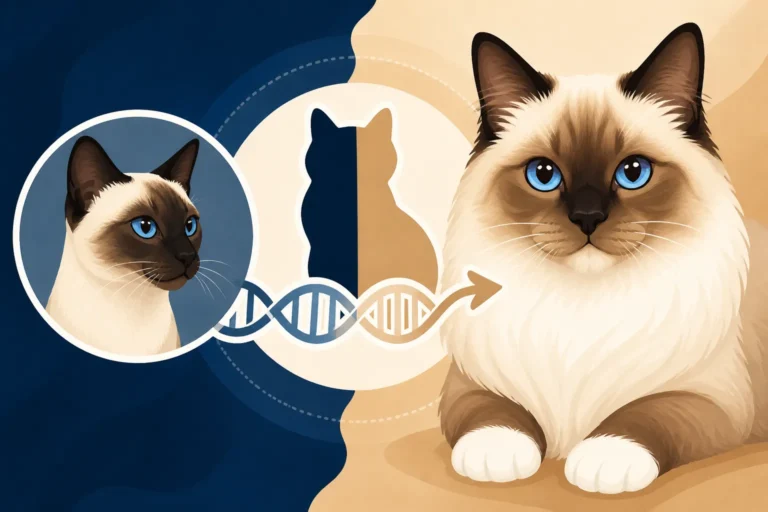
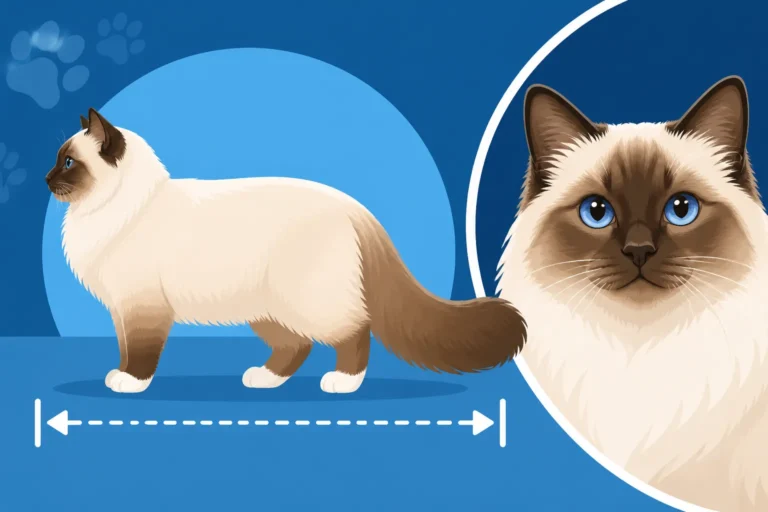
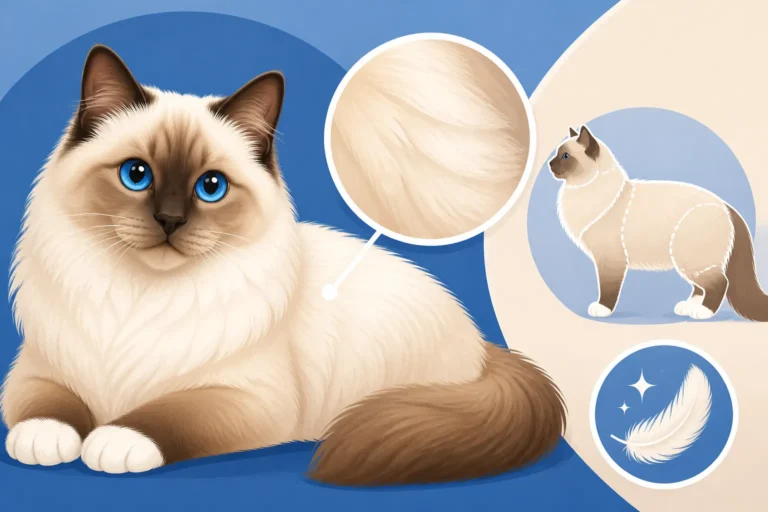
Many Birman cat owners, myself included, have fallen in love with these magnificent felines long before we ever heard the enchanting tale of their origins. But there's a legend that purports to explain those striking blue eyes, the deep points, and especially those pristine white "gloves" on their paws. This isn't just a bedtime story; it's a foundational myth that defines the breed's very essence for many enthusiasts, and understanding what Sinh the temple cat is said to have done helps us appreciate the mystical aura still surrounding these gentle creatures.
The Sacred Setting: The Temple of Lao-Tsun
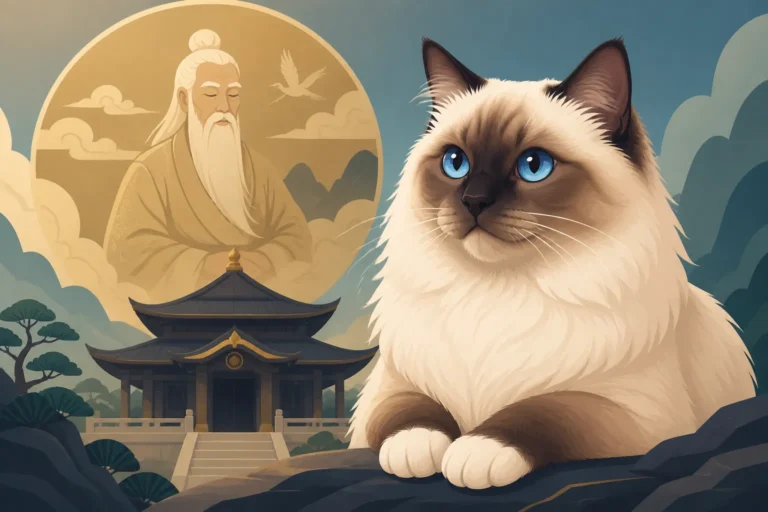
Imagine for a moment a world far removed from our busy lives, a place where time seems to stand still and ancient traditions hold sway. This is the backdrop for the Birman legend. We're talking about the Temple of Lao-Tsun, a breathtaking sanctuary in Burma (now Myanmar), where golden statues gleamed and sacred Kittah priests devoted their lives to worship. These priests, known for their piety and wisdom, lived in harmony with their beloved temple cats, animals revered as embodiments of their gods' spirits.
The most magnificent of these golden statues was that of Tsun-Kyan-Kse, a goddess with sapphire blue eyes, revered as the patron of transformation. Her presence infused the temple with a sense of divine mystery and tranquility. The cats of the temple, with their golden eyes, were her devoted companions, mirroring the priests' dedication and serving as a bridge between the mortal and divine. It was a serene existence, marked by daily rituals and a deep spiritual connection.
Among these revered felines was a particularly striking cat named Sinh. He was the devoted companion of the most senior priest, Mun-Ha. Sinh, like all the other temple cats, possessed golden eyes that seemed to hold ancient secrets, and a coat that was as pure and golden as the goddess's statue. He was a constant shadow to Mun-Ha, present at every prayer, every meditation, a silent, watchful guardian embodying the peaceful spirit of the temple.
The Tragic Night and Sinh's Transformation
Life in the temple, however, was not destined to remain undisturbed forever. The legend tells of a harrowing night when the temple was brutally attacked by raiders. These weren't just common thieves; they were invaders seeking to desecrate the sacred space and steal its priceless treasures. The peace of Lao-Tsun was shattered by chaos and violence, a stark contrast to the serene existence the priests and cats had always known.
During this terrifying onslaught, the revered High Priest Mun-Ha was tragically struck down by the invaders. He lay dying before the golden statue of Tsun-Kyan-Kse, his life ebbing away amidst the destruction. This was a moment of utter despair for the surviving priests and, indeed, for all the temple cats. It represented not just the loss of their beloved leader, but a profound spiritual wound, a violation of their sacred sanctuary.
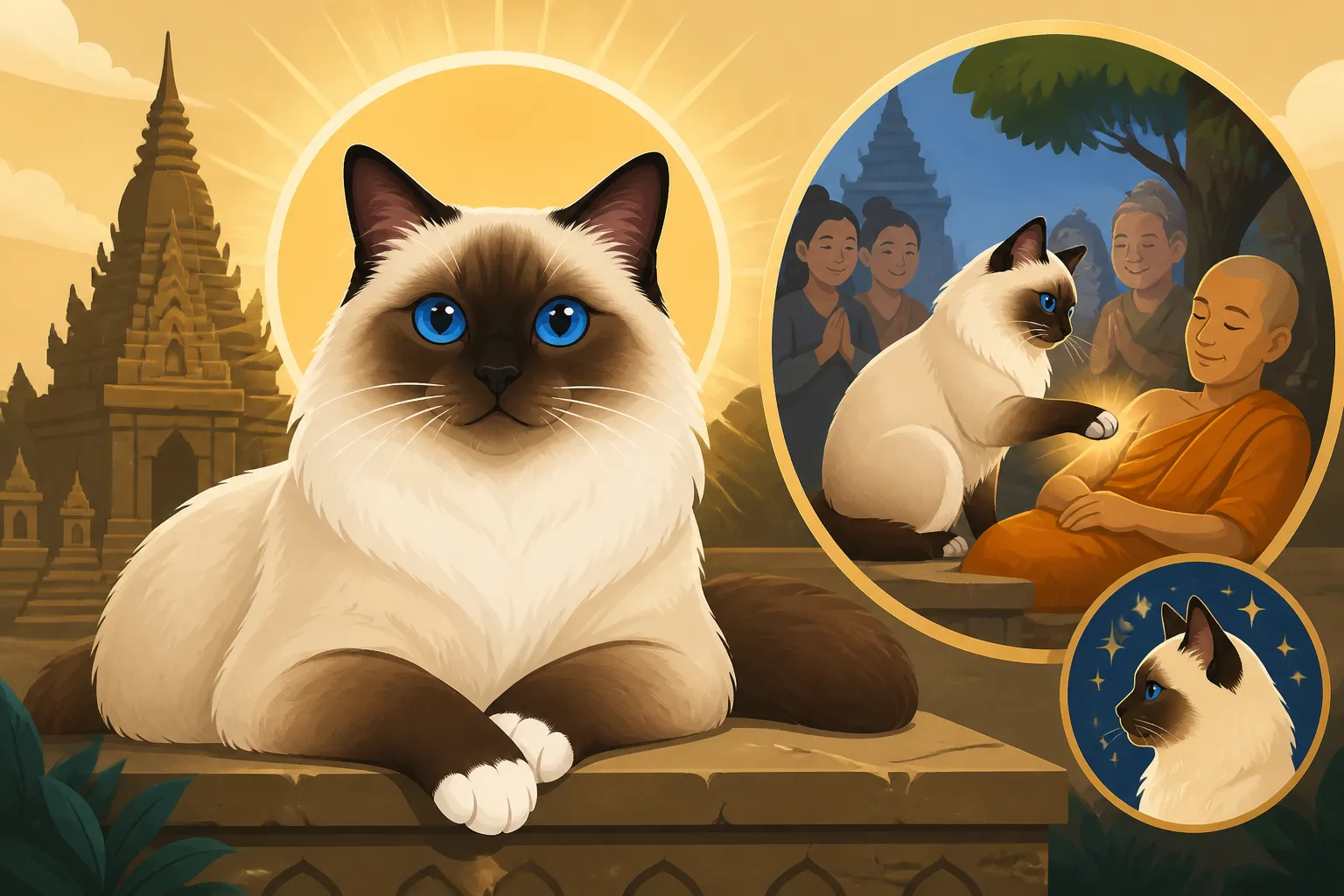
It was at this critical juncture that Sinh, the faithful companion, stepped forward. The legend says he leaped onto the dying body of his master, Mun-Ha, placing his paws on the priest's head as if to comfort him in his final moments. As he did so, a miraculous transformation began. In that sacred instant, infused with the spirit of the goddess Tsun-Kyan-Kse and the departing soul of Mun-Ha, Sinh underwent a profound metamorphosis.
The Divine Manifestation: Points, Gloves, and Eyes
The legend vividly describes the immediate and striking changes that came over Sinh as he rested upon his dying master. It was a spectacular display of divine intervention, a visible sign that the gods themselves were intervening to honor Mun-Ha and preserve the sanctity of the temple.
First, Sinh's golden fur, which had always reflected the temple's revered statues, deepened dramatically. His face, ears, legs, and tail, which are now known as the "points" in Birman cats, turned a rich, earthy brown, the color of sacred soil and enduring strength. This darkening wasn't random; it symbolized the connection to the earth and the profound shift in the cat's divine purpose. You can see this effect today, where a Birman's points typically begin to show as a kitten's coat develops, a process that takes time. How a Birman Kitten's Points Come In
But perhaps the most breathtaking part of the transformation involved his eyes. Sinh's golden eyes, once mirroring the other temple cats, deepened into the brilliant sapphire blue of the goddess Tsun-Kyan-Kse's own jewels. This change signified a direct blessing from the goddess, imbuing the cat with a piece of her divine wisdom and purity. These piercing blue eyes became a hallmark of the breed, a constant reminder of Sinh's divine connection. Why a Birman's Blue Eyes Are Not a Health Risk
Then came the iconic white "gloves" that every Birman cat is known for today. As Sinh’s paws rested on Mun-Ha, the legend says they remained pure white, unstained by the world, symbolizing Mun-Ha’s purity and devotion. These pure white paws, perfectly symmetrical, contrasted sharply with the newly darkened points. They were a divine mark, a badge of honor that would distinguish all future Birmans. The specific pattern, where the white extends up the back legs in what are called "laces," also emerged at this moment, signifying the sacred ties that bound Sinh to his master. What a Birman's Front Gloves Should Look Like
The Legacy of Sinh: Protecting the Temple
The transformation of Sinh was not merely an aesthetic one; it was a powerful act that deeply impacted the remaining Kittah priests. Witnessing their beloved temple cat’s miraculous change instilled in them renewed courage and determination. The sight of Sinh, now a living embodiment of the goddess's favor and Mun-Ha's spirit, spurred them to action. It was a clear sign that the divine had not abandoned them.
Inspired by this incredible manifestation, the priests rallied, finding strength they didn't know they possessed. They fought back against the invaders with a fervor that amazed even themselves. The raiders, perhaps unsettled by the mysterious events and the priests' sudden resilience, were eventually driven out. The Temple of Lao-Tsun, though scarred, was saved from complete destruction, its sacred essence preserved by the courage born from Sinh’s transformation.
The legend states that seven days later, Sinh died, taking Mun-Ha’s soul to paradise. But his legacy lived on. All the other cats in the temple, upon witnessing Sinh’s miracle, were also transformed. Each bore the sacred marks: the deep blue eyes, the rich points, and, most importantly, the pristine white gloves and laces. From that day forward, all sacred Birman cats were believed to carry the spirit of the Kittah priests within them, serving as living reminders of loyalty, divine intervention, and the sanctity of life. This ensured that the characteristics bestowed upon Sinh would be passed down through generations, making every Birman a testament to this ancient tale. You can even consider how modern Birman owners might purchase specialized litter from retailers like Chewy to keep those precious white gloves clean, continuing a tradition of care born from legend. Why Litter Discolors a Birman's White Feet
What the Legend Means for Modern Birmans
Even today, centuries after the legend of Sinh began, the story resonates deeply with Birman enthusiasts. While we live in a world of genetic understanding and scientific breeding programs, the myth of Sinh still lends a unique charm and mystique to the breed. It provides a beautiful, romantic origin story that helps owners appreciate the distinctive physical traits that make Birmans so special. When you look at a Birman's striking blue eyes, you're not just seeing an optical trait; you're seeing the sapphire gaze of a goddess. When you admire their white paws, you're seeing the purity of a devoted priest.
Breed standards in cat fancy associations around the world still meticulously describe the ideal "gloves" and "laces" on a Birman, almost as if adhering to the divine blueprint laid out by Sinh. Judges scrutinize the symmetry and extent of the white markings, seeking that perfect balance that the legend describes. What Judges Look For on a Birman's Paws First This attention to detail isn't just about aesthetics; it's a quiet homage to the mythical origins of the breed, keeping the spirit of Sinh alive in every show ring.
The legend also contributes to the Birman's renowned placid and gentle temperament. The idea that these cats carry the spirit of devoted priests suggests a quiet wisdom and calm demeanor. Many Birman owners will tell you their cats possess an almost spiritual presence, a comforting stillness that makes them wonderful companions. They are often described as serene and tolerant, quite possibly reflecting the peaceful nature attributed to the temple cats of Lao-Tsun. It is often said that a Birman will follow you from room to room just to be near you, a quiet devotion much like Sinh's to Mun-Ha. How a Birman Follows You Room to Room
This blend of ancient mythology and modern reality makes owning a Birman a truly special experience. We may not literally believe in goddesses transforming cats, but the story offers a beautiful framework for appreciating the unique beauty and gentle spirit of these "Sacred Cats of Burma." And while Chewy might deliver their food, the essence of their historical charm remains.
The Enduring Appeal of the Birman's Origin Story
The legend of Sinh the temple cat is more than just a quaint tale; it’s a vital part of the Birman cat’s identity. It speaks to the deep human desire to find meaning and a sense of sacredness in the creatures we share our lives with. For many, it provides a powerful narrative that connects their beloved pet to an ancient, mystical past.
It also serves as a beautiful illustration of how genetic traits can be woven into a compelling story. While the precise mechanisms of how Birman coat patterns and eye colors came to be are now understood through science, the legend offers a poetic explanation that satisfies a different kind of curiosity. It appeals to the heart and imagination, inviting us to see something extraordinary in the ordinary. Why the Birman Legend Explains the White Gloves
This blend of beauty, mystery, and a gentle nature is why the Birman remains such a cherished breed. Whether you focus on the scientific realities of their genetics or delight in the enchanting story of Sinh and the Temple of Lao-Tsun, there's no denying the captivating allure of these sacred cats. They truly are living legends, carrying a piece of an ancient world into our modern homes. The Birman Is the Sacred Cat of Burma, and the Story Is a Legend
| Birman Trait | Explained by Legend (Sinh's Transformation) | Modern Understanding (Genetics) |
|---|---|---|
| Pointed Coat | Sinh's golden fur deepened to brown on extremities. | Temperature-sensitive albino gene (Cs gene) causes pigment only in cooler areas of the body. |
| Sapphire Blue Eyes | Sinh's golden eyes turned blue, reflecting the goddess's eyes. | Associated with the same temperature-sensitive albino gene that creates the pointed pattern. |
| White "Gloves" | Sinh's paws remained pure white, symbolizing Mun-Ha's purity. | A specific gene called KIT, with a variant (gloving gene) that causes white markings on paws. The Gloving Gene Every Birman Carries Two Copies Of |
| Placid Temperament | Cats embodied spirits of pious Kittah priests. | A carefully selected breeding for generations favoring calm, gentle, and affectionate personalities. |
| Overall Appearance | A divine transformation by goddess Tsun-Kyan-Kse. | Selective breeding over decades, possibly with outcrossings to other long-haired breeds post-WWII to rebuild the population. |
Disclaimer
This article is for general informational purposes only and does not constitute professional advice. Laws, prices and regulations vary by location and change over time. Consult a qualified professional for guidance on your specific situation.