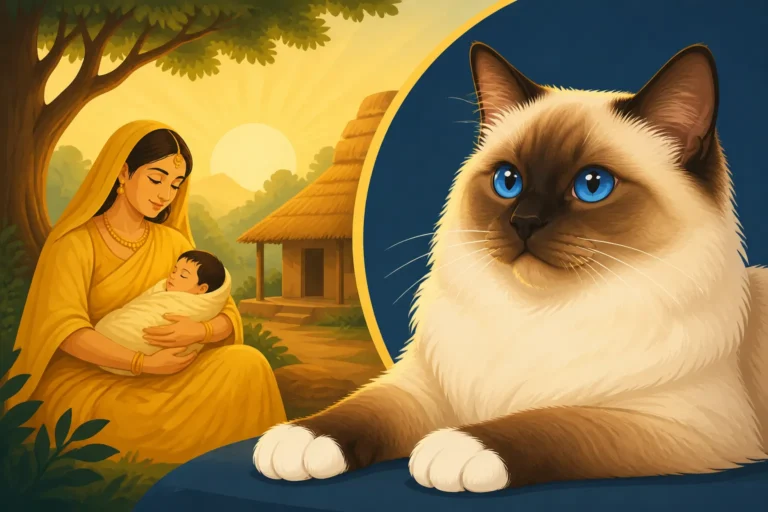
What Sacre de Birmanie Means
It's quite common for Birman cat lovers to hear their beloved feline referred to by its elegant French name, "Sacre de Birmanie," and wonder what exactly it means. It’s more than just a fancy title; it truly encapsulates the breed's mystical origins, its distinct appearance, and its gentle, almost ethereal nature. This guide will take you on a journey through the meaning and significance of this beautiful name, exploring its legendary past and how it continues to shape our understanding of the Birman cat today.
The Sacred Origins of a Mystical Name
The name "Sacre de Birmanie" translates directly from French to "Sacred Cat of Burma." This isn't just a whimsical label; it's steeped in a beautiful, ancient legend that many believe explains the Birman's unique coat pattern, especially those striking white paws. Imagine a time when cats were revered, believed to hold the souls of priests. That's the essence of the "Sacred Cat" part of the name.
The Legend of the Temple Cat
The most famous legend associated with the Birman speaks of the Temple of Lao-Tsun in Burma, guarded by 100 pure white cats with golden eyes. One night, invaders attacked the temple, and its revered priest, Mun-Ha, was killed. As Mun-Ha lay dying, his faithful cat, Sinh, leapt onto his master's body. In that moment, a miracle occurred: Sinh's fur instantly changed to a golden hue, reflecting the golden goddess Tsun-Kyan-Kse. His eyes transformed to a sapphire blue, matching his master's. His paws, however, remained pure white, a symbol of Mun-Ha's purity as he passed into the afterlife. Sinh's transformation inspired the other temple cats, whose coats also changed to reflect these sacred markings. This legend beautifully ties into The Birman Is the Sacred Cat of Burma, and the Story Is a Legend.
This tale, while a legend and not historical fact, provides the romantic foundation for the breed's name. It speaks to a deep respect and spiritual connection, suggesting that these cats were more than just pets; they were guardians of souls, symbols of purity, and links to the divine. The very idea that their distinctive markings, like their white "gloves," were divinely bestowed gives the breed an almost mythical aura that persists to this day. It highlights why understanding the legend is crucial to appreciating the full meaning of "Sacre de Birmanie."
The French Connection to "Sacre de Birmanie"
While the legend places the Birman's origins in ancient Burma, the name "Sacre de Birmanie" itself is undeniably French. This is because the breed as we know it today was truly developed and formally recognized in France. The first documented Birmans arrived in Europe in the early 20th century, with a pair reportedly being shipped from Burma in 1919. Sadly, the male cat did not survive the journey, but the female, Sita, who was pregnant, carried on the lineage. This pivotal moment set the stage for the breed's formal development and naming.
French breeders, captivated by these stunning cats, worked diligently to establish and standardize the breed. They were the ones who formally enshrined the "Sacred Cat of Burma" into its official French name. This development was crucial, marking the transition of a legendary cat into a recognized and cherished breed within the cat fancy. It's a testament to their dedication that the name, and the breed, flourished, even through challenging times. This initial dedication in France is why the name has such a strong French flavor, even if the cats themselves are said to hail from the East. When France Registered the Sacre de Birmanie is a key moment in the breed's history.
Formal Recognition and Early Spread of the Name
The journey from a legendary temple cat to an officially recognized breed involved meticulous breeding efforts and formal registration processes. The name "Sacre de Birmanie" was integral to this process, giving the breed a distinct identity that resonated with its perceived origins and unique features.
Registration in France
The first official recognition of the Birman as a distinct breed came in France in 1925. It was at this point that the breed was formally registered under the name "Sacre de Birmanie." This act solidified its place in the world of pedigreed cats and provided a standardized framework for its breeding and exhibition. This formal title wasn't just administrative; it was a proud declaration of the breed's spiritual roots and its connection to a captivating legend.
Breeders during this period focused on refining the physical characteristics that had been immortalized in the legend: the striking color points, the deep blue eyes, and, most notably, the pristine white "gloves" on all four paws. The name "Sacre de Birmanie" served as a constant reminder of these defining traits and the high standards breeders aimed to achieve. Without this foundational recognition and the evocative name, it's hard to imagine the breed gaining the traction it did. This period also saw significant challenges, as How Many Birmans Survived the Second World War tells a story of near extinction, making the survival of the name and the breed even more remarkable.
The Name's Journey Beyond France
From its official recognition in France, the Birman, along with its full name, began to capture hearts across Europe and eventually the world. It slowly but surely made its way to other countries, and with it, the moniker "Sacre de Birmanie" traveled, often in parallel with the shorter, more commonly used "Birman." For instance, the breed was established in Germany and Britain decades after its French recognition, a journey detailed in How the Birman Reached Germany and Britain From France. Each new country that embraced the breed acknowledged its origins through the continued use of its full, descriptive name.
While "Birman" became the practical, everyday name for these cats in many English-speaking countries, "Sacre de Birmanie" always lingered, especially in formal settings, show pedigrees, and among traditional breeders. It distinguishes the breed from others and emphasizes its unique heritage. Even today, when you hear a breeder or enthusiast use the full name, it's often with a sense of pride and reverence, acknowledging the rich history and distinct identity that it carries. It's a nod to tradition, a connection to those early French pioneers, and an honorific that sets the Birman apart.
Living Up to the Sacred Title
The name "Sacre de Birmanie" isn't just a historical artifact; it genuinely reflects the qualities that make the Birman such a beloved companion. From its stunning appearance to its gentle demeanor, these cats truly embody a certain sacred grace.
Temperament and Appearance Echo the Name
When you meet a Birman, it's easy to see how its name, "Sacred Cat of Burma," perfectly describes it. They possess an almost regal bearing, combined with an incredibly sweet and gentle nature. Unlike some more boisterous breeds, a Birman often carries itself with quiet dignity. They are known for their calm, placid temperaments, often described as neither overly active like a Siamese nor as completely sedentary as some Persians. This balance makes them wonderfully adaptable companions. Why Every Standard Calls the Birman a Gentle Breed perfectly encapsulates this aspect.
Their appearance, too, is key to the "sacred" imagery. Those striking deep blue eyes, often described as sapphire, seem to gaze into your soul. Their unique point coloration, which darkens with age and colder temperatures, is elegant, but it's those pristine white "gloves" and "laces" on their paws that truly stand out. The legend attributes these white markings to the purity of the priest Mun-Ha, and even without the legend, they give the Birman an ethereal quality. Why the Birman Legend Explains the White Gloves delves deeper into this fascinating connection. It’s no wonder they are often called "divine" or "heavenly" by those who know and love them. Even without the full name, their look and feel evoke a sense of specialness.
| Feature | "Sacre de Birmanie" Connection | Description |
|---|---|---|
| "Sacre" (Sacred) | Linked to ancient temple legends and spiritual reverence. | Refers to the breed's gentle, placid, and dignified temperament. |
| "Birmanie" (Burma) | Originating country in the breed's legend. | Denotes the legendary geographical source and mystical backstory. |
| White Gloves/Laces | Symbol of purity from the legend of Sinh. | The distinctive white markings on the paws, a hallmark of the breed. |
| Blue Eyes | Reflecting the dying priest's eyes in the legend. | Intense, deep sapphire blue eyes that are a standard requirement. |
| Pointed Coat | Goddess's golden reflection in the legend. | Lighter body with darker points (ears, face, paws, tail). |
The Lasting Legacy of the Name
Even as the world has modernized and cats are seen more as cherished family members than temple guardians, the name "Sacre de Birmanie" endures, serving as a powerful link to the breed's mystical past. It’s a name that evokes history, beauty, and a unique set of characteristics that have been carefully preserved over generations. When you choose a Birman, you're not just getting a cat; you're inviting a piece of this rich history into your home. This name truly captures the spirit of what What a Century Has Not Changed About the Birman discusses – the enduring essence of the breed.
This legacy also means that Birman owners often feel a special connection to their pets. They understand that there’s something more to these cats than just their fluffy coats and charming purrs. The sacred aspect of their name reminds us to treat them with kindness, respect, and to appreciate their gentle presence. Finding the right food for such a special cat is important; many owners enjoy browsing extensive selections at places like Chewy to ensure they get top-quality nutrition that supports their Birman's beautiful coat and overall health. Whether you refer to them as a Birman or a "Sacre de Birmanie," the deep blue gaze and the pristine white gloves will always remind you of the sacred tale that gave them their name and their place in our hearts. And for those curious about the physical traits, it makes you wonder What a Birman Would Look Like Without Its Gloves.
The enduring appeal of the Birman cat, often sought out for its calm companionship and striking beauty, is profoundly tied to its full, formal name. It’s a name that doesn’t just identify the breed but tells its story, hinting at ancient origins and a mystique that continues to captivate cat lovers around the globe. When you welcome a "Sacre de Birmanie" into your home, you're truly welcoming a piece of living legend.
Disclaimer
This article is for general informational purposes only and does not constitute professional advice. Laws, prices and regulations vary by location and change over time. Consult a qualified professional for guidance on your specific situation.