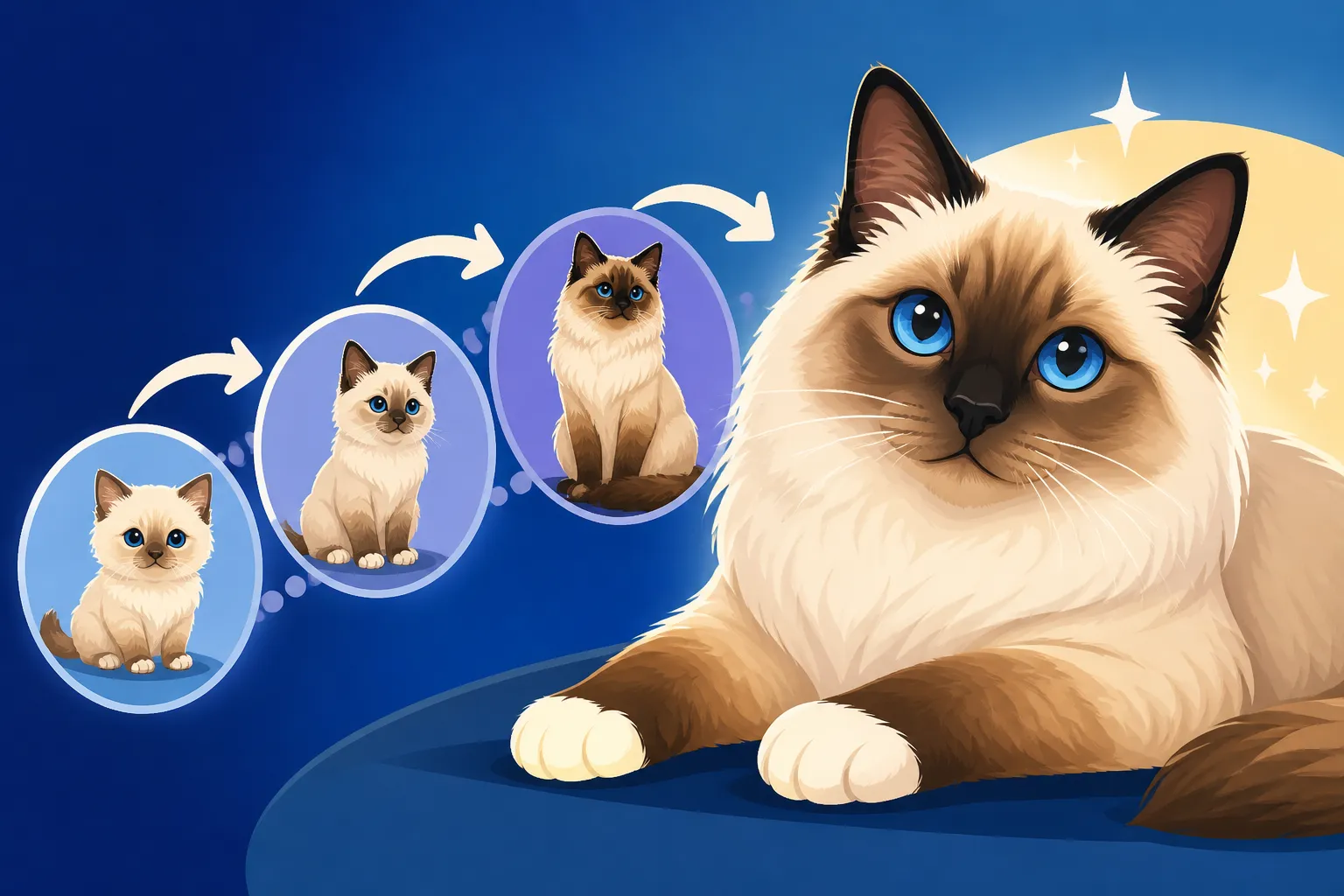
Why a Birman Takes Three Years to Finish
A Birman can look surprisingly unfinished well past its first birthday: the body may still be lengthening, the ruff may be sparse, and those pale kitten points may keep darkening. That slow change is normal for many Birmans. This guide explains what “finished at three” really means, what develops over those years, and how to support steady, healthy growth.
What it means when a Birman is finished growing
“Finished” is about more than height
When breeders say a Birman takes three years to finish, they usually mean the cat’s overall appearance and development can continue to mature until around that age. It is not a promise that every Birman grows at the same pace, or that a cat remains a kitten for three full years. Most cats reach much of their adult size earlier; the later changes are subtler, involving body condition, muscle, coat, and the way the cat fills out.
That distinction can be reassuring if your young Birman seems lean or leggy beside an adult cat. A healthy adolescent may look a little out of proportion for a while, especially as the body grows before the coat and musculature catch up. A change in appearance by itself does not necessarily mean something is wrong.
“Finished” also does not mean every feature suddenly stops changing on a birthday. One cat may have a full ruff early, while another’s coat takes longer to look mature. Point color can deepen gradually, too. If you are tracking your kitten’s progress, compare photos taken over several months rather than judging by one week’s appearance.
For a closer look at the breed’s gradual development, Why a Birman Is Still Filling Out at Three explains why the finishing period can extend beyond the most obvious growth spurt.
Growth varies from cat to cat
Three years is a useful rule of thumb, not a deadline. Genetics, sex, individual build, nutrition, health, and whether a cat has been neutered can all affect how its development looks. Littermates can mature at different rates even when they share the same parents and home.
A smaller-framed young cat may look close to its adult shape sooner than a larger, rangier one. Some Birmans develop a noticeable ruff early; others have a finer-looking coat until later. These differences do not automatically indicate that one kitten is thriving and another is failing to grow.
It is more useful to watch the whole picture: steady growth, a healthy appetite, normal energy, comfortable movement, and a coat and skin that look well cared for. If your cat is losing weight, has persistent digestive problems, seems unusually tired, or stops eating, do not assume it is simply a slow-maturing breed. Check in with a veterinarian.
Why a Birman’s development takes time
The body continues to fill out
A young Birman may gain length and height before it develops the fuller, balanced look associated with an adult. As the cat matures, muscle and body condition can change, giving it a more substantial appearance without necessarily making it dramatically taller. This is why an adolescent can seem all legs one month and more proportionate later.
The goal is not to make a young cat look as heavy as possible. A Birman should develop gradually and maintain a healthy body condition. Extra weight can hide the natural outline of the body and make it harder to notice changes in health. You should be able to feel the ribs beneath the coat without pressing hard, while the cat’s waist should be discernible when viewed from above.
The appearance of a long coat can make these checks tricky. Fluff around the sides and britches may disguise the outline, so use your hands as well as your eyes. Your veterinary team can help assess body condition and track weight over time. A simple record of weights at routine visits is more useful than comparing your cat with an arbitrary number online.
If you are wondering whether a young cat is on track, What a Birman Weighs at One With Two Years Still to Grow offers context for why a one-year-old may not yet look fully mature. For adult size differences, see How Heavy a Full Grown Birman Tom Gets and How Much Smaller a Birman Queen Finishes.
The coat and points keep changing
A Birman kitten is born with a very pale coat, and its darker points develop as it grows. The color on the face, ears, legs, and tail can become more visible over time, and the final shade may continue to deepen with age. This temperature-sensitive color pattern is one reason a kitten’s early appearance is not a perfect preview of its adult coat.
The coat itself may also look different as the cat matures. The ruff can become more noticeable, the tail plume may look fuller, and the longer hair can give the body a more finished outline. Seasonal shedding and changes in indoor temperature can influence how full or dark the coat appears, so small changes from one season to the next are not always a sign of a permanent shift.
A kitten’s white gloves are a defining feature, but the overall coat and point color develop on their own timeline. If you are comparing your kitten with photos of adult Birmans, remember that lighting, camera settings, and age can make point color look quite different. Why Every Birman Kitten Is Born Pure White and How a Birman Kitten's Points Come In explain these coat changes in more detail.
| Developmental feature | What you may notice | What to keep in mind |
|---|---|---|
| Body shape | A lanky or lightly built look during adolescence | Growth and filling out do not happen all at once |
| Muscle and condition | A more balanced outline over time | Aim for healthy condition, not maximum weight |
| Ruff and tail coat | Longer or fuller-looking hair as the cat matures | Seasonal shedding can change the appearance |
| Point color | Darker face, ears, legs, and tail | The shade may deepen gradually and vary by individual |
| Adult appearance | A more settled overall look | Three years is a guide, not a guaranteed finish date |
A general Birman growth timeline
From kittenhood through the first year
During the first year, the most obvious changes are often size, coordination, and the arrival of the point pattern. Your kitten may seem to grow in spurts: a period of rapid lengthening followed by a phase when the body appears to catch up. It is common for the coat and frame not to look perfectly balanced at every stage.
This is also when feeding habits and routines are being established. Offer a complete, age-appropriate diet and follow your veterinarian’s guidance on portions and transitions. A kitten that quietly finishes every meal may not make a fuss when it has eaten more than it needs. Why a Birman Will Quietly Eat Everything You Leave Down is a useful reminder that a calm appetite is not a reliable portion guide.
If you are buying food or supplies, Chewy can be one place to compare kitten-food labels and set up repeat purchases, but the important part is choosing a complete diet suited to your cat’s life stage. Ask your veterinarian before making a major food change, especially if your kitten has a sensitive stomach or a health concern.
From one year to around three
After the first birthday, growth usually looks less dramatic, but a Birman may continue to develop a fuller body and more adult-looking coat. You might notice the change most clearly in photos: the cat’s outline looks more balanced, the ruff frames the face differently, or the points appear richer than they did as a kitten.
This is a good period to maintain consistent routines rather than trying to accelerate development. Keep measuring meals, provide play and opportunities for movement, and arrange regular veterinary care. A long maturation period does not call for supplements or extra food unless a veterinarian identifies a specific need.
It can be helpful to keep a small growth record with dates, weights, and photos taken from similar angles. If you shop for food or grooming supplies through Chewy, save the product details so you can keep track of what your cat tolerates well. Changes in appetite, stool, coat quality, or energy are worth noting for your next veterinary appointment.
Supporting healthy growth without rushing it
Feed for steady development
A growing Birman needs suitable nutrition, but more food is not a shortcut to an adult frame. Overfeeding can lead to excess body fat rather than healthy muscle, and it can make later weight management harder. Follow feeding guidance on the food label as a starting point, then adjust with your veterinarian based on your cat’s age, activity, and body condition.
Make food changes gradually unless your veterinarian tells you otherwise. A sudden switch can upset digestion, while a slow transition gives you time to notice whether the new food suits your cat. Keep fresh water available, and ask your veterinary team about the right diet as your cat moves from kittenhood into adulthood.
Chewy may be convenient for checking ingredient panels or reordering a food your cat already eats, but a product’s availability or marketing claims are not a substitute for veterinary advice. When comparing options, focus on whether the food is complete and appropriate for the life stage, rather than on claims that promise a thicker coat or faster growth.
Know when to ask a veterinarian
A slow-looking change in size is not, by itself, a reason to panic. More concerning signs include unplanned weight loss, poor appetite, repeated vomiting or diarrhea, low energy, difficulty moving, or a coat that becomes dull alongside other changes. These symptoms deserve attention rather than being attributed to breed development.
At routine visits, ask the veterinarian to assess body condition and review your cat’s growth record. If you are unsure whether the cat is too thin beneath its silky coat, ask the veterinary team to show you how to feel the ribs and check the waist. That practical demonstration can be far more helpful than guessing from photographs.
Above all, let your Birman mature at its own pace. A slow transition toward an adult appearance is part of what people mean when they say the breed takes around three years to finish. The aim is not to make your cat reach a particular look by a certain date; it is to support healthy development and notice meaningful changes early.
Disclaimer
This article is for general informational purposes only and does not constitute professional advice. Laws, prices and regulations vary by location and change over time. Consult a qualified professional for guidance on your specific situation.