Why Post War Outcrossing Was Unavoidable for the Birman
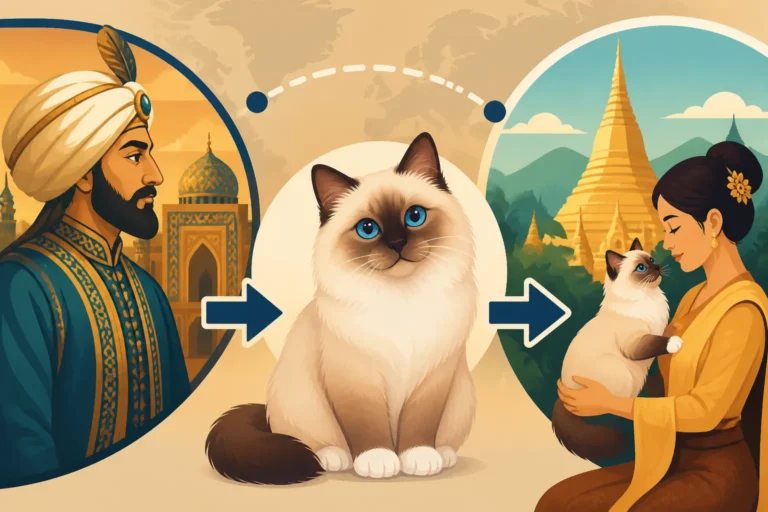
The end of World War II left Europe scarred, and in the quiet corners of the feline world, it left many beloved breeds on the brink. For the elegant Birman cat, a breed known for its stunning blue eyes, silken coat, and distinctive white "gloves," the situation was nothing short of a crisis. Its very survival hung by a thread, and without a bold, some might say controversial, decision by dedicated breeders, this sacred cat of Burma might have vanished forever. This guide delves into the stark reality of those post-war years, explaining precisely why outcrossing—introducing new bloodlines—was not just an option, but an unavoidable necessity to save the Birman.
The Brink of Extinction: The Birman's Post-War Reality
Imagine a world where the very continuity of your passion, your dedication, rests on the shoulders of just a handful of individuals. That was the grim reality for Birman breeders in the immediate aftermath of World War II. The devastation of war didn't just impact human lives and infrastructure; it severely crippled animal populations, including pedigree cats.
A Handful of Survivors and a Devastated Landscape
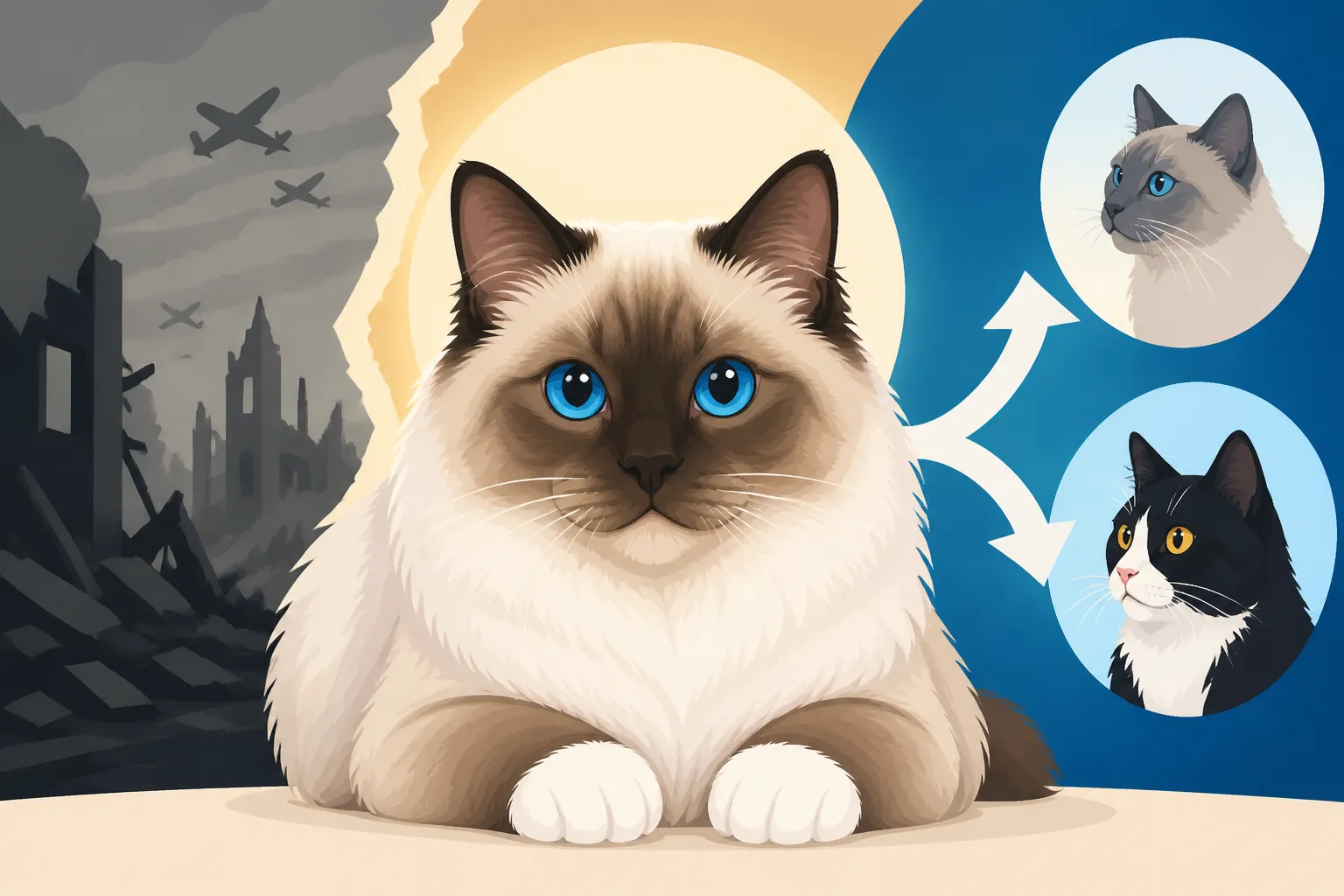
Cat breeding, a hobby and passion that often requires stable conditions, travel, and resources, simply wasn't a priority during wartime. Food was scarce, travel was dangerous or impossible, and many catteries were destroyed or abandoned. Across Europe, the numbers of purebred cats plummeted, and the Birman was hit particularly hard. Records from that era paint a stark picture: by 1945, reliable accounts suggest that there were only two known breeding Birmans left in France, a male named Orloff de Kaabaa and a female named Xenia de Kaabaa. Can you even fathom that? The entirety of a majestic breed, reduced to two individuals!
This wasn't just a numbers problem; it was a geographical nightmare. These cats weren't easily accessible to each other, nor were there other hidden pockets of Birmans waiting to be discovered. The established breeding lines and pedigrees that had been carefully cultivated before the war were either lost, scattered, or simply ceased to exist. Breeders faced an almost insurmountable task: how do you rebuild an entire breed from virtually nothing? The idea of simply continuing to breed the few remaining Birmans among themselves, though seemingly the "purest" path, quickly revealed itself as a dead end, leading directly into what geneticists call a bottleneck.
The Genetic Bottleneck Challenge
When a population size dramatically shrinks, like the Birman's did, it creates what is known as a genetic bottleneck. Think of it like pouring all the water from a wide river into a tiny funnel – only a fraction of the diversity makes it through. In genetic terms, this means that a huge amount of genetic variation is lost. Imagine all the unique genes that gave the Birman its robust health, its specific coat qualities, its distinct temperament—many of these traits were now concentrated in, or entirely lost from, just those few surviving individuals.
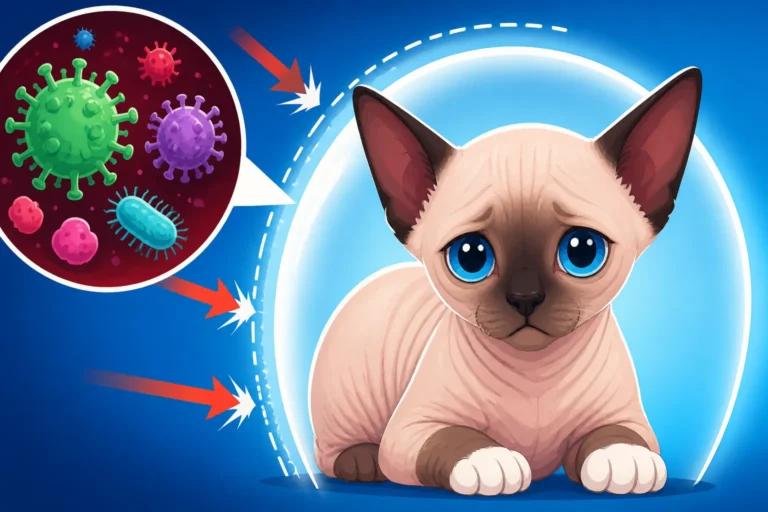
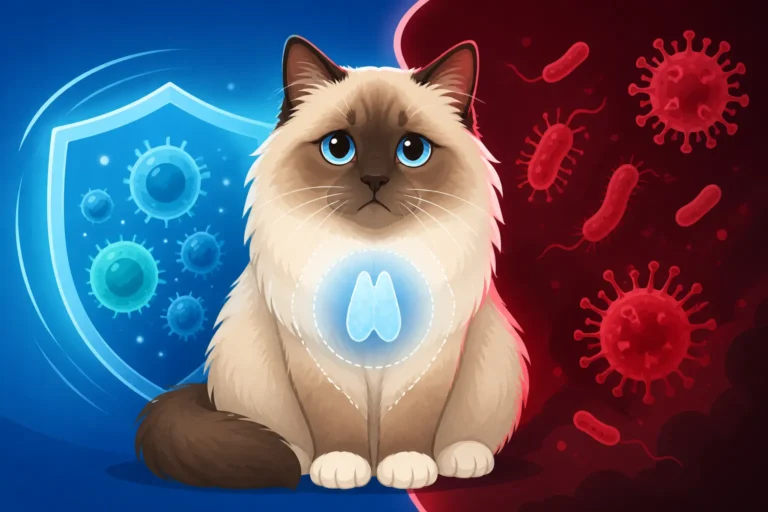
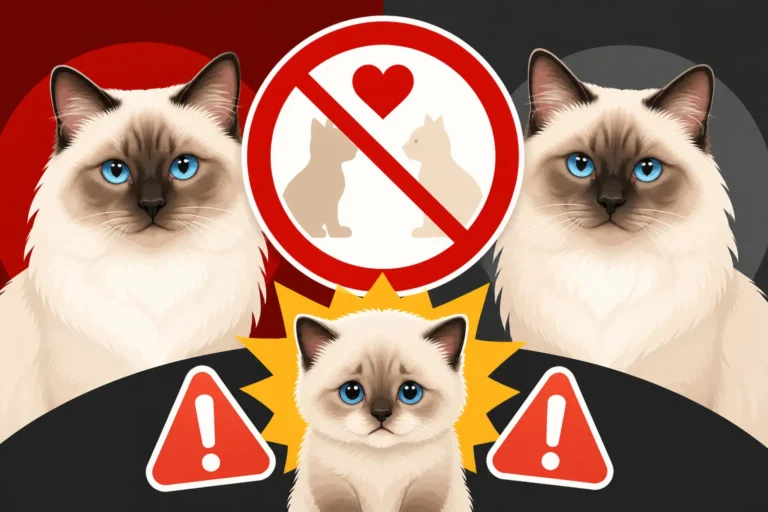
The immediate, terrifying consequence of such a narrow genetic base is a phenomenon called inbreeding depression. This isn't just a scientific term; it's a real and heartbreaking reality for any species facing it. Mating closely related animals dramatically increases the chances of offspring inheriting two copies of harmful recessive genes. These genes, normally hidden by a dominant healthy gene, can manifest as severe health problems, reduced fertility, smaller litter sizes, and weakened immune systems. A kitten born with a compromised immune system, for example, would struggle to fight off even common infections, drastically reducing its chances of survival.
For the Birman, continuing with such a limited gene pool would have been a catastrophic gamble. It would have meant a breed plagued by health issues, struggling to reproduce, and ultimately, unable to thrive. The quality of life for these cats would have diminished, and their long-term viability as a healthy breed would have been impossible. Breeders weren't just looking to keep a name alive; they were committed to ensuring the health and future of a living creature. This made the need to expand the gene pool not merely a preference, but a desperate imperative to prevent the breed from collapsing under its own genetic weight.
The Urgent Need for Genetic Diversity
Faced with such a dire situation, the choices were stark. Allow the breed to die out slowly and painfully through inbreeding, or take courageous steps to introduce new genetics, fundamentally altering the lineage but securing its future. For the dedicated Birman fanciers, the latter was the only morally responsible path.
Preventing Further Inbreeding Depression
The concept of inbreeding depression is terrifying for any breeder. When only a handful of cats remain, like How Many Birmans Survived the Second World War, their genetic relatedness becomes extremely high. If you were to breed Orloff and Xenia, and then breed their offspring together, you would rapidly intensify any existing genetic vulnerabilities. This isn't just about appearance; it's about the very biological machinery of life. Closely related matings lead to:
- Reduced Fertility: Queens might struggle to conceive, or studs might have lower sperm counts.
- Smaller Litter Sizes: Fewer kittens are born, making population recovery excruciatingly slow.
- Increased Kitten Mortality: Kittens might be born weak, with congenital defects, or simply fail to thrive. You might see a higher incidence of issues like kittens with Why a Birman Kitten Born Bald Will Not Reach Eight Months which would be devastating.
- Weakened Immune Systems: Making cats more susceptible to common infections and diseases.
- Manifestation of Recessive Genetic Disorders: Harmful genes that might be carried silently by many individuals in a large population suddenly become much more likely to combine and express themselves.
Imagine a breeder trying to bring a new litter into the world, only to face continuous heartbreak. The kittens are sickly, the queens struggle, and the future looks bleak. This wasn't a theoretical risk; it was an observable pattern in severely bottlenecked populations. To ensure that future generations of Birmans could live out The Twelve to Sixteen Years a Birman Usually Gets in good health, radical intervention was necessary. The gene pool simply had to be expanded, even if it meant temporarily stepping outside the strict definition of "purebred" to ensure a healthier foundation for the future.
The Quest for Health and Viability
The primary goal of the post-war Birman breeders wasn't just to increase numbers; it was to infuse the remaining stock with robust health and viability. They sought to create a foundation strong enough to carry the breed forward for centuries, not just a few fragile generations. This was a monumental task, requiring meticulous selection and an unwavering commitment to the breed's long-term well-being.
Breeders had to make incredibly difficult decisions. They needed to find suitable outcross partners that could contribute healthy genes and genetic diversity without drastically altering the Birman's distinctive appearance and gentle temperament. The challenge lay in identifying breeds that shared some phenotypic characteristics (like long hair or pointed coloration) but, more importantly, possessed sound genetic health. It was a careful tightrope walk: broadening the genetic base while preserving the unique Birman identity. They understood that diluting the core characteristics too much could lead to losing the very essence of what made a Birman, a Birman. Yet, doing nothing would have meant losing the breed entirely.
This delicate balancing act underscores the incredible foresight and dedication of those early post-war breeders. They weren't just crossing cats; they were making strategic genetic decisions that would impact every Birman born thereafter. Their decisions, though controversial at the time, laid the groundwork for the healthy, thriving Birmans we know and love today.
Strategic Choices: The Breeds Selected for Outcrossing
Once the inevitability of outcrossing was accepted, the next critical step was deciding which breeds would be introduced. This wasn't a random process; it involved careful consideration of traits, genetic compatibility, and the potential impact on the Birman's unique characteristics. The goal was to inject new life and genetic vigor while staying as true as possible to the beloved Birman standard.
Bringing in the Persian Influence
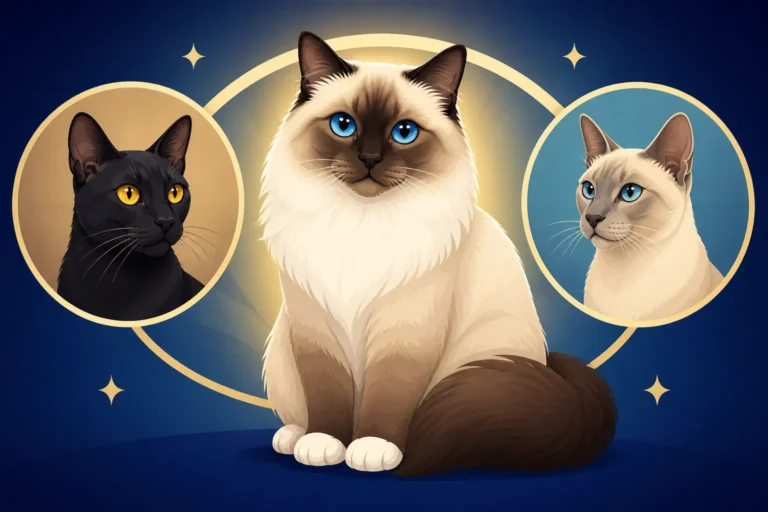
One of the most logical choices for outcrossing was the Persian cat. Why the Persian? Several key reasons made them a strong candidate:
- Long Hair: Persians are renowned for their luxuriant long coats, a characteristic shared with the Birman. This meant that introducing Persian genetics wouldn't dramatically alter the longhair requirement of the Birman standard.
- Gentle Temperament: Persians are known for their docile, calm, and affectionate nature, which aligns well with the Birman's placid disposition. This was crucial for maintaining the Birman's cherished personality traits.
- Established Breed: Persians were a well-established and numerous breed, providing a broad and diverse gene pool from which to select healthy individuals.
By carefully selecting Persian cats with desirable traits and integrating them into the fledgling Birman lines, breeders were able to introduce much-needed genetic variety. What Persian Blood Brought Into the Birman included a denser coat, possibly a more robust bone structure, and a widening of the genetic bottleneck that was threatening the Birman's existence. However, no outcross comes without potential trade-offs. The Persian, while offering many benefits, also historically carried a predisposition for certain health issues, such as Polycystic Kidney Disease (PKD). This is why, even today, Why a Birman Breeder Still Tests for PKD diligently, a direct legacy of those early outcrosses. This proactive health management, often supported by considering robust pet insurance plans like those offered by Healthy Paws, helps protect the breed from inherited conditions.
The Touch of Siamese Elegance
While Persians contributed to the longhair aspect and temperament, another breed was instrumental in reinforcing the Birman's distinctive point coloration: the Siamese.
- Point Coloration: Siamese cats are the quintessential pointed breed, meaning their coat color is concentrated on their cooler extremities (face, ears, paws, tail). This genetic trait was essential for maintaining the Birman's striking appearance.
- Body Type (Careful Selection): While the Siamese has a more slender, "foreign" body type compared to the Birman's semi-cobby build, careful selection of Siamese individuals with a less extreme body type, or backcrossing to Birman lines, helped to introduce the point gene without over-emphasizing the Siamese body structure.
- Intelligence and Affection: Siamese are intelligent and affectionate, albeit more vocal than Birmans. Breeders aimed to bring in the genetic strength without the famously loud Siamese voice.
The introduction of Siamese genetics helped to stabilize the point pattern and enhance the clarity of the Birman's "points." What Siamese Blood Brought Into the Birman primarily reinforced the colorpoint gene itself, ensuring that the characteristic dark points and white gloves remained a defining feature. This careful selection ensured that while the genetic pool was broadened, the distinct Birman phenotype—its elegant proportions, profound blue eyes, and specific color distribution—was preserved. It’s a testament to the skill and vision of breeders that they could walk this fine line, utilizing the best of other breeds to save their own.
The Emergence of the Modern Birman Line
The process of outcrossing wasn't a quick fix; it was a long, painstaking journey. After the initial crosses, multiple generations of "backcrossing" to the surviving Birman lines were necessary. This meant breeding the hybrid offspring back to the remaining pure Birmans to dilute the influence of the outcross breed and re-establish the desired Birman characteristics. This diligent process allowed breeders to select for the specific traits they wanted to keep from the outcrosses (like genetic diversity and health) while weeding out undesirable ones (like extreme Siamese body type or flat Persian faces).
It took decades for the Birman to truly "breed true" again, consistently producing kittens that met the established breed standard without exhibiting strong characteristics of the outcross breeds. This period of reconstruction, centered around Which Two Cats Rebuilt the Birman Orloff and Xenia de Kaabaa, firmly established the modern Birman line we recognize today. Every Birman cat alive owes its existence to the difficult, yet ultimately successful, decisions made by those post-war breeders who refused to let the breed vanish. Their work ensures that the legacy of The Birman Was Rebuilt From Two Cats and It Shows is one of resilience and careful stewardship.
Lasting Legacy: The Impact of Post-War Outcrossing
The decision to outcross the Birman was born out of desperation, but its legacy is one of strength and enduring health. It wasn't a perfect solution, and it brought its own set of challenges, but it undoubtedly saved the breed.
Reshaping the Birman's Genetic Landscape
The most profound impact of post-war outcrossing was the successful widening of the Birman's gene pool. By introducing the genetics of Persian and Siamese cats, breeders injected much-needed diversity, pulling the breed back from the precipice of inbreeding depression. This expanded gene pool has provided a healthier foundation, reducing the concentration of harmful recessive genes and giving breeders more flexibility in mating choices. It’s a delicate balance, and Whether the Birman Gene Pool Has Widened Since is a question that thoughtful breeders continuously monitor, always striving to maintain a healthy level of genetic variation.
Today, responsible Birman breeders continue this vigilance. They utilize modern genetic testing for conditions like Hypertrophic Cardiomyopathy (HCM) and Polycystic Kidney Disease (PKD), which can be present in many pedigreed lines. While outcrossing mitigated the imminent threat of inbreeding depression, it didn't magically eliminate all genetic predispositions. In fact, Which Diseases Survived the Birman's Post War Bottleneck are still carefully screened for, highlighting the ongoing commitment required. Regular health screenings and careful pedigree analysis are paramount. Owners play a vital role too, by ensuring their Birmans receive consistent veterinary care and by considering robust pet insurance options, like those from Healthy Paws, which can provide a financial safety net for unexpected health issues. This comprehensive approach ensures that the benefits of the post-war outcrossing are sustained and enhanced for future generations.
Ensuring a Healthier Future for the Breed
Ultimately, the story of the Birman's post-war outcrossing is a powerful testament to the unwavering dedication of breeders who prioritized the long-term health and viability of the breed above all else. This proactive intervention wasn't just about saving a cat breed; it was about ensuring that future Birman owners could enjoy healthy, vibrant companions for many years. It ensured that the breed could achieve its potential lifespan of The Twelve to Sixteen Years a Birman Usually Gets without being crippled by inherited genetic weaknesses.
The lessons learned from this challenging period continue to inform responsible breeding practices today. Breeders understand the critical importance of genetic diversity, the necessity of health testing, and the ethical responsibility they hold for the animals in their care. The Birman stands as a living example of how strategic, well-considered outcrossing, though a drastic measure, can be a lifeline for a breed facing extinction. It's a reminder that sometimes, to preserve purity of spirit and health, one must be willing to adapt and integrate, ensuring that the sacred Birman continues to grace our homes with its gentle presence for generations to come.
Disclaimer
This article is intended for informational purposes only and does not constitute professional veterinary advice. Always consult with a qualified veterinarian for any health concerns or before making any decisions about your pet's care. The information provided herein is based on general knowledge of the Birman cat breed and historical breeding practices.