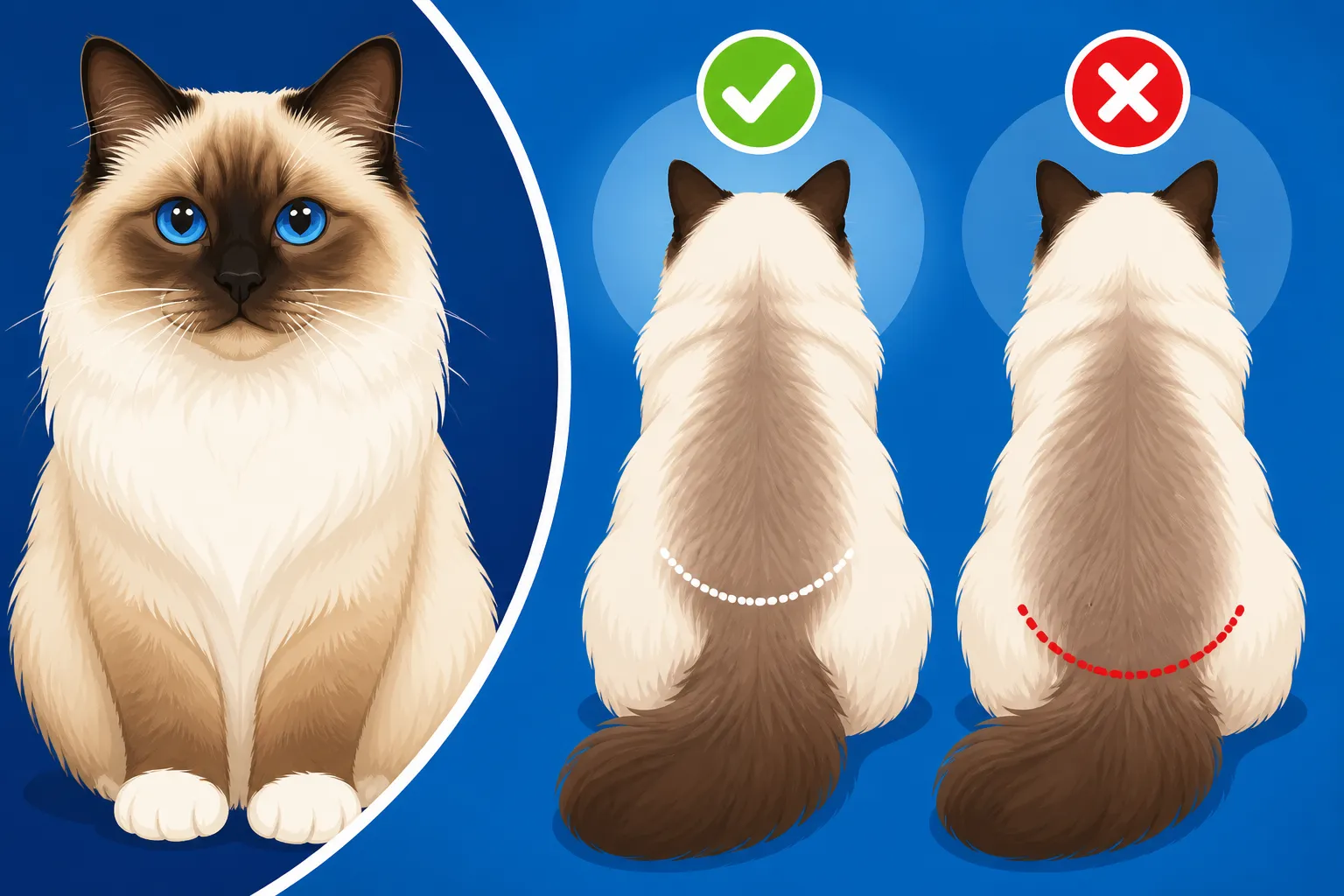
Where a Birman’s Back Lace Should End
One of the most captivating features of the Birman cat, those stunning white paws, often leads to a bit of confusion, especially when we start talking about the precise markings on their hind legs. Many prospective owners and even some newer breeders find themselves wondering exactly where that elegant "lace" on the back of a Birman's leg is supposed to stop. This guide will clarify the breed standard's requirements for these distinctive back laces, helping you understand what makes a Birman's gloving truly exceptional.
Understanding the Birman's Signature Gloves and Laces
The Birman cat is renowned for its enchanting blue eyes and, perhaps even more so, for its unique white "gloves" on all four paws. These aren't just random white patches; they are a hallmark of the breed, a genetic trait that makes Birmans instantly recognizable and incredibly special. But while the front gloves are often the first thing people notice, the back paws feature an additional, equally specific marking: the "laces."
The Ideal Birman Foot Markings: A Delicate Balance
When you first lay eyes on a Birman, the pristine white feet are likely to steal your attention. The breed standard calls for immaculate white gloves on the front paws, ideally ending in an even line across the paw, like a neatly trimmed sock. This specific aesthetic detail is not just for show; it's deeply ingrained in the breed's legendary origins, said to be a gift from a goddess in an ancient Burmese temple. The legend describes how a temple cat named Sinh received these white markings as a symbol of purity and devotion. This historical context underlines why such precision in markings is so highly valued in the Birman world today. Without these distinctive gloves, a Birman wouldn't truly be a Birman in the eyes of many enthusiasts and registries.
The elegance of these markings extends to the hind paws, where the white gloves ascend slightly higher in a delicate point, forming what breeders affectionately call "laces." It's this subtle, upward extension that truly distinguishes the Birman's hind feet from a simple white sock and adds to their overall graceful appearance. Achieving this delicate balance of white on the paws is a significant challenge for breeders, making perfectly marked kittens quite rare and highly prized.
Deconstructing the "Lace" on the Back Paws
The "lace" on a Birman's back paw is essentially an extension of the white glove, running up the rear of the hind leg. Unlike the front paws, where the white should ideally stop abruptly at the paw or wrist, the back paws are expected to have this distinct upward V-shape or pointed marking. It's not just a patch of white fur; it's a specific, tapering band that follows the contour of the leg.
Think of it as a little white arrow pointing towards the cat's body, or perhaps a delicate white stocking that has been artfully pulled up a little further at the back. This lace should be clean, clear, and well-defined, contrasting sharply with the colored point of the leg. It adds a touch of ethereal beauty to the Birman's already striking appearance. The presence and proper formation of these laces are critical for a Birman's conformation and show potential, and they are a key distinguishing feature from other pointed breeds that might have white on their feet but lack this specific rear lace. How to Tell a Birman From a Ragdoll by Its Feet delves into these differences.
The Exact Placement: Where the Birman's Back Lace Should End
This is the million-dollar question for many Birman aficionados! The precision required for the back lace is one of the most challenging aspects of breeding for the perfect Birman markings. It's not enough for the lace to just be there; its exact termination point is crucial.
The Breed Standard's Precise Requirements
According to most Birman breed standards, the white lace on the back of the hind paws should terminate at the hock, or just above it. The hock is essentially the cat's ankle joint, a prominent bony protrusion on the back of the hind leg. The ideal lace forms a symmetrical, inverted V-shape on the back of the hock. Crucially, this lace should not extend beyond the hock joint itself. If it goes too high, it enters the territory of what's called a "gauntlet," which is considered a fault.
Imagine drawing a horizontal line across the hock joint; the tip of the inverted V of the white lace should meet this line, or just barely extend above it, before the colored fur of the upper leg takes over completely. The definition of the lace must be sharp, with no blurring or fading of the white into the color. It's this crisp, clean line that signifies correct marking. When breeders are evaluating kittens, they will meticulously check this detail, often waiting until the kitten is a bit older, around 8-12 weeks, as the markings can develop and change slightly during those early weeks. When a Birman Kitten's Gloves Are Final explains more about this developmental period.
Why Evenness and Symmetry are Paramount
Just as important as the height of the lace is its symmetry and evenness between both hind legs. The breed standard emphasizes that the laces on both back paws should ideally be of equal length and shape. Picture a perfectly mirrored pair of white arrows ascending the back of the legs – that's the ideal. Any significant deviation from this symmetry is considered a fault, and it's something judges will penalize in the show ring.
For instance, if one lace extends higher than the other, or if one is wider or more jagged, it detracts from the overall perfection of the cat's markings. While a pet owner might not be overly concerned by minor imperfections, for a breeder aiming for show quality, this level of precision is paramount. It’s part of the artistry and the immense challenge of breeding truly typey Birmans. Breeders often aim for consistent lines, looking for a strong genetic predisposition towards these symmetrical markings in their breeding pairs. Why Perfect Birman Gloves Are Almost Impossible to Breed discusses just how difficult this can be.
Practical Implications of Back Lace Markings for Owners and Breeders
The precise markings, especially the back laces, have a significant impact on a Birman cat's journey, whether it's destined for the show ring or a loving pet home. These details translate directly into expectations around pricing, potential, and even daily care.
Impact on Kitten Pricing and Show Potential
When you're looking at Birman kittens, the clarity and correctness of their gloves and laces are often the first thing a breeder will discuss when it comes to price and show potential. Kittens with "perfect" gloves and laces, meaning they meet the breed standard's exacting requirements for symmetry, length, and termination points, will command the highest prices. These are the kittens that breeders will often hold back for their own breeding programs or sell to other reputable catteries for exhibition. How Much a Birman Good Enough to Show Costs can be quite a revelation.
On the other hand, kittens with "mismarked" gloves or laces – perhaps the laces go too high (gauntlets), are uneven, or have breaks in the white – are typically sold as "pet quality." This doesn't mean they are any less healthy, loving, or beautiful companions; it simply means they wouldn't perform well in a competitive show environment. These pet-quality Birmans are often sold on spay/neuter contracts to ensure they aren't used for breeding, as these marking faults are considered undesirable to perpetuate. Why a Mismarked Birman Is a Pet Price Cat because while their personality is 100% Birman, their aesthetic doesn't quite hit the show standard.
Maintaining Those Pristine White Laces
Owning a Birman with beautiful white gloves and laces means a little extra thought goes into daily care. Those white areas can, understandably, get dirty more easily than colored fur. This is particularly true for the laces on the back paws, which might come into contact with litter or outdoor elements if your Birman ventures into a catio.
Choosing the right litter is crucial. Opt for dust-free, non-clumping varieties that won't stick to the delicate fur and discolor it. Silica gel litter or certain paper-based litters are often favored by Birman owners for this reason. Regular, gentle grooming is also essential. While Birmans have a single coat and are less prone to matting than some other long-haired breeds, a quick daily or every-other-day comb-through, especially around the paws and lower legs, helps keep the fur clean and free of debris. If the laces do get a little dingy, a gentle wipe with a damp cloth or a pet-safe dry shampoo can work wonders. For deeper cleaning, a mild pet shampoo specifically designed for white coats might be needed, though baths should be infrequent. Ensuring your Birman has a high-quality diet also contributes to overall coat health, keeping the fur strong and less prone to staining or breakage.
Common Faults and What They Mean for a Birman
While the ideal Birman lace is a thing of beauty, the genetics governing these markings can be quite complex, leading to variations that are considered faults in the breed standard. Understanding these common faults helps both prospective owners and seasoned breeders appreciate the challenge of achieving perfection.
Gauntlets and Their Disqualification
One of the most significant faults related to the back laces is what's known as "gauntlets." A gauntlet occurs when the white marking on the back of the hind leg extends too far up, beyond the hock joint, creeping into the colored fur of the upper leg. Instead of a delicate V-shape stopping at the hock, it looks more like a high white sock or even a full white stocking. This is a serious deviation from the breed standard and is often considered a disqualifying fault in the show ring.
The reason gauntlets are so heavily penalized is that they fundamentally alter the classic Birman look. They disrupt the elegant balance of color points and white gloves that defines the breed. While a Birman with gauntlets can still be a perfectly healthy and loving pet, it means their career in competitive showing is effectively over. Breeders carefully select breeding pairs to minimize the likelihood of producing kittens with gauntlets, as it indicates an undesirable genetic tendency. Why a Birman With Gauntlets Cannot Be Shown highlights this impact.
Irregularities and the "Perfect" Ideal
Beyond gauntlets, other irregularities in the back laces can also be considered faults, even if they aren't outright disqualifying. These include:
- Uneven Laces: If the white lace on one hind leg extends noticeably higher or lower than the other, it creates an imbalance that is penalized for lack of symmetry. The ideal is for both laces to be a mirror image of each other.
- Feathering or Fuzziness: The lace should have a clear, distinct edge where the white meets the colored fur. If the white fades into the color, or if there are flecks of white (known as "feathering") extending beyond the main lace, it's considered an imperfection.
- Breaks in the Lace: Sometimes, the white lace might have a patch of colored fur interrupting it, or it might not form a continuous V-shape. Any break or discontinuity detracts from the desired solid white marking.
- Too Short or Too Long: Even if not full gauntlets, laces that are significantly too short (barely visible) or slightly too long (extending a little past the hock but not into a full gauntlet) can still be faulted for not meeting the ideal length.
These irregularities, while not always disqualifying, contribute to a cat being deemed "pet quality" rather than "show quality." They demonstrate the incredible difficulty and nuance involved in breeding Birmans to the precise standards set by feline associations worldwide. It's a testament to the dedication of breeders that such consistently beautiful cats exist, despite the challenges of these complex genetic traits. Why Birman Glove Genetics Are Unpredictable in a Birman sheds more light on the inherent challenges.
The Birman's White Gloves and Laces: A Summary of Perfection
Understanding the nuances of a Birman's markings, especially the precise termination of their back laces, is key to appreciating this magnificent breed. These aren't just pretty embellishments; they are defining characteristics steeped in history and breed standards.
Here's a quick overview of what constitutes ideal Birman paw markings:
| Feature | Description | Ideal Termination Point | Common Faults |
|---|---|---|---|
| Front Gloves | Pure white, covering the toes and paw, with a clean, even line across the paw at the metacarpal-phalangeal joint (like a neatly drawn sock). Must be symmetrical. | Even line across the paw, at the joint, not extending up the leg. | Uneven lines, white extending up the leg, colored spots within the white. |
| Back Laces | Pure white, covering the toes and paw, extending upwards in an inverted V-shape or pointed "lace" along the back of the hind leg. Must be symmetrical between both legs. | At or just above the hock joint, with a clear, crisp edge. | Gauntlets (white extends too far up the leg), uneven length/shape, fuzzy edges, breaks. |
| Overall | All four white markings (front gloves and back laces) should be perfectly balanced and symmetrical, emphasizing the contrast with the colored points. | Seamless transition from white to point color, with no smudginess or feathering. | Any lack of symmetry across all four paws, or any deviation from distinct white/color lines. |
For many Birman owners, the specific markings are part of the charm, and a cat with a slightly imperfect lace is no less loved. However, for those interested in showing or breeding, these details become incredibly important. When considering a Birman kitten, don't hesitate to ask your breeder about the lineage's history of gloving and lacing. Responsible breeders will be transparent about their cats' markings and the genetic tendencies within their lines. Just as you would inquire about health testing for conditions like HCM (a common concern that How HCM Shows Up in a Birman explains) or the Birman's overall health, discussing markings is part of due diligence.
Reputable breeders ensure their kittens are well-nourished, often recommending high-quality foods to support healthy coat development which, in turn, helps maintain the pristine appearance of those white gloves and laces. They also provide comprehensive health guarantees, sometimes with the option to purchase pet insurance from providers like Healthy Paws, giving new owners peace of mind about their feline friend's well-being, regardless of their show potential. These glorious markings are a key part of the Birman's mystique, and understanding their intricacies only deepens our appreciation for this sacred cat.
Disclaimer
This article is for general informational purposes only and does not constitute professional advice. Laws, prices and regulations vary by location and change over time. Consult a qualified professional for guidance on your specific situation.