What a Seal Point Birman Looks Like
One of the most common questions new Birman owners, or those simply admiring these magnificent felines, have is about their glorious coats, specifically their color points. It can be tricky to distinguish between the subtle shades and understand what makes each Birman unique, especially when a kitten is still developing its adult hues. This guide will walk you through everything that defines a classic Seal Point Birman, helping you recognize its distinctive features and appreciate the stunning beauty it brings to any home.
The Iconic Seal Point Birman Aesthetic
When you first see a Seal Point Birman, you're immediately struck by a sense of elegant contrast. This isn't just a cat with dark ears and a tail; it's a carefully balanced symphony of color that defines the breed's allure. The look is one of sophistication and warmth, immediately recognizable once you know what to look for.
The Rich, Dark Brown Points
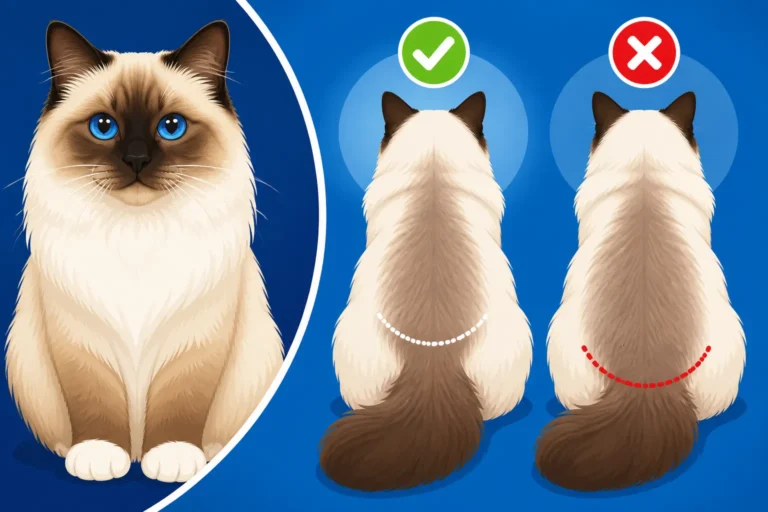
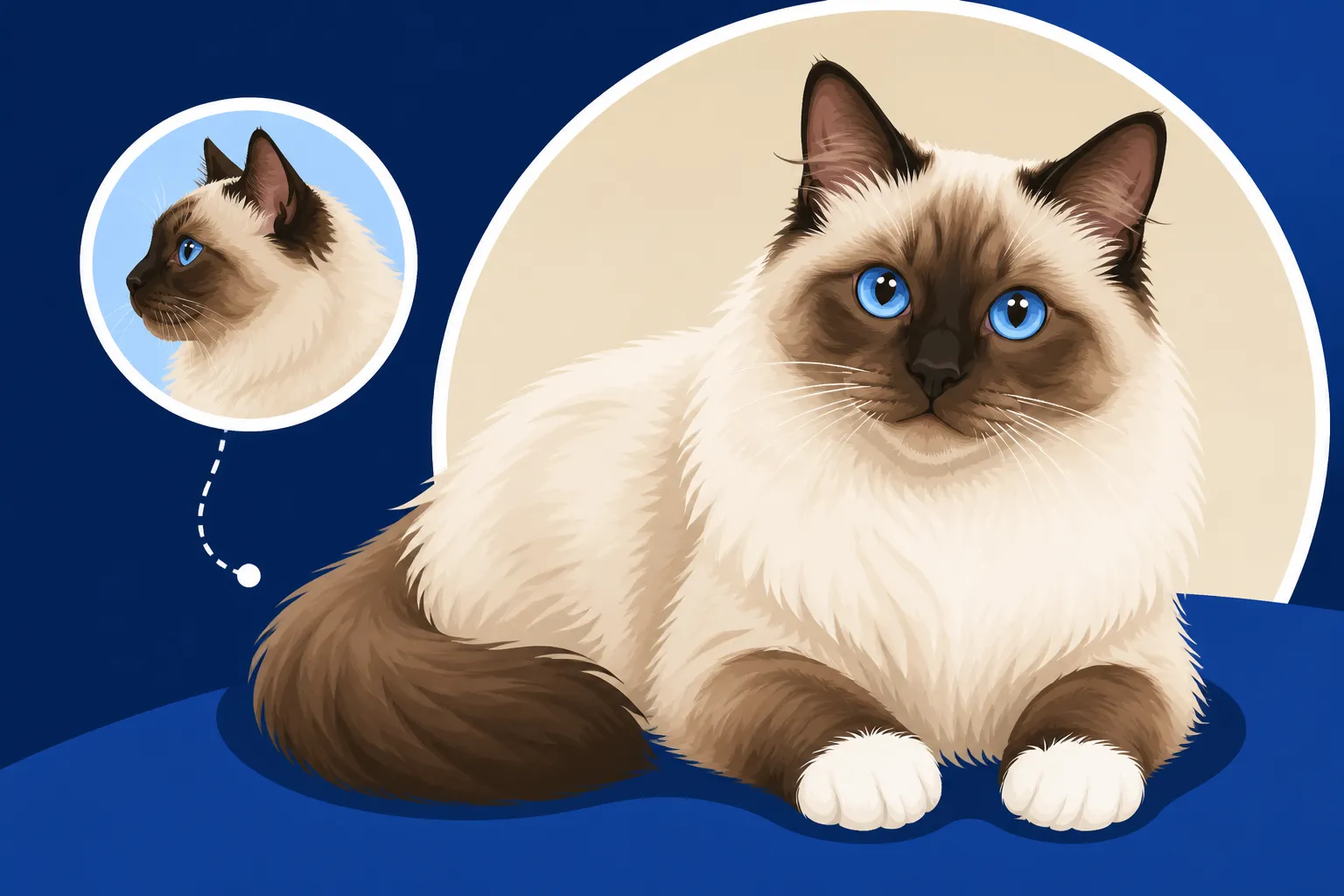
The "seal" in Seal Point refers to a specific, deep shade of brown, reminiscent of a dark seal's fur, or perhaps very dark, rich chocolate. These points – the ears, face mask, lower legs, and tail – are not black, though they can appear almost so in certain lighting or if the cat is particularly mature. Instead, they possess a warm, intense dark brown hue that is distinct and full of depth. Imagine a perfectly roasted coffee bean, or the darkest part of a redwood forest after a rain. That's the kind of profound richness you're looking for in a true Seal Point. It’s this deep, almost smoky brown that truly sets them apart from the cool, slate grey tones of a Blue Point or the softer, milkier browns of a Chocolate Point. The pigment extends evenly across these areas, creating a beautifully defined contrast with the lighter body.
Creamy Golden Body and White Gloves
The body of a Seal Point Birman is perhaps its most breathtaking feature, offering a dramatic canvas against which the dark points shine. It's not pure white; rather, it’s a beautiful creamy, often golden-toned, ivory or pale beige. This body color should be as light as possible, providing a striking contrast to the darker points. There should be a noticeable warmth to the cream, almost like spun gold or soft candlelight, that gives the Birman its truly sacred and ethereal appearance. This isn't a stark, cold white, but a gentle, inviting hue that invites you to stroke its silken fur. The goal is a clear demarcation, a clean line where the dark points meet the light body, without smudging or excessive shading on the torso itself.
And then, of course, we have the legendary white gloves. These are the Birman's crowning glory, the feature that makes them truly unique among pointed breeds. On the front paws, the white should cover just the paw, ideally forming a symmetrical "glove" that ends in a straight line across the top of the paw. On the back paws, the white extends a little higher, forming "gauntlets" or "laces" that should ideally taper to an inverted "V" shape and cover the hock joint. These gloves must be pure white, pristine against the dark points and creamy body. This is where the magic of the Birman truly comes alive, and it's a feature breeders strive endlessly to perfect. What a Birman's Front Gloves Should Look Like will give you an even closer look at what makes these white mittens so special.
The Deep Blue Eyes
No Birman, regardless of point color, is complete without those mesmerizing blue eyes. For a Seal Point, these eyes are particularly striking, acting as brilliant sapphires against the rich, dark mask. The ideal eye color is a deep, vivid blue – the more intense, the better. You're looking for an almost electric, piercing blue that truly captures your gaze. This isn't a pale, washed-out blue, but a confident, clear, and profound hue. These luminous eyes contribute significantly to the Birman’s gentle and soulful expression, and they are a non-negotiable part of the breed standard. They complete the overall aesthetic, adding a touch of serene beauty that is simply captivating. The depth of that blue is something truly special, a mirror to their calm and affectionate nature. Which Eye Color a Birman Must Have delves deeper into what makes those Birman eyes so important.
How Seal Points Develop and Change Over Time
One of the most fascinating aspects of owning a pointed cat, especially a Birman, is watching their colors bloom and evolve. They don't arrive fully formed in their adult splendor; it's a journey of gradual transformation, influenced by both genetics and their environment.
Born White, Points Develop Later
If you’ve ever seen a litter of newborn Birman kittens, you might have been surprised to find them almost entirely pure white. It’s quite a sight! This isn't a mistake or a trick of genetics; it's due to a phenomenon called temperature-sensitive albinism. The gene responsible for their pointed coloration only expresses itself in cooler parts of the body. Inside the queen's warm womb, the kittens are uniformly warm, so the pigment doesn't develop. It's only after they are born and exposed to the ambient temperature that their cooler extremities – ears, nose, paws, and tail – begin to show their true colors.
Over the first few weeks, tiny hints of the seal points will start to appear, usually beginning with the ears and nose. These first delicate smudges of color are exciting indicators of the magnificent cat they will become. It's a slow reveal, a gradual painting of their beautiful future. By the time they are ready to leave their mother, usually around 12 to 13 weeks, their points will be much more defined, though still softer than what they will eventually achieve. How a Birman Kitten's Points Come In offers a charming peek into this early development phase.
Darkening with Age and Environment
The points of a Seal Point Birman don't just appear; they deepen and intensify over the cat’s lifetime. A young adult Birman will have beautifully defined points, but these will likely become richer and darker as they mature. This isn't just about age; it's also influenced by environmental factors. Cats living in cooler climates, or those who spend more time in cooler rooms, tend to develop darker points and sometimes even a slight darkening of their body fur. The color-producing enzyme works more efficiently at lower temperatures, so consistent coolness allows more pigment to develop.
It’s completely normal for a senior Birman to have points that appear almost black, and their creamy body fur may also take on a deeper, more golden-beige hue over time. This natural darkening is part of their charm, a testament to their journey through life. However, sudden or uneven darkening could sometimes indicate an underlying health issue, so always keep an eye on your cat's overall health alongside their beautiful coat. Why a Birman's Points Darken as It Ages goes into more detail about this fascinating process.
The Role of Grooming in Maintaining the Look
While the color itself is largely genetic and temperature-dependent, keeping a Seal Point Birman looking its best absolutely relies on consistent grooming. Their single, silky coat is less prone to matting than some other long-haired breeds, but it still requires regular attention to prevent tangles and keep it lustrous. A good, gentle comb used a few times a week will help remove loose hairs and prevent the build-up of dirt that can dull their beautiful body color.
For those pristine white gloves, grooming is even more crucial. Birmans love to explore, and their white paws can easily pick up stains from litter, mud, or anything else they might step in. Using a low-dust, non-clumping litter, perhaps from a brand like Chewy, can make a huge difference in preventing discoloration. Regular paw checks and gentle cleaning with a pet-safe wipe can help maintain that brilliant white. A clean coat, especially on the body, ensures that the contrast with their dark points remains as striking as possible. Keeping a Birman's White Gloves White offers practical tips for keeping those magnificent mittens sparkling.
Distinguishing a Seal Point from Other Birman Colors
While all Birmans share the same enchanting blue eyes and characteristic white gloves, their point colors can vary widely. It’s easy to confuse a Seal Point with some of the other darker shades, but with a keen eye, you can spot the subtle yet significant differences.
Seal Point vs. Chocolate Point
This is perhaps the most common point of confusion. Both Seal Points and Chocolate Points have dark brown points, but the key lies in the shade of brown.
- Seal Points: As discussed, their points are a deep, rich, often cool-toned dark brown. Think dark espresso or a mahogany stain. Their nose leather and paw pads will also be a corresponding dark brown, sometimes almost black. Their body color is typically a warm cream or golden beige.
- Chocolate Points: These cats have a softer, warmer, milkier brown, often described as a medium chocolate bar. It’s less intense than a seal point and has a discernible reddish undertone, especially in direct sunlight. Their nose leather and paw pads will be a lighter, cinnamon-pink or milk chocolate brown. The body color is usually a warmer ivory or pale fawn.
Here's a quick comparison table:
| Feature | Seal Point Birman | Chocolate Point Birman |
|---|---|---|
| Point Color | Deep, rich, dark brown (like espresso) | Softer, warmer, medium brown (like milk chocolate) |
| Nose Leather | Dark brown to almost black | Cinnamon pink to milk chocolate brown |
| Paw Pads | Dark brown to almost black | Rosy pink to milk chocolate brown |
| Body Color | Creamy golden ivory, light beige | Warmer ivory, pale fawn |
| Undertone | Often a cooler, more intense dark brown | Distinct reddish/caramel undertone |
Seal Point vs. Blue Point
Distinguishing a Seal Point from a Blue Point is generally easier, as the color difference is more pronounced.
- Seal Points: Again, think deep, warm, dark brown.
- Blue Points: These Birmans have points that are a distinct slate grey or grey-blue. Imagine the color of freshly fallen snow on a shadowy winter's day. Their nose leather and paw pads will be a slate grey. Their body color is a cooler, almost icy white or pale blue-white, contrasting beautifully with the cool grey points. The overall impression is one of ethereal coolness, rather than the Seal Point's warm richness. If you want to dive deeper into the aesthetics of their cool-toned cousins, What a Blue Point Birman Looks Like provides a great overview.
Seal Point vs. Lilac and Red Points
While less common, it's good to be aware of Lilac and Red Points to fully appreciate the spectrum of Birman colors.
- Lilac Points: These are even paler than Blue Points, featuring a delicate, frosty grey with a distinctly pinkish or lavender undertone. Their body color is an off-white, almost magnolia shade. They have pinkish-lavender nose leather and paw pads. They are incredibly elegant and subtle.
- Red (Flame) Points: These Birmans have points that range from a warm, marmalade orange to a deeper, coppery red. Their body color is typically a creamy white with possible subtle apricot shading. Their nose leather and paw pads are rose pink. These are quite eye-catching and bring a vibrant warmth to the breed. The rarity and unique beauty of these lighter points often mean they come with a higher price tag. Why a Lilac or Cream Point Birman Costs More can tell you more about this.
The Birman Standard and Seal Point Perfection
For breeders and enthusiasts, a Seal Point Birman isn't just about having dark points; it's about adhering to a specific standard that ensures the breed's distinct beauty and consistency. Every detail, from the intensity of the points to the crispness of the gloves, plays a role.
Ideal Point and Body Color Balance
The beauty of a Seal Point Birman lies in the striking contrast between its dark points and its lighter body. The ideal scenario is for the points to be a rich, deep seal brown, well-defined and uniformly colored on all the extremities. The body color, conversely, should be as pale as possible – a creamy golden ivory. There should be a clear, clean line where these colors meet, with no smudgy transitional areas on the torso.
This balance is crucial because it highlights the point coloration that is so characteristic of the Birman breed. If the body color is too dark, or the points are not intense enough, the overall effect is diminished. Breeders meticulously select pairings to achieve this perfect harmony, striving for that "golden sheen" on the body that makes the contrast truly pop. It’s an art and a science, ensuring each kitten has the potential to grow into a breathtaking example of the breed.
Perfect White Gloves and Laces
The white gloves are, without a doubt, the defining feature of the Birman. For a Seal Point, these pristine white markings provide a brilliant counterpoint to the deep brown points. The ideal front gloves should be perfectly symmetrical, stopping at a straight line where the paw meets the leg. On the hind legs, the "laces" should extend higher, ideally tapering to an inverted 'V' shape on the back of the leg, covering the hock but not extending up into the flank.
Achieving perfect glove symmetry and length is notoriously difficult, which is why a Birman with exquisite gloves is so highly prized. Breeders spend years working to produce kittens with ideal markings, as even slight imperfections can result in a cat being considered "pet quality" rather than "show quality." The crispness and purity of the white are paramount; any smudges or discoloration from their point color are considered faults. What a Birman's Back Lace Should End and What a Birman With Four Even Gloves and Matching Laces Costs give you an insight into the meticulous standards applied to these stunning features.
Overall Impression: The Sacred Cat of Burma
Beyond the individual color components, the Seal Point Birman is meant to present a harmonious, elegant, and gentle overall impression. The dark, rich points, the creamy body, and the brilliant blue eyes all combine to create a cat that embodies grace and serenity. The soft, silky coat and well-balanced proportions contribute to an appearance of quiet dignity. Their placid temperament, often described as a "middle ground" between the boisterous Siamese and the sedentary Persian, perfectly complements their regal looks.
This is the “Sacred Cat of Burma,” a living legend, whose appearance should evoke a sense of ancient beauty and calm sophistication. When you look at a well-bred Seal Point Birman, you should feel a sense of peaceful admiration, a connection to the storied past of this magnificent breed. Their appearance is not just aesthetic; it’s a reflection of their history and gentle nature. Why the Birman Is Called the Sacred Cat of Burma reveals the enchanting legend behind this beloved breed. To maintain their overall health and well-being, including their glorious coat, many owners opt for comprehensive pet insurance, like plans offered by Healthy Paws, which can help cover unexpected vet bills. Regular, high-quality nutrition can also contribute to a gleaming coat and vibrant health.
Disclaimer
This article is for general informational purposes only and does not constitute professional advice. Laws, prices and regulations vary by location and change over time. Consult a qualified professional for guidance on your specific situation.