Whether a Rescue Birman’s Gloves Prove Anything
It's a common, understandable thought when you're looking for a rescue Birman: you see those distinctive white "gloves" on their paws, and you wonder, "What do they really tell me about this cat's background?" We're all drawn to the beauty of the breed, and the gloves are such an iconic part of their look. But the truth is, while a Birman's gloves are a hallmark of the breed, in a rescue situation, they often tell you far less about a cat's past quality or health than you might think. This guide will help you understand why, and what truly matters when you open your heart and home to a rescued Birman.
The Enduring Mystery of Birman Gloves
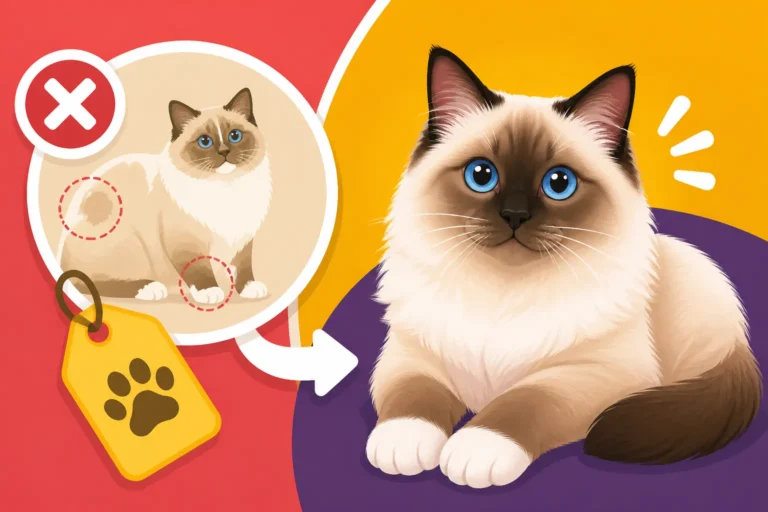
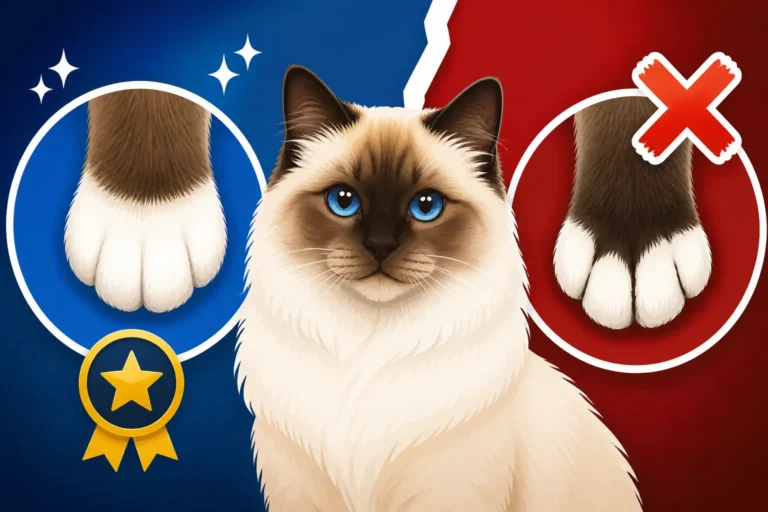
When you think of a Birman, the image that usually comes to mind is a striking cat with deep blue eyes, a luxurious coat, and those unmistakable white paws, often referred to as "gloves" on the front and "laces" on the back. These markings are not just a pretty feature; they're a defining characteristic of the breed, meticulously described in every official standard worldwide. Breeders work incredibly hard to produce kittens that meet these precise aesthetic requirements, striving for perfect symmetry and specific lengths of white on each paw.
However, even in the most carefully planned litters, achieving "perfect" gloves is notoriously difficult. Genetics are wonderfully complex, and while every Birman carries the gene for gloving, the exact expression – the crispness, the height, the evenness – can vary wildly. This means that a kitten from excellent, health-tested parents might still end up with a "mismark" – perhaps one glove is too high, or a lace isn't quite symmetrical. These variations don't make the cat any less of a Birman, nor do they impact its health or temperament, but they do mean it won't be a show cat. This is why many otherwise wonderful Birmans are sold as pets rather than breeding or show prospects, and it gives you a glimpse into why a rescue Birman's gloves aren't always a direct indicator of their heritage. Why a Mismarked Birman Is a Pet Price Cat delves deeper into this reality.
For a breeder, the gloves are everything in terms of show potential. Judges at cat shows scrutinize these markings with an eagle eye, assessing their crispness, their evenness across the front paws, and the way the white "laces" run up the back legs. A tiny splash of white too high on a front leg, or an uneven line at the back, can mean the difference between a champion and a cat destined for a loving pet home. They spend years trying to understand How a Breeder Judges a Birman Kitten's Gloves and perfect their lines. But for a pet owner, and especially for someone considering a rescue, these fine points of exhibition quality really don't matter in the grand scheme of things. Your focus should always be on the cat's health, personality, and suitability for your home, not on whether its back laces are perfectly matched.
Why a Rescue Birman's Gloves are Less About Pedigree and More About History
When a Birman ends up in rescue, its past is often a mosaic of unknowns. It might have been a cherished pet whose owner fell ill, or a retired breeding cat, or perhaps even an impulse buy that didn't work out. In such scenarios, the appearance of their gloves can be quite varied. A rescue Birman might have perfectly symmetrical gloves because it was indeed well-bred, but sold as a pet due to other minor "faults" that meant it wouldn't excel in the show ring. Or, conversely, it might have wildly asymmetrical gloves because it came from a backyard breeder who wasn't focused on breed standards or, more critically, health testing.
The reality is that many Birmans entering rescue are older cats, and age can play tricks on the appearance of their coat and points. As Birmans get older, their point coloration (the darker areas on their face, ears, legs, and tail) tends to darken significantly, sometimes appearing almost black. This natural phenomenon can make the contrast with their white gloves less distinct, or even give the impression of a less-than-perfect glove, simply due to the surrounding fur color. Why a Birman's Point Color Deepens With Age explains this fascinating aspect of their coat. A cat that had perfectly acceptable gloves as a kitten might, at ten years old, have much darker points that make the white seem less prominent or defined. You simply can't look at an older rescue Birman's gloves and definitively "prove" its original breeding quality.
What's more, the life a rescue Birman has led can profoundly affect its coat condition, which in turn impacts how its gloves appear. A cat that has been neglected, poorly fed, or allowed to roam outdoors might have a dull, matted coat. Mats can obscure the clear lines of the gloves, and general poor grooming can lead to staining on the white fur. These factors are about the cat's past care, not its genetic predisposition to glove quality. So, while you might see a Birman with dingy or poorly defined gloves in a rescue, it's far more likely to be a reflection of its journey and the care it has (or hasn't) received, rather than an inherent flaw in its breed genetics. A little TLC and a proper grooming routine can work wonders in restoring a Birman's natural beauty, white gloves and all.
What a Rescue Birman's Appearance Does Tell You (And What It Doesn't)
While the specifics of a rescue Birman's gloves won't tell you much about its pedigree or original "quality," its overall physical appearance can provide vital clues about its general health and the care it has received. Forget the glove symmetry for a moment and look at the bigger picture. Is its coat dull or matted, or is it soft and silky? A healthy Birman should have a beautiful, flowing coat with minimal matting, especially since they don't have a dense undercoat like some other longhaired breeds. Is it at a healthy weight, or is it too thin or obese? Look for clear eyes, clean ears, and a generally alert demeanor. These are the truly important visual indicators.
What's genuinely important for a rescue Birman isn't the aesthetic perfection of its markings, but rather its underlying health. Unfortunately, comprehensive health histories are often missing for rescue cats, making initial vet checks absolutely critical. When you adopt a rescue Birman, prioritize a thorough veterinary examination. The vet will be able to assess its overall condition, check for common Birman health issues like heart murmurs (which could indicate Hypertrophic Cardiomyopathy, or HCM) or signs of kidney disease, and discuss necessary vaccinations and parasite control. While you might pay significantly less for a rescue Birman than a kitten from a breeder – Why a Rescue Birman Costs a Tenth of a Bred One – you should still budget for these initial health checks and ongoing care.
This is where thinking about potential future costs comes in. While you're focusing on the cat's current state, it's wise to consider pet insurance, especially for a purebred with some known genetic predispositions. Companies like Healthy Paws offer coverage that can be a lifesaver if an unexpected health issue arises. For their daily needs, platforms like Chewy make it easy to order high-quality food, litter, and grooming supplies, often delivered right to your door. If your vet recommends a fresh food approach, it can be beneficial for overall health and coat condition, even if you don't have a complete dietary history for your rescue.
What a rescue Birman's gloves emphatically don't prove is its inherent worth or capacity for love. A Birman with imperfect gloves is just as capable of being a devoted, affectionate companion as one with show-stopping markings. Their personality, their gentle nature, and their desire for companionship are far more important traits to observe and understand. A cat's past struggles, which might be reflected in its physical appearance, should evoke empathy, not judgment based on arbitrary aesthetic standards.
| Feature | What It Might Prove (or not) About a Rescue Birman's Gloves | What It Definitely Proves About a Rescue Birman's Health/Care |
|---|---|---|
| Perfect Symmetry | Good breeding (but could still be a pet due to other reasons). | Nothing about current health; could have underlying issues. |
| Uneven Gloves | Mismark from a breeder, or unknown background. | Nothing about health; cat is still a Birman. |
| Stained White Fur | Past environment, poor grooming. | Previous neglect of basic hygiene. |
| Dull/Matted Coat | Poor care or nutrition. | Current poor health, neglect, or stress. |
| Bright Eyes/Alertness | General well-being, healthy. | A cat with a good baseline state. |
| Healthy Weight | Consistent feeding, good metabolism. | Adequate nutrition and care. |
Moving Beyond Aesthetics: Prioritizing Health and Temperament in a Rescue Birman
When you're welcoming a rescue Birman into your family, shifting your focus from aesthetic "perfection" to foundational health and temperament is paramount. This breed is known for its placid, gentle nature, but a cat's past experiences can influence how quickly it adjusts to a new home. A comprehensive veterinary check-up should be your very first step. It's not just about a routine exam; it's about uncovering any potential health issues that might have gone unnoticed or untreated. For instance, Why a Rescue Birman Should Have Its Heart Checked is incredibly important, as HCM is a concern in the breed, and a rescue might not have any history of regular echo screenings. Your vet can listen for murmurs and advise if further cardiac evaluation is needed.
Beyond heart health, Birmans can also be prone to Polycystic Kidney Disease (PKD), which is why Which Prescription Diet a PKD Positive Birman Ends Up On is a critical consideration if this condition is identified. While genetic testing for PKD1 can clear a cat, a rescue may not have this documentation. Dental health is another big one; many rescue cats arrive with significant dental disease, which can be painful and lead to other health problems. A vet will assess their teeth and recommend appropriate care. These health concerns are far more impactful on a Birman's quality of life than the precise markings on its paws. You'll want to ask your vet What a Birman's Annual Visit Includes Listening to Its Chest and other vital signs.
A Birman's temperament is truly one of its most endearing qualities. They are famously calm, affectionate, and intelligent, often forming deep bonds with their human companions. However, a rescue cat, regardless of breed, has likely been through some stressful experiences. They might be shy, reserved, or even a little withdrawn initially. Don't mistake this for a lack of affection; it's often a coping mechanism. The Birman's naturally placid nature can sometimes lead them to Why a Birman Hides Illness Behind a Placid Temperament, so it’s crucial to observe their behavior closely, even if they seem outwardly calm. Give them time, patience, and a quiet, safe space to decompress. Creating a predictable routine, offering gentle interaction, and providing a consistent environment will help them to relax and show their true, loving selves. How Long a Birman Takes to Settle After a Move can vary, but consistency is key.
When considering a rescue Birman, ask about any known history, however sparse. If they were a retired breeding cat, inquire if the previous owner has any health records, especially concerning heart scans or genetic tests. While breeders should always be transparent about these, rescue organizations do their best with the information they receive. Understanding What to Ask About a Birman Line's Heart Scans can help you formulate good questions. Ultimately, adopting a rescue Birman is an act of love and commitment to their well-being, irrespective of their past or the cosmetic details of their appearance. The true beauty of a rescue Birman lies in the bond you build and the happy, healthy life you can provide. Your total investment over its life, as outlined in What a Birman Costs From Kitten to Sixteen, will be more about care than initial price. Even a Birman with "clear papers" and a great start still needs regular vet check-ups; How Often a Birman With Clear Papers Still Needs a Vet helps emphasize the ongoing commitment.
Disclaimer
This article is for general informational purposes only and does not constitute professional advice. Laws, prices and regulations vary by location and change over time. Consult a qualified professional for guidance on your specific situation.