Whether a Birman Ever Yowls
One of the most common worries new Birman owners have is trying to understand their cat's vocalizations, especially when they hear a loud, drawn-out sound that makes them wonder if their placid feline is actually "yowling." It's a valid concern, as a yowl can signify something serious, but with Birmans, those loud, distressing cries are surprisingly rare and often point to a clear underlying issue rather than just a chatty personality. This guide will help you understand the nuances of your Birman's voice, differentiate their typical sounds from a true yowl, and know exactly what to do if you ever hear that unmistakable cry.
The Birman's Signature Soundtrack: A Muted Melody
If you've spent any time around Birmans, you'll quickly discover they aren't exactly known for their booming vocalizations. In fact, their quiet, gentle nature extends quite remarkably to their voices, setting them apart from many other cat breeds that might be more, shall we say, opinionated with their meows.
Distinguishing the Birman's Trill from a Siamese Shout
When you picture a cat talking, you might think of the incredibly vocal Siamese, famous for their loud, insistent meows that can sound like full-blown conversations. They're expressive, demanding, and you always know when a Siamese has something to say, whether it's about an empty food bowl or a desire for immediate cuddles. The Birman, however, lives at the opposite end of this vocal spectrum. Their typical "conversations" are far more understated.
Birmans are masters of the soft trill and the gentle chirp. These are often sounds of contentment, greeting, or mild inquiry. Imagine your Birman trotting to meet you at the door, head-butting your leg, and letting out a soft, rolling "prrrrt" sound – that’s classic Birman. It’s a warm, welcoming sound, almost like a bird's soft call, and it’s a far cry from a demanding shout. Their meows, when they occur, are usually quite delicate, almost whispered, and are often reserved for specific, gentle requests. They might let out a soft "mew" to indicate they'd like you to open a door, or to gently remind you that it's dinner time, but they rarely raise their voice to a truly loud volume. This is why when they do make a louder sound, it can be quite startling and concerning for their owners. The Small Trill a Birman Uses Instead of a Meow perfectly encapsulates this unique vocal habit. They are not a demanding breed by nature, preferring to observe and then quietly invite interaction rather than insist upon it.
The ancestry of the Birman plays a significant role in this vocal difference. While they share some distant roots with color-point cats, the influence of more placid, long-haired breeds in their early development has helped cement their reputation as serene companions. They aren't engineered for constant vocal feedback; rather, their charm lies in their quiet presence and affectionate, non-intrusive ways. This makes their very subtle forms of communication all the more precious, as you learn to decode their quiet nudges and soft sounds.
Why the Birman Never Inherited the Siamese Voice
The very essence of the Birman breed seems to gravitate towards tranquility and gentle companionship, and this deeply ingrained temperament extends to their vocal habits. Historically, when the Birman breed was being established and refined, particularly after its near-extinction post-World War II, breeders carefully selected for specific traits. While the precise genetic mechanisms that dictate vocal volume are complex and not fully understood, it's clear that the breed standard and the breeders' focus leaned heavily into creating a calm, adaptable, and quiet companion. Why the Birman Never Inherited the Siamese Voice highlights this divergence perfectly.
This isn't to say a Birman can't make noise; they absolutely can. But their default setting is one of quietude. Their placid nature means they are generally less prone to the high-strung anxieties or constant need for communication that might drive more vocal breeds to frequent, loud expressions. A Birman's emotional landscape typically runs on a calmer current. They might follow you from room to room, settling quietly at your feet or on a nearby chair, simply content to be in your presence. Why a Birman Follows You Without Demanding Anything illustrates this beautifully; their presence is a silent form of affection.
Therefore, when a Birman deviates from this characteristic quietness and begins to make louder, more prolonged sounds – especially those bordering on a yowl – it's a significant indicator that something is genuinely amiss. It’s not just them being chatty; it’s a direct signal of discomfort, distress, or an urgent need that their usual soft trills and gentle meows can't adequately convey. Understanding this inherent quietude is crucial for any Birman owner, as it primes you to recognize a true cry for help when it occurs.
Decoding the Cat Yowl: What It Really Means
Before we delve into specific Birman vocalizations, it’s important to understand what a "yowl" truly represents in the broader context of cat communication. It’s not just a loud meow; it carries a distinct quality and often signals a specific, usually urgent, message.
The Difference Between a Meow, a Trill, and a Yowl
Cats have an impressive vocal repertoire, far more varied than many people realize. Learning to distinguish these sounds is key to understanding your feline friend, especially a Birman, whose communication is often subtle.
A meow is perhaps the most recognized cat sound. It's a versatile vocalization that can express a wide range of emotions and intentions, from a polite greeting to an insistent demand. The pitch, length, and volume of a meow can vary greatly depending on the cat and the context. For most cats, it’s a primary way of communicating with humans. For a Birman, however, their meows are typically soft, brief, and used sparingly. They might offer a little "mew" when they're particularly excited about breakfast or when they've successfully led you to the toy they want you to play with.
A trill or chirp is a rolling, purr-like sound made with the mouth closed or barely open, often rising in pitch. It’s a sound of positive emotion, often used by mother cats to call their kittens, or by friendly adult cats to greet each other or their human companions. It usually signifies happiness, a friendly invitation, or a contented greeting. This is where your Birman truly shines! As discussed, the Birman’s communication style heavily relies on these gentle, melodic trills. It's their way of saying hello, expressing affection, or asking for a gentle pat. What a Birman Is Saying With That Short Trill explores this delightful aspect of their personality. These sounds are almost universally positive and comforting.
A yowl, on the other hand, is a completely different beast. It's typically a long, drawn-out, often low-pitched, mournful, or distressed sound that is usually much louder and more resonant than a typical meow. It sounds less like a request and more like a complaint, a warning, or a cry for help. A yowl carries a sense of urgency, often accompanied by body language that indicates stress, fear, pain, or aggression. It’s designed to be heard and to signal a significant issue. When a cat yowls, they are not asking politely; they are expressing profound discomfort or a powerful drive.
Common Reasons for a True Yowl in Any Cat
While Birmans are generally quiet, understanding the universal reasons for a true yowl in any cat is vital, as these reasons would apply to a Birman too, making a yowl from them a serious red flag.
One of the most frequent reasons for yowling, especially a prolonged and repetitive yowl, is mating calls. Unspayed female cats in heat will yowl to attract mates, and unneutered males may yowl in response to the scent of a female in heat, signaling their presence and readiness. This can be an incredibly loud and persistent sound, often described as mournful or unsettling, and it can go on for hours. If your Birman is intact and yowling, this is likely the first possibility to consider.
Territorial disputes can also trigger yowling. Cats are highly territorial, and if they perceive an intruder (another cat, a strange animal, or even a human) in their space, they might yowl as a warning or a challenge. This yowl is often accompanied by aggressive postures, puffed-up fur, and flattened ears. An indoor Birman might yowl if it sees a stray cat outside its window, feeling its territory threatened.
Perhaps the most concerning reason for a yowl is pain or sudden injury. A cat in acute pain, whether from an internal issue, an injury, or a sudden accident, may yowl loudly and repeatedly. This isn't a conversational meow; it's a raw expression of suffering. Given the Birman's tendency to hide illness, a yowl in this context is an emergency signal. You might notice them limping, guarding a specific area of their body, or being unusually withdrawn. Why a Placid Birman Hides Pain is a crucial read for any Birman owner, as it emphasizes how quietly they suffer.
Finally, cognitive dysfunction in older cats can manifest as increased vocalization, including aimless or confused yowling, especially at night. This is similar to dementia in humans, where disorientation leads to anxiety and vocal expression. Older cats might forget where they are, what they’re doing, or even who their people are, leading to distressed vocalizations. This is a common phenomenon that needs veterinary assessment. What an Old Birman Stops Doing Once It Passes Ten also touches upon changes in an aging Birman’s behavior that could include vocal shifts.
| Vocalization Type | Birman Characteristic (Typical) | General Cat Yowl Characteristic (Atypical for Birman) |
|---|---|---|
| Typical Meow | Soft, almost whispered; infrequent, used for gentle requests or greetings. | Can range from soft to loud; variable frequency, used for many forms of communication. |
| Trill/Chirp | Common, pleasant, often used as a greeting or to express contentment. | Present in many breeds, often a sign of friendliness or calling kittens. |
| Volume | Generally very low; often requires close proximity to hear clearly. | Can be very loud, piercing, and designed to carry over distances. |
| Pitch | Tends to be higher, softer, melodic. | Often lower, guttural, mournful, or high-pitched and distressed. |
| Duration | Short, quick bursts of sound. | Long, drawn-out, sustained vocalizations. |
| Context | Greetings, wanting gentle interaction, slight discomfort, curiosity. | Mating, territorial defense, severe pain, intense fear, cognitive decline. |
| Frequency | Infrequent and subtle; not a constant chatter. | Can be prolonged and repetitive, especially during heat cycles or distress. |
When a Birman Might Mimic a Yowl (and What It Usually Is)
Because Birmans are generally so quiet, any deviation from their soft trills and gentle meows can feel like a dramatic shift, making an owner wonder if their beloved companion is actually yowling. However, more often than not, what sounds like a yowl in a Birman is usually a heightened version of their typical communication, signaling a strong, but often less severe, need.
The Loud Meow of Discontent or Loneliness
While a Birman might not have the inherent vocal range of a Siamese, they certainly possess the ability to make their needs known, even if it requires a slight uptick in volume. When a Birman is truly discontent or feeling lonely, their usually quiet meow might become longer, more persistent, and louder than you're accustomed to hearing. This isn't typically the guttural, mournful sound of a true yowl, but rather a more emphatic, perhaps slightly whiny, meow designed to capture your attention effectively.
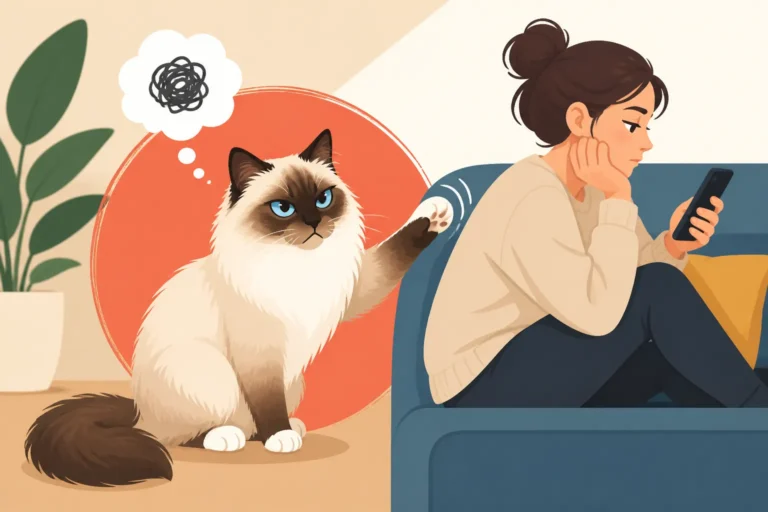
This type of vocalization often arises from their deep need for companionship and interaction. Birmans thrive on being part of the family, and if they feel ignored or left alone for too long, they can express their displeasure. Imagine coming home after a long day to find your Birman giving you a series of drawn-out, slightly louder meows as they rub against your legs. They might not be in pain, but they're definitely letting you know they missed you and are ready for some quality time. This is especially true for Birmans who are the only pet in the household. What a Lonely Birman Does clearly outlines the signs of a Birman longing for company, and increased vocalization is certainly one of them. They might pace, look pointedly at you, and then let out that "loud meow" of gentle complaint. It’s their unique way of saying, "Hey, I’m here, and I'd really like some attention now, please!"
Seeking Urgent Attention or Expressing Mild Discomfort
Sometimes, a Birman's unusual vocalization stems from a simple, yet urgent, need that they feel requires more emphasis than their usual quiet murmurs. This could involve an empty food bowl, a water fountain that has run dry, or even a toy that has rolled under the furniture, out of reach. In these situations, your Birman might produce a series of insistent, slightly louder meows that can have a "yowling" quality to them because of their persistence and slight increase in volume. It’s still within the realm of a meow, but it's clearly an elevated call for help or intervention.
Think about the scenario where your Birman is typically very polite about meal times, perhaps just sitting patiently by their bowl. If, however, their food is unusually late, or if you've forgotten to refill it, they might escalate their plea. That persistent, slightly louder sound isn't necessarily a yowl of pain, but rather a vocalization of "Hey! You forgot me! And I really need this now!" How a Birman Asks to Be Let In is another example of a heightened, but not distressful, vocal request.
Similarly, mild discomfort that isn't pain-related can prompt a louder vocal output. Perhaps their favorite napping spot is suddenly occupied by a laundry basket, or their litter box isn't quite as pristine as they prefer it to be. Birmans are generally clean creatures, and a dirty litter box can cause significant distress. While they may not explicitly yowl, they might utter a more pointed, persistent vocalization, coupled with body language like pacing near the box or giving you disapproving looks. These instances are usually easily remedied once you identify the source of their mild annoyance or urgent, yet simple, need.
Underlying Causes That Can Lead to Uncharacteristic Vocalizations
When a Birman, known for its quiet demeanor, suddenly starts making loud, uncharacteristic vocalizations, including sounds that resemble a yowl, it’s a strong indicator that something significant is happening. These changes are rarely just a cat deciding to be more chatty; they almost always have a root cause that needs investigation.
Medical Concerns and the Hidden Language of Pain
This is arguably the most crucial area for any Birman owner to understand when faced with unusual vocalizations. Given their incredibly placid and stoic nature, Birmans are remarkably adept at masking discomfort, illness, and pain. They don't typically cry out dramatically at the first sign of trouble. Instead, they often withdraw, become a little less interactive, or show subtle behavioral changes. Therefore, if a Birman does yowl, or emits prolonged, loud, distressed vocalizations, it should be treated as a genuine emergency and a strong signal of significant pain or acute illness. Why a Placid Birman Hides Pain cannot be stressed enough; their quietness about discomfort is a trait every owner must be aware of.
A range of medical issues can cause a Birman to yowl. Dental pain, for instance, can be excruciating. Cats are very good at hiding tooth decay or gum disease until it reaches an advanced, painful stage. A yowl might occur during or after eating, or if they accidentally touch a sensitive area of their mouth. Urinary tract infections or blockages are another common culprit. These conditions are incredibly uncomfortable and can cause cats to cry out in pain, especially when trying to use the litter box. Other possibilities include sudden injuries, such as a sprain or fracture, internal organ issues like kidney stones or pancreatitis, or even severe digestive upset. Any acute onset of pain can make a Birman, who would normally suffer in silence, vocalize in a way that demands immediate attention. If your Birman is suddenly vocalizing loudly and appears distressed, withdrawn, or is refusing food, a veterinary visit is not just recommended, it's essential. Why a Birman That Stops Following You Needs a Vet underscores the importance of seeking professional help for any significant behavioral shift, especially a vocal one.
Age-Related Cognitive Changes and Nocturnal Yowling
As Birmans gracefully age, they, like all senior cats, can experience a decline in cognitive function. This phenomenon, often referred to as Feline Cognitive Dysfunction (FCD) or "feline dementia," can lead to a variety of behavioral changes, and increased vocalization, including persistent, confused yowling, is a very common symptom. This is particularly noticeable at night.
An older Birman affected by FCD might wake up disoriented, unsure of where they are or why they're alone. This confusion and anxiety can manifest as aimless pacing accompanied by loud, mournful yowls. They might cry out in rooms where no one is present, seemingly calling for help or expressing their profound confusion. Their sleep-wake cycle can become disturbed, leading to them being awake and vocal at night when the house is otherwise quiet, which can be very distressing for both the cat and the owner. This isn't a sign of pain in the acute sense, but rather a sign of neurological distress and disorientation. What an Old Birman Stops Doing Once It Passes Ten further explores the changes in an aging Birman, and FCD is certainly a part of that journey for some.
Managing FCD involves a multi-faceted approach, usually under veterinary guidance. This might include maintaining a consistent routine to reduce anxiety, providing easily accessible resources (food, water, litter boxes), ensuring a safe and familiar environment, and enriching their day with gentle interaction. Your vet might also suggest dietary supplements or even medications that can help manage the symptoms of cognitive decline, potentially reducing the frequency and intensity of nocturnal yowling. These measures are designed to improve your aging Birman's quality of life and help them feel more secure and less disoriented, which in turn can reduce their need to vocalize out of confusion.
Addressing Unwanted Vocalizations in Your Birman
When your usually quiet Birman suddenly starts making loud, persistent noises that verge on a yowl, it's natural to feel concerned. The good news is that with a methodical approach, you can usually identify and address the root cause.
Rule Out Medical Issues First and Foremost
As we've emphasized, a Birman's default setting is quietude. This means that any significant, sudden, or persistent change in their vocalization, especially if it's loud or distressed, must be treated as a potential medical emergency. Before you even begin to consider behavioral causes, your absolute first step should be a thorough veterinary check-up.
Don't assume it's "just old age" or "just a quirk." Birmans are incredibly stoic, and a yowl is their body's way of overriding their natural tendency to hide discomfort. Your veterinarian will conduct a comprehensive physical examination, which might include checking their teeth for dental disease, palpating their abdomen for pain or abnormalities, and assessing their gait and joints for signs of injury or arthritis. They might recommend blood work to check for underlying systemic illnesses like kidney disease or thyroid issues, or a urine analysis for urinary tract infections. If Feline Cognitive Dysfunction is suspected in an older Birman, your vet can discuss diagnostic criteria and management strategies. The goal is to systematically rule out any physiological cause of distress before exploring behavioral interventions. Catching an illness early can make a world of difference in your Birman's prognosis and quality of life. Why a Birman That Stops Following You Needs a Vet serves as a vital reminder that behavioral shifts, including vocal changes, warrant professional veterinary attention.
Environmental Enrichment and Meeting Social Needs
Once your veterinarian has given your Birman a clean bill of health, or if the vocalizations are clearly not indicative of pain or serious illness, you can then turn your attention to behavioral and environmental factors. For Birmans, who are deeply social and sensitive creatures, meeting their emotional needs is paramount to their overall well-being and quiet contentment.
One of the most common reasons a healthy Birman might become overly vocal is a lack of social interaction or environmental enrichment. These cats thrive on companionship. If you work long hours or if your Birman is the only pet in the house, they might be expressing loneliness or boredom. Consider dedicating more focused playtime each day, perhaps with interactive wand toys (you can find a great selection on Amazon), or puzzle feeders that engage their minds. Even simple things like sitting quietly with them, offering gentle grooming, or having them join you in the room you're in can make a huge difference. Why a Birman Does Better With Company is a fundamental truth about this breed; they genuinely prefer company to solitude. If your lifestyle prevents you from providing constant companionship, consider adopting a second, equally placid cat as a companion for your Birman.
It’s also crucial to avoid inadvertently rewarding unwanted loud vocalizations. While it's hard to ignore a distressed cat, if you rush to give attention every time they make a loud, persistent meow (and you've ruled out medical issues), you might inadvertently be teaching them that this is the most effective way to get what they want. Instead, try to anticipate their needs – feeding on a schedule, initiating playtime before they demand it, and offering proactive affection. If they vocalize loudly, wait for a brief pause in the sound, then calmly address their need. This teaches them that polite, quiet communication, or patience, is more effective. How Many Times a Day a Birman Actually Speaks will remind you just how subtle their usual communication is, reinforcing the need to address any deviation with care and understanding.
Disclaimer
This article is for general informational purposes only and does not constitute professional advice. Laws, prices and regulations vary by location and change over time. Consult a qualified professional for guidance on your specific situation.