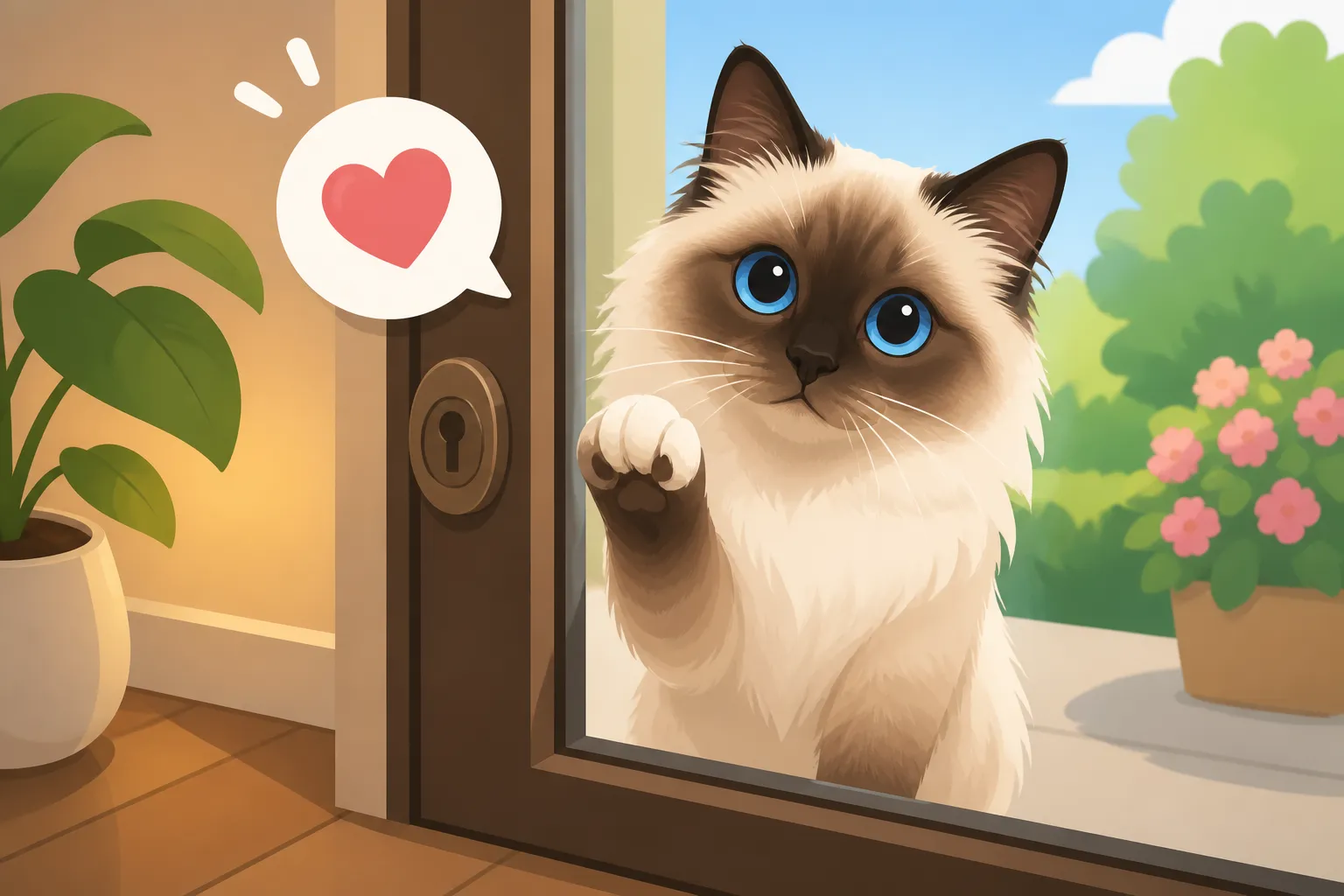
How a Birman Asks to Be Let In
It can be incredibly frustrating when you know your beloved Birman wants something, but you just can't quite figure out what it is they're trying to communicate. Unlike some more boisterous feline friends, Birmans are often quite reserved in their requests, especially when it comes to simply asking to be let into a room or through a door. This guide will help you decode those subtle signals, so you can respond to your Birman's gentle nudges and build an even stronger, more understanding bond.
The Subtle Symphony of a Birman's Request
Birmans are often described as the "gentle giants" of the cat world, and this extends to their communication style. They rarely demand attention or make loud, overt requests. Instead, they operate on a spectrum of subtle cues that, once understood, become perfectly clear. The trick is learning to read their particular brand of polite persistence.
The Silent Sentinel at the Door
One of the most common ways a Birman asks to be let in is by simply being there. They don't usually throw themselves at the door, scratch relentlessly, or unleash a series of plaintive meows. Oh no, that's far too dramatic for a Birman. Instead, you might find them sitting patiently, perhaps a foot or two from the closed door, gazing intently at the handle or directly at you if you happen to be nearby.
This silent vigil is their primary mode of operation. They will sit there, often perfectly still, as if hoping their mere presence will somehow manifest an open door. If you're busy or distracted, it's incredibly easy to miss this. They aren't going to make a fuss; they'll just be. Imagine a polite houseguest waiting quietly for you to notice them, rather than ringing the doorbell repeatedly. That's your Birman at the door. If you frequently find yourself wondering how your Birman materialized so silently next to you, it's likely they’ve been waiting for a while, giving you their most eloquent silent treatment.
The Delicate Door Scratch or Paw Tap
While a full-blown clawing attack on your lovely oak door is decidedly not a Birman trait, they might employ a very delicate physical cue. This isn't the frantic scratching of a cat desperate to get out or in, but rather a gentle, almost tentative, paw tap against the door or the doorframe. Sometimes, it's so soft you might think you imagined it.
It's more of a "knocking" than a "scratching." Picture them extending a single, gloved paw and making contact, perhaps just enough to create a faint whisper of sound, or sometimes no sound at all if it's on a soft surface. This isn't about damage; it's about making a quiet statement. If you're working in the next room and hear a faint thump or a barely audible scrape, investigate. It’s their way of saying, "Excuse me, I'm here, and I'd love to join you." How a Birman Asks Without Ever Raising Its Voice beautifully captures this nuanced approach to communication.
The "Accidental" Obstruction
Another classic Birman move when they want to be let in, or simply want your attention for any reason, is the "accidental" obstruction. They won't jump on your lap and swat your book away (usually!), but they might just… appear. You'll be walking from the kitchen to the living room, and suddenly, there's your Birman, sitting directly in your path. Not just off to the side, but strategically positioned to make you either stop or step over them.
They aren't trying to trip you, of course. This is their gentle, non-confrontational way of breaking your focus and drawing your eye to them. If you then look at them, they might slowly turn their head towards the door they want opened, or give you a soft, questioning gaze. It's a subtle redirect, a physical interjection that requires you to acknowledge their presence. They rely on their irresistible charm and your love for them to translate this maneuver into an action on your part. This kind of behavior really illustrates how A Birman Would Rather Be Near You Than On You still wants to be in your orbit.
Deciphering the Birman's Vocal Cues (or lack thereof)
If you're used to more vocal breeds, the Birman's approach to "speaking" can be a bit of a mystery. They certainly aren't known for their booming meows or endless chattiness. Their vocal repertoire is generally much quieter and more refined, making it all the more important to tune into their unique language.
The Infrequent, Soft Trill
Forget the loud, demanding meows you might associate with many cats. Your Birman's primary vocalization, especially when making a request, is a soft, melodic trill. It's like a tiny, rolled "r" sound, often accompanied by a purr, and it's incredibly endearing once you recognize it. This trill is almost like a polite question or an acknowledgement, rather than a forceful demand.
You'll hear it when they greet you at the door, when they're pleased to see you, or yes, when they're hoping you'll open a door for them. It's not a sound designed to cut through noise; it's a sound meant for close conversation. If you're in a noisy room, or if the television is on, you might miss it entirely. It’s usually a singular sound, not a series of repeated trills, making it fleeting. Learning to recognize this gentle sound is key, because it truly is their unique way of communicating. This quiet nature is explored further in The Small Trill a Birman Uses Instead of a Meow. They really do just use that lovely little murmur!
The Questioning Glance and Head Tilt
When a Birman wants something, their eyes are often doing a lot of the talking. They possess a remarkable ability to hold eye contact that feels deeply communicative. If they're waiting by a door and you make eye contact, you might notice a slight tilt of their head, or an exaggerated blink. This isn't just random movement; it's an unspoken query.
It's as if they're silently asking, "Are you going to do it?" or "Did you understand my subtle hints?" Their placid temperament means they're not going to jump up and down to make their point, but they will use their expressive blue eyes to convey their desires. Why a Birman Hides Illness Behind a Placid Temperament hints at this stoicism, which translates to their communication style even when they're well. They simply don't have the instinct to be overtly dramatic, relying instead on your perceptive understanding of their demeanor.
The Gradual Escalation (or lack of it)
One of the most important things to understand about a Birman's requests is their typical lack of escalation. Many cats, if ignored, will progressively get louder, more insistent, or more destructive. They might start with a meow, then a louder meow, then a caterwaul, followed by scratching furniture. A Birman, by contrast, is far more likely to simply give up and find something else to do if their initial, subtle requests are not met.
They are incredibly patient creatures, but that patience has its limits, and those limits often don't involve a dramatic outburst. If you consistently miss their quiet signals, your Birman might just decide it's not worth the effort and retreat. This isn't to say they'll never try again, but they won't typically throw a feline tantrum. They simply weren't bred for that kind of vocal insistence; Why the Birman Never Inherited the Siamese Voice explains this genetic difference. This means it's even more crucial for us as owners to be attentive and learn their quiet language.
Creating a Responsive Environment for Your Birman
Because Birmans are so subtle, it falls to us, their human companions, to create an environment where their quiet requests are heard and understood. It's about proactive observation and consistent responses that reinforce their gentle communication.
Establishing Routine and Observation
One of the best ways to understand when your Birman needs to be let in or out of a particular room is to observe their daily routines. Cats are creatures of habit, and Birmans are no exception. Do they always want into the bedroom right after you finish breakfast? Do they typically ask to go into the sunroom around midday? Knowing these patterns can give you a huge advantage.
Pay attention to the time of day and what activities usually precede their "door requests." If they always follow you to the bathroom, waiting patiently outside the door, then you know that particular door is a common point of interaction. Why a Birman Waits Outside the Bathroom Door delves into this common behavior. By anticipating their needs, you can open the door before they even have to make a request, strengthening your bond and making them feel truly understood. Keep a mental note, or even a literal one for a few days, of when and where they tend to wait. You'll likely see patterns emerge quickly.
Doorway Communication Strategies
While your Birman might not be the loudest communicator, you can certainly facilitate their requests and make it easier for them to "ask." One simple method is to use a gentle bell. Attach a small, quiet bell to the doorknob, low enough for your Birman to easily bat at it. Over time, they can associate the sound with you opening the door. However, ensure it's not a loud, jarring sound that might startle them or you. A small, tinkling bell is perfect.
Another strategy is simply ensuring clear access paths. Sometimes, a closed door is less about a deliberate barrier and more about human forgetfulness. Get into the habit of leaving doors ajar for rooms they frequently visit, especially if you're home. If you have rooms that are strictly off-limits, that's fine, but for the rest, a slightly open door can prevent many unspoken requests. Consistency is key here; if you respond promptly and positively when they use their subtle cues, they'll learn that their quiet efforts are effective.
Technology to Bridge the Gap
In today's world, technology can be a huge help in understanding our quiet companions. If you're often in another part of the house, or if you work from home and need to focus, a pet camera can be incredibly useful. Many brands, including those found easily on Amazon, offer affordable options. Set one up facing a frequently used door, and you can quickly glance at your phone to see if your Birman is staging a silent protest outside.
Some smart home devices can also be configured with motion sensors that detect movement outside a door and send you an alert. While this might be overkill for some, for a genuinely quiet Birman, it can be the difference between a satisfied cat and one who feels ignored. Even something as simple as a baby monitor placed near a common doorway can help you pick up on those faint trills or paw taps that might otherwise be missed. Amazon offers a wide range of these devices, from simple webcams to more advanced pet monitoring systems, allowing you to choose what fits your lifestyle and your Birman’s needs.
Common Scenarios and Misinterpretations
Understanding your Birman's "let in" requests isn't always straightforward. Their gentle nature can sometimes mask other needs or intentions, making careful interpretation essential.
The "I Just Wanted to See What You Were Doing" Request
It’s easy to assume that if your cat wants into a room, they have a very specific purpose in mind – food, a litter box, a favorite toy. But for a Birman, their request to be let in often stems from their profound desire for companionship. They might not want anything more than to simply be in the same room as you, even if they just curl up in a corner and nap.
They are incredibly people-oriented cats, and their calm demeanor means they don't always need to be on you or demanding your interaction. They are often content to just be near you, observing. So, when your Birman sits patiently by the door, it might not be a mission for a specific item, but simply a desire for proximity. This is a testament to their nature, as How a Birman Follows You Room to Room highlights, demonstrating their quiet devotion and preference for being part of your daily life, no matter how mundane the activity.
When "Let In" Means "I'm Unwell"
This is a critical point for any Birman owner. Their placid, stoic nature, while endearing, can also make it incredibly difficult to tell when they are feeling unwell. A sudden change in their "asking" behavior, no matter how subtle, could be a sign that something is amiss. If your Birman, who usually waits patiently, suddenly starts tapping the door more persistently, or if they stop asking to come into a favorite room entirely, it warrants closer investigation.
Because Birmans are so prone to hiding pain or discomfort, a shift in their communication can be one of the first indicators that they're struggling. They might be seeking comfort, or trying to alert you in the only way they know how. This connects to the larger issue that Why a Birman Hides Illness Behind a Placid Temperament addresses; their quiet disposition means you have to be extra vigilant for behavioral changes that hint at health problems. Never dismiss a sudden, unexplained change in their quiet requests as just "being weird"; it's always worth monitoring closely.
Training Your Birman to "Speak" More Clearly
While Birmans won't suddenly become boisterous, you can gently encourage them to be slightly clearer in their requests through positive reinforcement. If your Birman trills when you open the door, or if they give you that questioning glance, respond immediately with praise and perhaps a gentle stroke. This reinforces that their subtle efforts are recognized and rewarded.
Avoid inadvertently rewarding unwanted behaviors, like excessive scratching (if it were to occur, which is rare for a Birman) or desperate meows (also rare). Instead, focus on the calm, polite actions. When they simply sit and look, acknowledge them, then open the door. Over time, they'll learn that their quiet communication is understood. Remember that Why Praise Motivates a Birman More Than Food is often true for Birmans; their desire for your approval and affection can be a powerful motivator in training, more so than many food-driven breeds. Consistency and patience from your end will go a long way in nurturing their confidence in communicating with you.
| Birman "Asking" Behavior | Other Breeds (Common Examples) | Owner Interpretation | Recommended Action |
|---|---|---|---|
| Silent wait, direct stare | Loud meows, frantic scratching | "I'm here, I want in" | Acknowledge, open door |
| Gentle paw tap/nudge | Persistent scratching, body slams | "Please notice me" | Investigate, open door |
| Soft trill, quiet chirps | Demand meows, yowling | "I'd like to join you" | Listen closely, respond |
| Sitting in your path | Jumping on counters, playful nips | "Look at me!" | Stop, make eye contact, respond |
| Subtle head tilt/eye contact | Extended vocalizations, pawing | "Did you understand?" | Affirm, fulfill request |
Disclaimer
This article is for general informational purposes only and does not constitute professional advice. Laws, prices and regulations vary by location and change over time. Consult a qualified professional for guidance on your specific situation.