How to Slow a Fast Eating Birman
It’s a common scenario: you put down your Birman’s meal, and before you can even turn around, half of it has vanished, often followed by a suspicious silence and then… well, you know. Watching your beloved Birman devour their food at warp speed, only to regret it moments later, is frustrating and concerning. This guide is here to walk you through understanding why your gentle giant might be eating so quickly and, more importantly, how to help them slow down for better digestion and overall health.
Why Your Birman Becomes a Food Hoover
Before we dive into solutions, it’s helpful to understand why your Birman might be inhaling their meals. It’s rarely about them being ungrateful for their delicious dinner; often, there are deeper instincts or learned behaviors at play that turn mealtime into a race.
The Instinctive Drive to Eat Quickly
Cats, including our refined Birmans, carry a primal instinct from their wild ancestors. In nature, a meal could be stolen by a competitor or disappear quickly. Eating fast was a survival mechanism to secure precious calories. Even though your Birman lives a life of luxury with a guaranteed next meal, these ancient instincts can still surface. If they came from a larger litter, especially if food was scarce or competitive, they might have learned to eat quickly to get their share. This isn't about being greedy; it's ingrained.
Sometimes, the type of food can also influence speed. Dry kibble, being easy to swallow quickly, might disappear faster than wet food, which requires more chewing. If your Birman is used to a particular texture or size of food, a sudden change might also trigger faster eating as they adjust.
Boredom, Anxiety, or Under-Stimulation
Our Birmans are intelligent and social creatures, and while they aren't as boisterous as some other breeds, they do need mental and physical engagement. A Birman that is bored or feeling under-stimulated might channel that energy into eating. The act of eating can become a primary source of stimulation if other outlets are lacking. Think of it like a person stress-eating – sometimes, it’s just something to do.
Anxiety can also play a huge role. Perhaps there’s another pet in the house, even one they usually get along with, that makes them feel they need to guard their food. Moving to a new home, changes in routine, or even construction noise nearby can create subtle anxieties. What a Sudden Change in a Birman's Behavior Means can be a clue. When a Birman feels unsettled, their appetite can be affected, sometimes leading to a rapid consumption of food as a coping mechanism, or even a sudden loss of appetite. Why a Birman's Appetite Goes First When It Is Unsettled is often a primary indicator of underlying stress.
Underlying Health Conditions
While often behavioral, fast eating could sometimes point to an underlying health issue. Conditions like hyperthyroidism can cause an increased appetite and metabolism, making your Birman constantly hungry and eager to eat quickly. Dental pain or other mouth issues might make eating certain foods uncomfortable, causing them to gulp food whole to avoid chewing, or they might try to eat quickly to get it over with.
Parasites, though less common in indoor cats, could also lead to increased hunger as the parasites are consuming nutrients, making your Birman feel less full. It's always a good idea to rule out medical causes with your vet, especially if the fast eating is a new behavior or accompanied by other symptoms like weight loss despite eating, vomiting unrelated to speed, or changes in litter box habits. Don't forget, our placid Birmans are pros at Why a Birman Hides Illness Behind a Placid Temperament, so subtle signs can be missed.
Practical Solutions for Slowing Down Mealtime
Once you have a handle on why your Birman is rushing through their meals, you can start implementing effective strategies. The goal isn't to punish them for their eating habits, but to make mealtime a more enjoyable, measured experience.
Investing in Slow-Feeder Bowls
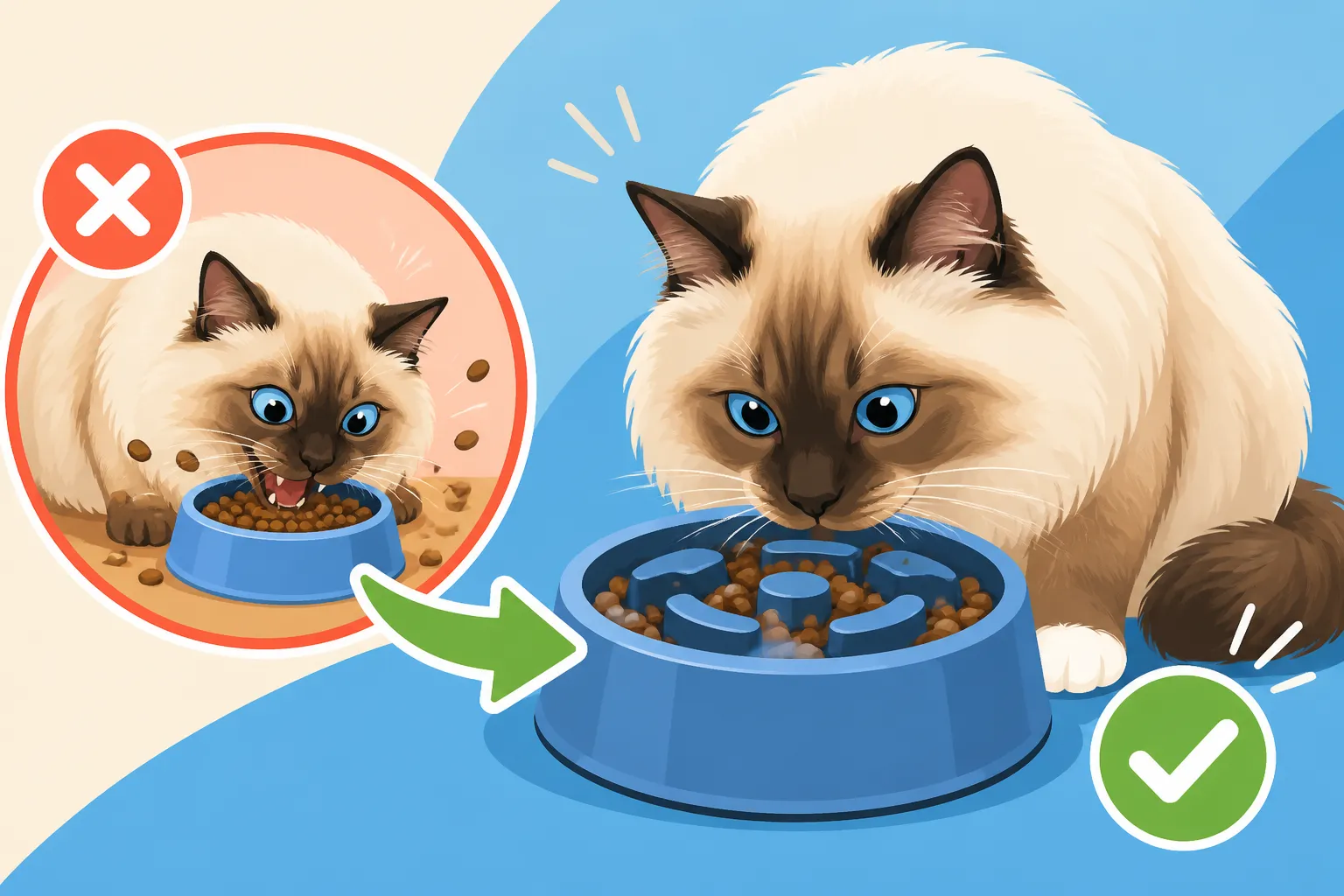
This is often the first line of defense, and for good reason! Slow-feeder bowls are designed with ridges, mazes, or pillars that force your Birman to navigate around obstacles to get to their food. This simple design trick significantly extends mealtime, preventing them from gulping down huge mouthfuls.
You'll find these bowls in various materials, from plastic to ceramic or stainless steel, and with different levels of complexity. Start with a simpler design to ease your Birman into it, and if they master it too quickly, you can always upgrade to a more intricate pattern. Many owners have success with ceramic slow-feed bowls, easily found on Amazon, as they are heavy and less likely to be pushed around. Just make sure to choose one that's wide enough for their whiskers and doesn't irritate their sensitive facial areas.
Harnessing the Power of Puzzle Feeders
Puzzle feeders take the concept of a slow feeder to the next level by turning mealtime into a mental game. These are fantastic for Birmans who might be bored or need more mental stimulation. Instead of just eating, your cat has to problem-solve to release their food.
There's a vast world of puzzle feeders out there:
- Treat balls: Your Birman rolls the ball, and kibble falls out.
- Interactive boards: These often have little compartments, sliders, or pegs that your cat needs to manipulate to get their food.
- Snuffle mats: While more common for dogs, some cats enjoy digging through the fabric strips to find hidden kibble.
Introducing puzzle feeders can be a bit of a learning curve for your Birman. Start with easy ones, perhaps leaving some food easily accessible to encourage them. Show them how it works a few times, gently nudging the food out. As they get the hang of it, you can gradually increase the difficulty. You can find a huge variety of these on Amazon, from beginner-friendly designs to advanced puzzles that will keep them engaged. This also encourages natural foraging behavior, which is a great way to enrich your cat's environment.
| Slow Feeding Method | Description | Pros | Cons |
|---|---|---|---|
| Slow-Feed Bowl | Bowl with ridges, mazes, or bumps to impede eating speed. | Simple to use, readily available, forces slower consumption. | Some cats adapt quickly and find ways around obstacles; limited mental stimulation. |
| Puzzle Feeder | Device requiring manipulation (rolling, nudging, opening) to release food. | High mental stimulation, extends mealtime significantly, promotes natural foraging. | Can be frustrating for some cats initially; requires owner interaction to teach; potential for mess. |
| Scattered Feeding | Spreading kibble around a clean floor or designated area. | Very low cost, encourages movement and hunting behavior, slows eating considerably. | Requires clean floors; can be difficult with wet food; not suitable for multi-cat homes with food guarding issues. |
| Automatic Feeder | Dispenses measured meals at set times. | Regulates portion size and frequency, helpful for weight management. | Doesn't directly slow down eating speed (unless combined with slow-feed bowl insert); can be noisy. |
The "Scatter" Method and Smaller, More Frequent Meals
Sometimes, the simplest solutions are the most effective. Instead of putting all their kibble in one bowl, try scattering it across a clean, hard floor or a designated "feeding mat." This forces your Birman to move around and find each piece, turning mealtime into a mini-hunt. It taps into their natural instincts and makes them work for their food, which can be surprisingly satisfying for them. Just make sure the area is free of any hazards or other pets who might try to steal their spoils.
Another incredibly effective strategy is to break down their daily food allowance into several smaller meals throughout the day, rather than one or two large ones. Cats are naturally grazers, preferring small, frequent meals. If you're currently feeding twice a day, try three or four smaller portions. This means they're never quite as ravenous, reducing the urge to gobble everything down immediately. An automatic feeder can be a lifesaver here, especially if you work long hours. You can program it to dispense small amounts of food multiple times a day. Whether a Timed Feeder Suits a Birman Left Alone is a common concern, but for many Birmans, it provides welcome routine and reduces mealtime anxiety.
Lifestyle Adjustments and When to Seek Vet Advice
Slowing down eating isn't just about the food delivery system; it's also about creating a calm, predictable environment and ensuring there are no underlying issues contributing to the behavior.
Creating a Calm and Predictable Mealtime Environment
Cats thrive on routine and feeling secure, and Birmans, with their placid nature, are no exception. Ensure your Birman's feeding area is quiet, safe, and away from high-traffic zones or where other pets might disturb them. If you have multiple cats, feed them in separate locations to eliminate any perceived competition. Even if they seem to get along, the subtle tension of another cat nearby can trigger fast eating.
Establish a consistent feeding schedule. Knowing when their next meal is coming can reduce anxiety and the feeling of needing to gorge. Feed them at roughly the same times each day, in the same spot, using the same type of bowl or feeder. This predictability fosters a sense of security and can help regulate their appetite. Why a Birman Will Not Tell You It Is Hungry means you can't rely on them to vocalize their needs; sticking to a schedule is key.
Enrichment Beyond the Bowl
Remember that boredom and under-stimulation can contribute to fast eating. Ensure your Birman has plenty of opportunities for play and mental engagement throughout the day. Interactive play with wand toys that mimic hunting can be incredibly satisfying. Provide vertical space like cat trees or shelves, even if your Birman isn't a huge climber, they still appreciate having options to perch. A Birman Would Rather Be Near You Than On You and appreciates company, but also needs independent activities.
If your Birman is often home alone, consider providing environmental enrichment such as window perches for bird watching, safe toys, or even a companion if suitable. What a Birman Does During a Nine Hour Working Day might be very little if they lack stimulation. A tired, mentally stimulated cat is often a calmer eater.
Diet and Hydration Considerations
The type of food you offer can also influence eating speed and overall digestion. High-quality wet food generally takes longer to eat than kibble, due to its texture and moisture content. It also helps with hydration, which is crucial for kidney health in all cats, including Birmans. Which Wet Food Suits a Birman's Kidney History is a conversation worth having with your vet, especially if you're trying to incorporate more wet food.
Even with wet food, some cats will still eat it too fast. You can spread wet food on a slow-feeder mat or plate, or even freeze small portions in a LickiMat for an extended treat. For kibble, ensure the pieces aren't too small, which can encourage gulping. Adequate hydration is essential, too. Why Kibble Alone Leaves a Birman Short of Water is a real concern, and a well-hydrated cat often has better digestion. Consider a cat fountain to encourage more drinking.
When to Consult Your Veterinarian
If you've tried various slow-feeding methods and addressed environmental factors, but your Birman is still eating excessively fast, or if you notice other concerning symptoms, it's time for a vet visit. As mentioned earlier, underlying health issues like hyperthyroidism, dental disease, or even gastrointestinal problems can manifest as rapid eating.
Your vet can perform a thorough examination, including blood tests if necessary, to rule out any medical conditions. They can also offer tailored advice based on your Birman's specific health profile and provide reassurance. It’s always better to be safe than sorry, especially with a breed as stoic as the Birman, who may not show discomfort readily. Addressing these issues early can significantly improve your cat's quality of life and prevent more serious problems down the line.
Disclaimer
This article is for general informational purposes only and does not constitute professional advice. Laws, prices and regulations vary by location and change over time. Consult a qualified professional for guidance on your specific situation.