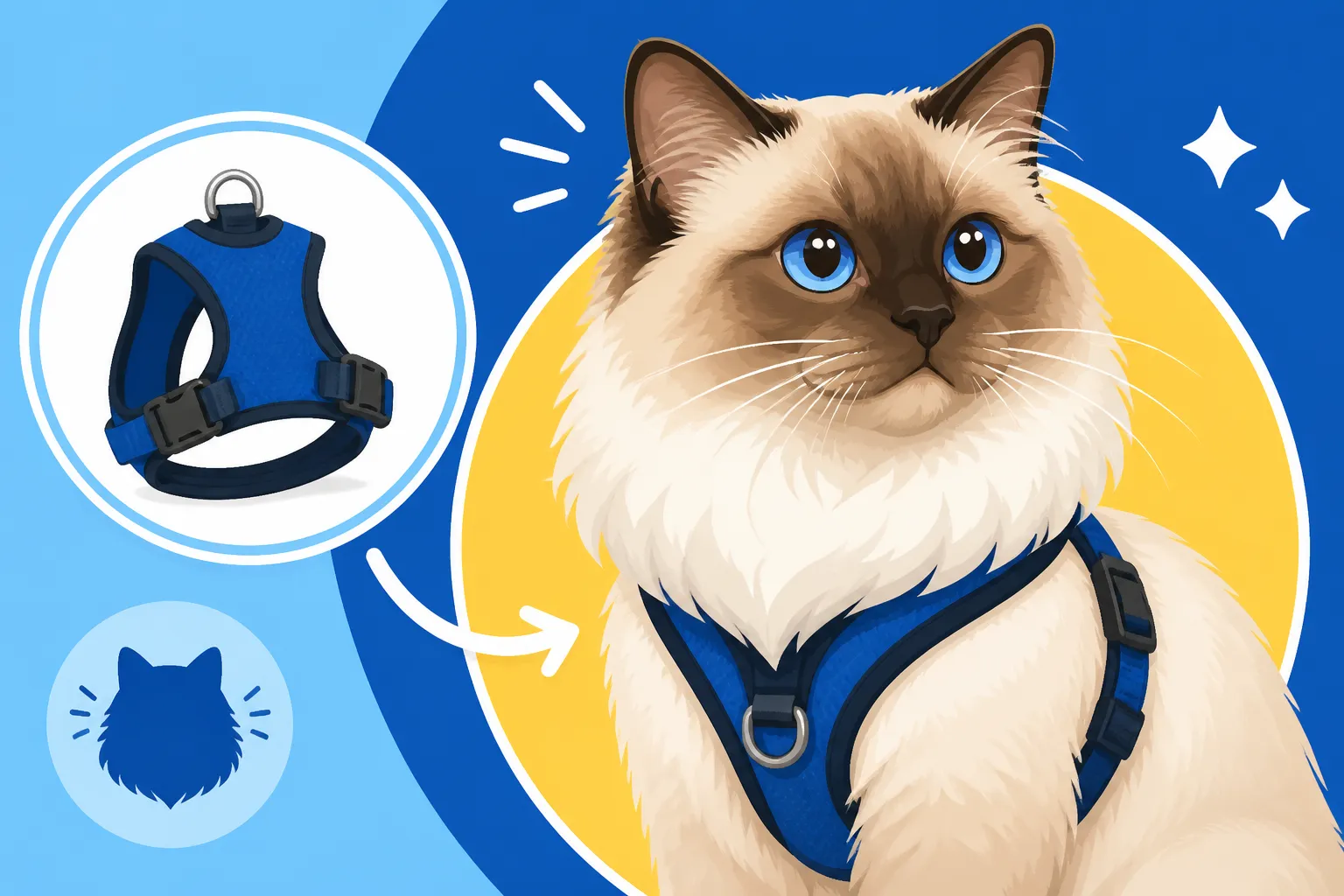
Fitting a Harness Around a Birman’s Ruff
Many Birman owners dream of taking their beloved feline companions for a safe stroll outdoors, only to be met with the immediate challenge of their cat's glorious, often abundant, ruff. This magnificent collar of fur, while beautiful, can turn fitting a standard harness into a frustrating wrestling match. This guide will walk you through understanding your Birman's unique coat, selecting the right harness, and gently acclimating your placid companion to wearing it comfortably and securely.
Understanding Your Birman's Majestic Ruff
The Birman's ruff isn't just a pretty feature; it's a defining characteristic of the breed, a lush, dense collar of fur around their neck and chest. While it contributes immensely to their regal appearance, it also presents a particular challenge when it comes to standard cat harnesses. You might find yourself grappling with buckles disappearing into the fur or straps that just don't seem to sit right.
The Unique Texture and Density of Birman Fur
Unlike many long-haired breeds, the Birman has a single coat, meaning it lacks a dense undercoat. This is fantastic for grooming, as it significantly reduces matting compared to, say, a Persian. You might even find that How Many Minutes a Week a Birman's Coat Takes is surprisingly low for such a luxurious coat. However, don't let the "no undercoat" description fool you; the fur itself is long, silky, and voluminous, especially around the neck, chest, and britches. This creates a soft, flowing texture that can easily conceal a harness or allow it to slip if not fitted correctly. The fur isn't coarse or woolly; it's almost like fine silk, which can make it feel less secure against straps.
When your Birman is in its prime, perhaps around two or three years old, its ruff will be at its fullest. And you'll notice how big the ruff gets in winter (How Big a Birman's Ruff Gets in Winter) – it truly blossoms, becoming even more substantial. This seasonal change means a harness that fit perfectly in summer might feel a bit snug, or even get lost, in the winter fluff. You'll need to remember this when choosing and fitting. The length and softness mean that straps can sink into the fur, making it seem like the harness is looser than it is, or conversely, pull uncomfortably if too tight and pressing against the fur.
Why the Ruff Can Be a Harness Hurdle
The primary hurdle created by the Birman's ruff is twofold: concealment and potential chafing. Firstly, the sheer volume of fur can hide the straps and buckles, making it difficult to adjust the harness properly or even to ensure it's sitting symmetrically. You might think it's tight enough, but then find a strap has simply disappeared into the silky depths, giving a false sense of security. It's not uncommon for owners to accidentally leave the harness too loose because they can't feel the straps against the body beneath the fur.
Secondly, if the harness material is rough or too narrow, it can chafe against the delicate skin underneath the ruff, especially if it's constantly rubbing in one spot. While your Birman is generally quite placid and unlikely to complain loudly, Why a Placid Birman Hides Pain means you need to be extra vigilant. A poorly fitting harness could cause skin irritation, matting of the fur directly under the straps, or even small sores if left unaddressed. Imagine trying to comb a mat out of that sensitive area after an uncomfortable walk; it's a nightmare you want to avoid. The ruff is meant to be flowing and free, and anything that restricts or pulls at it can be irritating for your cat.
Choosing the Best Harness Style for a Birman
Selecting the right harness for your Birman is crucial for comfort, security, and a successful outdoor adventure. You can't just pick any harness off the shelf; you need something designed with a long-haired, deep-chested cat in mind. The goal is to distribute pressure evenly and minimize contact with the sensitive ruff area while still being escape-proof.
Different Harness Types and Their Suitability
There are generally a few main types of cat harnesses, and some are definitely better suited for a Birman's unique physique.
- H-Style Harnesses: These are usually made of thin straps that form an 'H' shape across the cat's back and chest. While simple, they often don't provide enough coverage or stability for a Birman, especially around the ruff. The narrow straps can easily get lost in the fur or slide around, increasing the risk of escape or uncomfortable pressure points. The straps can also pull at the fur, which is something you definitely want to avoid.
- Step-In Harnesses: These require your cat to step into two leg loops, and then the harness is fastened over their back. They can be good for cats who dislike things going over their head. However, the fit around the chest and shoulders needs to be very precise to avoid rubbing or restricting movement, especially for a Birman with its long fur. Again, narrow straps can be an issue.
- Vest-Style Harnesses: These are often the best choice for Birmans. They consist of a wider piece of fabric that covers more of the cat's chest and back, distributing pressure more broadly. This wider coverage means the harness is less likely to dig into the ruff or get lost in the fur. They provide a more secure and comfortable fit, reducing the chance of chafing and making it much harder for your clever Birman to wriggle out. The softer material is also generally kinder to their silky coat. Many owners find brands like the Rabbitgoo or PetSafe harness lines offer good vest-style options that can be found on Amazon.
Key Features to Look for in a Birman Harness
When you're shopping for that perfect harness, keep these specific features in mind to ensure it's a good match for your Birman's majestic ruff and placid nature.
- Soft, Breathable Material: Look for harnesses made from soft, lightweight, and breathable fabrics like mesh or padded nylon. Harsh, stiff materials will chafe against the fur and skin. The softer the material, the less likely it is to irritate your Birman or pull at their delicate ruff hairs.
- Wider Straps or Vest Design: As mentioned, wider straps or a full vest design are generally superior for Birmans. They distribute pressure more evenly and are less likely to disappear into the ruff or create uncomfortable friction points. They also make the harness feel more substantial and secure for both you and your cat.
- Adjustability: This is non-negotiable. Your Birman's size can vary, and its ruff certainly changes throughout the year. A good harness will have multiple adjustment points, usually around the neck and chest, to allow for a snug, yet comfortable, fit over varying amounts of fur. You need to be able to fine-tune it perfectly.
- Secure Fastenings: Look for strong, durable buckles and D-rings for leash attachment. While you want easy on-and-off, security is paramount. A good quality buckle will give you peace of mind that your Birman won't suddenly slip free, even with a little wiggle.
- Comfort Around the Neck: Pay close attention to the neck area. This is where the ruff is thickest. Some harnesses have a slightly lower neck strap or a more open design to avoid compressing the fur. You want it to sit comfortably without digging in or pulling at the ruff. Remember, your Birman is generally quite tolerant, but discomfort will lead to resistance.
- Reflective Strips (Optional but Recommended): If you plan on walking in low light, reflective strips can be a great safety feature, making your Birman more visible to others.
Here's a quick comparison of harness types:
| Harness Type | Pros for Birman | Cons for Birman | Best Use Case |
|---|---|---|---|
| H-Style | Lightweight, less fabric | Straps can get lost in ruff, easily escape-able, chafing risk | Not generally recommended |
| Step-In | No over-head action | Can be awkward with long fur, narrow straps, precise fit needed | For cats that truly hate overhead entry, with careful selection |
| Vest-Style | Even pressure distribution, secure, less chafing, comfortable | Can be bulkier, some cats dislike the 'jacket' feel | Highly Recommended |
A Step-by-Step Guide to Fitting the Harness
Now that you've got the perfect harness, let's tackle the actual fitting. This isn't a race; it's a patient process, especially with a cat as sensitive and observant as a Birman. Remember, Why a Birman Rarely Fights Handling but they are also masters of subtle communication.
Introducing the Harness Gently
The very first step is to make the harness a positive, non-threatening object. Don't just spring it on your Birman.
- Let them investigate: Place the harness on the floor near their favorite sleeping spot or food bowl. Let them sniff it, rub against it, and get used to its presence. You might even drape it over them briefly while they're relaxed, like during a petting session.
- Associate with treats: Offer high-value treats (think salmon paste or freeze-dried chicken) whenever the harness is near. If they sniff it, treat. If they tolerate it on their back for a second, treat.
- Short, positive interactions: Keep initial interactions very short. You're building trust and positive associations. If your Birman seems stressed, back off and try again later. This is similar to the approach you'd take when teaching them to accept regular grooming, where gentle, consistent exposure is key.
The Actual Fitting Process
This is where the ruff comes into play, demanding a bit more care and finesse.
- Choose a calm moment: Pick a time when your Birman is relaxed, perhaps after a nap or a meal. Avoid fitting when they're playful or stressed.
- Gather your tools (and treats!): Have your harness ready, adjusted to its loosest setting for the first attempt. Keep a small brush or comb handy; a fine-toothed comb that you use for Which Comb Gets Through a Birman's Ruff Without Pulling might be helpful to gently separate fur if needed. And don't forget those high-value treats!
- Over the head or step-in:
- For vest or H-style (over the head): Gently guide the neck opening over your Birman's head. Be slow and reassuring. The ruff will likely fluff up and get in the way here. Use your fingers to gently guide the fur down and out of the way, ensuring no hair gets pinched under the strap.
- For step-in harnesses: Place the harness on the floor and encourage your Birman to step into the leg loops. This might be easier for some, as it avoids disturbing the ruff as much initially.
- Position the harness:
- Neck strap: Once the neck opening is on, gently pull the strap away from the body and carefully sweep all the ruff fur out from underneath it. You want the strap to be against the skin, not compressed fur. Then, carefully adjust the neck strap. You should be able to comfortably slip two fingers between the strap and your Birman's neck, ensuring it's snug enough not to slip over their head, but not tight. Remember, a Birman's ruff is not meant to be flattened; the strap should sit above it or gently encompass it without squashing.
- Chest strap: Position the chest strap so it sits a few inches behind their front legs. Again, sweep all the beautiful belly fur out from underneath the strap before fastening and adjusting. This strap should also allow two fingers to slide underneath. If it's too close to the armpits, it will chafe. If it's too far back, your Birman might be able to back out of it.
- Secure the buckles: Once adjusted, securely fasten all buckles. Double-check that no fur is pinched in the mechanism.
Checking for Comfort and Security
Once the harness is on, this crucial step ensures it's safe and comfortable for your Birman.
- The "Two-Finger Rule": This is your golden standard. You should be able to comfortably slide two fingers under both the neck and chest straps. If you can fit more, it's too loose. If you can't fit two, it's too tight. For a Birman, remember to get those fingers under the fur and against the skin to truly gauge the fit.
- Observe movement: Let your Birman walk around the house for a few minutes. Does the harness restrict their natural gait? Are they struggling to move their front legs? Does it shift excessively? It should stay relatively stable without twisting.
- Check for shifting: Gently try to pull the harness over their head or back. It should not be possible to pull it off easily. If it slides right off, tighten it carefully using the two-finger rule as your guide. If it rotates too much, it might be too loose or the wrong style.
- Monitor behavior: Watch for signs of discomfort. Is your Birman trying to chew or scratch at the harness? Are they freezing or refusing to move? While some initial stiffness is normal, persistent discomfort needs addressing. They might just stand there, looking utterly bewildered, which is a common Birman reaction to new things. Take it off, give treats and praise, and try again later. Don't forget that What a Stressed Birman Does can include hiding, refusing food, or overgrooming, so be sensitive to their cues.
- Ruff check: After a few minutes, gently lift the harness straps around the neck. Check for any areas where the ruff looks compressed or where the skin underneath might be irritated. Smooth the fur back into place.
Acclimating Your Birman to Harness Wear
Even with the perfect fit, a harness is a new sensation. Your Birman's placid temperament is a huge advantage here, as they are generally Why a Birman Rarely Fights Handling, but patience is still key. The goal is to make the harness a normal part of their routine, not a source of stress.
Short Sessions and Positive Reinforcement
The introduction to wearing the harness should be gradual and always associated with positive experiences.
- Start small: Begin with very short wearing sessions, perhaps just a minute or two, right before a favorite meal or play time. This creates a strong positive association. For example, put the harness on, immediately give a tasty treat, and then take it off. Build up the duration very slowly.
- Supervised wear: Never leave your Birman unsupervised in a harness, especially during the initial stages. They could get tangled or injured, or simply get frustrated and develop a negative association.
- Play and distraction: While they are wearing the harness, engage them in a fun activity. Play with a wand toy, offer a puzzle feeder, or simply give them gentle pets. Distraction can help them forget they're even wearing it. Remember, How much play a Birman wants a day is usually moderate, so a short, engaging play session is perfect.
- Praise and treats: Shower your Birman with praise and treats throughout the wearing sessions. If they tolerate it calmly, reward them enthusiastically. If they try to scratch or bite at it, calmly redirect them or end the session if they're too distressed. Don't punish, just stop the activity.
- Consistency: Regular, short sessions are much more effective than infrequent, long ones. Try to do a few sessions each day or every other day. This routine helps your Birman understand what's expected and builds comfort.
Gradual Introduction to Leash Walking
Once your Birman is completely comfortable wearing the harness around the house, it's time to introduce the leash.
- Attach the leash indoors: First, simply attach the leash to the harness while your Birman is walking around inside. Let them drag it for a few minutes under close supervision. This gets them used to the weight and feel of the leash.
- Practice holding the leash: Pick up the leash and gently hold it. Don't pull or guide them yet. Just let them move where they want, with you following, while holding the leash. Reward them for calm behavior.
- Gentle guidance: Once they're comfortable with you holding the leash, start with very light guidance. Lead them a few steps, then stop and offer a treat. The goal is not to pull them along, but to encourage them to move in a desired direction. Remember, a cat on a leash is not like a dog; they often set the pace and direction.
- First outdoor steps: Choose a quiet, safe outdoor space for the very first outdoor adventure. A fenced yard or a calm area of your garden is ideal. Keep the first few outings extremely short, perhaps just five or ten minutes. The outside world is full of new sights, sounds, and smells, which can be overwhelming. Let them explore at their own pace. If you plan to travel with your Birman, this harness training is also excellent practice for getting them comfortable with being secured, even if it's just in Which Carrier Suits a Birman for a vet visit.
- Build up duration and exposure: Gradually increase the length of your walks and expose them to slightly different, still calm, environments. Always be aware of your surroundings and your Birman's comfort level. If they seem frightened or stressed, gently scoop them up and bring them back inside. This builds confidence and reinforces that outdoor time is safe and enjoyable.
Patience, positive reinforcement, and understanding your Birman's individual temperament will make all the difference in successfully fitting a harness and enjoying safe, enriching outdoor adventures together.
Disclaimer
This article is for general informational purposes only and does not constitute professional advice. Laws, prices and regulations vary by location and change over time. Consult a qualified professional for guidance on your specific situation.