Whether a Birman Glove Test Exists
Birman kitten white paw markings and glove genetics remain unpredictable because modifier genes control traits instead of simple tests.

Birman kitten white paw markings and glove genetics remain unpredictable because modifier genes control traits instead of simple tests.

Birman cats inherit two copies of the KIT gloving variant from both parents, ensuring every purebred kitten develops white paws.
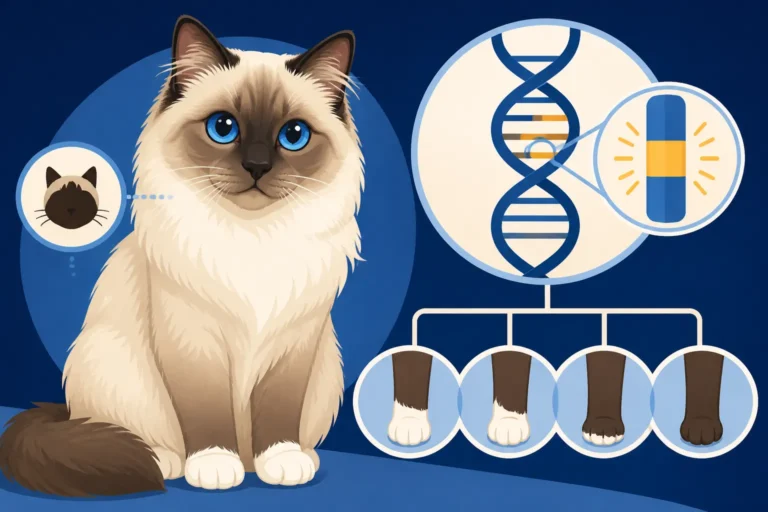
The Birman gloving gene is a specific KIT gene variant that controls white paw markings and causes every cat to carry two copies.
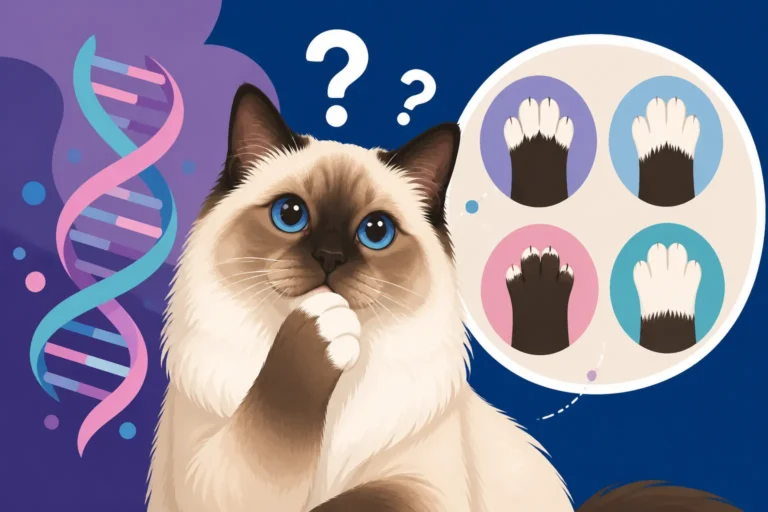
Birman cat paw markings remain unpredictable because other factors influence the KIT gene variant carried by every individual.
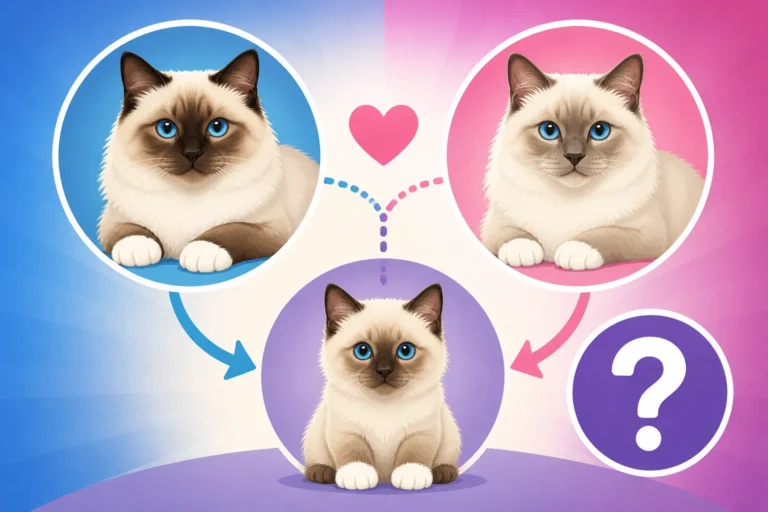
Birman show marking predictions based on parent genetics and the complex KIT gene variants explaining white glove development.
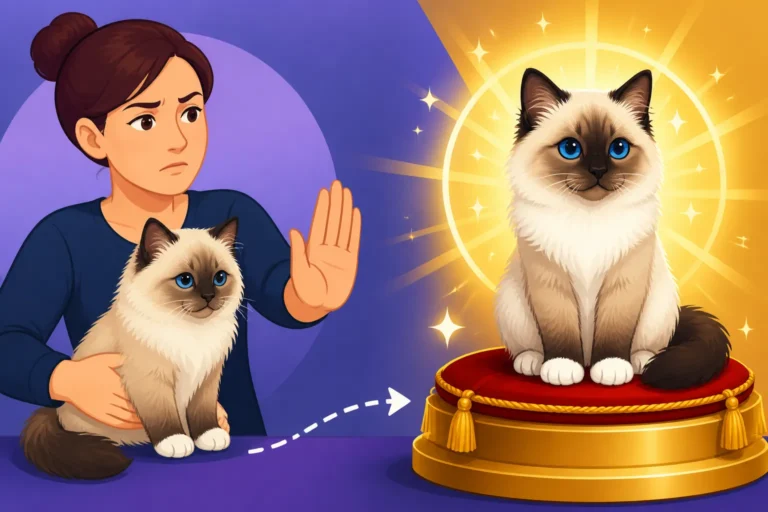
Birman breeders retain perfectly marked kittens with ideal white gloves and laces to protect and advance the breed standard.

Birman kitten pricing reflects breeder investments in parent cat health testing, veterinary care, and daily socialization.
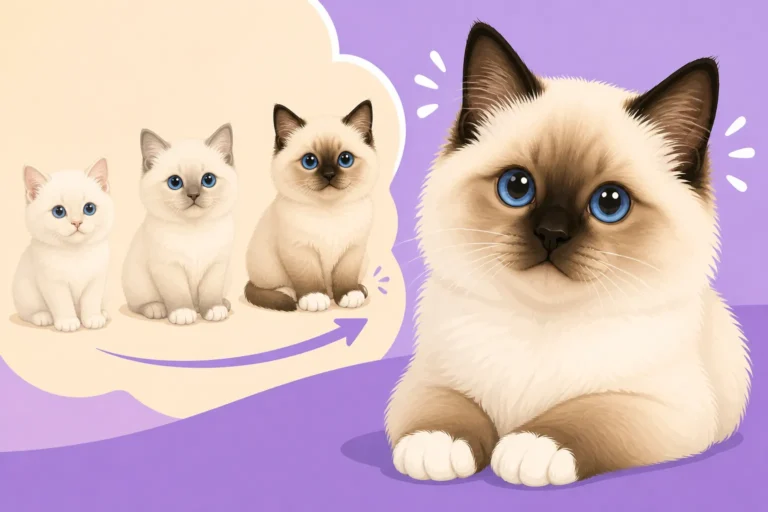
Birman kitten point coloration develops through a temperature-sensitive enzyme that activates color on cooler extremities like ears and nose.
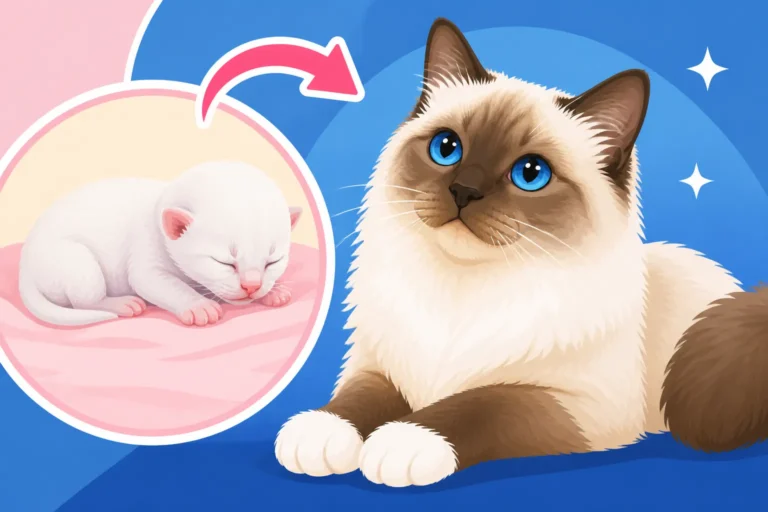
Birman kitten genetics and temperature-sensitive enzymes explain why newborns have white coats that develop dark points over time.
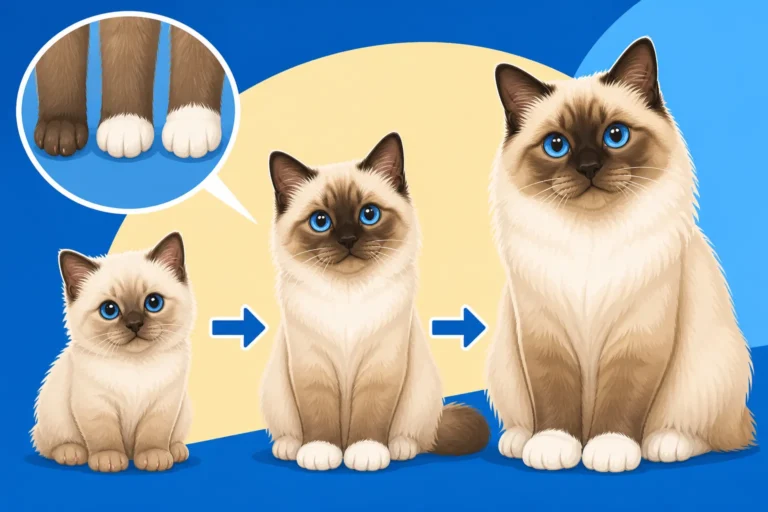
Birman kitten white paws and gloves develop as the temperature sensitive gene produces color after birth between twelve and fourteen weeks.