The Household a Birman Was Effectively Bred For
The Birman cat temperament and need for companionship explain why this balanced breed thrives in busy family households.
Is this the right one for you?
Origins and temperament, size and coat, what living with one is actually like, and how it compares to the breeds people weigh against it.

The Birman cat temperament and need for companionship explain why this balanced breed thrives in busy family households.

Cat registry data reveals the official pedigree numbers and popularity differences between Birman and Ragdoll cats.

Cat breed differences between the Birman and the Snowshoe explain their distinct physical markings, origins, and calm temperaments.

Feline genetics reveal why Birmans inherit the KIT locus for white paws while Himalayans lack this gloving gene.

Birman points are the cooler extremities, such as face mask, ears, legs and tail, where a genetic trait restricts pigment; recognized colors and genetics.
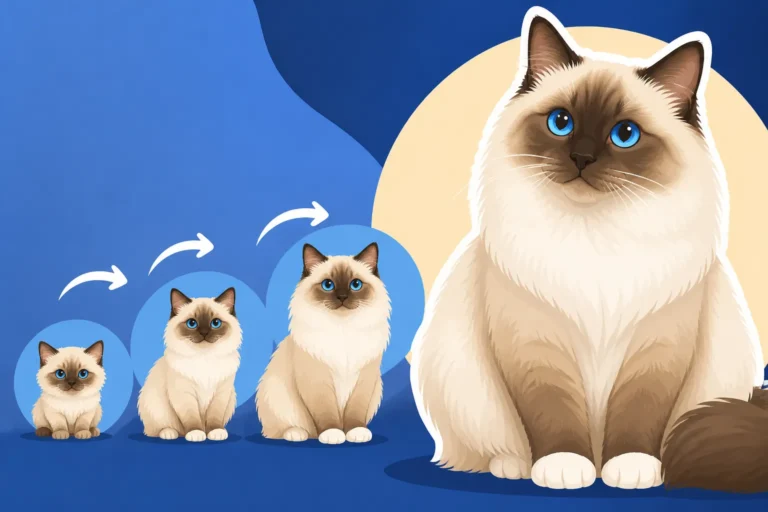
Birman cats continue growing and filling out muscle and bone density until three years of age due to slow genetic maturation.
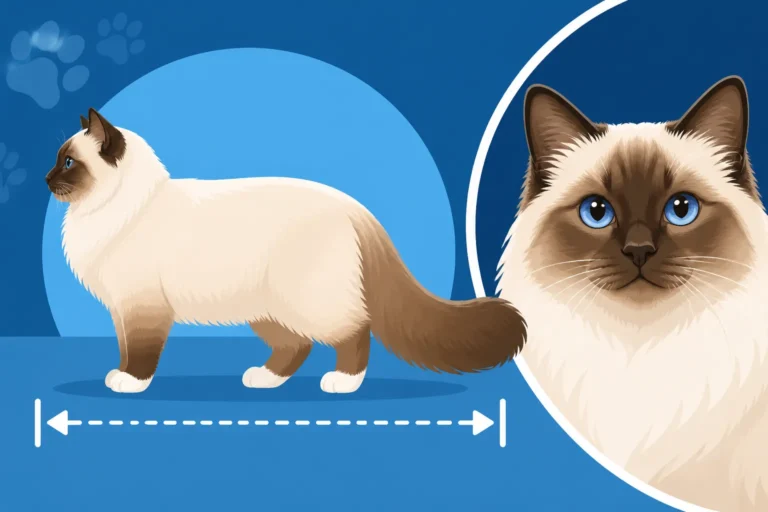
Birman cat length from nose to tail, growth stages from twelve weeks, and size differences between male and female adults.

Birman cat eye color rules explain why every purebred feline requires deep sapphire blue eyes linked to the pointed coat gene.

Birman cats feature a unique Roman nose defined by a gentle convex curve extending smoothly from the forehead without any stop.

Birman cat white glove markings, laces, and gauntlets are judged using a specific scoring system and breed standard.