Why a Birman’s Roman Nose Is Judged in Profile
The Birman cat Roman nose features a gentle convex curve evaluated in profile by judges to ensure breed standards.
Is this the right one for you?
Origins and temperament, size and coat, what living with one is actually like, and how it compares to the breeds people weigh against it.
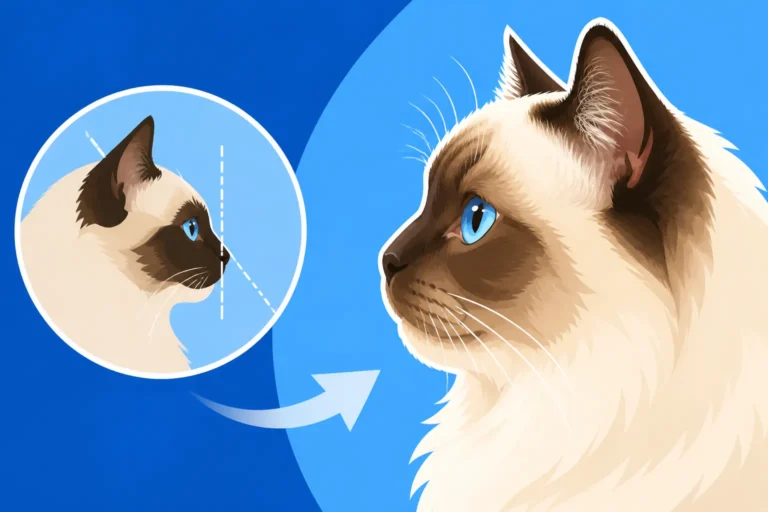
The Birman cat Roman nose features a gentle convex curve evaluated in profile by judges to ensure breed standards.
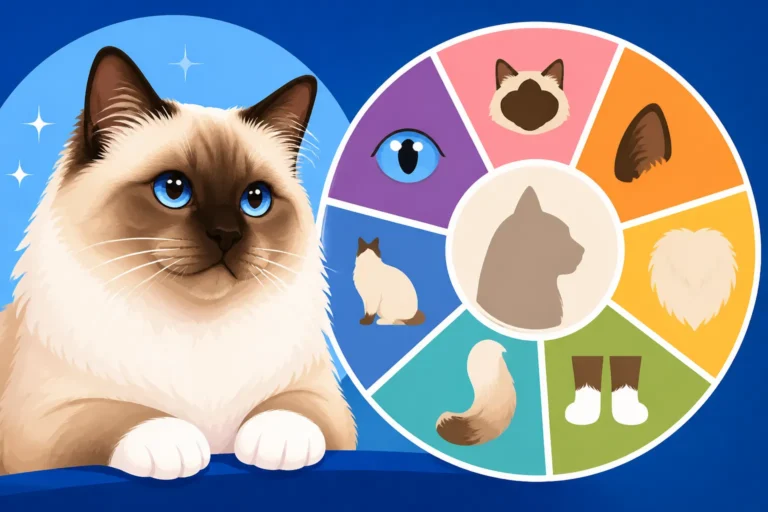
The Birman breed standard uses a hundred point system to evaluate physical appearance, temperament, and health.
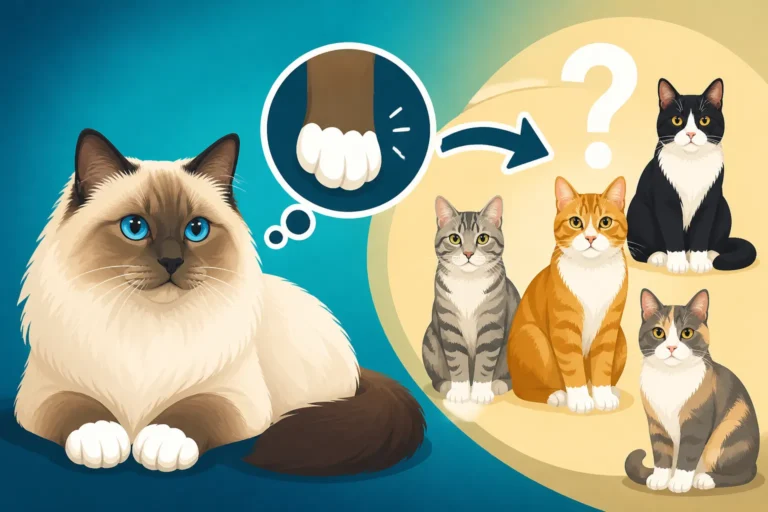
Birman cat white paw gloving explained through the recessive KIT gene mutation and the breed post-war genetic bottleneck recovery.

The Birman gloving gene determines the iconic white paws, explaining why every cat inherits two copies of this trait.
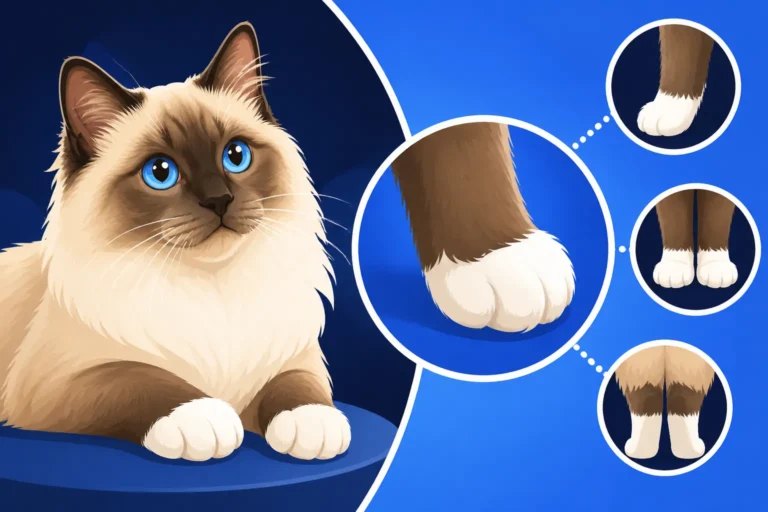
The KIT gloving variant mutation directly causes the white paw markings and symmetrical laces defining Birman cats.

Major cat registries officially recognize the Birman breed, providing consistent standards, pedigree documentation, and health guidelines.

The journey of the Birman cat to championship status with the Cat Fanciers Association and early European recovery.

The Birman cat journey to formal acceptance in Britain details post war efforts and dedicated individuals for the breed.

Post-war Birman cat populations recovered from near extinction through careful outcrossing by dedicated breeders in France.

Specific longhaired breeds used to rebuild the post-World War II Birman cat population and their genetic contributions.