Why a Birman Kitten Bites Less Than Most
Birman kitten temperament, gentle genetics, and early socialization explain why this breed bites far less than other cats.

Birman kitten temperament, gentle genetics, and early socialization explain why this breed bites far less than other cats.

Birman kitten play styles, featuring gentle biting and soft pouncing, and how early socialization shapes their calm behavior.
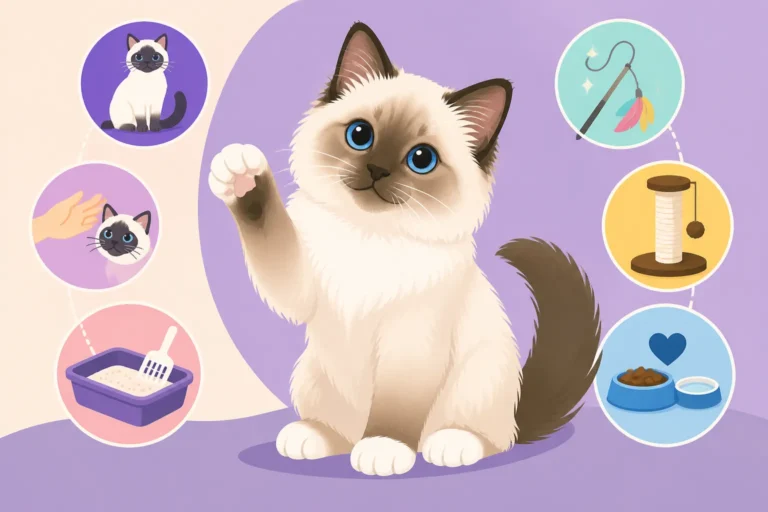
Birman kitten socialization milestones outline what pets must learn about human handling and household sounds by twelve weeks.

Elevating a Birman cat onto a sturdy table for grooming creates a psychological shift that improves cooperation and reduces resistance.

Birman cat grooming behavior explains why quiet cats tolerate brushing instead of enjoying it and how to spot subtle discomfort.

Birman kitten dental hygiene methods protect against plaque, tartar, gingivitis, and periodontitis to prevent systemic organ infections.
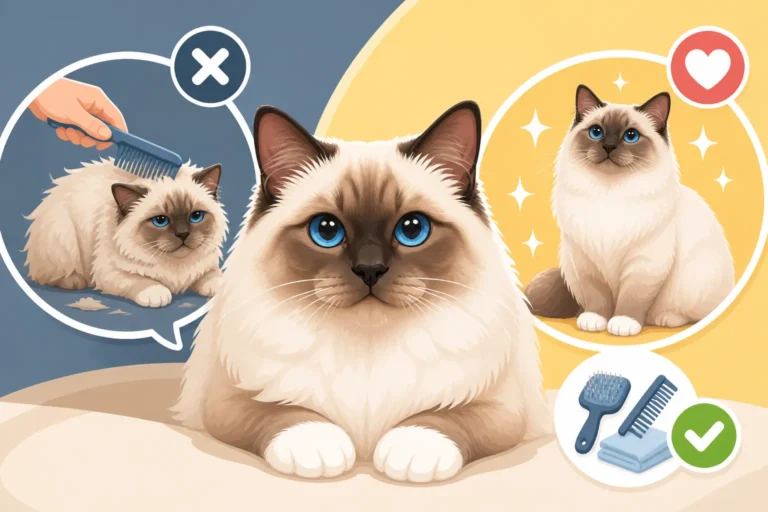
Early grooming habits for Birman kittens prevent matting, check paws and ears, and build trust for future veterinary visits.
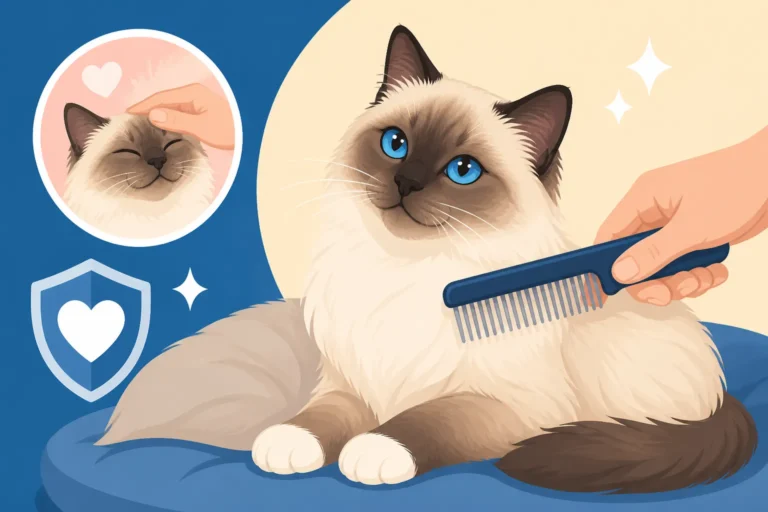
Birman grooming methods explain how to gently introduce a cat to a metal comb by leveraging its single coat and placid temperament.

Birman nail trimming techniques leverage the placid breed temperament for a calm, stress-free grooming and bonding experience.

Birman cats tolerate handling and avoid fights due to an inherent gentleness, deep trust, and a calm middle ground temperament.