Why a Birman Leaves Long White Hairs Everywhere
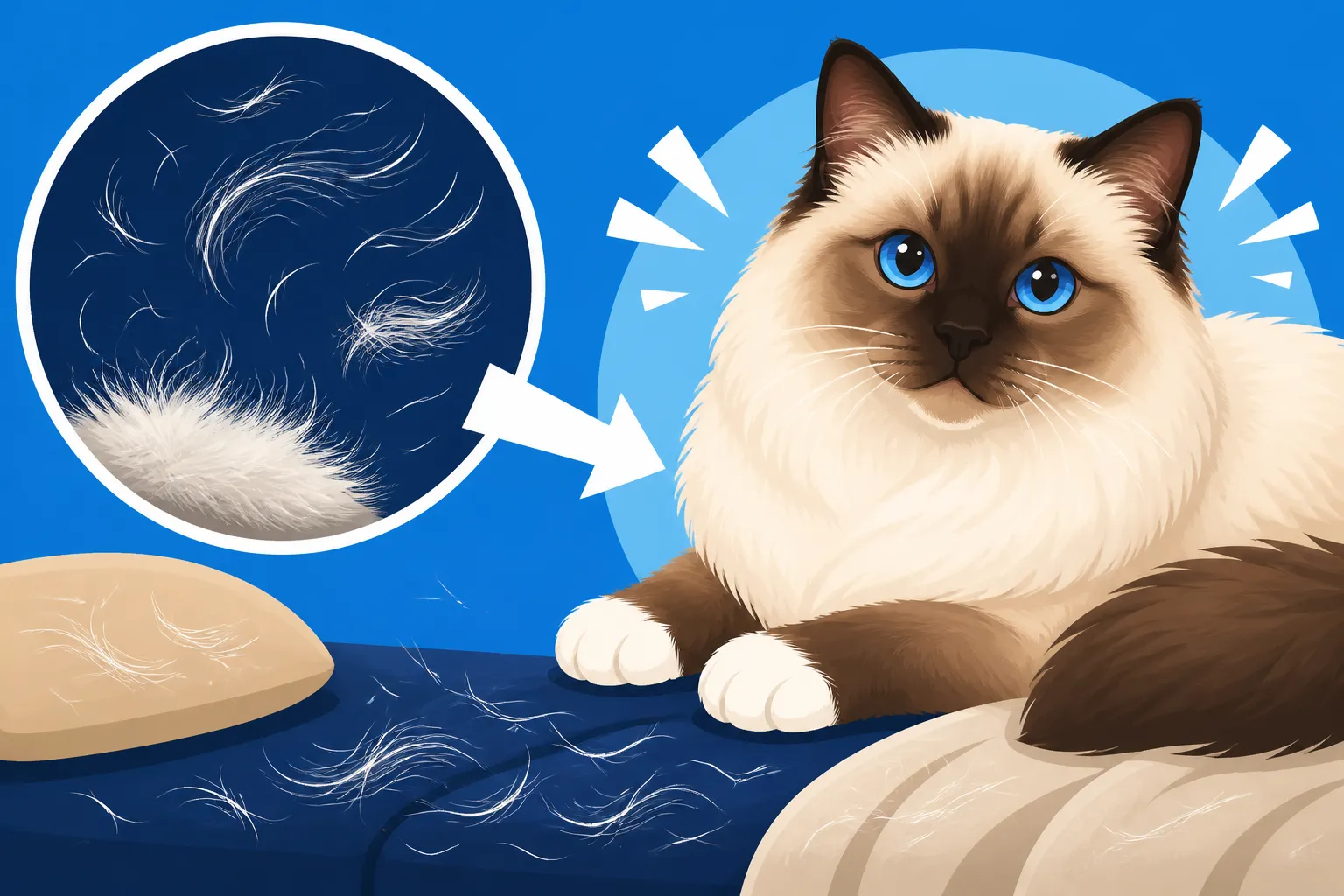
You adore your Birman, those stunning blue eyes, the silky coat, the gentle purr – but let's be honest, sometimes it feels like your home is in a constant battle with a blizzard of long white hairs. You're not alone in wondering why such a seemingly "easy to groom" cat still manages to leave a visible trail on every dark surface, every sweater, and even in your morning coffee. This guide is here to shed some light on the unique nature of the Birman's coat, why those hairs seem to cling to everything, and most importantly, what you can realistically do to manage the shedding without turning your home into a furry wonderland.
The Unique Character of the Birman's Coat
It's a common misconception that all long-haired cats shed profusely, but the Birman, with its distinctive single coat, actually has a shedding profile that's quite different from breeds like the Persian or Maine Coon. Understanding this unique coat structure is the first step to truly tackling the hair situation in your home. It’s not about if they shed, but how and why.
Why a Single Coat Still Leaves a Trail
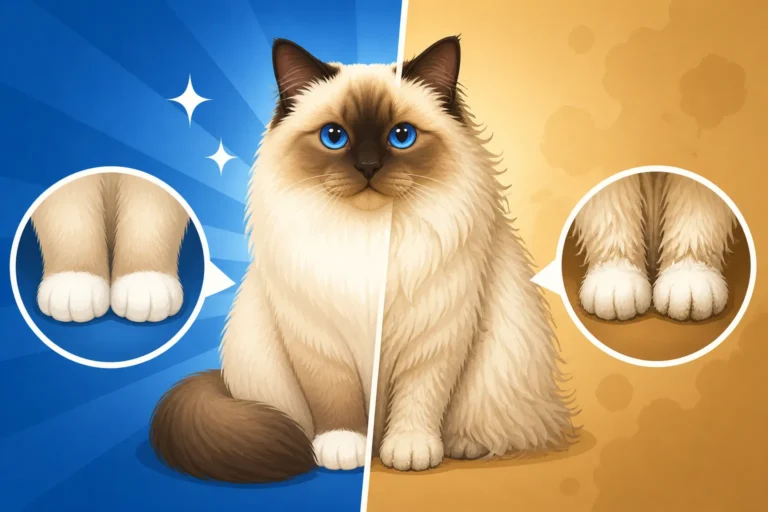
Unlike many other long-haired breeds, the Birman boasts a single coat, meaning it lacks the dense, woolly undercoat that often traps loose hairs and contributes to massive shedding clumps. This is fantastic news for matting – you'll find your Birman mats far less than you might expect for such a luxurious mane. The texture is famously silky, flowing, and lies close to the body, except for the magnificent ruff around their neck and the plume of their tail. Because there's no thick undercoat to hold onto the dead hairs, they have nowhere to go but… out into your living space.
Think of it this way: a cat with a double coat is like a dense forest, where fallen leaves (shed hairs) can get caught in the lower branches and undergrowth. A Birman's coat is more like a sparse, open woodland. When a "leaf" detaches, it's quickly on its way to the forest floor (your sofa). So, while the amount of hair shed might be less in terms of bulk compared to a double-coated cat, the visibility and distribution of those individual long, white hairs can feel more pervasive. They simply don't get trapped within the coat itself. You can find out more about this specific trait in No Undercoat Is What Makes a Birman Easy to Groom.
How Long a Birman's Coat Actually Is
The Birman's coat isn't uniformly long across its entire body. You'll notice it's shorter on their face and legs, gradually lengthening over their back and flanks, and reaching its majestic peak in the ruff, which can frame their face beautifully, and on their tail, forming a magnificent plume. This variation in length means the hairs you find aren't all the same. The fine, longer hairs from the ruff and tail are often the most noticeable culprits on dark clothing or furniture. They're light, often white or cream, and have a knack for floating through the air before settling somewhere visible.
These longer hairs, especially from the ruff, are also the ones most prone to static electricity, making them excellent at clinging. You might brush your Birman diligently, thinking you've caught all the loose hair, only to turn around and find a new collection forming on your favourite chair. It's a testament to the fineness and length of these particular strands that they manage to travel so far and stick so stubbornly. This characteristic also plays a role in Whether a Birman's Single Coat Means Fewer Hairballs, as the hairs aren't typically ingested in large, dense quantities.
The Natural Shedding Cycle and Its Management
Shedding is a completely natural process for all cats, and Birmans are no exception. Understanding their typical shedding patterns and implementing a consistent grooming routine can make a world of difference in managing those ubiquitous white hairs. It's not about stopping shedding entirely – that's impossible – but about controlling where and when most of it happens.
When a Birman Drops Its Coat
Birmans tend to have seasonal shedding patterns, although as indoor cats, these can be less pronounced than for cats that spend significant time outdoors. You'll likely notice a heavier "blow" of coat twice a year: in spring, as they lighten their winter coat for warmer months, and in autumn, as they prepare to grow a denser coat for winter. During these peak periods, you might feel like you're constantly grooming and vacuuming. However, a Birman, with its single coat, still sheds year-round to some extent, just a more moderate, continuous trickle.
Even in between these heavier shedding seasons, you'll still encounter those tell-tale long white hairs. Factors like indoor heating and consistent temperatures can sometimes blur the seasonal distinctions, leading to a more steady, albeit lighter, shedding rate throughout the year. It's a gentle reminder that even the most easy-going of cats requires ongoing care for their beautiful fur. For a deeper dive into the volume of shedding, check out How Much a Coat With No Undercoat Actually Sheds.
Combing Your Birman Three Times a Week
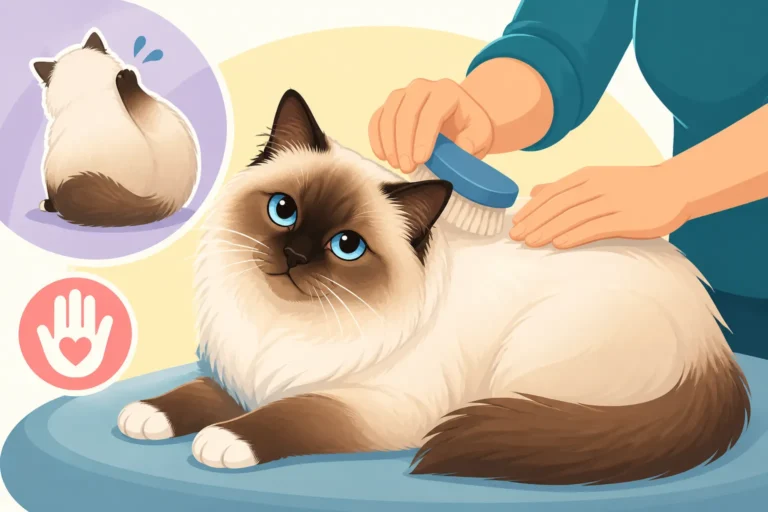
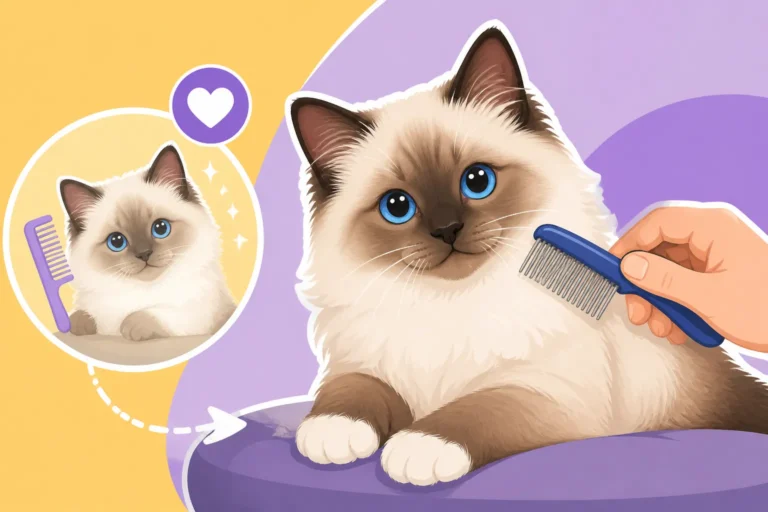
This is perhaps the most crucial strategy for managing Birman hair. Because their coat doesn't mat easily, it's easy to get complacent, but regular combing is your best friend. Aim for at least three times a week, though daily combing during peak shedding seasons will yield even better results. The goal isn't just to remove tangles, but to capture those loose, dead hairs before they have a chance to detach and float around your home. A good comb will gently lift these hairs from the coat, effectively reducing the amount that ends up on your furniture.
When combing, focus on areas where the coat is longest and densest, such as the ruff, the "britches" on their hind legs, and their tail plume. Use slow, gentle strokes, working in sections to ensure you cover the entire body. Many Birmans enjoy this attention, turning it into a bonding experience. If you make it a routine, they'll often come to expect and even solicit their grooming sessions. For guidance on the right tools, Which Comb Gets Through a Birman's Ruff Without Pulling is an excellent resource, but typically a good quality metal comb with both wide and narrow teeth is ideal. A soft slicker brush is generally not recommended as it can damage their silky guard hairs.
Here's a quick comparison of popular grooming tools for Birmans:
| Tool Type | Best For | Pros | Cons |
|---|---|---|---|
| Metal Comb | All-around, detangling, removing loose hair | Effective, gentle, good for all coat lengths, Birman-approved | Can snag if hair is truly matted (rare for Birmans) |
| Pin Brush | Longer body hair, stimulating skin | Good for general grooming, can feel nice | Less effective at removing fine, loose hairs than a comb |
| Rubber Curry Brush | Short hair, massaging, distributing oils | Excellent for massage, helps remove surface hair | Less effective on long Birman hair for deep shedding |
| Shedding Blade | Dense undercoats (double-coated breeds) | Extremely effective for heavy undercoat shedding | Not suitable for Birmans; can damage single coat |
| Grooming Glove | Quick touch-ups, shy cats, surface hair | Gentle, good for bonding, removes some surface hair | Less effective for deep grooming or heavy shedding |
Lifestyle Adjustments to Minimize Birman Hair
Beyond the comb, there are several environmental and dietary adjustments you can make to further reduce the amount of Birman hair decorating your home. These are often small changes that, when implemented consistently, can add up to a noticeable difference.
Smart Cleaning Routines and Tools
Let's face it, no matter how much you groom, some hair will escape. The key is to manage it effectively. Invest in a good quality vacuum cleaner designed for pet hair, ideally one with strong suction and attachments for upholstery. Regular vacuuming, perhaps even daily in high-traffic areas or on favourite napping spots, will prevent hair from building up. For quick clean-ups, lint rollers are your best friend, especially for clothes before you head out the door. You might even consider having a few strategically placed around the house!
Microfiber cloths are also excellent for wiping down surfaces as they attract and hold onto loose hair. For hard floors, a static dust mop can work wonders. Remember to clean your cat's bedding frequently, as this is where a significant amount of shed hair will accumulate. Washing their beds weekly or bi-weekly can dramatically reduce the overall hair circulating in your home. Companies like Chewy and Amazon offer a vast selection of pet hair vacuums and lint rollers, making it easy to find what you need.
The Impact of Diet on Coat Health
What your Birman eats directly impacts the health and strength of their coat, which in turn can influence shedding. A high-quality diet rich in essential fatty acids, particularly Omega-3 and Omega-6, can promote a healthier, shinier coat and potentially reduce excessive shedding. These fatty acids help maintain skin hydration and strengthen hair follicles, making the hair less prone to breakage and premature shedding. Look for foods that list ingredients like salmon oil, flaxseed, or fish as primary fat sources.
Protein is also incredibly important for coat health, as hair is primarily made of protein. Ensuring your Birman receives adequate, high-quality animal protein in their diet supports strong hair growth. Avoid filler-heavy foods that offer little nutritional value. While Birmans aren't typically picky eaters, as noted in Feeding a Birman That Will Never Beg for It, selecting a premium food can make a tangible difference. Regularly discussing your cat's diet with your veterinarian can help ensure they are getting the best possible nutrition for their individual needs. More about the dietary needs of their coat can be found in What Protein Level a Birman's Ruff Needs to Stay Full and Why Omega Oils Matter for a Birman's Coat.
Environment and Temperature
The environment your Birman lives in can also play a subtle role in their shedding. While largely an indoor cat, extreme temperature fluctuations can still affect their coat. A consistent, comfortable indoor temperature can help stabilize their shedding patterns, preventing them from blowing coat dramatically due to sudden shifts. For instance, if your home gets very cold in winter and then suddenly warms up quickly, this can trigger a shedding response.
Humidity also plays a part. Dry indoor air, especially during colder months when heating is on, can make skin drier and hair more brittle, potentially leading to more shedding. Using a humidifier, particularly in the room where your Birman spends most of their time, can help add moisture to the air, benefiting both their skin and coat. This subtle consideration can contribute to a healthier, more resilient coat, making those long white hairs less of a persistent presence. Remember, a Birman's single coat means Why a Coat With No Undercoat Is Not Warm, so they often appreciate a stable, cozy environment.
When Shedding Might Signal a Health Concern
While shedding is normal, an excessive or sudden increase in shedding, especially accompanied by other symptoms, can sometimes be an indicator of an underlying health issue. It's always wise to be observant and know when to seek professional veterinary advice.
Recognizing Abnormal Shedding Patterns
Normal Birman shedding, even during peak seasons, usually results in loose hair that's easily removed with a comb. Abnormal shedding might look different: large patches of hair loss, thinning fur, bald spots, a dull or greasy coat, or skin irritation underneath the fur. If you notice your Birman is suddenly shedding much more than usual, or if the texture of their coat seems to have changed significantly, it's worth paying closer attention. Sometimes, it's not just about the volume of hair, but the quality of the remaining coat.
Keep an eye out for concurrent symptoms. Is your Birman scratching more? Are there any scabs, redness, or bumps on their skin? Is their appetite different, or their energy levels lower? A healthy Birman generally has bright eyes, a clean nose, and a lustrous coat. Any departure from this can be a sign that something is amiss. Why a Birman Hides Illness Behind a Placid Temperament reminds us that these gentle cats often mask discomfort, so changes in their physical appearance or routine should always be taken seriously.
Common Health Issues Linked to Excessive Shedding
Several health conditions can manifest as increased shedding. Allergies, whether environmental, food-related, or to fleas, are a common culprit. The irritation and itching cause the cat to over-groom or scratch, leading to hair loss. Parasites like fleas, mites, or ringworm can also cause intense itching and subsequent shedding. While largely indoor cats, Birmans can still be exposed, so consistent parasite prevention is key.
Hormonal imbalances, such as thyroid issues, can also affect coat health and lead to excessive shedding or a poor coat condition. Nutritional deficiencies, often from poor quality food or an imbalanced diet, can weaken hair follicles. Stress and anxiety can even contribute to over-grooming, where a cat compulsively licks or pulls out its own fur. If you're concerned, it's always best to consult your veterinarian. They can perform a thorough examination, possibly run diagnostic tests, and rule out any medical conditions. Early detection and treatment of underlying health problems are vital for your Birman's overall well-being and, as a side benefit, can help get that shedding back to a manageable level. This aligns with being vigilant about What a Sudden Change in a Birman's Behavior Means.
Disclaimer
This article is for general informational purposes only and does not constitute professional advice. Laws, prices and regulations vary by location and change over time. Consult a qualified professional for guidance on your specific situation.