Why the Birman Legend Explains the White Gloves
One of the enduring charms of the Birman cat, and perhaps one of its most distinctive physical traits, is the elegant white "gloves" on its paws. For many who fall in love with this beautiful breed, the unique markings are more than just a genetic quirk; they're steeped in a captivating legend that tells a story of devotion, transformation, and divine blessing. Understanding this legend isn't just about hearing a pretty tale; it helps us appreciate the mystical allure that has surrounded the Birman for generations and shaped its identity in the cat world.
The Genesis of a Legend: The Sacred Cat of Burma
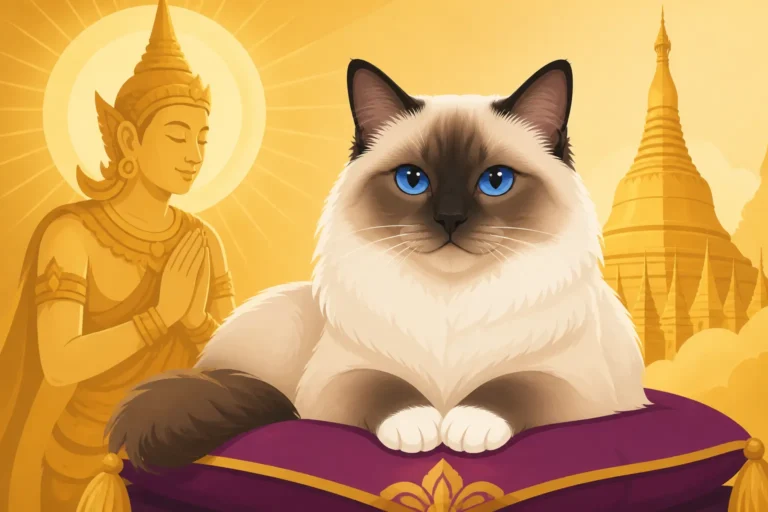
The Birman cat is often referred to as the "Sacred Cat of Burma," and this title isn't merely for poetic effect. It stems directly from a beautiful and ancient legend that has been passed down through time, giving a mythical origin to the breed's striking appearance, particularly those pristine white paws. For anyone encountering a Birman for the first time, especially if they’ve only seen typical pointed cats, those white feet are an immediate standout feature. The legend provides a deeply romantic and spiritual explanation for something that, in reality, is a specific genetic trait.
This foundational story truly sets the Birman apart from other pointed breeds, giving it a depth of character and history that transcends mere physical description. It suggests a cat chosen by deities, marked by sacred intervention, rather than just the whims of genetics. This spiritual connection is part of what makes the Birman so special to its devotees, creating an emotional bond that goes beyond typical pet ownership. It fosters a sense of guardianship over a living piece of history and myth.
The Temple of Lao-Tsun and the Golden Goddess
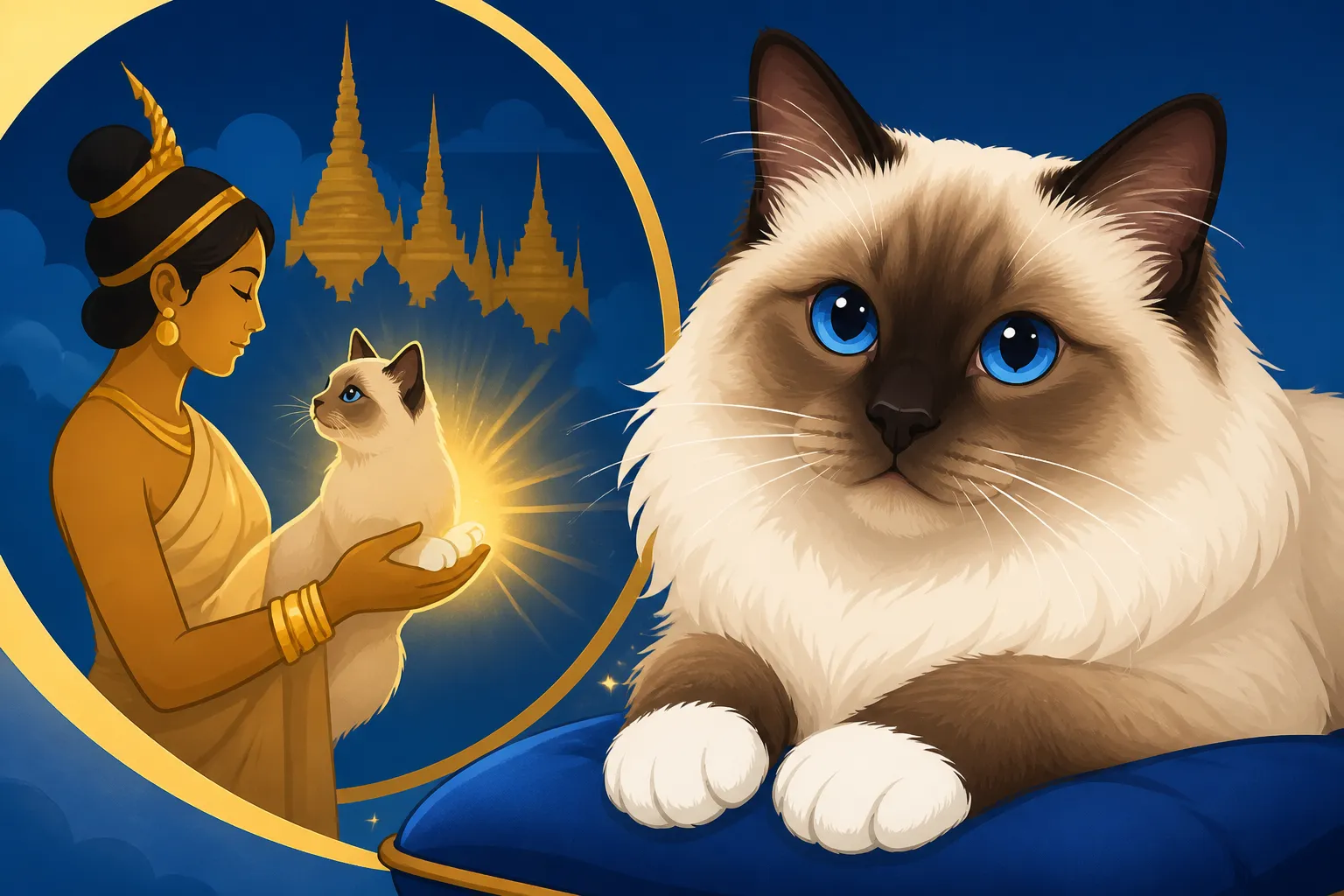
The heart of the Birman legend centers around the revered Temple of Lao-Tsun, nestled high in the mountains of ancient Burma. This temple was dedicated to the golden goddess, Tsun-Kyan-Kse, who possessed sapphire-blue eyes. Imagine a sanctuary, rich with ornate carvings, golden statues, and the hushed reverence of devoted priests. These priests, known as Kittahs, lived in devotion to the goddess, and their temple was home to a hundred pure white, long-haired cats, believed to be the sacred companions of the divine. These cats, in the legend, were pure white with golden eyes, a stark contrast to the modern Birman, but crucial to the transformative tale.
The most beloved of these temple cats was a magnificent creature named Sinh. Sinh was the constant companion of the head priest, Mun Ha, a venerable figure with a long, flowing white beard and a soul utterly dedicated to his goddess and the temple. Their bond was deep and spiritual, a testament to the profound connection between humans and animals. It's easy to picture them together, Mun Ha in his meditation, and Sinh resting faithfully by his side, soaking in the quiet sanctity of the temple.
The Attack and Divine Intervention
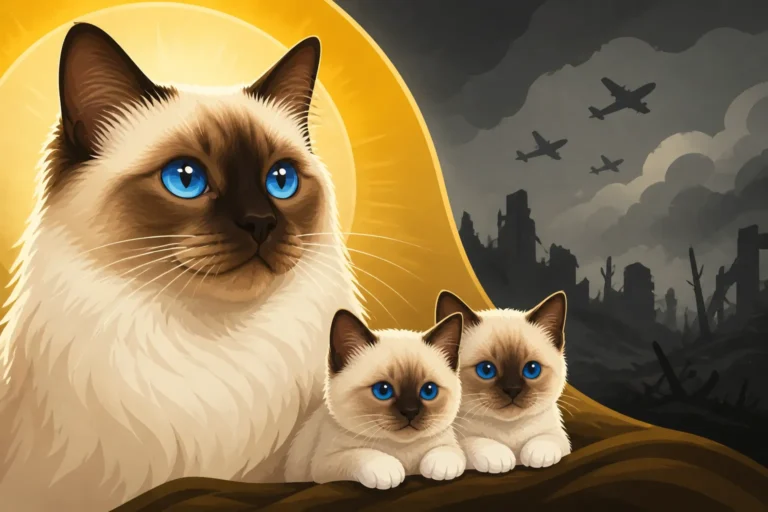
The legend takes a dramatic turn when the temple is tragically attacked by raiders from Siam. In the midst of the chaos and sacrilege, the elderly High Priest Mun Ha is struck down and dies before the golden statue of his goddess, Tsun-Kyan-Kse. As the raiders press their assault, the other priests are gripped by fear and despair, wavering in their defense of the temple. It's a moment of utter crisis, where faith and courage are tested to their limits.
It is at this critical juncture that Sinh, Mun Ha’s devoted companion, performs a miraculous act. The legend states that Sinh leaped onto the body of his fallen master, turning his golden eyes towards the sapphire gaze of the goddess. In that moment, a breathtaking transformation occurred: Sinh’s pure white fur turned golden, reflecting the sacred statue. His once golden eyes deepened to the vivid sapphire blue of the goddess, and his face, ears, legs, and tail became a rich, earthy brown, marking the points where he touched the impurities of the world. But most strikingly, the paws that touched his master remained pure white, as a symbol of Mun Ha’s unwavering purity and devotion, untouched by the earthly chaos. These became the Birman's distinctive gloves. The other temple cats experienced a similar transformation, instantly adopting the newly revealed sacred markings. This dramatic metamorphosis rallied the wavering priests, inspiring them to drive out the invaders and save their temple.
The Legacy of the Gloves: Purity and Devotion
The white gloves, or mittens, of the Birman cat are the most iconic and essential part of the breed's standard. The legend offers a beautiful and poignant explanation for this distinctive feature, imbuing it with deep symbolic meaning. It's not just about aesthetics; it's about the very soul of the Birman. This part of the legend is what resonates most with breeders and owners alike, connecting them to a story of sacred origins and unwavering loyalty.
The striking contrast of the white feet against the deeper point color is what truly makes a Birman instantly recognizable. Imagine trying to explain this unique pattern to someone unfamiliar with the breed – the legend provides a powerful, emotional narrative that goes far beyond simple genetics. It speaks to the heart, giving a sense of purpose and history to every paw.
The Symbolism Behind the White Markings
According to the legend, the pure white feet of Sinh, and subsequently all Birmans, symbolize the pure soul and unwavering devotion of the High Priest Mun Ha. It represents an unblemished connection to the divine, untouched by the worldly stains of conflict and despair. This isn't just a pretty story; it's a profound statement about the Birman's inherent nature, suggesting a cat that carries a piece of that sacred purity and loyalty within them.
This symbolism carries weight even today. Many Birman owners speak of their cats' gentle, placid, and devoted nature, qualities that seem to echo the quiet loyalty of Sinh to his master. It's easy to see how a cat that so faithfully follows its owner from room to room, sitting quietly nearby rather than demanding attention, could be seen as embodying such a pure spirit. A Birman Would Rather Be Near You Than On You is a common sentiment among owners, reinforcing this gentle devotion. The white gloves are a constant visual reminder of this sacred bond, a living testament to a beautiful myth that continues to define the breed.
How the Legend Explains the Birman's Specific Marking Pattern
The legend isn't vague about the white markings; it describes a very specific pattern that perfectly aligns with the Birman breed standard. It speaks of the paws remaining pure white, almost as if dipped in snow, while the rest of the body points darkened. This translates directly to the ideal Birman markings: white "gloves" on the front paws and white "laces" or "gauntlets" on the hind paws, extending higher up the leg in a symmetrical 'V' shape on the back of the hock.
This detailed description in the legend makes it even more compelling. It’s not just "white feet," but a specific distribution that breeders strive for. For instance, the legend's emphasis on purity for Mun Ha's soul is visually represented by the clear, sharp line where the white glove ends and the point color begins. Any 'smudges' or unevenness might, in a symbolic sense, detract from that purity, which is why breeders work so hard to achieve perfect marking symmetry. How a Breeder Judges a Birman Kitten's Gloves highlights the meticulous attention paid to these details, echoing the precision of the legendary transformation.
Fact Versus Fiction: The Genetic Reality
While the Birman legend is utterly captivating and provides a beautiful narrative for the breed's origins, it's important to differentiate between the mythical explanation and the scientific reality of genetics. In the modern understanding of cat breeding, the Birman's distinctive white gloves are not a result of divine intervention but rather a specific genetic trait. This doesn't lessen the breed's appeal or its unique beauty; it simply offers a different lens through which to appreciate its development.
Understanding the genetic basis helps us appreciate the skill and dedication of breeders who have worked to stabilize and refine these traits over generations. It’s a testament to selective breeding and careful observation, rather than a magical occurrence. Both the legend and the science contribute to the rich tapestry of the Birman's story.
The Role of the Gloving Gene (KIT)
The scientific explanation for the Birman's white gloves lies in a specific genetic mutation, often referred to as the "gloving gene." This gene is a variant of the KIT gene, which is responsible for white spotting in many animals. In Birmans, this particular variant causes the unique pattern of white paws against the colorpoint body. It’s a recessive gene, meaning a cat needs two copies of it (one from each parent) to express the white gloves. Every Birman carries two copies of this particular gloving gene. The Gloving Gene Every Birman Carries Two Copies Of is a fundamental aspect of the breed's genetic makeup.
What's fascinating is that while the KIT gene exists in many breeds, the specific variant causing the Birman's gloves is unique to the breed. It interacts with the colorpoint gene (which gives them their Siamese-like darker points on cooler body parts) to create that stunning contrast. This means that unlike random white spotting you might see on a domestic shorthair, the Birman's white feet are a predictable and inherent part of its genetic identity, passed down consistently.
The Unpredictability of "Perfect" Gloves
Despite every Birman carrying the gloving gene, achieving those "perfect" show-quality gloves, with ideal symmetry and length, is incredibly challenging for breeders. This is where the legend and reality truly diverge. The legend suggests a sudden, uniform transformation, but in real life, there are modifying genes and polygenic influences that cause variations in the expression of the white markings. Some kittens might have uneven gloves, or the white might extend too far up the leg (known as "gauntlets"), or not far enough ("mismarks").
This unpredictability is one of the most significant frustrations for Birman breeders. They can perform all the right genetic tests and breed two perfectly gloved parents, yet still produce kittens with less-than-ideal markings. It’s a constant dance between genetic potential and phenotypic expression. This is why a Birman kitten with flawless gloves often commands a higher price, reflecting the rarity and the breeder's dedication. Why Perfect Birman Gloves Are Almost Impossible to Breed delves into this challenge in detail, underscoring the ongoing quest for the ideal.
| Marking Feature | Legendary Explanation | Genetic Reality | Breeder's Goal |
|---|---|---|---|
| White Gloves (Front) | Symbol of Mun Ha's purity, untouched by earthly conflict. | Specific KIT gene variant. | Even, symmetrical white ending at the joint. |
| White Laces/Gauntlets (Rear) | Extension of purity on hind legs, reflecting deeper devotion. | Specific KIT gene variant, modified by other genes. | White "V" shape on hind hocks, not extending too high. |
| Point Coloration | Body turned golden, extremities darkened by contact with the world. | Temperature-sensitive colorpoint gene. | Clear contrast between points and body color. |
| Sapphire Blue Eyes | Reflection of the goddess Tsun-Kyan-Kse's eyes. | Recessive gene associated with the colorpoint trait. | Deep, vivid blue, large and round. |
The Birman's Journey from Legend to Registry
The Birman cat's journey from a mystical legend in ancient Burma to a recognized and beloved breed in cat registries around the world is a fascinating one. While the legend provides a romantic origin, the breed's actual history involves European breeders, outcrossing, and meticulous record-keeping. The legend undoubtedly played a role in capturing the imaginations of early enthusiasts, fueling the desire to develop and preserve this unique cat.
The myth gave the nascent breed a compelling backstory, setting it apart from other pointed cats that might have been developed through less dramatic means. It added an air of exoticism and sacredness that made the Birman even more desirable. This blend of ancient lore and modern breeding efforts is part of what makes the Birman so special.
How the Legend Was Documented and Popularized
The Birman legend, as we know it today, was first recorded and widely popularized in France in the early 20th century. While the story claims ancient Burmese origins, many cat historians believe the narrative was largely crafted or embellished by early European breeders to give the emerging breed a rich, mystical heritage. It certainly served its purpose, creating an aura of exoticism and spiritual significance around the cat. The tale itself is often attributed to a French author or breeder, emphasizing its European rather than purely Asian genesis in its written form.
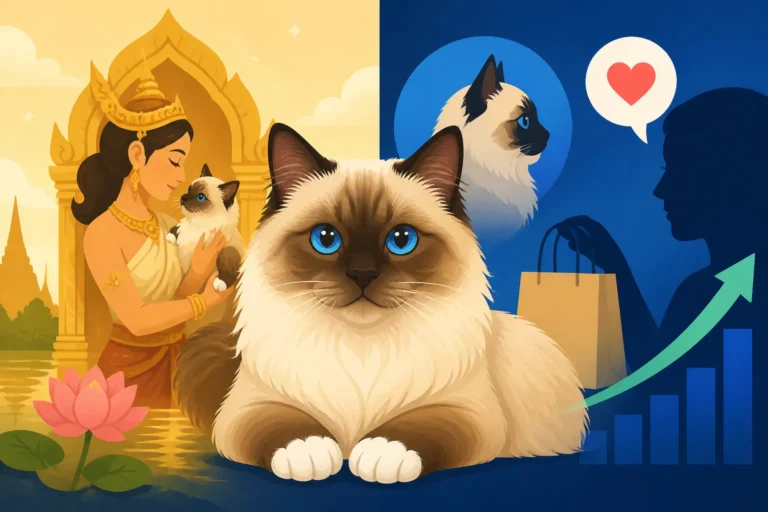
This written legend became a powerful marketing tool, capturing the hearts of cat fanciers and drawing attention to the breed. It offered a romantic explanation for the Birman's unique appearance, particularly those distinct white gloves, that no amount of genetic explanation could quite match. The legend appealed to a sense of wonder and provided a compelling narrative that distinguished the Birman from its contemporary breeds. Why the Birman Legend Was Written Down in France provides more context on this historical aspect.
The Impact on Breed Development and Recognition
The compelling legend certainly contributed to the Birman's early popularity and recognition in the Western world. It gave the breed an identity that was more than just physical traits; it had a story, a soul. This narrative appeal helped to generate interest and secure its place among other established breeds. Cat fanciers were not just adopting a pet; they were inviting a piece of ancient mystery and devotion into their homes.
When the Birman was being established in Europe after the First World War, with only a very small founder population, the strong narrative of the "Sacred Cat of Burma" helped to solidify its unique status. Breeders were not just preserving a cat; they were preserving a legacy. This early allure translated into dedicated breeding programs and eventual recognition by major cat registries like the CFA (Cat Fanciers' Association) and TICA (The International Cat Association), solidifying the Birman's place as a cherished and distinct breed. It was this blend of captivating myth and dedicated breeding that truly propelled the Birman onto the global stage.
Living with the Birman: Modern Reflections of the Legend
Even though we now understand the scientific reasons behind the Birman's exquisite white gloves, the enduring legend continues to influence how we perceive and appreciate this magnificent breed. For many Birman owners, the ancient story adds a layer of depth and magic to their everyday interactions with these cats. It's a reminder of their unique heritage and the qualities they are said to embody.
The legend isn't just a historical curiosity; it shapes the modern Birman experience. It influences owner expectations, highlights beloved personality traits, and even impacts practical care decisions, especially concerning those iconic white paws. Owners often feel a connection to the lore, enhancing the special bond they share with their Birmans.
Birman Temperament: Echoes of Sinh's Devotion
Perhaps one of the most beautiful aspects of the Birman legend is how perfectly it seems to describe the breed's renowned temperament. Birmans are famous for their gentle, affectionate, and extremely loyal nature. They are often described as "dog-like" in their devotion, following their favorite people from room to room, always wanting to be near, yet rarely demanding attention. This quiet companionship feels like a direct echo of Sinh's steadfast loyalty to Mun Ha. They are the definition of a placid companion, and this is Why a Birman Is the Cat Families Are Told to Get.
Owners frequently remark on their Birman's serene disposition, their soft voices, and their tendency to be 'velcro cats' without being overwhelming. They thrive on human company and are known for their ability to integrate seamlessly into busy family homes, often getting along well with children and other pets. This inherent gentleness and devotion perfectly align with the legendary qualities of purity and unwavering faithfulness attributed to Sinh, making the myth feel very real in daily life.
Caring for the Legendary White Gloves
Beyond the temperament, the Birman's white gloves present a practical aspect of care that connects back to their legendary status. Just as the legend speaks of purity, owners of Birmans often find themselves dedicated to keeping those pristine white paws, well, pristine. White fur, especially on feet, is prone to showing dirt and discoloration. This isn't just about aesthetics for show cats; it's about maintaining the iconic feature of the breed, a feature that many see as a living link to the Birman's sacred past.
To keep those white gloves sparkling, owners often opt for specific types of litter that are low-dust and non-staining. You might find yourself on Chewy, searching for premium, natural clay or silica gel litters that promise minimal tracking and no dye transfer, ensuring those lovely white feet don't turn an unfortunate shade of grey or yellow. Regular grooming, though relatively easy for a Birman due to its single coat, often focuses a little extra on the paws, ensuring any stray dirt or staining is quickly addressed. Keeping a Birman's White Gloves White is a task many owners take seriously, feeling a subtle responsibility to uphold the visual integrity of their cat's legendary markings.
The Enduring Appeal of the Birman's Story
The Birman legend, whether historically accurate or a brilliant piece of breed mythology, has undoubtedly contributed immensely to the breed's mystique and global popularity. It gives the Birman a narrative depth that few other breeds possess, transforming a beautiful cat with unique markings into a living embodiment of an ancient, spiritual tale. This rich backstory is a powerful draw for many who choose to welcome a Birman into their lives.
It's more than just owning a cat; it's participating in a centuries-old story, a lineage tracing back to a moment of divine intervention. This unique blend of beauty, temperament, and legend ensures the Birman's continued appeal for generations to come.
Why the Legend Continues to Captivate
The Birman legend continues to captivate because it taps into fundamental human desires for beauty, meaning, and connection. In a world increasingly driven by science and practicality, a story of divine transformation and unwavering loyalty offers a welcome touch of magic and romance. It gives a profound spiritual dimension to the physical appearance of the cat, making each white glove a symbol rather than just a genetic trait. Who wouldn't want a cat with such a noble and sacred heritage?
The vivid imagery – golden temples, sapphire-eyed goddesses, and heroic feline devotion – creates a powerful emotional resonance. It’s a story that evokes wonder and a deep appreciation for the Birman's gentle spirit and striking looks. This captivating narrative ensures that the Birman remains one of the most cherished and recognizable cat breeds worldwide. The Birman Is the Sacred Cat of Burma, and the Story Is a Legend is a title that continues to draw people in, sparking curiosity about this extraordinary feline.
The Birman's Place in Our Hearts, Shaped by Myth and Reality
Ultimately, the Birman cat occupies a special place in the hearts of its owners, a place shaped by both the enchanting myth of its origins and the wonderful reality of its companionship. The legend provides a beautiful framework for understanding their serene temperament, their gentle affection, and their distinctive appearance. While modern genetics can explain the "how," the legend provides the "why" – why these cats feel so special, so revered.
From the temple cats of ancient Burma to the cherished pets gracing our homes today, the Birman carries with it an undeniable aura of grace and sanctity. The white gloves are not just markings; they are badges of honor, symbols of loyalty, and a constant reminder of a story that continues to enchant and inspire. Whether you're choosing a new kitten or simply admiring one from afar, the Birman's legend ensures that these "Sacred Cats" will always be viewed with a touch of awe and deep affection. If you're looking for a companion that comes with a built-in mythology, a Birman might just be the sacred cat for your home.
Disclaimer
This article is for general informational purposes only and does not constitute professional advice. Laws, prices and regulations vary by location and change over time. Consult a qualified professional for guidance on your specific situation.