How Rare a Cream Point Birman Is
A cream point Birman can be hard to find, and listings do not always use color names consistently. Some cats described as cream may be registered under a different accepted color category, while others may not meet a particular registry’s Birman standard. This guide explains what “cream point” means, why it is less commonly seen, and how to check a kitten’s color and pedigree.
What a cream point Birman looks like
Cream is a color, not a separate Birman type
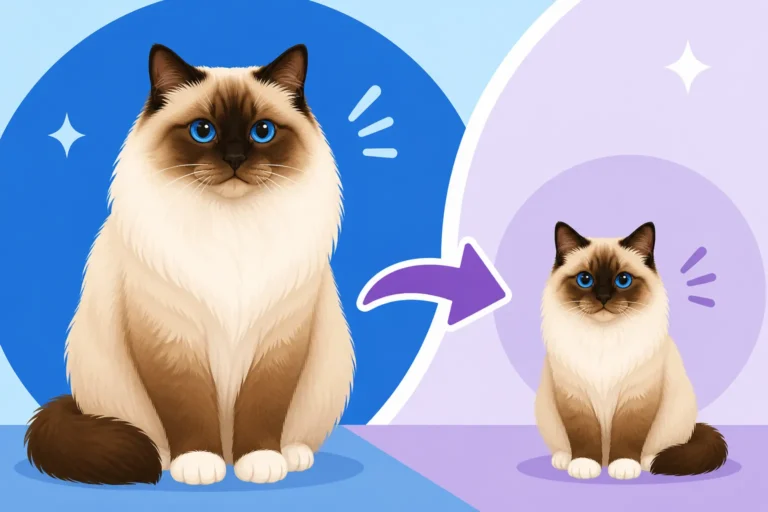
A cream point Birman has the breed’s familiar pointed pattern: a pale body, darker color on the face, ears, legs, and tail, and white gloves on the paws. The cream shade is a softened, pale version of red coloration. It can look warm or peachy, but the exact appearance varies with lighting, age, and the individual cat.
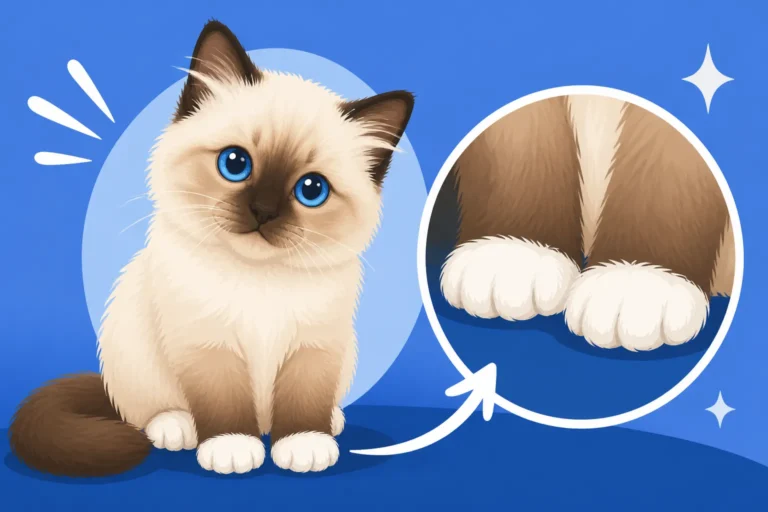
The defining Birman features still matter. A kitten does not become a cream point Birman simply because it has pale orange markings and blue eyes. It should also have the breed’s characteristic body and coat, white feet with the expected glove pattern, and traceable pedigree from a recognized registry. The white markings are a particularly useful visual clue, but they do not prove breed identity on their own.
Color descriptions can be confusing because breeders, registries, and casual listings may not use exactly the same terms. Depending on the registry and its accepted varieties, a cat that looks cream may be listed with a different color designation. When checking a specific kitten, ask for the color recorded on its registration documents rather than relying only on an advertisement or a seller’s informal description.
How cream differs from red, tortie, and tabby points
Red or flame point cats generally have stronger orange or reddish points than cream point cats, whose markings are usually paler and softer. The difference can be subtle in young kittens, in indoor lighting, or in photographs with strong filters. Cream points may also deepen or become easier to distinguish as their coat develops.
Tortie point cats have patches of more than one color in their points, often combining red or cream with another point color. Tabby point cats show striped or patterned markings, especially on the face and legs. A cream point Birman, by contrast, is described by its pale, warm point color rather than by a patchwork or striped pattern. These categories can overlap in complex ways, so a breeder’s paperwork and explanation are more reliable than a quick visual guess.
If you are comparing photographs, look at several views in natural light: the face, ears, legs, tail, and body. A single close-up can make a cream point look redder or paler than it is. For a broader look at recognized colors, see Which Point Colors the Birman Standard Allows and How a Birman's Point Color Is Registered.
| Description | What to look for | Why the label may be uncertain |
|---|---|---|
| Cream point | Pale, warm cream or peach-toned points | Shade varies with age, lighting, and registry terminology |
| Red or flame point | More vivid orange or reddish points | A photograph may exaggerate or mute the color |
| Tortie point | Patches of more than one color in the points | Small patches may be difficult to see in a young kitten |
| Tabby point | Visible stripes or markings on the points | Pattern can be subtle in some colors and photographs |
Why cream point Birmans are less commonly seen
Color inheritance makes cream less straightforward to produce
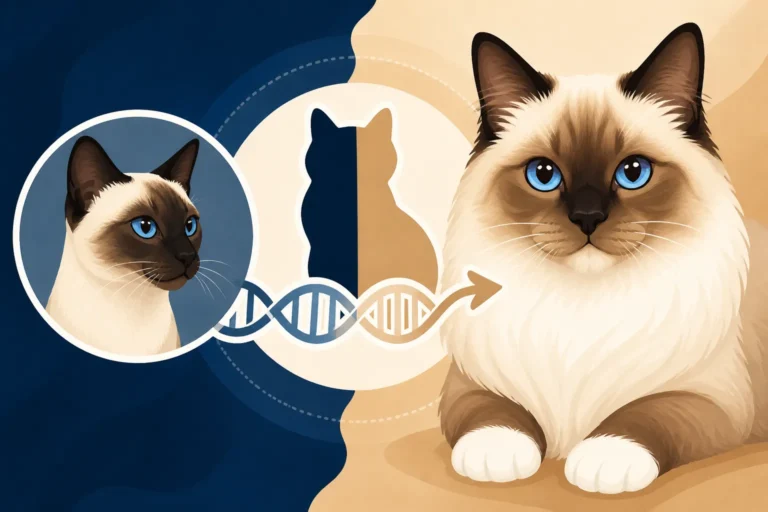
Coat color is inherited through combinations of genes, not chosen simply by matching two cats that look similar. Cream coloration depends on inherited color traits, and the pointed pattern adds another layer to the picture. A breeder may understand the colors in a pedigree but still cannot promise that every kitten in a litter will be cream point.
The sex of a kitten can also affect how red-based colors appear in a litter. In cats, the orange-color gene is linked to the X chromosome, which is one reason red and tortie patterns can be distributed differently between males and females. That does not mean cream point kittens are impossible to predict in every detail; it means a visual guess about the parents is not enough to guarantee a particular color or pattern.
This is one reason a breeder should be able to explain the expected color possibilities without promising an exact result. The point pattern, dilution, and other inherited features need to line up, and littermates may look quite different. For a closer look at why even a fixed breed trait can vary in appearance, read Why Birman Gloves Vary Despite the Fixed Gene.
“Rare” usually describes availability, not a special quality
Cream point Birmans are often considered less commonly encountered than familiar colors such as seal or blue point. But there is no single, reliable worldwide count that establishes exactly how rare they are. Availability can vary by country, registry, and local breeding community. A color that is difficult to find in one area may be more familiar in another.
The word “rare” in an advertisement is not proof that a kitten is unusual, correctly registered, or responsibly bred. It is a description sellers can use loosely, and it should not replace questions about pedigree, health history, and the kitten’s welfare. A genuinely uncommon color does not make a cat healthier, more affectionate, or a better match for your household.
If a seller presents cream coloring as a reason to skip ordinary checks, slow down. Ask which registry recognizes the kitten’s color, whether its parents have documented pedigrees, and what health information the breeder provides. The same careful approach applies to every color, including familiar ones. Which Point Colors CFA Accepts in a Birman can help explain why color recognition may depend on the registry.
How to confirm a kitten is a cream point Birman
Check the documents as well as the coat
Start by asking the breeder for the kitten’s registration information and pedigree. The paperwork should identify the cat and make it possible to trace its ancestry through the relevant registry. Ask the breeder how the kitten’s color is officially recorded and whether the registry’s terminology differs from the phrase “cream point” used in the listing.
It is reasonable for a young kitten’s color to be described with some caution while its points develop. Ask for photographs of the kitten at different ages, along with pictures of its parents if available. Compare the color in unfiltered, natural-light images rather than relying on heavily edited photographs. A breeder who explains what can and cannot be known at that age is usually more helpful than one who guarantees a show-quality color from a single early picture.
Paperwork confirms more than color: it helps distinguish a pedigreed Birman from a cat that merely resembles one. White paws and blue eyes are appealing, but neither feature alone establishes breed. For more guidance on reading pedigree documents, see Which Registry Body Issues a Birman's Papers and Why a Birman's Pedigree Should Reach the Post War Founders.
Ask careful questions before joining a waitlist
Before sending a deposit, ask whether the kitten is being sold as a pet or with breeding or show rights, how the breeder determines that, and what will happen if the kitten’s color or markings develop differently than expected. A responsible breeder should explain the contract and the kitten’s records clearly. Do not assume that a promise about color guarantees any particular show result.
It can also help to ask what health screening the breeder performs and what veterinary records come with the kitten. Color is only one small part of a good adoption decision. Temperament, early socialization, appropriate veterinary care, and honest communication matter just as much. A seller who is unwilling to answer ordinary questions about the kitten’s background is not made more trustworthy by offering a rare-sounding color.
Be wary of listings that use “cream point” as the main selling point but provide no registry details, pedigree, or verifiable records. A kitten without papers may still be a loving companion, but its breed and color should not be treated as confirmed on the strength of an online description alone. For a practical overview of the breed’s background, see How to Tell a Birman From a Ragdoll by Its Feet.
Living with a cream point Birman
Color does not change the everyday care a Birman needs
A cream point Birman needs the same thoughtful care as a Birman of another color. Its coat benefits from regular gentle combing, and its white feet may need occasional attention if they become dirty. Introduce grooming gradually, especially if you bring home a kitten, so combing becomes a calm routine rather than a wrestling match.
If you are preparing a grooming kit, focus on tools suited to a silky coat rather than buying products because they are marketed for a “rare” color. A fine-toothed metal comb is often a practical starting point; you can compare options at a local pet shop or retailers such as Chewy. Whatever the source, check that the tool glides through the coat without pulling, and stop if the kitten becomes uncomfortable.
Cream coloration is not a care problem to solve with whitening products or strong shampoos. Avoid treating the coat to make it look paler or brighter. If staining, skin irritation, or a sudden change in coat condition appears, ask your veterinarian for guidance rather than experimenting with cosmetic products. If you need to restock basic grooming supplies, Chewy is one place to compare ordinary combs and cat-safe care items; the important thing is to choose products appropriate for your individual cat.
Choose the cat, not just the color
It is understandable to have a favorite color, especially when you have been waiting for a cream point kitten. Still, color availability can make a search longer, and the right kitten may not be the one with the exact shade you first pictured. Ask yourself whether you are prepared to wait for a responsible breeder, consider an adult cat, or broaden your search to another accepted point color.
The Birman’s temperament, care needs, and fit with your home are more important than a particular coat shade. A quiet cat still needs company and daily attention; a beautiful kitten is not a good match if its household routine leaves it isolated for long stretches. When comparing breeders or planning for a kitten’s arrival, ordinary supplies matter more than color-specific marketing. Chewy may be useful for comparing basics, but your breeder and veterinarian are better sources for advice tailored to that kitten.
A cream point Birman can be a lovely, less commonly encountered variation, but “rare” is best treated as a description of availability rather than a promise of special value. Confirm the color designation, check the pedigree, ask sensible health and care questions, and give the kitten’s personality equal weight. That approach helps you find a healthy, well-matched companion, whether its points are cream, red, seal, blue, or another recognized shade.
Disclaimer
This article is for general informational purposes only and does not constitute professional advice. Laws, prices and regulations vary by location and change over time. Consult a qualified professional for guidance on your specific situation.