What a Corneal Dermoid Is on a Birman
Finding something unusual in your beloved Birman's eye can send a shiver down your spine, immediately making you wonder if their vision is at risk or if it's something more serious. It's a natural fear, especially when dealing with such a delicate and important sensory organ. This comprehensive guide will walk you through what a corneal dermoid is, how it affects Birmans, what to look for, and the best ways to manage and treat this often startling but typically benign condition.
Understanding What a Corneal Dermoid Truly Is
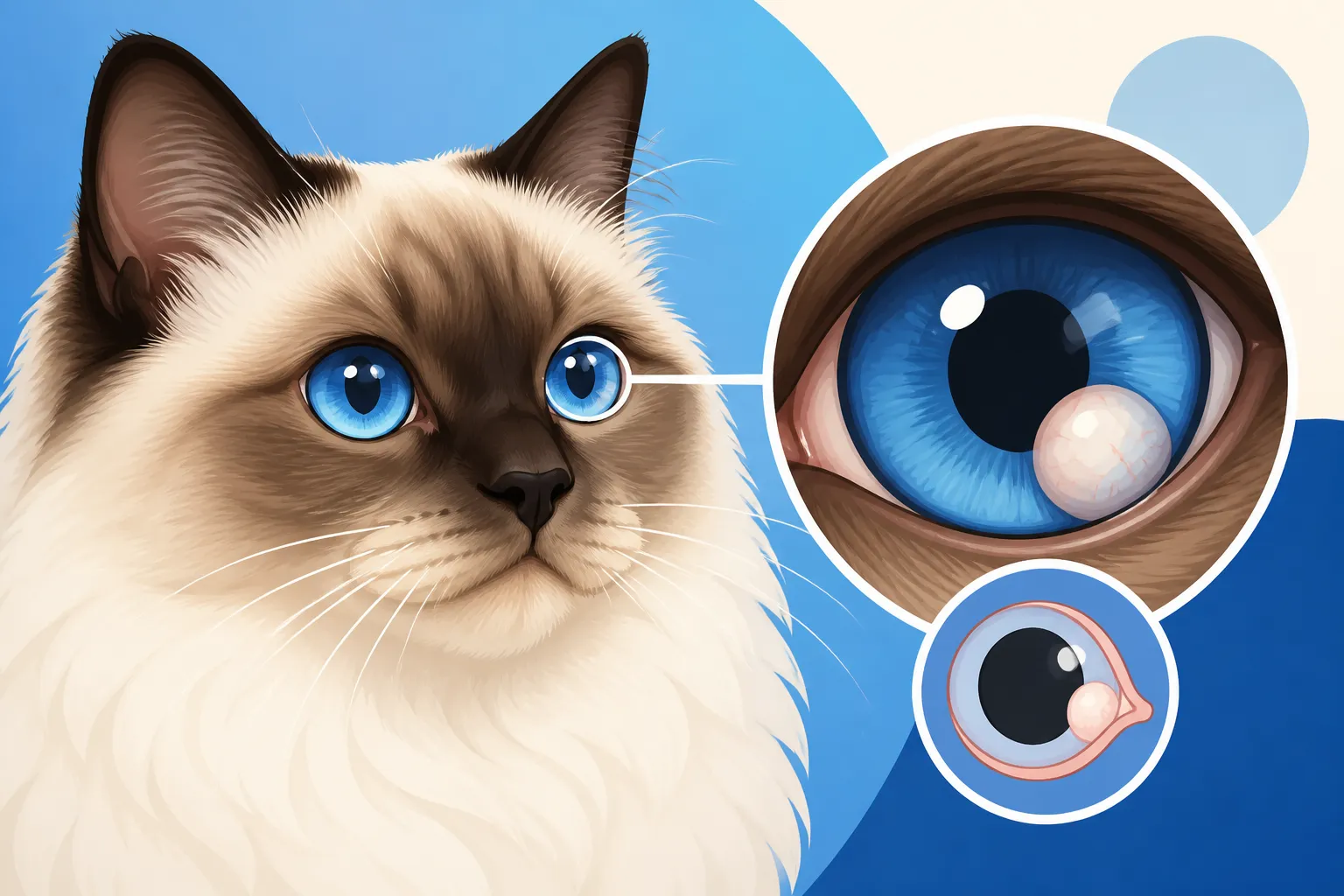
When you first notice something odd on your Birman's eye, it's easy for your mind to jump to worst-case scenarios. But take a deep breath; a corneal dermoid, while certainly looking alarming, isn't usually as threatening as it might appear. It’s essentially a piece of skin tissue, sometimes complete with hair, that has grown in an abnormal location – right on the surface of the eye.
More Than Just a Stray Hair
Imagine looking closely at your Birman's beautiful blue eyes and spotting a tiny patch of skin, perhaps with a few hairs sprouting from it, directly on the clear cornea or the surrounding conjunctiva. That's a corneal dermoid. It's not a foreign object that's landed on the eye, nor is it a cancerous growth, which is often the immediate fear for many pet parents. Instead, it's a congenital anomaly, meaning your Birman was born with the predisposition for it. This misplaced tissue is structurally identical to normal skin, containing hair follicles, sweat glands, and even fatty tissue, but its presence on the eye can cause significant irritation and, depending on its size and location, impact vision.
For a Birman, with their naturally placid and tolerant nature, they might not outwardly show severe distress until the irritation is quite pronounced. This can make it tricky for owners to spot early, especially if the dermoid is small or in a less visible area. Unlike a tiny piece of dust that can be blinked away, a dermoid is firmly attached and cannot be removed by natural eye lubrication or gentle wiping. It's a permanent fixture that needs professional intervention if it causes discomfort or obstructs sight.
Why Birmans Can Be Affected
While corneal dermoids can appear in any cat breed, and indeed in other animals and humans, some breeds seem to have a higher incidence, suggesting a genetic component. Birmans, unfortunately, are among those breeds where this condition can be observed, though it's still relatively uncommon. This isn't a condition that develops later in life due to injury or infection; it's something that arises during the cat's fetal development.
During gestation, as the kitten's eyes are forming, cells that should normally develop into skin in other parts of the body somehow migrate or fail to differentiate correctly, ending up on the eye's surface. When the kitten is born, this misplaced tissue is already present, though it might be tiny and hard to see. As the kitten grows, the dermoid can also grow, and the hair on it might become more noticeable, drawing attention to the problem. It's not a fault of breeding practices in the same way some inherited diseases are, but rather a hiccup in embryonic development that can unfortunately affect these otherwise healthy and gentle felines.
Understanding that it's congenital means you can rule out environmental factors or anything you might have done "wrong" as an owner. It simply is a part of their unique biological makeup from birth. This knowledge can bring some peace of mind, even as you prepare to address the issue.
Common Characteristics and Potential Impact of Corneal Dermoids
| Characteristic | Description | Potential Impact on Birman |
|---|---|---|
| Location | Can be on the cornea (clear part) or conjunctiva (white part/inner eyelids). | Varies; corneal dermoids obstruct vision more. |
| Appearance | A fleshy mass, often with hair growing from it. Can vary in size from tiny speck to several millimeters. | Irritation, discomfort, foreign body sensation. |
| Growth Rate | Usually grows slowly, if at all, after birth, but hair can become longer and more irritating. | Increased irritation over time as hair rubs the eye. |
| Associated Symptoms | Excessive tearing, squinting, rubbing the eye, redness, discharge. | Chronic discomfort, risk of secondary infections from rubbing. |
| Vision Impairment | Depends on size and location. A large corneal dermoid can partially or completely block vision. | Reduced visual acuity in affected eye. |
| Congenital Nature | Present from birth, though not always immediately obvious. | Not contagious or acquired later in life. |
Recognizing the Signs and Getting a Diagnosis
You know your Birman best, and you're usually the first to notice when something is off, even with their quiet nature. When it comes to their eyes, any change warrants a closer look, and identifying a corneal dermoid often comes down to careful observation and then a professional veterinary examination.
What to Look For in Your Birman's Eye
Birmans are famously easygoing and gentle, often choosing to observe quietly rather than draw attention to themselves, even when they're not feeling their best. This means that Why a Birman Hides Illness Behind a Placid Temperament and subtle signs of discomfort, like those caused by an irritating corneal dermoid, might go unnoticed for a while. You might observe them doing something very slight, like squinting just a little more than usual, or perhaps rubbing their face against furniture or your leg, rather than pawing at their eye directly.
Look closely for a fuzzy, skin-like patch on the surface of their eye. Sometimes, it might literally look like a small patch of fur growing on the eye itself. This can be particularly noticeable if the dermoid is on the clear cornea, causing a cloudy or opaque spot. Other signs of irritation include increased tear production, leading to wetness around the eye, or a mild discharge. The white of the eye (sclera) might appear reddened due to chronic inflammation. If the dermoid is large enough to physically obstruct part of their vision, you might notice them bumping into things on one side or seeming less confident navigating certain areas. These are all subtle cues that, when combined, strongly suggest an issue with their eye that needs attention. Remember, even a small dermoid can cause significant discomfort, much like having an eyelash constantly rubbing against your own eye.
The Vet's Role
Once you suspect an issue, the next crucial step is a visit to your veterinarian. Don't try to remove anything yourself, as you could cause severe damage. Your vet will perform a thorough ophthalmic examination. This isn't just a quick glance; it involves using specialized tools to get a magnified view of the eye's structures. They'll use an ophthalmoscope and potentially a slit lamp to meticulously examine the surface of the cornea and conjunctiva.
During this exam, the vet will be looking for the characteristic appearance of a dermoid. They'll also typically perform a fluorescein stain test. This test involves applying a special dye to the eye which sticks to damaged areas of the cornea, making ulcers or abrasions glow green under a blue light. While dermoids themselves don't typically pick up the stain (since they are healthy tissue), this test is vital to ensure there isn't any secondary corneal damage caused by the dermoid's constant rubbing. Confirming it’s a dermoid usually involves a visual diagnosis based on its location and appearance. In some cases, if there's any uncertainty, your vet might recommend a referral to a board-certified veterinary ophthalmologist. These specialists have advanced training and equipment to provide the most precise diagnosis and discuss the best course of action. They can also offer insight into the specifics of Why a Birman's Eyes Should Be Checked at Every Visit, considering their unique breed characteristics.
Treatment Options and Post-Operative Care
Once a corneal dermoid is diagnosed, the conversation naturally turns to what can be done. The good news is that these conditions are almost always treatable, and the prognosis for a full recovery and maintained vision is generally excellent.
Surgical Excision as the Primary Solution
For almost all corneal dermoids causing irritation or visual impairment, surgical excision is the recommended course of action. This isn't a minor procedure; it requires the delicate precision of a veterinary surgeon, often one with ophthalmic experience. Your Birman will need to be under general anesthesia for the surgery, which is a consideration in itself. You might recall discussions about Whether a Birman Needs a Heart Scan Before Anesthetic due to HCM risks in the breed, highlighting the importance of thorough pre-surgical screening.
The surgeon will carefully remove the dermoid tissue from the surface of the eye. The goal is not just to remove the visible skin and hair, but also to meticulously remove the underlying follicles to prevent recurrence. This is a very delicate operation, as the cornea is thin and crucial for vision. The surgeon uses specialized instruments to shave the tissue off, ensuring minimal damage to the surrounding healthy corneal layers. In some cases, a very shallow keratectomy (removal of a small portion of the cornea) may be performed to ensure all aberrant tissue is removed. The success of the surgery hinges on preserving the clarity and integrity of the cornea, allowing your Birman to see clearly and comfortably once healed. Many pet parents worry about the cost associated with such specialized surgery, and this is where a good pet insurance plan like Healthy Paws can be incredibly beneficial, helping to cover unexpected surgical expenses and post-operative care.
Managing Recovery and Preventing Complications
The period immediately following surgery is just as critical as the operation itself. Your Birman will likely go home with an Elizabethan collar (the dreaded "cone of shame") to prevent them from rubbing or pawing at the surgical site, which could dislodge sutures, introduce infection, or hinder healing. This collar will need to be worn diligently for several weeks, which can be a challenging adjustment for both you and your cat.
You'll also be given a regimen of eye drops or ointments. These typically include antibiotics to prevent infection and anti-inflammatory medications to reduce swelling and pain. Administering eye drops to a cat, especially a post-surgical one, requires patience and a gentle touch. Your vet will show you the correct technique, but it's a routine that needs commitment. Pain medication will also be prescribed to keep your Birman comfortable during recovery. It's important to restrict their activity to prevent accidental injury to the healing eye. No rough play, no high jumps, and ensure their resting areas are easily accessible. While your Birman's placid temperament might make this easier than with a more boisterous breed, keeping them contained and calm is paramount. Follow-up appointments will be scheduled to monitor healing and remove any sutures if necessary. Pet insurance providers like Healthy Paws often cover these essential post-operative check-ups, providing further financial relief. Potential complications, though rare, can include scarring that affects vision, or a recurrence if not all dermoid tissue was removed. However, with a skilled surgeon and diligent post-operative care, these outcomes are generally avoided.
Long-Term Outlook and Living with a Birman Who Has Had a Dermoid
Once your Birman has successfully navigated treatment for a corneal dermoid, you can look forward to them returning to their comfortable, normal self. The long-term prognosis is overwhelmingly positive, bringing peace of mind back to concerned owners.
Prognosis After Successful Removal
For most Birmans who undergo surgical removal of a corneal dermoid, the prognosis is excellent. Once the healing process is complete, the eye typically returns to its normal function, and any irritation or discomfort is resolved. The improvement in your cat's comfort can be quite dramatic; they'll no longer be experiencing that constant foreign body sensation or irritation. Their bright, expressive blue eyes will likely regain their full sparkle. Vision, if it was impacted by the dermoid, is usually restored to its pre-condition level, or even improved if the dermoid was significantly obstructing sight.
It's a huge relief to know that this is generally a one-time issue. While no surgery comes with a 100% guarantee against recurrence, especially in cases where the removal was very challenging, the vast majority of dermoids are successfully excised without reappearing. This means you won't typically need to worry about repeated surgeries for the same eye. This excellent outcome ensures that your Birman can continue to enjoy their full lifespan with clear, comfortable vision, focusing on their favorite quiet activities like following you from room to room or How a Birman Splits Its Day Between Sleep and Company. Thinking about the lifetime care for your Birman, including potential veterinary needs, can be a lot, and resources like What Fifteen Years of Combing and Echoes Costs a Birman Owner offer valuable perspective.
Regular Eye Health Checks for Your Birman
Even after a successful dermoid removal, maintaining regular veterinary check-ups is paramount for your Birman's overall health, and their eyes should always be a priority. Birmans, like many purebred cats, benefit from consistent monitoring. During routine visits, your vet will perform a general physical examination, which includes a visual check of their eyes. This is an opportunity to catch any new issues early, even if unrelated to the previous dermoid.
For any cat, and especially a Birman, routine wellness exams are critical. These appointments often involve checking for other breed-specific concerns, such as monitoring for early signs of How Dental Disease Progresses in a Birman or assessing their overall well-being. Keeping up with these yearly or bi-annual visits allows your vet to keep a close eye on their healing and ensure no new problems arise. It's an essential part of responsible pet ownership and provides another layer of security for your feline companion, letting you enjoy their quiet companionship without constant worry. When considering comprehensive care, remember that pet insurance, such as a plan from Healthy Paws, can contribute significantly to covering the costs of these routine and specialized eye check-ups, ensuring your Birman receives the best ongoing care without added financial stress.
Disclaimer
This article is intended for informational purposes only and does not constitute medical advice. Always consult with a qualified veterinarian for any health concerns or before making any decisions about your pet's health or treatment.