How a Breeder Judges a Birman Kitten’s Gloves
Anyone who has ever admired the stunning Birman cat knows that their pristine white "gloves" are an absolute hallmark of the breed, a captivating feature that truly sets them apart. But if you’ve ever wondered how breeders actually assess these delicate markings on tiny kittens, especially when they're born pure white, you're not alone. It’s a process that requires a keen eye, deep understanding of genetics, and a whole lot of patience, and this guide is here to walk you through exactly how a Birman breeder judges a kitten's gloves from the moment they arrive.
The Mystique and Importance of Birman Gloves
There's something almost magical about the Birman's pure white paws, as if they've dipped their feet in snow. For breeders, these gloves aren't just a pretty accessory; they are a defining characteristic, steeped in legend and fundamental to the breed standard. Understanding their origins helps us appreciate why their assessment is such a meticulous art.
Why Gloves Are Central to the Birman Standard
The legend of the Birman cat tells of cats guarding temples in Burma, whose golden eyes and dark points were transformed when their priest died. The goddess Tou-kin-wah blessed them, turning their eyes blue, their coats golden, and leaving their paws pure white as a symbol of purity and their unwavering devotion. Whether you believe the legend or not, it speaks to the deep significance of these markings. These distinctive white paws, or "gloves," are what truly separate a Birman from other pointed breeds like the Siamese or Himalayan. They are the most distinguishing feature, and without them, a cat, no matter how beautiful, wouldn't truly be a Birman in the eyes of the standard. This means breeders dedicate immense effort to understanding and perfecting this trait in their lines. It's not just about aesthetics; it’s about preserving the very essence of the breed's identity. For a deeper dive into their mythical origins, you might enjoy reading The Birman Is the Sacred Cat of Burma, and the Story Is a Legend.
The Early Stages: Why Kittens Are Born White
Imagine the challenge for a breeder: all Birman kittens are born pure white, or a very pale cream. It’s a common misconception that they emerge with their points already showing, but this isn't the case! The Birman's color, like all pointed breeds, is determined by a temperature-sensitive gene. The pigment only develops in the cooler extremities of the body – the ears, nose, paws, and tail. In the warm environment of the womb, the kitten's entire body is at a uniform temperature, preventing pigment from forming. It's only after birth, as they are exposed to the cooler ambient temperature of the nursery, that the points begin to darken and the gloves start to become discernible. This is why a breeder’s initial assessment is often more about potential than immediate visual confirmation. If you're curious about this fascinating aspect, check out Why a Birman Kitten Is Born Almost White. The process unfolds slowly, a testament to nature's subtle artistry.
The Core Elements of a Birman Glove
When a breeder judges a Birman kitten’s gloves, they aren't just looking for white paws. Oh no, it's far more nuanced than that! There are specific criteria for the front paws and entirely different, but equally crucial, criteria for the back paws, often referred to as "laces." Precision and symmetry are the names of the game.
Defining the Perfect Front Gloves
The front gloves on a Birman are meant to be perfectly white, stopping abruptly at the joint where the paw meets the leg. Think of it like they've dipped their paws into a pot of white paint, but only up to a very specific, neat line. The key here is symmetry: both front paws should have gloves of equal length and shape. A breeder will meticulously examine each paw, looking for any deviation. If one glove extends higher up the leg than the other, or if it's too short, it's considered a fault. Even a tiny speck of color on a white glove can be a mark against it in the show ring, often called a "seal spot" if it's a darker point color.
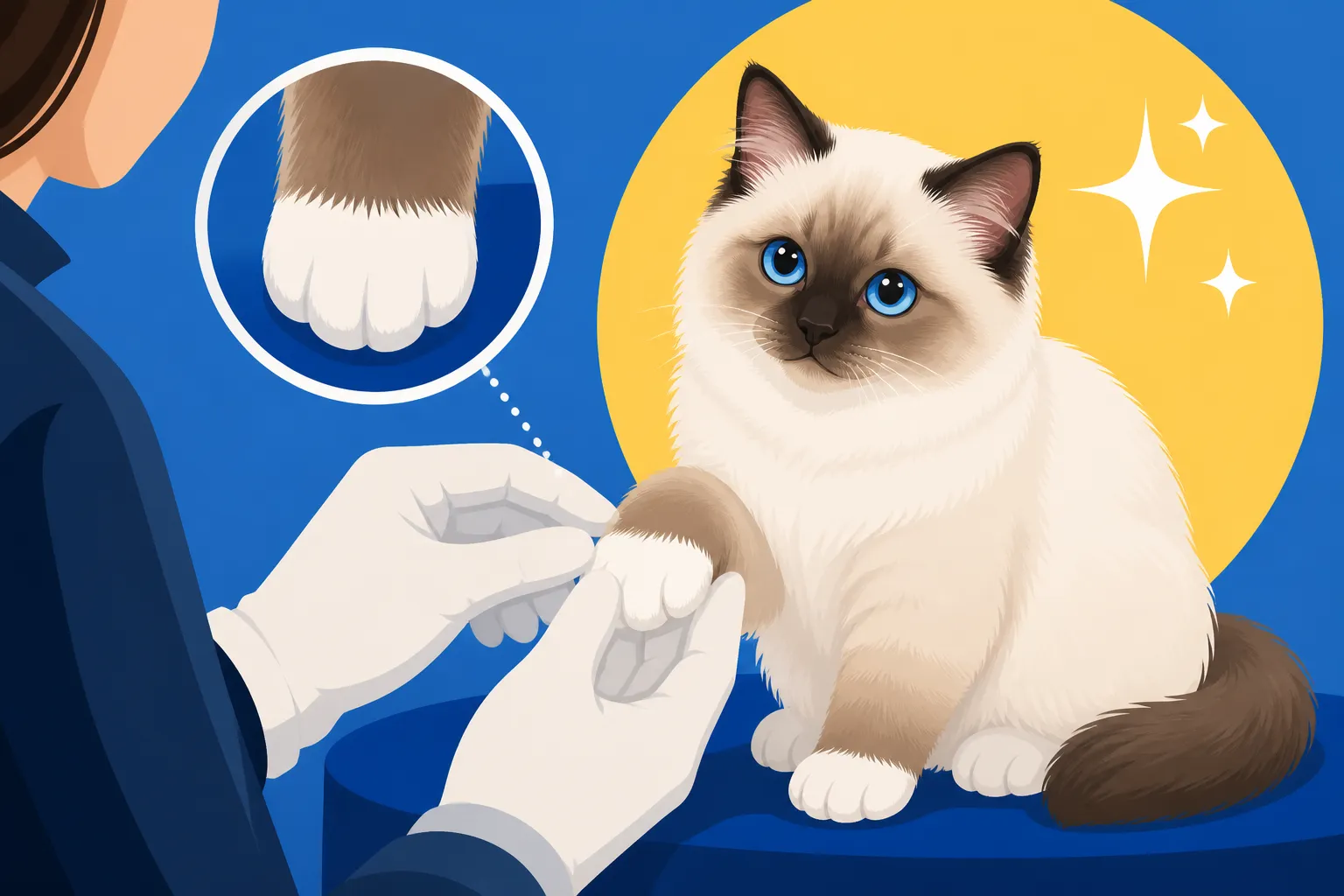
Imagine a painter trying to create two identical white stripes on a canvas – that’s the kind of precision a breeder is striving for. They'll lift each tiny paw, gently spreading the toes to ensure the white extends completely around the paw, not just on top. It’s a delicate balance, and achieving perfect front gloves is surprisingly difficult. For more detail on what to look for, you can read What a Birman's Front Gloves Should Look Like. These details are fundamental to the breed's distinct appearance.
The Crucial 'Laces' on the Hind Feet
Now, the hind feet are where it gets even more intricate and, frankly, a bit magical. On the back paws, the white not only covers the toes and paw pad, but it should also extend up the back of the leg in a perfect "lace" or "gauntlet" pattern, tapering to a point. These laces should also be symmetrical, meaning they should reach the same height on both hind legs. The ideal lace extends about halfway up the hock joint, forming a neat, inverted 'V' shape.
A common fault here is what’s known as "gauntlets," where the white extends too far up the leg, almost like a white stocking, or where it extends unevenly. A breeder might describe a cat as having "running laces" if they go too high, or "uneven laces" if one leg has a perfectly formed lace while the other is too short or malformed. These specific patterns are vital for show quality. The absence of these laces, or any deviation from the symmetrical, perfectly-placed white, can significantly impact a kitten's show potential and, consequently, its price. Learning about Where a Birman's Back Lace Should End can give you a better idea of this intricate detail. It’s truly a dance of genetics and subtle aesthetic judgment.
The Evaluation Process: From Tiny Toes to Twelve Weeks
Judging a Birman kitten's gloves isn't a one-time event; it's an ongoing process that begins almost immediately after birth and becomes more definitive as the kitten grows. Breeders are constantly observing, making mental notes, and sometimes even taking pictures to track the development.
Initial Observation: The First Weeks
In the very first weeks, Birman kittens are a flurry of white fluff. Their points are just beginning to show a hint of color, a faint blush on the ears and nose. At this stage, a breeder is mostly looking for the presence of white on the paws and a general sense of whether the potential for gloves is there. It's like looking at a blank canvas and trying to imagine the finished painting. They can tell if a kitten has no white on its paws at all (a very rare occurrence, thankfully, but one that would immediately disqualify it from being a Birman), or if there are clear indications of where the white will eventually form.
During these initial weeks, development is rapid. The small patches of white might grow, shrink, or shift ever so slightly. Experienced breeders know that patience is key. They understand that what they see at two or three weeks is merely an indicator, not a final pronouncement. It’s an exciting time, watching these tiny miracles slowly reveal their true colors and patterns. They might use a soft cloth to gently clean tiny paws, ensuring any discoloration from milk or litter isn't masking the true glove development. Even at this early stage, a breeder's discerning eye is already at work, anticipating the final outcome. You might wonder when these crucial markings are finally set, and When a Birman Kitten's Gloves Are Final delves into that.
The Critical Twelve-Week Assessment
The real judgment day, or rather, the judgment weeks, usually happens around the twelve-week mark. By this age, the kitten's points have darkened considerably, and the gloves and laces are much more defined. This is often the time when breeders can make a more accurate assessment of a kitten’s show potential or determine if it will be placed as a pet. At twelve weeks, the symmetry of the front gloves should be evident. Are they even? Do they stop at the correct height? The laces on the hind feet should also be clearly visible, showing their characteristic V-shape and extending to the appropriate height.
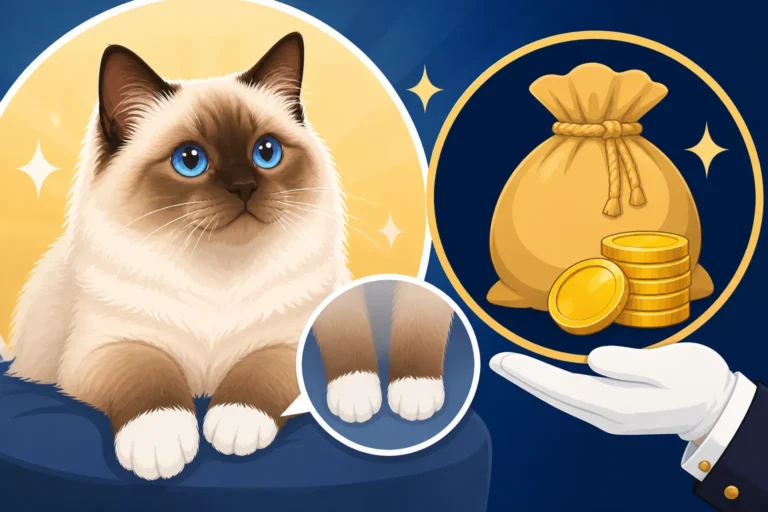
Breeders will carefully handle each kitten, turning their paws to examine the white from all angles. They might compare littermates, noting the subtle differences in glove placement and symmetry. This assessment is crucial not only for determining show quality but also for pricing. Kittens with perfect, show-quality gloves and laces will command a higher price, reflecting the immense effort and careful breeding that went into producing them. Those with minor mismarks, while still beautiful and healthy, will typically be priced as pet-only companions. This detailed evaluation influences how a breeder might market and price their kittens, as explored in How a Breeder Prices a Birman at Twelve Weeks.
Common Glove Faults and Their Impact on a Kitten's Future
While the ideal Birman glove is a thing of beauty, genetics can be a tricky business. It’s not uncommon for kittens, even from well-bred lines, to have what are considered "faults" in their glove markings. These don't diminish the cat's health or personality, but they do affect its potential in the show ring.
Mismarks and Unevenness
A "mismark" essentially means any deviation from the ideal glove standard. The most common mismarks involve unevenness. This could be one front glove extending higher up the leg than the other, or one hind lace being longer or shorter than its counterpart. Perhaps a glove doesn't fully extend around the paw, leaving a small patch of color on the side. Another common mismark is a "seal spot" – a small patch of color (matching the cat's points) on an otherwise white glove. These are often tiny, but for a show judge, they are significant.
For a pet owner, these mismarks are usually completely irrelevant. A kitten with slightly uneven gloves will still be a stunning, loving companion. However, for a breeder aiming to produce show-quality cats, these faults are critical. They mean the cat wouldn't be competitive in conformation shows and would typically be sold on a neuter contract as a beloved family pet. It's a pragmatic decision based on breed standards, not a judgment on the cat's inherent worth. Understanding Why an Uneven Birman Glove Is a Show Fault helps clarify why breeders are so particular.
Gauntlets and Absent Gloves
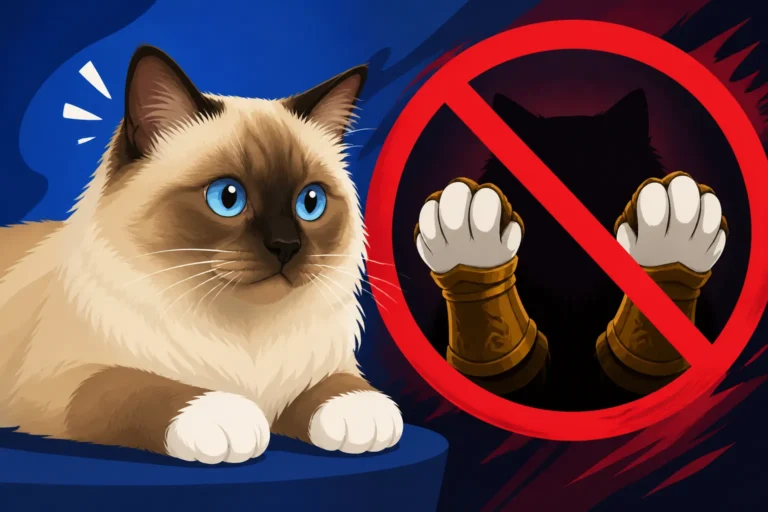
Beyond simple unevenness, there are more significant faults. "Gauntlets," as we mentioned earlier, occur when the white on the hind legs extends too far up, essentially looking like a white stocking rather than a delicate lace. This is a disqualifying fault in the show ring, meaning a cat with gauntlets cannot be shown, regardless of how perfect its other features might be. While still beautiful pets, their potential in the show world is limited. Why a Birman With Gauntlets Cannot Be Shown goes into more depth on this particular marking.
Even rarer, and much more serious, is the instance of completely "absent gloves." This means a Birman kitten is born without any white on its paws. This is an immediate disqualification from the breed standard and means the cat cannot be registered as a Birman. While incredibly rare due to the fixed gloving gene in the breed, if it were to occur, it underscores the absolute necessity of these markings for the breed's identity. If you’re interested in why this is such a strict rule, you might find Why a Gloveless Birman Kitten Cannot Be Registered enlightening. Such a kitten would still be given a loving home, of course, but not as a registered Birman.
The Breeder's Perspective: Patience and Genetic Knowledge
Breeding Birmans, especially with an eye for perfect gloves, is not for the faint of heart. It demands a deep understanding of genetics, years of experience, and an incredible amount of patience. It’s far more than just pairing two beautiful cats together.
Understanding Glove Genetics and Predictability
Every Birman carries two copies of the "gloving gene," which is responsible for the white paws. So, theoretically, every Birman should have gloves. However, the expression of these gloves – their precise length, symmetry, and how cleanly they are defined – is influenced by a complex interplay of other "modifier genes." This is why even when you breed two Birmans with impeccable gloves, you can still get kittens with slight mismarks. It’s a bit like baking a cake from a perfect recipe; sometimes, even with the same ingredients and steps, one cake comes out a little more golden than the next.
This genetic variability makes the breeder's job both challenging and endlessly fascinating. They’re constantly striving to understand these modifier genes, often tracking patterns of glove development across multiple generations in their pedigrees. It’s a long game of selective breeding, trying to consolidate the genes that produce the most ideal markings. This is why a breeder with a long, established line is so valued; they’ve put in the years of observation and careful planning. The unpredictability of these markings is truly a wonder, as explored in Why Glove Genetics Are Unpredictable in a Birman.
The Long-Term View: From Kitten to Adult
A good breeder knows that a kitten’s gloves, while largely set by twelve weeks, can still undergo subtle changes as the cat matures. Sometimes, a tiny seal spot might fade, or a slightly uneven lace might appear a touch more balanced as the cat grows into its full size and coat. Conversely, sometimes a perfectly marked kitten might develop a slight flaw as an adult, though this is less common with established lines.
This long-term view means a breeder’s commitment doesn’t end when the kitten leaves for its new home. They’re invested in the success and development of their lines, and often encourage new owners to share updates and photos as their Birmans grow. This continuous feedback loop helps them refine their breeding program and better predict future outcomes. It's a testament to their dedication that they understand How a Birman Kitten's Gloves Change as It Grows. This relationship with their kittens' development is part of what makes them true stewards of the breed.
Beyond the Gloves: The Health and Temperament Imperative
While the exquisite gloves are a defining trait, any responsible Birman breeder will tell you that health and temperament are paramount. A beautiful cat with perfect markings is worthless if it's not healthy or has a difficult personality.
Prioritizing Health Testing Over Markings
For any reputable Birman breeder, health is always the number one priority. They invest significant time and resources into ensuring their breeding cats are free from known genetic conditions that can affect the breed. This includes tests for conditions like Feline Hypotrichosis (FOXN1), which causes hair loss and immune deficiencies, and Polycystic Kidney Disease (PKD1), a hereditary kidney condition. These tests are not optional; they are a fundamental ethical responsibility.
A breeder should always be transparent about their health testing results and provide documentation for both parent cats. They will have certificates from veterinary cardiologists confirming clear heart scans for hypertrophic cardiomyopathy (HCM), a common heart disease in many cat breeds, and DNA test results for FOXN1 and PKD1 from reputable genetic laboratories. Never, ever compromise on health for the sake of perfect markings. A kitten with minor glove mismarks but clear health is always preferable to a perfectly marked kitten from untested parents. You should certainly ask Which Tests Belong on a Birman Panel when speaking with a breeder, and understand What Testing a Birman for FOXN1 and PKD1 Together Costs so you appreciate the breeder's investment. This due diligence ensures you're bringing home a robust and thriving companion.
The Birman Temperament: A Defining Trait
Beyond health, the Birman's renowned temperament is another non-negotiable trait for responsible breeders. Birmans are known for their gentle, placid, and affectionate nature. They are often called "dog-like" because they love to follow their people around, but they do so quietly, without being overly demanding. They are known for being excellent with children and other pets, including dogs, making them an ideal family cat.
A breeder will also assess a kitten’s temperament during the twelve-week evaluation period. Are they playful but not aggressive? Do they enjoy human interaction and handling? Are they curious and confident? These behavioral traits are just as important as their physical markings, if not more so, for ensuring a kitten grows into a well-adjusted and beloved family member. A perfectly marked cat with an anxious or aggressive temperament would be a disservice to the breed. The Birman's gentle nature is one of its most cherished qualities, and it's Why a Birman Is the Cat Families Are Told to Get. When considering a Birman, remember that their sweet disposition is as much a part of their identity as their beautiful appearance, and a high-quality diet can support their overall well-being.
Birman Glove Assessment Summary
Here’s a quick overview of what breeders look for when judging Birman kitten gloves:
| Feature | Ideal Description | Common Faults | Impact on Show Potential |
|---|---|---|---|
| Front Gloves | Pure white, stopping evenly at the paw/leg joint. | Uneven length, seal spots, colored patches. | Lowers or disqualifies |
| Hind Laces | White, inverted 'V' on back of leg, symmetrical, extending halfway up hock. | Gauntlets (too high), uneven height, absent laces. | Lowers or disqualifies |
| Symmetry | All white markings on opposing paws are identical. | Discrepancies in length, shape, or definition. | Lowers or disqualifies |
| Purity of White | Crisp, clean, pure white. | Yellowing, stray color hairs, dirty appearance. | Lowers |
| Definition | Clear, sharp line where white meets point color. | Fuzzy, blended, or indistinct edges. | Lowers |
When you're looking for a Birman, remember that while perfect gloves are a breeder's goal for the show ring, a slight mismark doesn't affect a cat's ability to be a wonderful, loving companion. Many fantastic Birmans with minor cosmetic quirks find their way into cherished homes. The joy and companionship a Birman brings far outweigh any minor deviation from the show standard. Reputable breeders focus on health, temperament, and ethical practices above all else, and you should too. When stocking up on your Birman's essentials, whether it's special litter to keep those white gloves pristine or engaging toys, places like Chewy offer a fantastic selection. And for peace of mind regarding their health journey, especially with breed-specific considerations, exploring options like Healthy Paws for pet insurance is always a wise decision.
Disclaimer
This article is for general informational purposes only and does not constitute professional advice. Laws, prices and regulations vary by location and change over time. Consult a qualified professional for guidance on your specific situation.