What a Birman’s Front Gloves Should Look Like
Bringing a Birman into your life means learning to appreciate a feline renowned for its gentle nature and striking appearance, particularly those pristine white "gloves" on its paws. However, for many new owners, and even those familiar with the breed, understanding the exact nuances of what those front gloves should look like can be quite a puzzle, especially when browsing breeder sites or attending shows. This guide aims to clarify the ideal presentation of a Birman's front gloves, helping you understand this distinctive and much-loved breed trait.
The Foundation of Birman Gloves: What They Are Meant to Be
The Birman cat is truly unique, not just for its stunning blue eyes and silky, single coat, but for its characteristic white paws, often referred to as "gloves" and "laces." These markings are a cornerstone of the breed standard, setting the Birman apart from other pointed breeds. When we talk about front gloves, we're focusing on the specific white areas on the forepaws, and there's a very particular aesthetic that breeders strive for and judges meticulously evaluate. It's not just about having white feet; it's about the precision, symmetry, and ideal length of that white.
The Ideal Length and Symmetry of Front Gloves
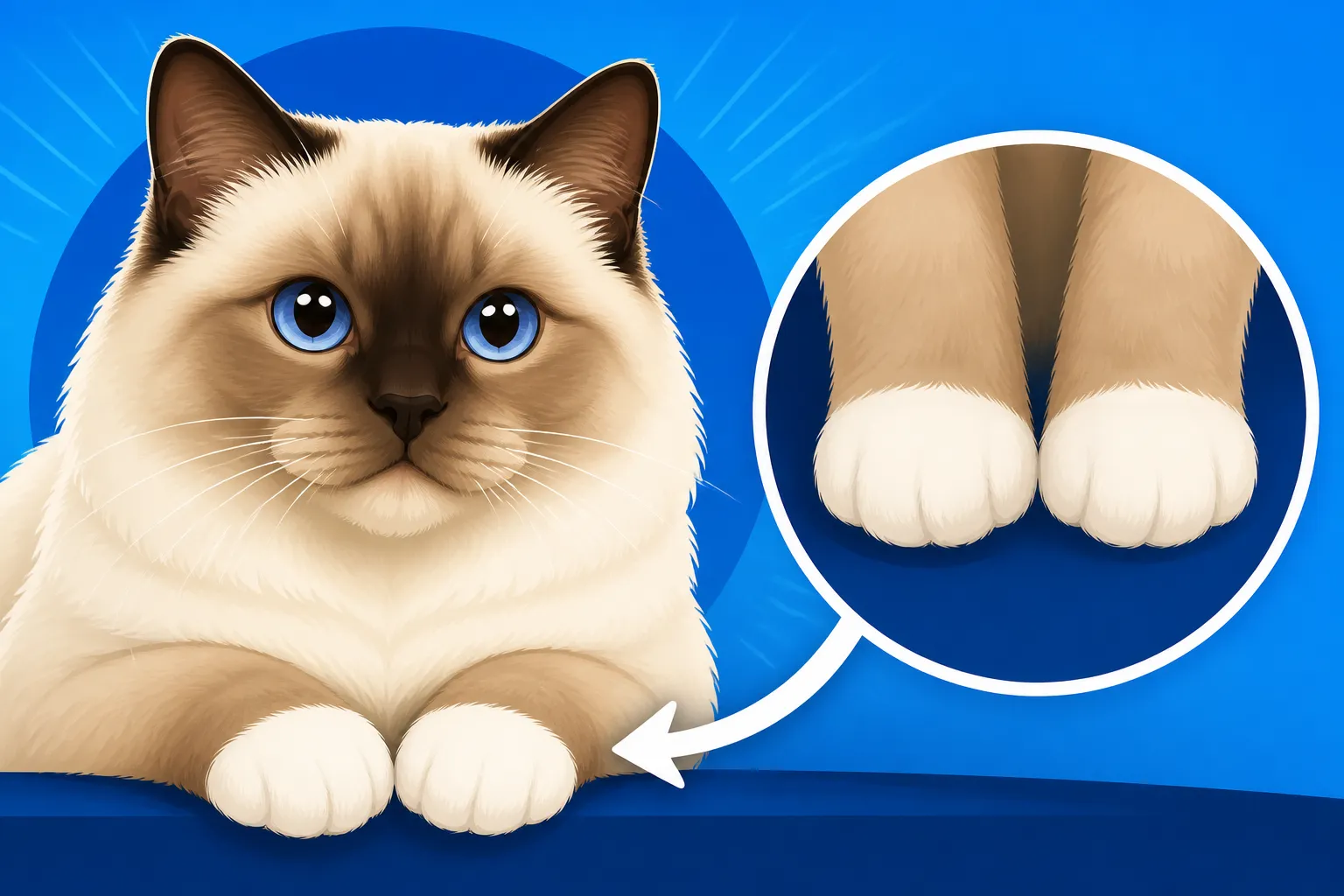
Imagine slipping on a perfectly fitted pair of white gloves – that's the visual breeders aim for. The white on the front paws should ideally cover the toes and extend evenly up the paw, ending in a straight, level line across the paw, parallel to the toes. This creates a clean, symmetrical appearance that highlights the delicate structure of the paw. The key here is evenness. Both front paws should have gloves of comparable length and shape. It’s not just about how much white there is, but how consistently it’s applied. A common challenge in breeding is achieving this consistent height, as genetics can be a tricky thing, often throwing in slight variations that can be barely noticeable to the casual observer but significant to a judge. You might hear breeders discuss Why Perfect Birman Gloves Are Almost Impossible to Breed, and this precise symmetry is a big part of that challenge.
Think about it from a visual perspective: if one front paw has white extending further up the leg than the other, it disrupts the entire elegant balance of the cat. It’s like wearing two different length socks – a small detail that stands out to a discerning eye. The ideal is a crisp, clean line, almost as if the cat had dipped its paws in fresh snow, then lifted them out, leaving a perfectly horizontal demarcation. This requires a strong genetic lineage where the white spotting factor expresses itself in a very controlled manner.
The Pure White Aspect: No Other Colors Allowed
Crucially, the gloves must be pure white. There should be no other color mixed in, no point color creeping through, no creaminess, or spots of darker fur. This pure white color is part of the legend surrounding the Birman, often linked to the sacred cats of Burma, believed to have had their feet dipped in divinity. Regardless of the historical stories, in the show ring, any deviation from pure white is considered a fault.
Maintaining this pristine white can be a real effort for owners. Imagine a playful Birman digging in their litter box or exploring dusty corners of the house! It quickly becomes clear why choosing the right litter is essential. Many Birman owners opt for low-dust, non-clumping white litters to help preserve those immaculate paws. Brands like those found on Chewy often offer a range of litter options specifically designed for minimal dust and tracking, which can be a godsend for keeping those white gloves sparkling. It's not just about aesthetics either; keeping the paws clean and free of staining litter helps prevent skin irritation.
Another consideration for maintaining pure white gloves is diet. A healthy, well-nourished coat is less prone to staining and breakage. While diet won't change the genetic color, a good quality food supports overall coat health. Fresh, quality ingredients can contribute to a healthy, lustrous coat, which in turn makes it easier to keep those white gloves looking their best.
What Constitutes a Fault in Birman Front Gloves?
While the ideal is clear, real-world genetics often present variations. Understanding these "faults" isn't about finding flaws in beloved pets, but rather appreciating the strict criteria applied in the competitive world of cat shows and responsible breeding. These deviations from the standard impact a Birman's show potential and, in some cases, its price.
Uneven or Asymmetrical Gloving
One of the most common issues with front gloves is unevenness. This could manifest as one glove being significantly longer than the other, or the white line being jagged or slanted rather than perfectly horizontal. Imagine that perfect dip in snow we talked about; an uneven glove looks more like a hurried, messy splash. This lack of symmetry detracts from the overall elegance of the cat's appearance and is a definite fault in the show ring.
This genetic lottery means that even from the same litter, you can have kittens with vastly different glove quality, which explains Why Two Birman Littermates Differ in Price. A cat with perfectly symmetrical gloves is a rare and prized possession for a breeder, reflecting successful selective breeding and sometimes just sheer luck. It's a constant quest for perfection, knowing that often, even slight asymmetries are considered less than ideal.
Gauntlets and Laces: When White Extends Too Far
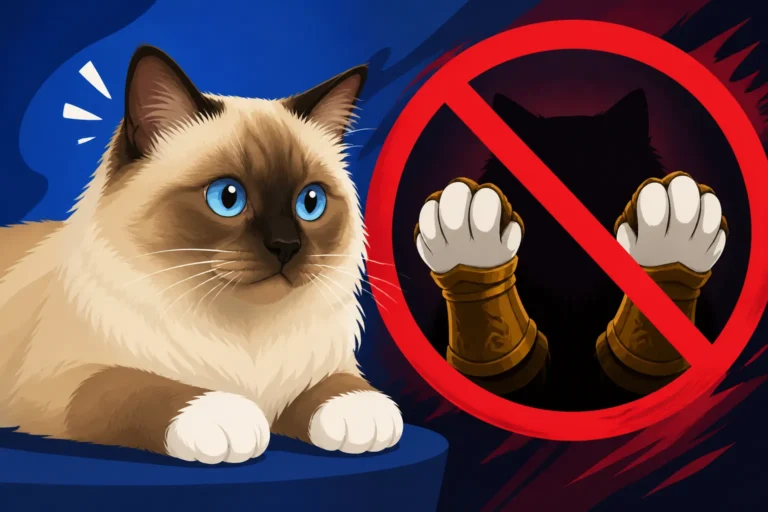
While some white is desired, too much white is also a fault. This is where terms like "gauntlets" and "laces" come into play, referring to white markings that extend further up the leg than the ideal glove.
- Gauntlets: These occur when the white on the front paws extends significantly high up the leg, often past the wrist or even further. It's like wearing opera gloves instead of short wrist-length gloves. While visually striking, it deviates from the defined standard. What Laces and Gauntlets Mean on a Birman's Price Tag is a direct result of this, as these cats often cannot be shown to championship.
- Laces: While the term "laces" typically refers to the white extending up the back of the hind legs in Birmans, sometimes you might hear it colloquially applied to white creeping too high up the back of the front legs as well. The distinction is that true laces are a feature of the hind paws, where a short, inverted 'V' shape of white is desired. On the front paws, any white extending beyond the clean, horizontal glove line is generally considered a fault, not a desired "lace." The ideal front glove should be distinct and not merge with white further up the leg.
These excessive white markings are usually genetic and are not something that can be "fixed" through grooming. They are part of the cat's unique pattern, but one that falls outside the stringent show standards. A Birman with gauntlets might still be a wonderfully loving pet, but its potential in the show ring is severely limited.
The Importance of Front Gloves in Birman Judging and Breeding
The precise appearance of a Birman's front gloves isn't just an aesthetic preference; it's deeply ingrained in the breed's history, its show standards, and the meticulous efforts of dedicated breeders. These markings are a signature trait, defining the Birman's identity.
Why Judges Focus on the Gloves
In a cat show, judges allocate points based on various aspects of the Birman standard, and the gloves receive a significant portion of these points. This means that a Birman with perfect gloves has a distinct advantage. Judges will scrutinize:
- Evenness: Are the gloves on both front paws of equal length and shape?
- Definition: Is the upper border of the white clean, straight, and parallel to the toes?
- Purity of Color: Is the white truly pure, with no colored hairs mixed in?
- Absence of Faults: Are there any instances of gauntlets or other excessive white markings?
The attention to detail is immense. A slight asymmetry, a few colored hairs, or a wavy top line can all lead to deductions. This is why How a Breeder Judges a Birman Kitten's Gloves is such a critical part of a kitten's early evaluation. Breeders need a keen eye to identify potential show quality from a young age, even though the gloves can subtly change as the kitten grows.
The Role of Genetics in Glove Development
Understanding the genetics behind the Birman's gloves is fascinating. The white spotting gene responsible for the gloves is believed to be unique to the Birman breed. However, its expression is influenced by other modifier genes, which is why achieving those perfectly symmetrical and precisely defined gloves is so challenging. It’s not a simple dominant/recessive trait for perfection.
Breeders invest a great deal of time and research into pedigrees, studying how glove quality has been passed down through generations. They make careful decisions about pairings, hoping to produce kittens that inherit the best possible expression of the glove gene. Despite all this effort, nature still has its own plans, and even a mating between two perfectly gloved parents can produce kittens with less-than-ideal markings. This unpredictability is part of the challenge and the thrill of breeding Birmans. You might find more detail in articles like How the Gloving Gene Works in a Birman.
The Impact on Pet vs. Show Quality Birmans
For most Birman owners, a cat's show potential is secondary to its health and temperament. A Birman with a "mismark" – such as uneven gloves or gauntlets – will still make a wonderful, loving companion. These cats are often sold as "pet quality" at a lower price point than their show-quality siblings. This makes them more accessible to families who simply want a beautiful and affectionate feline friend without the pressures of the show ring.
However, even for pet owners, understanding the standard helps appreciate the artistry and dedication involved in breeding. It also means you know what you're looking at when you see a Birman at a show or even just online. A responsible breeder will be transparent about a kitten's markings and explain any deviations from the standard. They will also typically require a neuter contract for pet-quality kittens to ensure that breeding lines are carefully managed and the breed standard is maintained. Insurance providers like Healthy Paws, while focused on health, also understand the value owners place on breed characteristics, acknowledging the care and effort that goes into maintaining such specific traits.
Here's a quick reference table to help visualize the ideal vs. less ideal front glove characteristics:
| Characteristic | Ideal Birman Front Glove | Common Faults | Impact on Show Potential |
|---|---|---|---|
| Length & Height | Covers toes, extends evenly up the paw, ending in a straight, horizontal line. | Uneven lengths between paws; jagged or slanted top line; white too short. | Significant deductions |
| Symmetry | Both front gloves are identical in length and shape. | One glove visibly longer/shorter than the other; different shapes. | Significant deductions |
| Color Purity | Pure, brilliant white, no other colors mixed in. | Creamy tint; colored hairs (point color) creeping into the white; spots. | Deductions |
| Marking Extent | White confined to the "glove" area on the paw. | Gauntlets: White extends too far up the leg (e.g., past the wrist). | Disqualification/Severe fault |
| Definition | Crisp, clear demarcation between white glove and colored leg. | Fuzzy, ill-defined border; gradual blending of white into point color. | Deductions |
When you're admiring a Birman, whether in person or in photos, taking a moment to observe those beautiful white front gloves can tell you a lot about the cat's genetic lineage and the breeder's dedication. It's a small detail, but one that carries significant weight in the world of this sacred cat.
Disclaimer
This article is for general informational purposes only and does not constitute professional advice. Laws, prices and regulations vary by location and change over time. Consult a qualified professional for guidance on your specific situation.