A Birman Kitten’s First Year, From White to Pointed
Bringing a Birman kitten home is one of the most exciting and rewarding experiences, but it’s also a journey of transformation. Many new owners are completely captivated by their tiny, almost-white bundles of fluff, only to watch in wonder as those iconic points slowly appear, deepening in color and intensity over their first year. This guide will walk you through those incredible twelve months, from that first startlingly pale appearance to the emergence of their full, glorious color and the unfolding of their gentle, loving personality.
The Birman Kitten's Start: Born Pure White
It’s always a delightful surprise for first-time Birman owners to discover that their future color-pointed beauty starts life looking like a tiny, fluffy marshmallow. There are no dark points, no tell-tale signs of seal, blue, chocolate, or lilac; just pure, unadulterated white. This initial blank canvas is a fundamental aspect of the breed's genetics, setting the stage for the remarkable transformation that will unfold over their first year. It's a key part of the magic, and understanding why it happens helps you appreciate every subtle shift in their appearance.
Why Every Birman Kitten Enters the World Without Color
The reason behind a Birman kitten's pristine white birth coat lies in a fascinating genetic trait known as temperature-sensitive albinism, or more accurately, the Himalayan gene (cs/cs). This gene is responsible for the color-pointed pattern seen in breeds like the Siamese, Himalayan, and of course, the Birman. What it means, in simple terms, is that the pigment responsible for color can only develop in cooler parts of the cat's body. Inside the queen's womb, the temperature is uniformly warm and cozy, preventing the gene from activating any color production. So, the kitten emerges completely unpigmented, a tiny, downy white fluffball, indistinguishable by color alone from a litter of other pointed breeds at birth.
This is a really important piece of information for new owners, as it can sometimes cause confusion or even concern if they’re expecting a kitten to have some hint of its future color. Rest assured, this is entirely normal and a beautiful testament to the unique genetics of the breed. Over the coming weeks and months, as the kitten is exposed to the cooler ambient temperatures outside the womb, the magic will begin to happen. The extremities – the ears, nose, paws, and tail – will gradually start to darken, revealing the underlying genetic color that makes each Birman unique. You're witnessing science and nature working hand-in-hand to create those stunning contrasts we all adore. You can learn more about this by reading Why every Birman Kitten is born pure white.
The First Few Weeks: Helpless and Completely Dependent
The first two weeks of a Birman kitten's life are a whirlwind of growth, but they are also a period of profound vulnerability and complete dependence on their mother. These tiny creatures are born blind, deaf, and unable to regulate their own body temperature. Their entire world revolves around warmth, nourishment, and their mother's comforting presence. The breeder plays a crucial role during this time, ensuring the queen and her kittens are in a quiet, warm, and secure environment, monitoring their weight daily to confirm they are feeding well. Any loss of weight or failure to thrive during these critical early days is a red flag, as kittens can go downhill very quickly.
During this period, the kittens spend most of their time nursing and sleeping, growing at an astonishing rate. Their primary tasks are eating, gaining weight, and staying warm. The breeder will often handle them gently, ensuring they are accustomed to human touch from a very young age, which lays the groundwork for their famously placid and affectionate temperament. This early handling is vital for their future socialization, teaching them that human interaction is a source of comfort and security. It's a delicate balance of observation and minimal intervention, allowing the queen to nurture her litter while ensuring every kitten is healthy and progressing.
The Magic of Point Development: Weeks 2-8
As your Birman kitten crosses the two-week mark, you'll start noticing the first, most exciting changes. It’s like watching a polaroid develop, but in slow motion and with a purr. The initial uniform whiteness begins to give way to the subtle, almost imperceptible hints of color on their extremities, a process driven by the cooler temperatures of their new world. This period is also marked by significant sensory and physical milestones, transforming them from utterly helpless newborns into curious, wobbly explorers.
When the Subtle Hints of Color First Begin to Emerge
Around the two to three-week mark, you'll start to see it – a faint, shadowy blush on the tips of their ears, a slight darkening on their tiny noses, and perhaps a subtle smudge on their little tails. These are the very first signs of their genetic point color finally coming through. If you have a seal point, these areas will take on a soft, smoky grey-brown hue; for a blue point, it might be a barely-there whisper of dove grey. It’s incredibly subtle at first, often visible only in good lighting and to a discerning eye. The paws, which will eventually sport those distinctive white gloves, will remain pristine white at this stage, creating an early, intriguing contrast.
This slow reveal is a direct result of the temperature-sensitive gene we discussed earlier. The ears, nose, and tail tips are generally the coolest parts of a kitten's body, and therefore, the first places where the pigment can start to develop. It's not a sudden, dramatic change, but a gradual deepening that unfolds day by day, week by week. Patience is key, as the full richness and depth of their points won't be apparent until they are much older, sometimes even into their second or third year. But these first glimpses are truly special, offering a preview of the stunning cat your kitten is destined to become. For more on this, check out When a Birman Kitten's Points Start to Show.
Watching the Pointed Pattern Slowly Take Shape
As the weeks progress from three to eight, the points become more defined, and you can truly start to identify your kitten's specific color. The ears will be visibly darker, the nose leather will deepen in shade, and the tail will show more pronounced coloration. It’s during this time that the "gloves" on their front paws and "laces" on their back paws begin to solidify their form. While the body remains a much lighter shade, a clear delineation between the body color and the point color starts to establish itself. The contrast isn't as stark as it will be in adulthood, but the pattern is undeniable.
Breeders pay very close attention to the development of these markings, particularly the gloves and laces, as they are a hallmark of the Birman breed. The symmetry and distinctness of these white markings are crucial for show quality, but for pet owners, it's simply a joy to watch this unique trait emerge. Each kitten's development is slightly different, and even within the same litter, you might see variations in how quickly and intensely the points develop. It’s a continuous, fascinating process of maturation, showcasing the intricate genetic dance that creates the Birman's iconic beauty. Understanding How a Birman Kitten's Gloves Change as It Grows can provide deeper insight into this process.
The Developing Senses: Eyes Opening and First Sounds
While the color points are developing on the outside, a whole world is opening up for the kitten on the inside. Around 7-10 days old, their eyes will begin to open, revealing striking blue or grey-blue eyes. Initially, their vision is blurry and they are sensitive to light, but over the next week or two, their sight will sharpen, allowing them to navigate their immediate surroundings with more confidence. Shortly after their eyes open, their ear canals will begin to open, giving them access to the sounds of their environment. At first, they might startle at loud noises, but they quickly adapt, using their newfound hearing to locate their mother and littermates.
These sensory developments coincide with their first attempts at exploring beyond the nest. You'll see them tentatively waddling, then stumbling, and eventually, gaining enough coordination to attempt short bursts of play with their siblings. Their early interactions are clumsy but vital for developing social skills. They begin to experiment with vocalizations beyond just distressed cries, learning to purr, trill, and make those soft, sweet sounds Birmans are known for. This period is magical, as they transform from passive bundles into active, responsive, and increasingly interactive little beings, ready to engage with the world around them.
Physical Growth and Emerging Personality: Months 2-6
The period between two and six months is arguably the most dynamic in a Birman kitten's first year. They transition from tiny, dependent babies to miniature versions of their adult selves, filled with boundless energy and blossoming personalities. This is when their unique Birman traits become undeniable, both in their physical development and their charming behavior.
Rapid Growth and the Birman's Distinctive Frame
Once a Birman kitten hits the two-month mark, their growth trajectory becomes incredibly rapid. They're no longer just gaining weight; they're lengthening, strengthening, and starting to fill out into that distinctive, semi-longhaired, rectangular frame characteristic of the breed. Their legs grow longer, their bodies become more substantial, and their fluffy tails begin to develop a glorious plume. This isn't just about getting bigger; it's about developing muscle tone and coordination that allows them to move with more agility and grace.
Their appetite will reflect this growth, requiring high-quality kitten food to support their developing bones, muscles, and luxurious coat. You'll notice their coat itself becoming thicker and silkier, starting to develop the full ruff around their neck that is a hallmark of the breed. While they are gaining size, Birmans mature slowly, and they won't reach their full adult weight and size until around three years old, so this rapid growth is just the beginning. It's truly fascinating to watch their bodies transform, taking on the elegant proportions that define the adult Birman. Considering What a Birman Weighs at One With Two Years Still to Grow can give you an idea of their trajectory.
Refining Motor Skills and the Start of Play
This age is all about learning to use their bodies. Those wobbly steps quickly turn into confident runs, nimble climbs, and enthusiastic pounces. Kittens at this stage are endlessly curious and energetic, engaging in elaborate play sessions with their littermates. They'll chase, wrestle, stalk, and ambush each other, developing crucial hunting skills and refining their motor coordination. These play behaviors are not just for fun; they are essential for physical and social development, teaching them boundaries and communication cues within their feline social group.
For a Birman, however, this play tends to be gentler than with some other breeds. They're often described as having a "play-with-claws-in" approach, preferring soft batting and playful pounces over aggressive wrestling. Providing a variety of toys, like wand toys, crinkle balls, and soft plush mice (easily found on Amazon), will encourage healthy play and mental stimulation. Observing how gently it plays (Why a Birman Plays Gently) will reassure you that their soft approach to play is perfectly normal and endearing.
The Birman's Gentle Temperament Starts to Shine
The Birman's famous gentle, placid, and affectionate temperament truly begins to emerge during these months. While all kittens are playful, Birman kittens often display a unique calm and adaptability that sets them apart. They’re usually quick to seek out human interaction, not demanding or pushy, but content to sit near you, observe, and offer soft purrs and head rubs. This is the age when they start forming strong bonds with their human companions, laying the foundation for a lifetime of devotion.
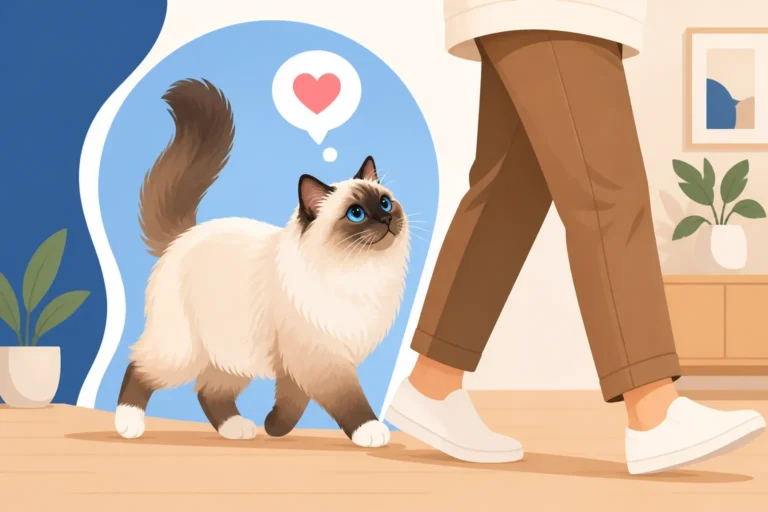
They are known for their quiet demeanor, often using soft trills and chirps rather than loud meows, even when they want attention. You'll notice them following you from room to room, acting as your quiet shadow, simply enjoying being in your presence. This innate sweetness makes them wonderful companions, particularly for families or individuals seeking a calm and loving pet. Their early interactions with people and their environment heavily influence how these traits develop, highlighting the importance of positive experiences during this formative period. This phase really shows A Birman Would Rather Be Near You Than On You.
Socialization and Training Foundations: Months 4-8
As your Birman kitten moves into this crucial developmental window, their world expands even further. This is a prime time for learning, absorbing new experiences, and solidifying good habits that will serve them well throughout their lives. Thoughtful socialization and consistent, gentle training are paramount to raising a well-adjusted, confident, and happy Birman.
Crucial Socialization: Building Confidence and Trust
The period between 4 and 8 months is still a very important time for socialization, even if the primary "sensitive period" is earlier. Continuing to introduce your Birman kitten to a variety of positive experiences will build their confidence and ensure they remain well-adjusted. This means carefully introducing them to different people, sounds, sights, and even other friendly, vaccinated pets if appropriate. Think about gentle car rides in a comfortable carrier, supervised visits from calm friends, or exposure to different household noises like vacuum cleaners or washing machines, always ensuring these experiences are positive and not overwhelming.
Since Birmans are known for their adaptable nature and tolerance, this continued exposure helps them grow into confident adults who aren't easily startled by new situations. It's about showing them that the world isn't scary, but full of interesting things. Remember, a Birman often comes out to meet strangers, rather than hiding, and nurturing this natural curiosity is beneficial. The goal isn't to make them fearless, but to teach them resilience and trust in their environment and their human companions. What a Birman Kitten Should Learn by Twelve Weeks provides a good foundation for what they should have already experienced.
Introducing Grooming and Dental Care Early
Establishing a consistent grooming routine early in your Birman kitten's life is absolutely vital. While their single coat mats far less than a Persian's, regular combing is still necessary to keep their luxurious fur silky and tangle-free. Starting with short, gentle sessions using a soft, wide-toothed comb (many excellent options available on Amazon) will help them associate grooming with a positive, bonding experience. Focus on their beautiful ruff and tail plume, as these areas tend to be the longest and might catch a snag if neglected. This consistent care from a young age will prevent future struggles and make grooming a pleasant ritual for both of you. You can find specific tips in How to Get a Birman Used to a Comb.
Equally important, and often overlooked, is dental care. Birmans can be prone to dental disease, partly due to their facial structure. Introducing a toothbrush and cat-specific toothpaste early will set them up for a lifetime of better oral health. Again, start slowly and gently, making it a positive experience with praise and perhaps a tiny treat. It might seem daunting, but even a few seconds of brushing a few times a week can make a huge difference in the long run. Learn how to ease them into this routine by reading Introducing a Toothbrush to a Birman Kitten.
Litter Training and Understanding Their Quiet Cues
By this age, your Birman kitten should be fully litter trained, having learned from their mother and breeder. However, ensuring you provide the right setup is key. Birmans have relatively long bodies, so they need a litter box that is spacious enough for them to turn around comfortably. Their beautiful white gloves also mean that dusty litter can easily stain their paws, so opting for a low-dust, non-clumping litter (check out options on Amazon) is often a wise choice. Place the box in a quiet, accessible location, and keep it impeccably clean – Birmans are fastidious creatures.
Beyond basic training, this is also the time when you'll truly start to understand your Birman's subtle communication style. Unlike some more vocal breeds, Birmans tend to be quiet. They'll use gentle trills, soft headbutts, or simply follow you around to indicate their desires. They are excellent at showing affection without making demands. Paying attention to these quiet cues will deepen your bond and ensure their needs are met, reinforcing their trust in you as their caregiver. They'll rarely wake you for food, for example, but might sit patiently watching you eat.
Adolescence and Maturing Appearance: Months 8-12
As your Birman kitten rounds out its first year, it’s entering a phase of adolescence. They are no longer tiny kittens, but not yet fully mature adults. This period is marked by continued physical development, especially the deepening of their point colors, and the solidifying of their individual personalities and routines. It’s a time of subtle but significant changes, as they grow into the magnificent cats they are destined to be.
Finalizing Point Colors and Coat Development
While your Birman’s points will have been clearly visible for months, they continue to darken and intensify throughout this adolescent period and even beyond the first year. The rich, deep tones of their genetic color will truly begin to emerge on their ears, mask, paws, and tail. For darker points like seal, you'll see a profound chocolate-brown develop. For blue points, a lovely slate grey will deepen. The body color, while always much lighter, might also warm slightly, creating a beautiful contrast. Remember that ambient temperature can influence this; a Birman living in a cooler climate might have slightly darker points than one living in a warmer environment.
Their coat, too, will reach near-full length and density during this time, particularly the glorious ruff around their neck and the impressive plume on their tail. The silky texture, which is a hallmark of the breed's single coat, will be fully established. You’ll find that their shedding, while generally moderate due to the lack of an undercoat, might become more noticeable as they transition through seasonal changes. Continuing with your regular combing routine is essential to maintain the health and beauty of their evolving coat. The process of the points coming in is discussed further in How a Birman Kitten's Points Come In.
Reaching Near-Adult Size and Weight
By their first birthday, most Birman kittens will have achieved a significant portion of their adult height and length. They'll appear much more substantial than they did just a few months prior, moving with the grace and confidence of a nearly grown cat. However, it’s important to remember that Birmans are a slow-maturing breed. While they might look like adults at one year old, they will continue to fill out, gain muscle, and deepen in chest and body until they are closer to three years of age. This means that their dietary needs will remain somewhat elevated compared to a fully mature adult cat, as their bodies are still undergoing development.
Keeping an eye on their weight and body condition is important. They should have a lean, muscular frame, and you should be able to feel their ribs easily without them being visible. While their point colors will continue to develop, their overall physique is nearing its final shape, preparing them for the next couple of years of subtle, graceful maturation. Don't be surprised if they feel like they’re still gaining a bit of heft even after their first birthday; it's all part of the Birman's unique growth pattern.
Solidifying Behavioral Patterns and Routines
By the end of their first year, your Birman will have established a solid set of behavioral patterns and routines. They’ll have a clear understanding of household rules, their favorite sleeping spots, and their preferred playtimes. Their inherently placid and adaptable nature means they usually settle beautifully into a household rhythm. They’ll still be playful, but perhaps with a slightly less frantic energy than their younger kitten selves, often enjoying interactive games with wand toys or carrying a favorite toy around.
Their affectionate nature will be fully blossomed, manifesting as a constant, gentle presence. They will likely continue to follow you around the house, sit quietly by your side, or curl up nearby for a nap. Birmans thrive on routine and companionship, and by this age, they’ve learned to anticipate your movements and activities, forming a deep and comforting bond. Any sudden or drastic changes in behavior at this stage should always be noted and potentially discussed with your vet, as Birmans are known for hiding illness behind their placid temperaments. However, generally, this is a period of settled, loving companionship.
Preparing for the Future: Beyond the First Year
The first year with your Birman kitten is a journey of incredible transformation, but it’s just the beginning of a long and loving companionship. As they cross that one-year mark, it’s time to shift your focus from kitten-specific care to ensuring they transition smoothly into healthy and happy adulthood. Remember, even at twelve months, they are still maturing, and their needs will continue to evolve.
Understanding That "Adult" Doesn't Mean "Finished"
While your Birman is technically an "adult" at one year old in many respects, it’s crucial to remember that they are a slow-maturing breed. Physically, they will continue to fill out and gain muscle mass until they are closer to three years of age. Their coat, particularly the ruff and tail plume, might also continue to gain density and length. Behaviorally, while their core personality traits are well-established, they will continue to deepen their bonds with you and refine their understanding of their world. This means that consistency in care, routine, and positive interaction remains incredibly important.
Think of it as moving from adolescence to early adulthood; there's still a bit of growing up to do, both physically and emotionally. This prolonged maturation period contributes to the Birman's dignified and calm demeanor. Continue to provide a stimulating but stable environment, and don't be surprised if you notice subtle changes in their physique or even a deeper richness in their point colors over the next couple of years. This extended development is part of what makes the Birman such a unique and rewarding companion. It’s why Why a Birman Matures Slowly is such a relevant topic.
Ongoing Care for a Lifelong Companion
Transitioning from kitten food to adult cat food is one of the first major care decisions past the one-year mark. Choose a high-quality adult formula that supports their coat health and overall well-being. Regular grooming remains a cornerstone of Birman care; those silky coats, while low-matting, still benefit from regular combing to prevent tangles and reduce shedding. Continue with the dental care routine you established, as oral health is paramount for longevity.
Annual veterinary check-ups are also crucial. Even if your Birman seems perfectly healthy, these visits allow your vet to catch any potential issues early, maintain vaccinations, and discuss preventative care. Regular heart screenings, particularly echo scans, are important for Birmans given their predisposition to certain cardiac conditions. Ask your vet about the recommended frequency for these. Your commitment to consistent, proactive care will ensure your Birman lives a long, healthy, and happy life by your side. How Often a Birman With Clear Papers Still Needs a Vet provides excellent guidance on this.
How a Birman Continues to Mature and Deepen Bonds
The bond you've built with your Birman during their first year will only deepen over time. Birmans are incredibly devoted and thrive on companionship. As they mature, their quiet affection often becomes even more pronounced. They might not be a demanding "lap cat" in the traditional sense, but they will almost always choose to be in the same room as you, often sitting close by, offering a comforting presence. Their play might become a little less boisterous and more focused, enjoying interactive sessions but also content with quiet observation.
Many owners find that Birmans truly come into their own personality around two to three years of age, showcasing their full elegance and the depth of their loving nature. They continue to be adaptable and good-natured, making them wonderful family pets for years to come. The first year is an amazing foundation, but the journey of watching your Birman mature into a serene, devoted, and beautiful adult is one of the greatest joys of owning this incredible breed.
Here's a quick overview of some key milestones in a Birman kitten's first year:
| Age Range | Physical Development | Point Color Development | Behavioral Milestones |
|---|---|---|---|
| Birth – 2 Weeks | Born pure white, blind, deaf, helpless. | No visible points (uniformly white). | Primarily nursing and sleeping. Total dependence. |
| 2 – 4 Weeks | Eyes open (blue), ear canals open, wobbly walking. | Faint, subtle darkening on ears, nose, tail. | Early exploration, purring, first vocalizations. |
| 4 – 8 Weeks | Rapid growth, improved coordination, teeth erupt. | Points more defined, gloves/laces start showing. | Play with siblings, litter training begins, social interaction. |
| 2 – 4 Months | Significant growth in length and weight, coat thickens. | Points clearly visible, deepening in color. | Active play, developing personality, seeking human interaction. |
| 4 – 8 Months | Filling out, developing muscle, full coat coming in. | Points continue to intensify, contrast emerges. | Solidifying routines, gentle play, confident socialization. |
| 8 – 12 Months | Nearing adult size/weight, full coat density. | Point colors deepening to near-final shade. | Established routines, deep bonds, mature play. |
Disclaimer
This article is for general informational purposes only and does not constitute professional advice. Laws, prices and regulations vary by location and change over time. Consult a qualified professional for guidance on your specific situation.