Whether a Birman Ends Up Under the Covers
It's a question many Birman parents ponder late at night: will your beautiful, placid Birman eventually join you under the duvet, becoming a furry, purring bed warmer? While many cats are content on top of the covers, or even on a completely separate cat tree, Birmans have a unique way of showing affection and seeking comfort, which can sometimes lead them to burrow right into your personal sleeping space. This guide will explore the nuances of a Birman's desire for warmth and closeness, and what might prompt them to seek the cozy embrace of your bed covers.
The Birman's Unique Approach to Affection and Proximity
Birmans are famously affectionate, but their expression of love often comes with a distinct elegance and a touch of independence. They are not typically the "in-your-face" type of cat, yet they crave your presence and thrive on companionship. This balance often influences where and how they choose to sleep, especially concerning sharing your bed.
The "Near You, Not On You" Tendency
Many Birman owners will tell you that their feline companions are masters of proximity rather than direct contact. They'll follow you from room to room, settling on the sofa cushion next to you, or even on the floor at your feet. It's a sweet, undemanding presence that speaks volumes about their bond with you. This "near you, not on you" behavior extends to bedtime for many Birmans. You might find them curled up on your pillow above your head, stretched out along your legs, or even just at the foot of the bed, creating a furry barrier. The Birman Sits Against Your Leg, Not on Your Lap describes this beautifully – they want to be close, but often without the full weight or direct pressure of a true lap cat.
This preference stems from their gentle nature. They love the security and warmth of being near their human, but they also appreciate their personal space. It's a quiet form of devotion, a constant, comforting shadow that makes you feel loved without feeling smothered. If your Birman settles just outside the covers, perhaps with a paw resting gently on your arm, that's their way of saying, "I'm here, and I adore you." Don't mistake this for a lack of affection; it's simply their preferred style.
When a Birman Seeks a Deeper Snuggle
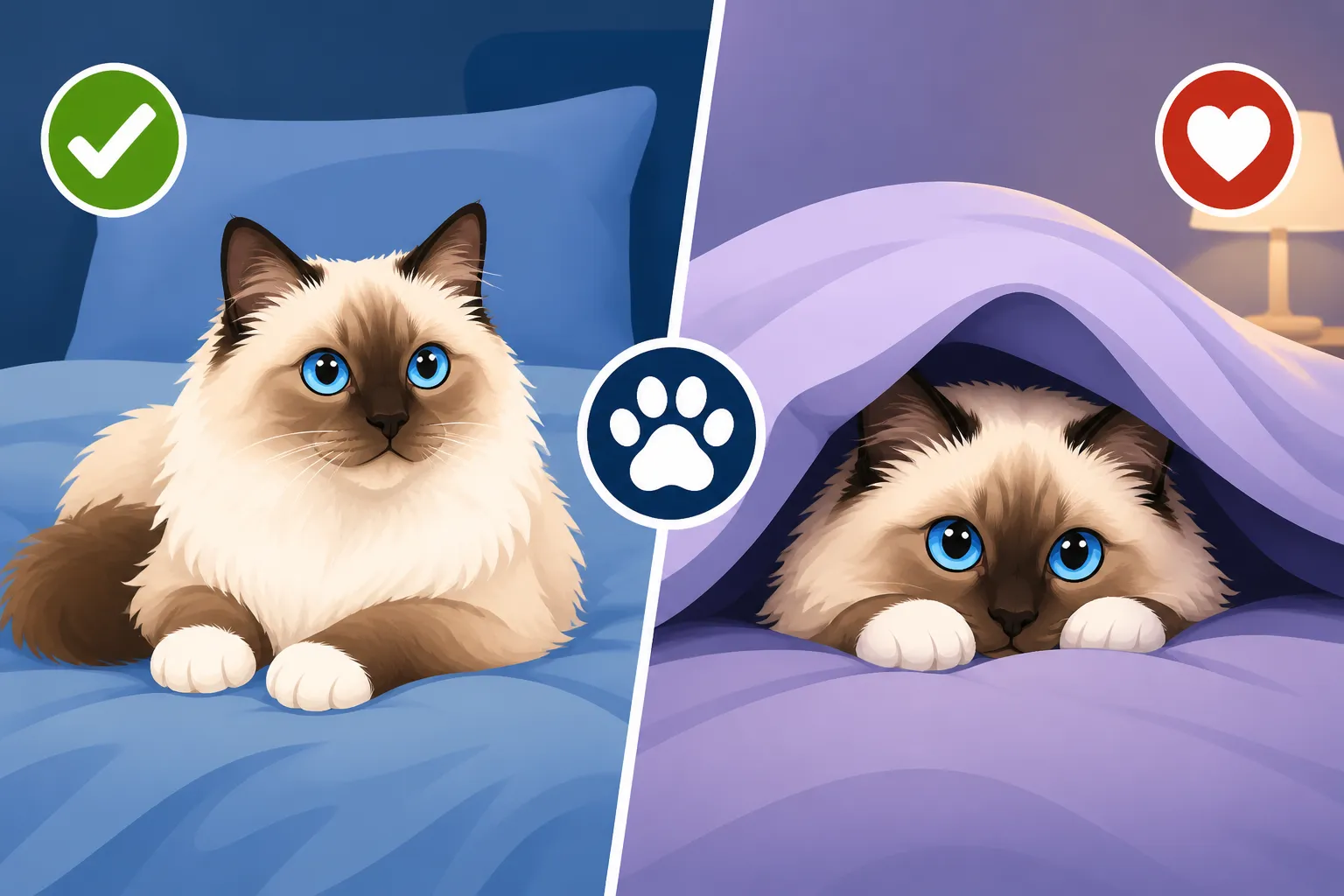
However, there are those special Birmans who decide that "near" simply isn't close enough. These are the ones who will, eventually, make their way under the covers. This often happens gradually. Perhaps they start by nudging their head under a corner, then a shoulder, until one morning you wake up to find a purring, pointed creature nestled deep by your feet or even tucked against your side. It's a truly heartwarming experience, feeling that soft fur and the rumble of their purr vibrating through the blankets.
This deeper snuggle often develops as their trust deepens and as they seek extra warmth or security. It's a sign of ultimate comfort and confidence in their environment and with you. If your Birman starts doing this, consider it a high compliment – they feel completely safe and cherished enough to let down their guard entirely in your presence. It's a bond that strengthens over time, much like how a Birman matures slowly and forms deep, lasting attachments. Why an Old Birman Sleeps Closer to You can offer insights into how their comfort-seeking behavior evolves with age.
Why Some Birmans Embrace the Blanket Burrow, and Others Don't
The decision to burrow under the covers isn't universal among Birmans, and it can be influenced by several factors, from their unique coat to their individual personality and life experiences.
The Role of Their Silky Single Coat
One of the most distinguishing features of a Birman is its gorgeous, silky single coat. Unlike many long-haired breeds, Birmans lack a dense undercoat. This means their fur is less prone to matting and generally easier to groom than, say, a Persian, but it also means they don't have the same built-in insulation. No Undercoat Is What Makes a Birman Easy to Groom highlights this aspect of their fur. While lovely to touch, this single coat can leave them feeling a bit chilly, especially in cooler climates or during winter nights.
Because of this, some Birmans are naturally drawn to warmer spots. A thick duvet or a cozy blanket offers an immediate, enveloping warmth that their coat alone can't provide. You might notice them gravitating towards sunny spots during the day or seeking out heated cat beds. The covers on your bed become a natural extension of these warm havens. For a Birman that enjoys consistent warmth, diving under the covers isn't just about cuddling; it's a practical, instinctual move to regulate their body temperature and find supreme comfort. Why a Coat With No Undercoat Is Not Warm further explains this unique characteristic and how it influences their behavior.
Personality, Past Experiences, and the Need for Security
Beyond their physical traits, a Birman's individual personality plays a huge role in whether they'll become a cover-dwelling cat. Some Birmans are naturally bolder and more exploratory, while others are a bit more cautious. A Birman with a naturally placid and trusting temperament might be more inclined to experiment with burrowing, especially if they feel supremely safe in their home.
Past experiences can also shape their habits. A Birman kitten who was raised in a very warm environment, or one that was frequently tucked into blankets by their breeder, might carry that preference into adulthood. Conversely, a cat who might have had a negative experience with confinement, even something as simple as being accidentally tangled in a blanket once, might be wary of going under the covers.
For some, it's also about security. The enclosed space under a blanket can feel like a den, a safe retreat from the wider world. It provides a sense of protection and privacy, which can be particularly appealing to a sensitive or shy Birman. This need for security is often why they appreciate a quiet home and a predictable routine. If your Birman is naturally a bit anxious, the burrowing might be their way of finding a secure hiding spot that also offers comfort and your comforting scent. They are renowned for being adaptable, but What a Stressed Birman Does illustrates that sudden changes can still make them seek out safe havens.
Cultivating a Secure and Cozy Sleeping Sanctuary
Whether your Birman is already a duvet-diver or you're hoping to encourage them to be more adventurous with their bedtime snuggles, creating an inviting and secure sleeping environment is key.
Offering Attractive Alternatives to Your Duvet
While sharing your bed can be wonderful, it's also good to provide attractive alternatives for your Birman, especially if they're not keen on being under the covers, or if you simply need your own space sometimes! Many Birmans appreciate soft, comfortable beds that offer both warmth and a sense of enclosure without being too restrictive. Think about a covered cat bed, a cozy "cat cave," or even a simple, plush blanket folded in a sunbeam.
- Covered Beds: These beds offer a den-like feel, providing security and warmth. Look for ones made with soft, breathable materials. Many reputable brands offer such options, and you can find a wide selection on Amazon. A Birman who might be hesitant about going under your heavy duvet might love the gentle enclosure of their own dedicated cave.
- Heated Beds: For Birmans who genuinely crave warmth due to their single coat, a low-wattage heated cat bed can be a game-changer. These are especially beneficial for older Birmans who might feel the cold more. Ensure it has an automatic shut-off and is designed specifically for pets.
- Soft Blankets: Sometimes, the simplest solution is the best. A soft, clean blanket placed in a favorite sleeping spot – perhaps on the sofa, a chair, or even a window perch – can be incredibly appealing. The familiar scent of their human or another pet on the blanket can add to its allure.
Remember, Birmans appreciate comfort and often seek out places that feel soft and inviting. Providing them with their own luxurious sleeping spots can fulfill their need for warmth and security, whether or not they decide to join you in your bed. A long, rectangular bed is often preferred for their elongated bodies, much like Why a Birman Needs a Longer Box Than a Round Cat implies for litter boxes.
Gentle Encouragement for the Cover-Curious Birman
If you're eager for your Birman to join you under the covers, the key is always gentle encouragement, never force. Birmans respond best to positive reinforcement and a calm, patient approach.
- Lead by Example: When you settle into bed, gently lift a corner of the duvet and pat the spot next to you. Say their name softly and invite them. Don't grab them or try to pull them in.
- Make it Appealing: Ensure the space under the covers isn't too hot or stuffy. You can even place a favorite soft toy or a small, familiar blanket under there initially to create an inviting scent.
- Positive Association: If your Birman tentatively pokes their head under or even just steps onto the bed, reward them with soft praise, a gentle stroke, or a tiny treat. You can find excellent small, healthy treats suitable for cats on Amazon that work well for training.
- Observe Their Cues: Watch their body language. If they seem uncomfortable, fidgety, or try to escape, let them. Pushing them will only create a negative association. Some cats simply don't like being confined, and that's perfectly okay.
- Routine: Establishing a bedtime routine can help. Perhaps a few minutes of quiet petting before bed, followed by your invitation to the covers. Consistency can make them feel more secure and understanding of what's expected.
Remember, the goal is for your Birman to choose to be under the covers with you, not to be coerced. Their unique blend of independence and affection means they'll come to you on their own terms, but with a little encouragement, your bed might just become their favorite cozy spot.
Recognizing Your Birman's Individual Comfort Signals
Ultimately, whether your Birman ends up under the covers is a very personal choice for them. Understanding their individual signals and respecting their boundaries is paramount to fostering a happy, trusting relationship.
Observing Their Preferences and Respecting Their Boundaries
Every Birman is an individual, with their own quirks and preferences. One might love the deepest burrow, while another prefers to lie elegantly draped over the top of your legs. Some might even alternate, enjoying a deep snuggle for a while before emerging to cool down on top of the blankets. It's like how A Birman Would Rather Be Near You Than On You but still sometimes chooses a lap – they have a range of preferences.
Pay attention to:
- Their Entry and Exit: Do they dart under quickly and settle, or do they approach hesitantly? Do they stay for a long time, or do they quickly pop out again?
- Body Language: Are they relaxed, purring, and kneading gently? Or do they seem restless, trying to find a comfortable position, or excessively grooming themselves, which can sometimes be a sign of discomfort or anxiety?
- Breathing and Temperature: Is their breathing regular, or do they seem a bit warm? Remember, a Birman's single coat offers less insulation, so they might overheat more easily than you think if they're completely covered.
Respecting their boundaries means letting them leave when they want to, and not trying to hold them under the covers if they're clearly uncomfortable. A Birman's quiet nature means they might not vocalize their discomfort loudly, but their actions will speak volumes. Why a Quiet Birman Is Easy to Misread perfectly highlights the importance of observing their subtle cues. Creating a trusting bond means you understand and honor their needs, even if it means your bed isn't always shared with a furry, four-legged blanket hog.
The Impact of Age and Health on Sleeping Habits
As Birmans age, their habits, including where and how they sleep, can change. An older Birman might seek out warmth more often due to a slightly slower metabolism or if they start to develop conditions like arthritis, which can be eased by gentle heat. What an Old Birman Slows Down From First details some of these age-related changes. A formerly independent sleeper might start seeking out your bed for warmth and comfort, finding immense solace in your proximity.
Conversely, health issues can also influence their preferences. A Birman feeling unwell might hide more, preferring quiet solitude rather than a shared bed. Why a Birman Hides Illness Behind a Placid Temperament reminds us that Birmans are stoic and can mask discomfort, so any sudden change in sleeping habits, especially if they become withdrawn or stop seeking out their usual cozy spots, warrants a check-up with your vet.
In summary, while not every Birman will be a dedicated duvet diver, many will eventually find their way to a deeper snuggle under the covers, driven by their need for warmth, security, and a deep connection with their human. By understanding their unique coat, respecting their individual personalities, and providing a range of cozy options, you can ensure your Birman feels loved and comfortable, whether they're on top of the bed, next to it, or nestled deep within its warm embrace. You can explore a variety of cat beds and blankets on Amazon to find the perfect fit for your Birman's comfort preferences.
Disclaimer
This article is for general informational purposes only and does not constitute professional advice. Laws, prices and regulations vary by location and change over time. Consult a qualified professional for guidance on your specific situation.