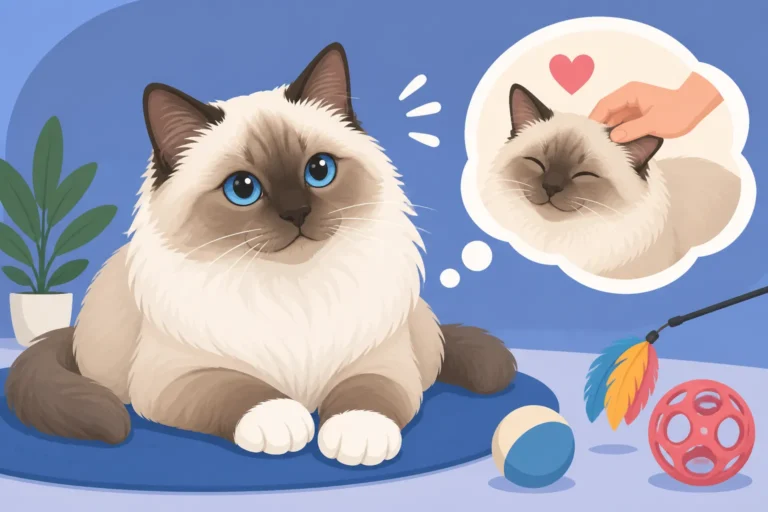
How a Birman Shows Affection Without Making Demands
Have you ever felt a little puzzled by your Birman cat's displays of affection? Perhaps you’ve watched them from a distance, wondering if they truly love you as much as a more boisterous feline might. It’s a common feeling, because Birmans have a beautifully understated way of showing their devotion, one that might not involve constant purring on your lap or demanding head-butts. This guide is all about helping you decode those subtle, yet incredibly profound, signals of love from your Birman, so you can appreciate their unique personality and strengthen your bond even further.
The Subtle Language of a Birman's Love
Birmans are often lauded for their calm and gentle temperament, a characteristic that extends to how they express affection. They aren't typically the "in-your-face" type of cat, demanding constant attention. Instead, their love often manifests in quieter, more consistent ways that speak volumes once you learn to recognize them. It’s a nuanced ballet of presence and understated gestures, perfectly reflecting their serene nature.
The Gentle Follower, Not the Lap Dominator
One of the most heartwarming ways a Birman expresses its affection is by simply being near you, almost like a fluffy, benevolent shadow. They aren't necessarily vying for prime lap real estate or attempting to wedge themselves between you and your book. Instead, you'll find them quietly following you from room to room, settling on the floor nearby, on a comfy cushion, or perhaps on a chair just a few feet away. They want to be in your orbit, to share your space, even if they aren't actively engaging in physical contact.
This can sometimes be a source of quiet frustration for owners who long for a more traditional "lap cat" experience. You might wonder if they truly care, when in reality, their continuous presence is a deep affirmation of their trust and contentment. It's their way of saying, "I choose to be here, close to you, because you are my safe space." Think of it as a silent conversation where their proximity is the most powerful word. Observing this gentle loyalty helps you understand How a Birman Follows You Room to Room, often settling quietly as you move about your day.
The Quiet Observer, Always Nearby
Building on that gentle following, Birmans are master observers. They often prefer to perch themselves in a spot where they can keep an eye on you without necessarily being involved in whatever you're doing. This might mean lying on the sofa back behind your head, curled up at the foot of your bed, or even just stretching out on a sunbeam in the same room. They might not jump onto your lap for a snuggle every time you sit down, but their consistent presence, even when seemingly aloof, is a testament to their bond with you.
Their preference for proximity over constant physical interaction is a key aspect of their personality. They are happy to be included in your life, to simply exist in the same space, absorbing your energy and offering their calm companionship. It’s a quiet reassurance that you are their chosen person, and they find immense comfort in your presence. Many Birman owners will tell you that A Birman Would Rather Be Near You Than On You, finding joy in their cat's calm, steady presence beside them.
Vocalizations and Physical Gestures: What to Look For
While their overall demeanor is calm, Birmans do have their own specific ways of communicating their affection through sound and touch. These gestures are often subtle, a whisper rather than a shout, and learning to recognize them is like discovering a secret language.
The Soft Trill and Purr: A Whisper of Affection
If you're expecting the loud, insistent meows of certain other breeds, you might miss a Birman's vocal repertoire entirely! Birmans are not typically loud cats; they possess a rather dainty voice. Instead of booming meows, you'll often hear a soft, conversational trill or chirp. This sound is often reserved for greeting you, expressing mild curiosity, or simply acknowledging your presence. It's a gentle, rolling sound, almost like a question mark, and it's their special way of saying "hello" or "I'm here!" It's quite different from a persistent meow for food or attention, underscoring Why a Birman Rarely Meows.
Their purr, too, tends to be on the quieter side. It's not always the rumbling engine you might associate with some felines. Often, you'll have to lean in close, or feel the gentle vibration against your hand, to truly appreciate the depth of their contentment. This soft purr, accompanying a trill or a slow blink, is one of the clearest signs of their happiness and affection. If you listen closely, you'll start to recognize The Small Trill a Birman Uses Instead of a Meow, a truly endearing sound. It’s worth the effort to lean in, as Why You Have to Lean In to Hear a Birman Purr becomes clear: it's a deeply personal, intimate sound shared between you and your cherished Birman.
Slow Blinks, Gentle Nudges, and Kneading
Beyond sounds, Birmans use subtle body language to convey their love. The "slow blink" is perhaps the most universally recognized cat affection signal, and Birmans excel at it. When your Birman looks at you and slowly closes and then opens its eyes, it's essentially blowing you a kiss. This gesture speaks volumes about their trust and comfort in your presence. It's a clear sign they feel safe and loved, mirroring your own feelings back to you.
You might also experience gentle nudges. A Birman might lightly butt its head against your hand or leg as it walks past, or gently rub its cheek against you. These are subtle requests for attention, a way to mark you with their scent, or simply an acknowledgement of your shared space. It's not demanding; it's an invitation.
And then there's kneading, often referred to as "making biscuits." This instinctual behavior, stemming from kittenhood when they kneaded their mother for milk, is a profound sign of contentment and security. When your Birman kneads on a soft blanket near you, or occasionally on your lap, it means they feel utterly safe and loved. It’s a beautiful, timeless gesture of pure bliss. If you've ever wondered Whether a Birman Kneads, you'll find that many do, but often in a quiet, undemanding way.
Beyond the Obvious: Affection in Daily Routines
Birman affection isn't just about direct interactions; it's woven into the fabric of your shared life. Their presence in your routines, their predictable habits, and their quiet inclusion in your day-to-day existence are all forms of deep, abiding love.
The Unconditional Welcome Home
Few things are as heartwarming as coming home to a waiting pet, and Birmans have a special way of greeting you. While they might not jump up or clamor for immediate attention, you'll often find them at the door, or perhaps just a few steps inside, ready to acknowledge your return. They might weave figure-eights around your legs, offering those gentle head nudges, or simply walk slightly ahead of you, guiding you further into the house.
This isn't a frantic, desperate greeting; it’s a calm, assured welcome, a clear sign that they noticed your absence and are pleased you're back. It speaks to their consistent, steadfast nature, their joy in having their human companion home again. This subtle greeting exemplifies The Birman Meets You at the Door and Then Leads You In, a gentle invitation into their shared world. It's a quiet declaration of, "I missed you, and I'm happy you're here."
Contentment in Shared Space and Routine
Birmans are creatures of comfort and routine, and their affection is often expressed through their desire to simply share your daily rhythms. They thrive on feeling like an integral part of the household, even if their contribution is simply to nap peacefully nearby. You might find them curled up on a cat tree from Amazon in your home office, observing you while you work, or stretched out on the living room rug while you read. They don't need to be the center of attention; they just need to know they belong.
This shared existence, where their peaceful presence accompanies your daily activities, is a powerful form of affection. It demonstrates their trust in you and their deep sense of security within your home. They are perfectly content to be present, to enjoy the quiet rhythm of life alongside you. Providing them with cozy, comfortable spots – perhaps a window perch or a plush cat bed also found on Amazon – in the rooms you frequent most will encourage this shared presence and further cement their feeling of belonging.
Understanding and Responding to Your Birman's Unique Love Language
Once you start recognizing these subtle cues, you’ll unlock a deeper appreciation for your Birman's affection. It’s about meeting them where they are, rather than expecting them to conform to a more boisterous definition of love.
Don't Force It: Respecting Their Boundaries
Perhaps the most crucial aspect of fostering a loving relationship with a Birman is respecting their boundaries. While they cherish your company, they often prefer to initiate physical contact or dictate the terms of affection. Trying to constantly pick them up, force cuddles, or smother them with attention when they're not in the mood can actually be counterproductive, making them withdraw.
Instead, let them come to you. Offer a gentle hand for a head rub, but allow them to lean into it or walk away if they prefer. This respect for their autonomy builds immense trust and strengthens the bond. When they know their space is respected, they are far more likely to offer their affection freely and genuinely. This understanding is key to truly embracing How a Birman Shows Affection Without Making Demands. They offer their love on their own terms, and that makes it all the more special. Many owners find that Why a Quiet Undemanding Birman Suits an Older Owner is precisely this aspect – they provide companionship without overwhelming their human.
Small Gestures, Big Impact
Responding to your Birman's subtle cues with equally gentle gestures will show them you understand and appreciate their unique love language. A slow blink returned, a quiet word of praise, or a gentle stroke along their silky back can mean the world to them. You don't need grand gestures; consistency and understanding are far more impactful.
For instance, if your Birman is lounging nearby, offer a soft pet as you pass, or a quick scratch behind the ears. Consider a gentle grooming session with a soft brush, a daily ritual that many Birmans enjoy and perceive as an act of love. You can find excellent, cat-friendly grooming tools on Amazon that will make this a pleasant experience for both of you. Their placid nature means that Why Praise Motivates a Birman More Than Food often holds true; a soft voice and a gentle touch are incredibly powerful rewards.
Here’s a quick guide to understanding your Birman's affection:
| Birman Affection Cue | What it Looks Like | What it Means | How to Respond |
|---|---|---|---|
| The Shadow Follow | Walks room-to-room, settles near your feet/sofa | "I want to be near you, but not on you." | Acknowledge with a soft word or glance |
| Soft Trill/Quiet Purr | A gentle, rolling sound, often barely audible | "I am happy and content in your presence." | Lean in, offer a gentle pet |
| Slow Blink | Closes eyes slowly, then opens them | "I trust you and feel safe with you." | Blink slowly back |
| Gentle Nudge | Rubs head against your hand or leg | "Hello, I acknowledge you and want attention." | Give a gentle stroke or scratch |
| Kneading | "Making biscuits" on a soft surface or your lap | "I feel utterly safe and comfortable." | Enjoy the moment, offer soft praise |
| Door Greeting | Weaves through legs, walks ahead into the house | "Welcome home! I missed you!" | Gentle pets, talk softly to them |
Learning to speak your Birman's love language is a truly rewarding experience. It's about cherishing their quiet, consistent affection and recognizing that their calm presence is a profound expression of their bond with you.
Disclaimer
This article is for general informational purposes only and does not constitute professional advice. Laws, prices and regulations vary by location and change over time. Consult a qualified professional for guidance on your specific situation.