How Long a Birman’s Coat Actually Is
If you've ever admired a Birman cat, you've probably been captivated by its flowing, luxurious coat. Many people assume such beauty must come with immense length and endless hours of grooming, often feeling intimidated by the sheer volume of fur. It’s a common misconception, but the truth about a Birman's coat length and texture is actually one of its most delightful surprises, and this guide is here to unravel the secrets behind that stunning, yet surprisingly manageable, fur.
The Birman's Signature Silken Sheen: Beyond Mere Length
When you see a Birman, your eyes are immediately drawn to that magnificent coat, giving the impression of boundless, flowing fur. It looks like it should be tangled and high-maintenance, right? But the reality is that the Birman's coat, while certainly long and impressive, is designed in a way that makes it surprisingly easy to care for compared to other longhaired breeds. It's not just about how long the hairs are, but how they grow and what they lack. This combination is what truly defines the Birman's unique aesthetic and feel.
The Single-Layered Secret: Why it Feels So Different
Unlike many other long-haired cats, the Birman possesses a truly distinctive coat: it's single-layered. What does this mean in practical terms? It means there's no dense, woolly undercoat lurking beneath the longer guard hairs. Think about a Persian cat, for instance; they have a thick, fluffy undercoat that contributes to their incredible volume but also makes them highly prone to matting if not groomed daily. The Birman, on the other hand, has a coat that is soft, silky, and flows freely, almost like finely spun silk. This lack of an undercoat is the primary reason why their fur feels so different when you run your hand through it, and it's also a major factor in its ease of care. No Undercoat Is What Makes a Birman Easy to Groom describes this wonderfully.
This single-layer construction is a blessing for owners. It reduces the likelihood of severe matting, which is a common frustration for people with other long-haired breeds. Instead of thick, felt-like clumps, any mats that do form on a Birman are usually much looser and easier to gently comb out. This characteristic also contributes to the impression of length; without a bulky undercoat pushing the outer hairs up, they simply lie flatter and flow more elegantly, making them appear even longer than they might be if they had a denser base.
An Illusion of Endless Flow: How the Coat Drapes Elegantly
The way a Birman's coat drapes isn't just a matter of aesthetics; it's a direct consequence of its texture and structure. Because the hairs are so fine and silky, they fall gracefully along the body, following the cat's contours rather than puffing out. This creates a visual effect of greater length and fluidity. When a Birman moves, its coat ripples and flows, accentuating its graceful movements. It's a hallmark of the breed's elegance, often compared to liquid silk.
This flowing quality also means the coat sheds differently. While Birmans do shed, especially seasonally, the individual hairs are less prone to clinging together or forming large tumbleweeds of fur like those from cats with heavy undercoats. Instead, the shed hairs are fine and often disperse more readily, though you will definitely still find them on your furniture! The visual impact of this flowing coat also contributes to the perception that it must be incredibly long, when in reality, it's the texture and drape that give it that majestic appearance. It's a brilliant genetic trick that gives you all the beauty with significantly less of the fuss.
Measuring Up: Specific Lengths Across the Birman's Body
While the Birman's entire coat gives a general impression of length, it's not uniformly long across its whole body. There are specific areas where the fur truly shines in its magnificent length, contrasting with other parts that are more moderately covered. Understanding these variations helps appreciate the breed standard and why certain areas require particular attention, even with such a manageable coat.
The Grandeur of the Ruff and Tail Plume
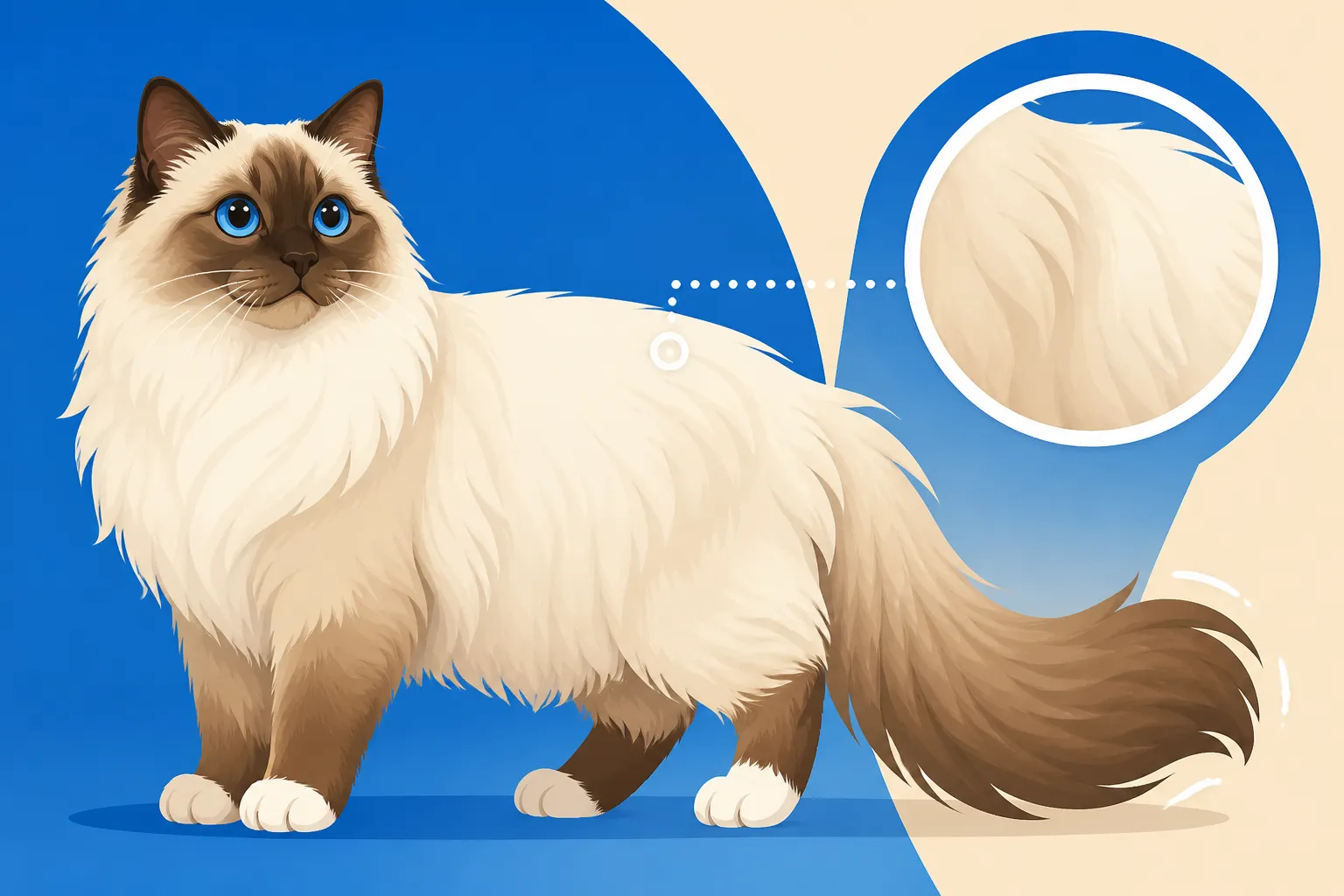
When you think of a long-haired Birman, two areas immediately come to mind for their impressive length: the neck ruff and the tail plume. The ruff, a luxuriant mane of fur around the neck and chest, is undeniably the longest part of a Birman's body coat. It can be quite substantial, especially in mature males, framing their beautiful faces and adding to their regal presence. In winter, this ruff often becomes even more pronounced, a natural adaptation that makes them look even grander. How Big a Birman's Ruff Gets in Winter explores this seasonal change.
Similarly, the tail plume is a wonder to behold. A Birman's tail is medium in length but heavily furnished with long, flowing hair, creating a magnificent plume that is often carried gracefully over its back like a banner. The individual hairs on the tail can be significantly longer than those on the body, contributing to its bushy, luxurious appearance. It’s an eye-catching feature that adds to the overall elegance and perceived length of the cat. How Long a Birman's Tail Plume Is delves deeper into this particular feature.
The Practicality of the Body Coat
Away from the dramatic flair of the ruff and tail, the fur on the Birman's main body—its back, sides, and flanks—is more moderate in length. While still considered a long-haired breed, the body coat isn't as extreme as that of, say, a show Persian. It’s long enough to flow smoothly and feel incredibly soft, but not so long that it becomes cumbersome or excessively prone to tangling. The body fur typically measures a few inches, tapering gently towards the sides.
This practicality is another reason why Birmans are often described as "easy longhairs." The moderate length on the body, combined with the lack of an undercoat, means that daily brushing isn't strictly necessary to prevent disaster. Instead, a few times a week is often sufficient, allowing the coat to remain sleek and beautiful without demanding constant intervention. This balanced approach to coat length allows the cat to move freely and comfortably, maintaining its dignified appearance without hindrance.
The Defining Features: Gloves, Britches, and Belly
The Birman's signature white "gloves" on its paws are not just about color; they also have a specific hair length and texture. The fur on the paws, while part of the longer coat, is often a bit shorter and denser than on the main body to allow for better function and define the 'glove' line. On the hind legs, the white "laces" or "gauntlets" extend up the hock and transition smoothly into the longer fur of the "britches" – the longer, feathery hair on the upper hind legs. These britches contribute to the breed's plush appearance, adding volume and softness around the rear.
The belly fur, while often overlooked, is also a key area. It tends to be a bit longer and very soft, creating a lovely fringe that can easily mat if not attended to during grooming. Because Birmans love to sprawl out and show their bellies, this area is exposed to friction and can gather debris, making its length something to be mindful of. Regular, gentle combing of the belly and britches ensures these areas remain as pristine and flowing as the rest of their magnificent coat.
Why the Birman's Coat Appears Longer Than It Is
It's a common observation that a Birman's coat looks incredibly long, often leading prospective owners to believe it requires an exorbitant amount of grooming. Yet, as many Birman enthusiasts will tell you, the reality is far more manageable than the visual suggests. This intriguing paradox lies in the unique characteristics of its fur, which create an illusion of greater length and density than what actually exists.
The Lack of an Undercoat's Visual Impact
The absence of a thick undercoat is perhaps the single most significant factor contributing to the perceived length of a Birman's fur. In breeds like the Persian or Maine Coon, a dense undercoat pushes the longer guard hairs outwards, giving the coat a fluffy, voluminous appearance. This volume can sometimes make the coat appear shorter, as the individual hair shafts are obscured by the sheer density.
With a Birman, however, the silky guard hairs lie flat against the body. There's no underlying layer to prop them up, so they hang and flow freely, revealing their true length more visibly. Imagine a heavy velvet curtain versus a light silk scarf; both might have the same linear measurement, but the silk scarf will drape and appear much longer and more fluid. This flowing, untroubled drape allows each strand to be seen in its full glory, creating the impression of greater length. What Makes a Birman's Coat Silky Rather Than Woolly dives into this textural difference.
The Growth Cycle and Full Maturation of the Birman Coat
Another reason the Birman's coat seems to grow so long is its maturation process. Birman kittens are born almost entirely white, with their points (ears, face, paws, tail) gradually darkening over time. Their full coat length and density don't develop overnight; it's a slow, steady process that continues for their first few years. A Birman isn't considered fully mature until it's around three years old, and its coat will continue to gain length, density, and richness in color until then.
This gradual development means that the coat you see on an adult Birman has had ample time to grow and establish its full, flowing magnificence. It's not a static length; it evolves and deepens over time. This extended growth period contributes to the overall impression of a very long, well-developed coat. New owners watching their kittens grow might be amazed at how much the fur develops, creating that striking, luxurious look they initially admired, but without the high-maintenance nightmare many longhaired breeds present.
Birman Coat Length in Comparison: Sidestepping Common Misconceptions
When people think of long-haired cats, their minds often jump to a few prominent breeds. The Birman is sometimes lumped in with these, but its coat, while undoubtedly long, has distinct characteristics that set it apart. Understanding these differences can help clarify expectations about grooming and general care, debunking the myth that all longhaired cats are equally high-maintenance.
Contrasting with the Persian's Denser, More Voluminous Coat
Perhaps the most common comparison, and often the source of misunderstanding, is between the Birman and the Persian. Persian cats are renowned for their incredibly thick, voluminous coats that are uniformly long across their entire body, including an extremely dense undercoat. This double-layer coat creates a plush, almost woolly texture that stands out from the body. Because of this density, a Persian's coat is highly prone to matting and requires daily, rigorous grooming to prevent painful knots and skin issues.
The Birman's coat, while visually long, is fundamentally different. As we've discussed, it lacks that dense undercoat. This means while the length of the guard hairs might be comparable in some areas, the volume and texture are not. A Birman's coat lies flat and feels silky, while a Persian's coat is thick and fluffy. This distinction is crucial for grooming. While a Persian owner might spend an hour or more a day battling mats, a Birman owner can often get by with just Combing a Birman Three Times a Week. It's a significant difference that makes the Birman a much more accessible longhair for many homes.
Distinguishing from the Ragdoll's Fluffier Texture
Another breed often compared to the Birman is the Ragdoll, and for good reason—they share some superficial similarities in appearance and temperament. Both are large, pointed cats with semi-long hair. However, there's a subtle yet important difference in their coat textures and how they contribute to perceived length. A Ragdoll's coat, while also semi-long and silky, often has a bit more fluff and volume than a Birman's. It's generally a little less prone to matting than a Persian's, but it can still have a slight undercoat that gives it a fuller, more plush feel compared to the Birman's truly single-layered silkiness.
The Ragdoll's coat tends to be softer and more rabbit-like, which can give it a somewhat more voluminous appearance, even if the actual hair length isn't dramatically different from a Birman's. The Birman's coat, by contrast, maintains that sleeker, finer drape. Visually, this means a Birman's coat often looks a touch more elegant and less "fluffy" than a Ragdoll's. These nuances highlight that even among semi-longhaired breeds, the specific coat characteristics greatly influence both their aesthetic and their grooming requirements. How a Birman's Coat Differs From a Ragdoll's provides an excellent deep dive into these fascinating distinctions.
Here's a quick comparison of popular longhair coat characteristics:
| Breed | Coat Type | Undercoat | Texture | Matting Tendency | Perceived Length | Grooming Frequency |
|---|---|---|---|---|---|---|
| Birman | Semi-long | None | Silky | Low | Very Long | 2-3 times/week |
| Persian | Long | Dense | Woolly | High | Very Long | Daily, intensive |
| Ragdoll | Semi-long | Light | Plush/Soft | Moderate | Long | 3-4 times/week |
| Maine Coon | Shaggy | Thick | Coarse | Moderate | Long | 2-3 times/week |
Factors that Influence Your Birman's Coat Length and Quality
While genetics lay down the blueprint for a Birman's coat, several other factors can significantly influence how long, lush, and healthy that beautiful fur actually appears. It's not just about inherited traits; diet, overall health, age, and even the environment your Birman lives in all play a role in maintaining its signature silken sheen.
Genetic Predisposition: The Blueprint for Length
At the core of every Birman's coat is its genetic makeup. The breed standard dictates a semi-long coat, and the genes passed down from its ancestors determine the potential maximum length and texture of its fur. Breeders carefully select breeding pairs to maintain these desired coat characteristics, aiming for that fine, silky texture and a good length on the ruff and tail, without excessive bulk on the body. This genetic predisposition is why all Birmans, despite individual variations, share that unmistakable coat type.
However, even with the right genes, individual Birmans can show slight differences. Some might naturally have a slightly longer ruff or a fuller tail plume than others, even within the same litter. These minor variations are part of the joy of owning a pedigreed animal – each one is unique while still embodying the breed's essential qualities. Understanding that genetics sets the stage means you can appreciate the inherent beauty of your Birman's coat, knowing it's designed to be stunningly long without being overwhelmingly dense.
Nutrition and Hydration: Fueling a Lush Coat
Just like with humans, "you are what you eat" holds true for your Birman's coat. A healthy, lustrous coat—one that reaches its full genetic potential for length and silkiness—is a direct reflection of a well-balanced diet. A diet rich in high-quality protein provides the building blocks for strong hair shafts, preventing breakage and promoting healthy growth. Beyond protein, essential fatty acids, particularly Omega-3 and Omega-6, are absolutely vital for skin health and coat shine. Why Omega Oils Matter for a Birman's Coat underscores this point.
If a Birman isn't getting adequate nutrition, its coat can suffer. It might become dull, brittle, or even appear sparse, losing some of its characteristic length and flow. Ensure your Birman's food contains these crucial nutrients. Many high-quality cat food brands available on platforms like Chewy or Amazon explicitly list their protein and fat content. Some owners also opt for fresh food diets to ensure maximum nutrient absorption and hydration, which can truly make a difference in coat quality. Clean, fresh water is also paramount; proper hydration helps keep the skin healthy and the hair follicles functioning optimally, supporting robust hair growth.
Age and Environment: The Evolving Coat
A Birman's coat changes throughout its life and is influenced by its living environment. As kittens, their coats are shorter and less developed, gradually filling out and gaining length as they mature. The full splendor of their coat often isn't seen until they are two or three years old. Conversely, as Birmans enter their senior years, their coats can start to thin slightly, lose some of their shine, or even become a bit coarser. Why an Old Birman's Coat Loses Its Shine details these age-related changes.
Environmental factors also play a role. For example, temperature can influence the darkness of a Birman's points and, to a lesser extent, the perceived density of its coat. Cats living in colder climates might develop a slightly thicker ruff or a denser overall coat as a natural adaptation. Humidity levels can also affect coat texture, with very dry environments potentially leading to more static or brittle fur. Providing a comfortable, stable indoor environment and adjusting grooming or dietary supplements as your Birman ages can help mitigate these effects and keep their coat looking its best for as long as possible.
Maintaining that Luxurious Length: Grooming for the Birman Coat
While the Birman's single coat is blessedly low-maintenance compared to some other longhaired breeds, it still requires consistent, gentle grooming to preserve its beautiful length, prevent the occasional mat, and ensure its overall health. The right tools and a regular routine are key to keeping that silky fur flowing and radiant.
Essential Tools for Preserving Length and Preventing Damage
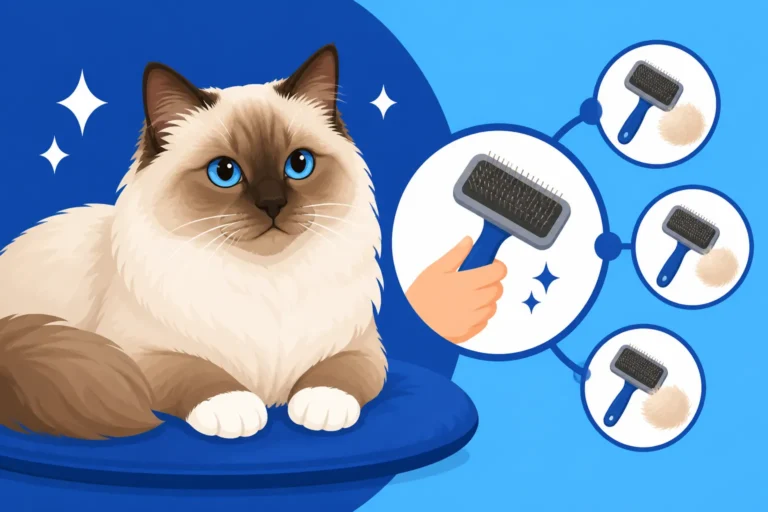
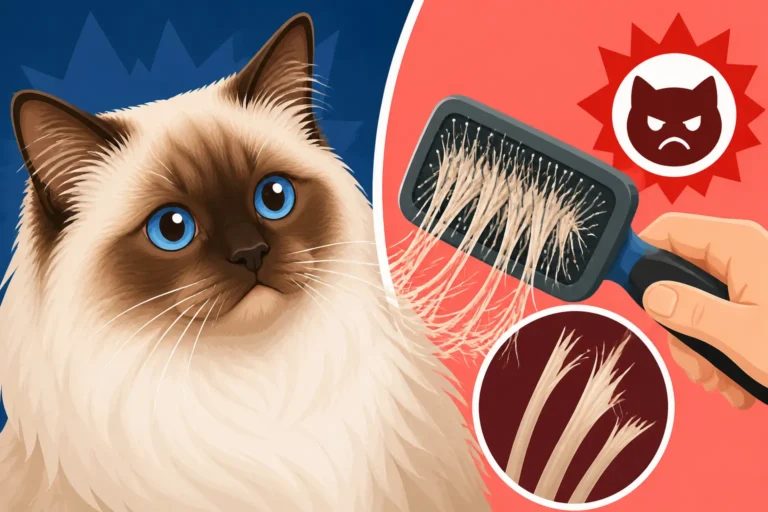
Choosing the right grooming tools is paramount for a Birman's delicate, silky coat. Harsh brushes or combs designed for dense undercoats can actually damage the fine guard hairs, leading to breakage and frizz, which can make the coat appear less lustrous and uniform in length. Instead, opt for tools that glide smoothly through the fur, detangling gently without pulling.
A good quality metal comb with both wide and fine teeth is your best friend. The wide-toothed section is perfect for initial passes through the ruff and tail, gently working out any loose hairs or minor tangles. The fine-toothed side can then be used on the body and for more detailed work. A soft bristle brush can also be used for a finishing touch to distribute natural oils and enhance shine. Avoid slicker brushes, which can be too harsh for a Birman's single coat and can tear the delicate hair. You can find excellent quality combs and brushes specifically designed for long-haired, fine-coated cats on sites like Chewy or Amazon, ensuring you have the best instruments for a comfortable grooming session. Which Comb Gets Through a Birman's Ruff Without Pulling offers specific recommendations.
A Consistent Routine for a Healthy, Flowing Coat
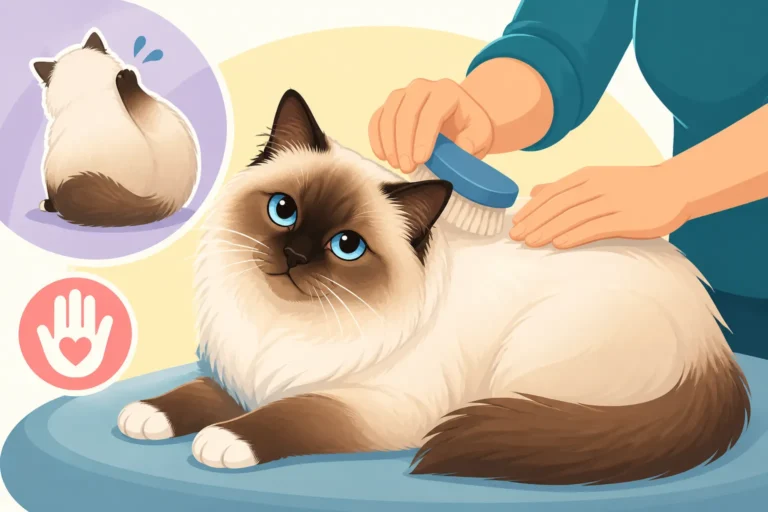
Even with its forgiving nature, a Birman's coat benefits immensely from a regular grooming routine. Aim for two to three combing sessions per week, each lasting around 10-15 minutes. This frequency is usually sufficient to remove loose hair, prevent mats from forming, and keep the skin healthy. Consistency is more important than intensity; short, regular sessions are far more effective and less stressful for your cat than infrequent, lengthy battles with tangles.
Start grooming your Birman kitten early to get them accustomed to the process. Positive reinforcement, gentle handling, and making it a calm, pleasant experience will ensure your Birman grows to tolerate, if not enjoy, their grooming sessions. Pay particular attention to areas prone to friction and matting, such as behind the ears, in the armpits, on the belly, and the "britches" around the hind legs. Gently work through these areas, teasing out any small knots with your fingers before using a comb. This routine will not only maintain the length and beauty of their coat but also provide an opportunity for bonding and a quick health check. Remember, a well-groomed Birman is a happy Birman, showcasing its beautiful, flowing coat at its very best.
Disclaimer
This article is for general informational purposes only and does not constitute professional advice. Laws, prices and regulations vary by location and change over time. Consult a qualified professional for guidance on your specific situation.