What an Old Birman Needs Once Its Ruff Starts Matting
Senior Birman cats develop ruff matting and coat changes due to decreased mobility and aching joints in their golden years.
The daily stuff, done right.
Feeding amounts by life stage, coat and skin routines, dental and nail care, exercise needs, and what changes as they age.
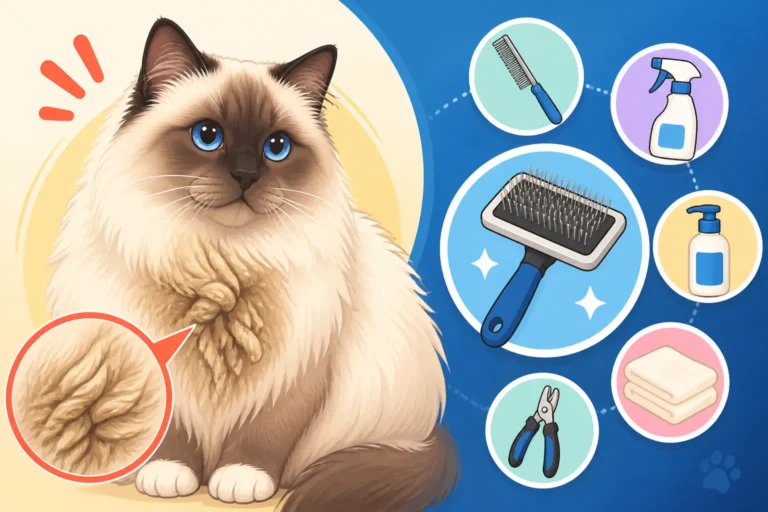
Senior Birman cats develop ruff matting and coat changes due to decreased mobility and aching joints in their golden years.
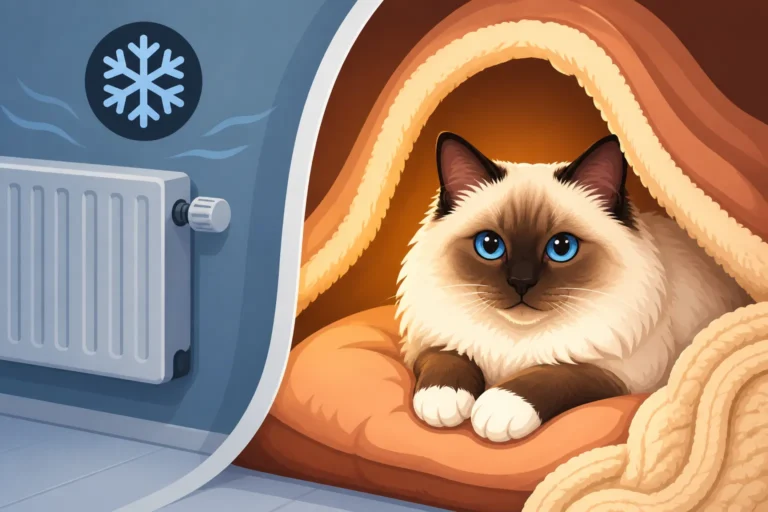
Birman cats possess a single coat lacking an insulating undercoat, making them more sensitive to household temperature drops.
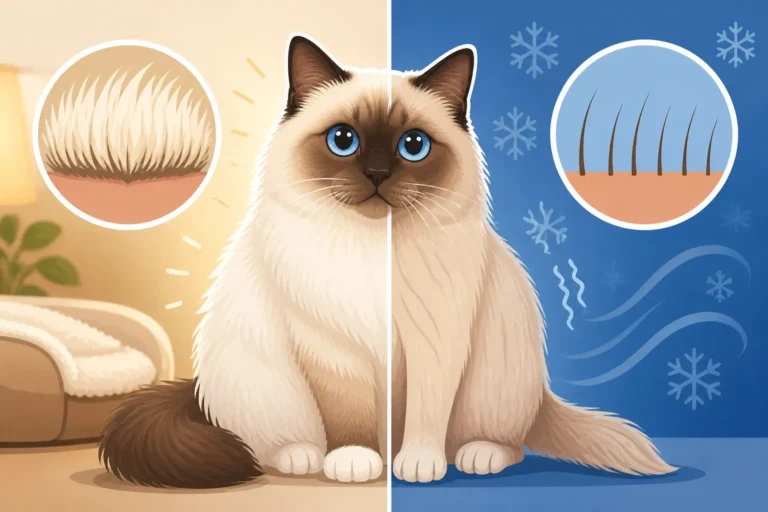
Birman cats lack a dense woolly undercoat and rely only on fine guard hairs, trapping less warmth against temperature drops.
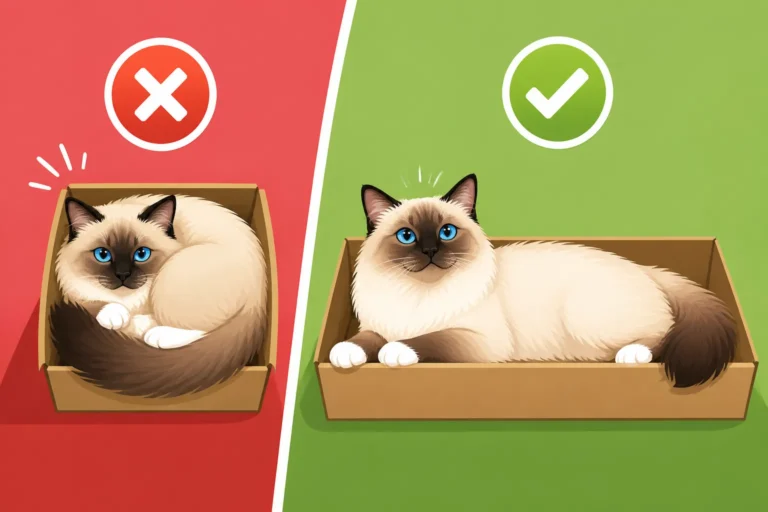
A Birman litter box length requirement explains why long-bodied cats need larger pans to prevent messy bathroom accidents.

Why a Birman’s silky single coat needs healthy fats in the diet, since the guard hairs lack an undercoat’s cushion and dull, dry or flaky fur can signal a gap.

Birman cat polycystic kidney disease history explains why daily water intake and DNA testing are critical for feline health management.

Protein intake levels and specific dietary requirements for developing and maintaining a thick, lustrous Birman cat ruff.

Birman cat behavior explains why quiet cats silently eat unattended food and how owners manage this trait to keep pets healthy.
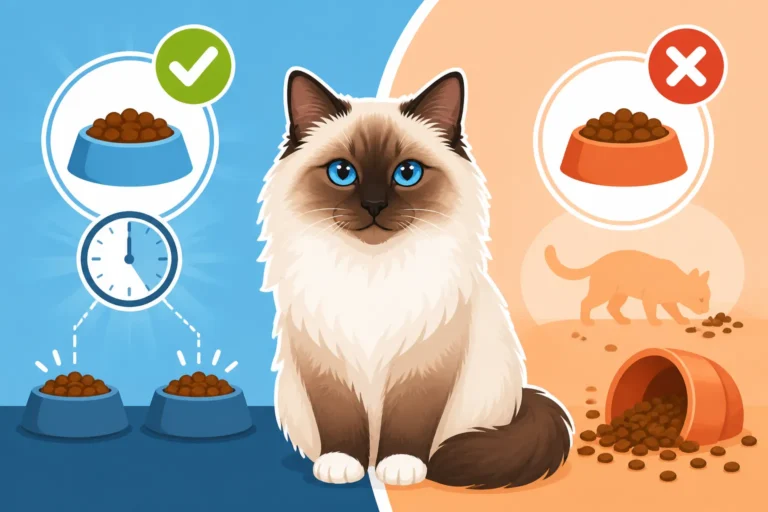
Two daily measured meals prevent weight gain in calm Birmans because this medium breed lacks natural self regulation.

Birman caloric intake and dietary needs explain how medium energy levels and single coats require specific nutrients to maintain silky fur.