Caring for a Birman Once Its Points Have Gone Dark
Senior Birman cat points darken due to temperature-sensitive genes, metabolism, and age, changing ear, paw, and tail color.
Know what to watch for.
Breed-specific conditions, screening and DNA tests, what surgery actually costs, and the daily habits that stretch a healthy lifespan.

Senior Birman cat points darken due to temperature-sensitive genes, metabolism, and age, changing ear, paw, and tail color.
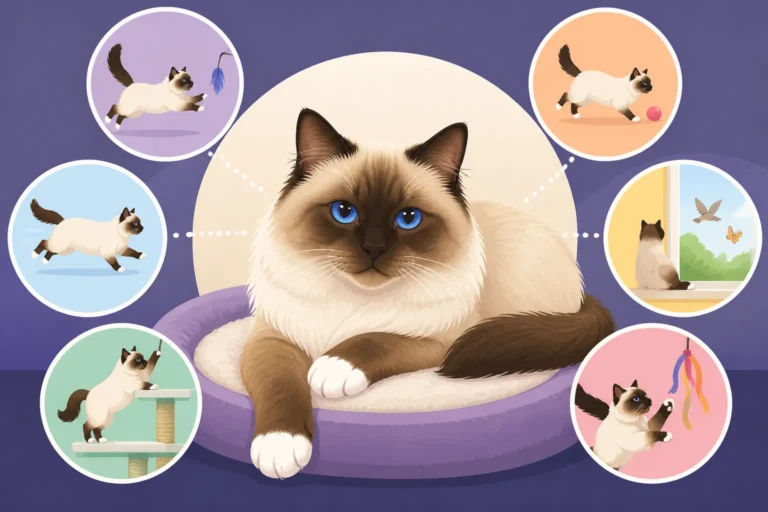
An aging Birman cat shows early signs of slowing down through reduced activity, decreased jumping, and longer sleep durations.

Birman cat behavior and tranquil temperament explain why this breed hides illness, suffering in silence with subtle signs.
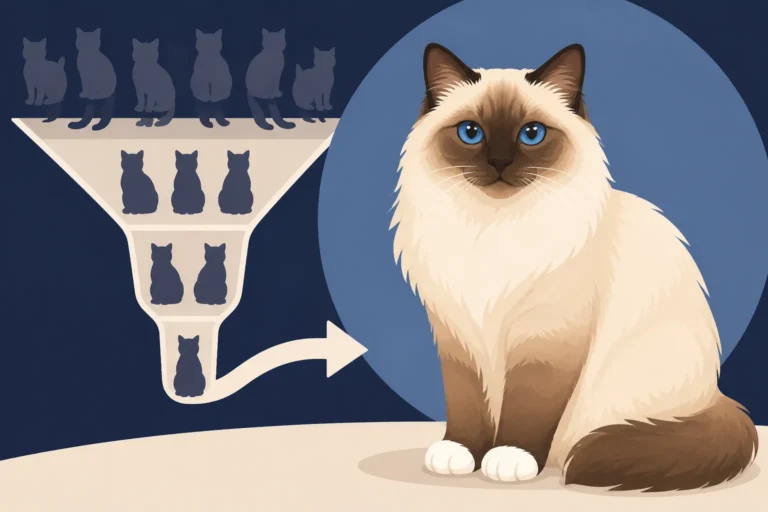
Birman cat genetics reveals how a narrow founder base and World War II left just two surviving cats to shape the modern breed.

The typical lifespan of a healthy Birman cat ranges from twelve to sixteen years with proper care and routine veterinary visits.
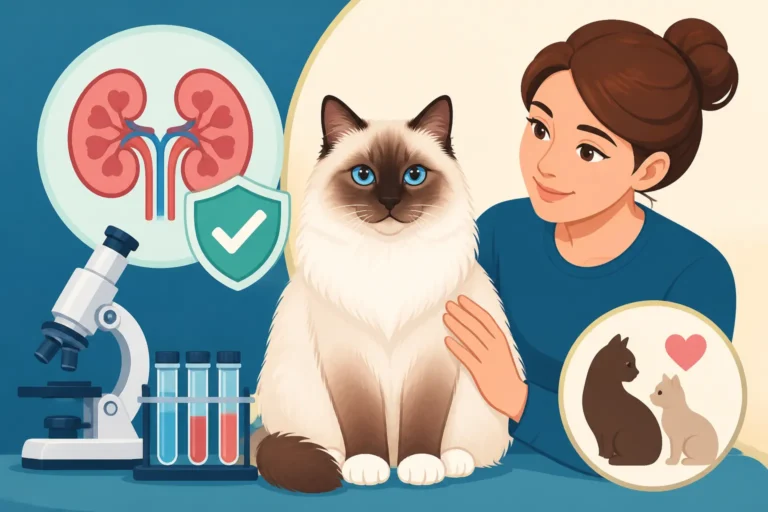
Polycystic Kidney Disease testing helps Birman breeders identify the genetic mutation causing fluid-filled cysts in kidneys.
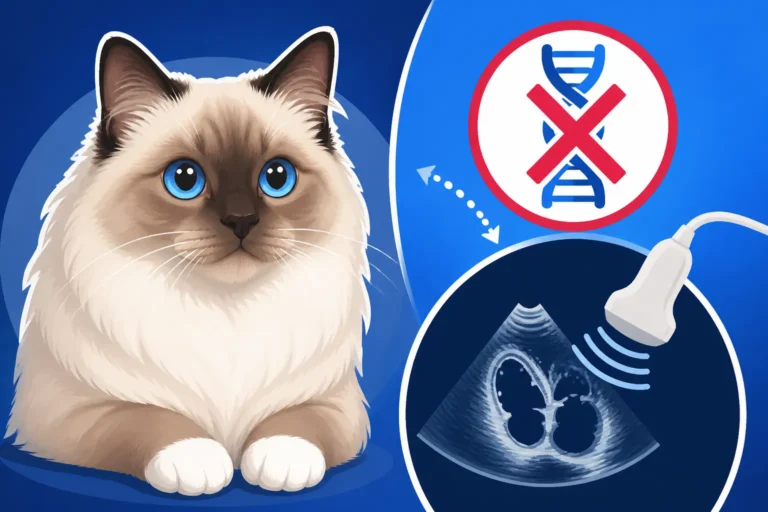
Hypertrophic cardiomyopathy in Birman cats lacks a genetic test, making regular echocardiograms the gold standard for accurate diagnosis.
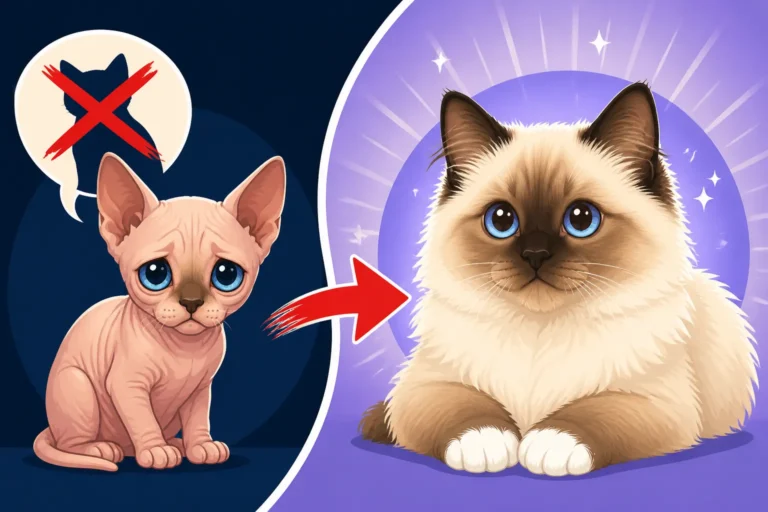
Birman hypotrichosis linked to FOXN1 gene mutations explains why bald kittens have shortened lifespans and weak immune systems.

FOXN1 gene deletion in Birman cats causes autosomal recessive immune deficiency by destroying thymus gland development and T cells.

World War II decimated the Birman cat population, leaving only two surviving individuals to rebuild the entire lineage in France.