Why a Birman’s Back Legs Go Cold and Useless in an Hour
Feline aortic thromboembolism causes sudden hind leg paralysis and coldness in Birmans when a blood clot blocks the aorta near the iliac arteries.
Know what to watch for.
Breed-specific conditions, screening and DNA tests, what surgery actually costs, and the daily habits that stretch a healthy lifespan.
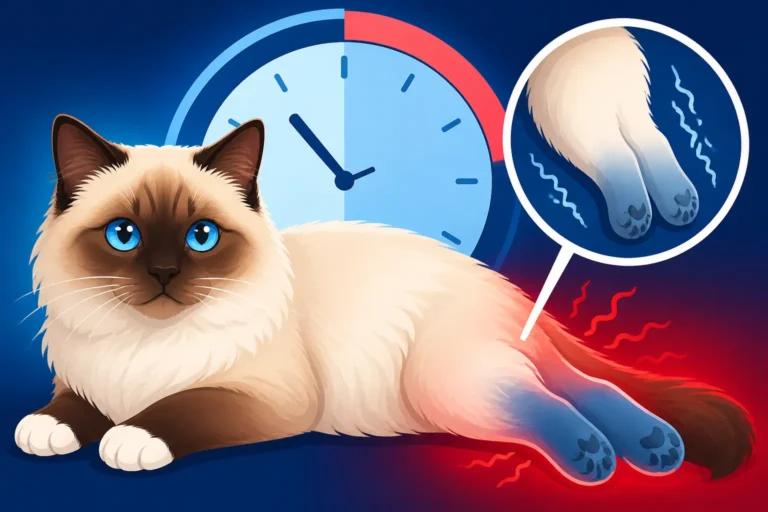
Feline aortic thromboembolism causes sudden hind leg paralysis and coldness in Birmans when a blood clot blocks the aorta near the iliac arteries.
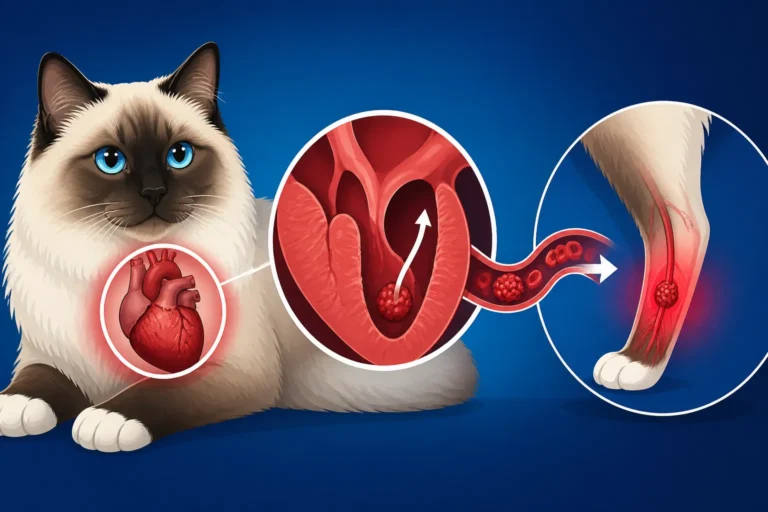
Birman cats with Hypertrophic Cardiomyopathy develop thickened left ventricle walls, forming blood clots that block leg circulation.

Common medications prescribed for Birmans diagnosed with hypertrophic cardiomyopathy include beta-blockers and calcium channel blockers.

Annual stethoscope heart exams cannot reliably detect hidden cardiac disease in Birman cats, making echocardiograms necessary for proper screening.
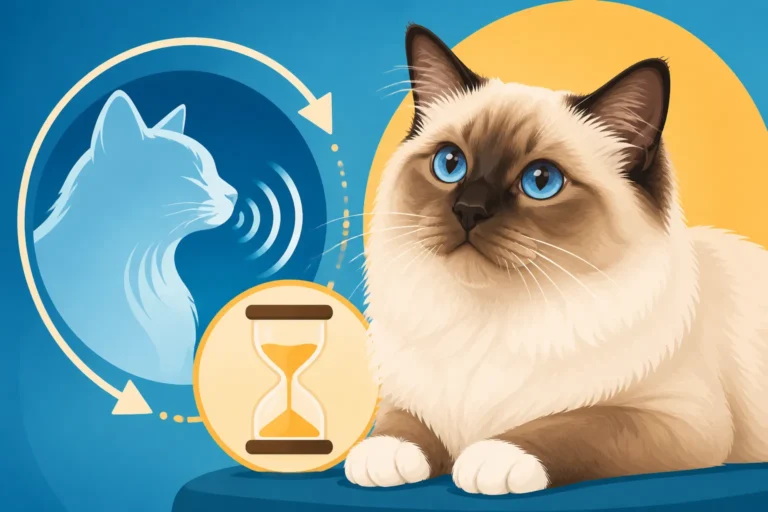
An echocardiogram measures heart wall thickness in a Birman to detect hypertrophic cardiomyopathy, but clear results do not last permanently.
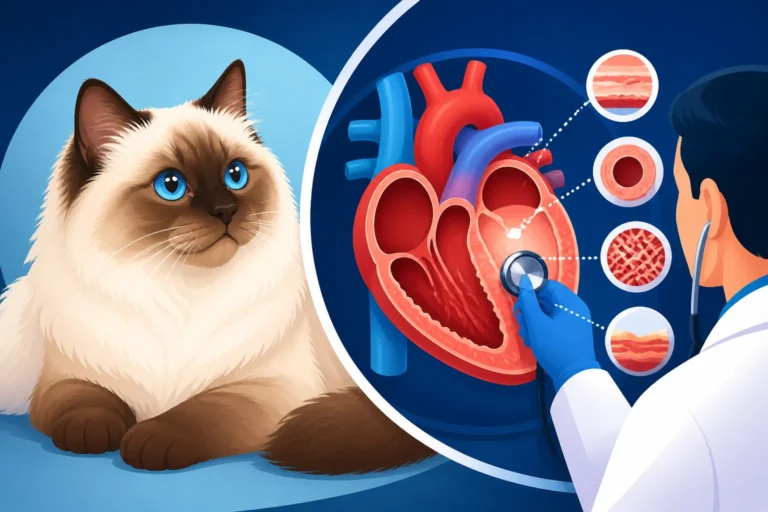
A veterinary cardiologist measures a Birman cat heart wall during an echocardiogram to diagnose hypertrophic cardiomyopathy.
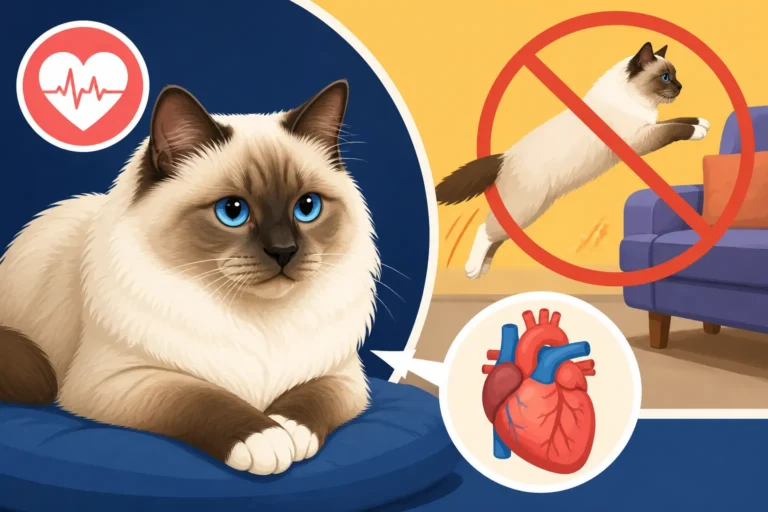
Hypertrophic cardiomyopathy in Birmans restricts blood flow and oxygen, causing muscle fatigue that prevents jumping and physical exertion.
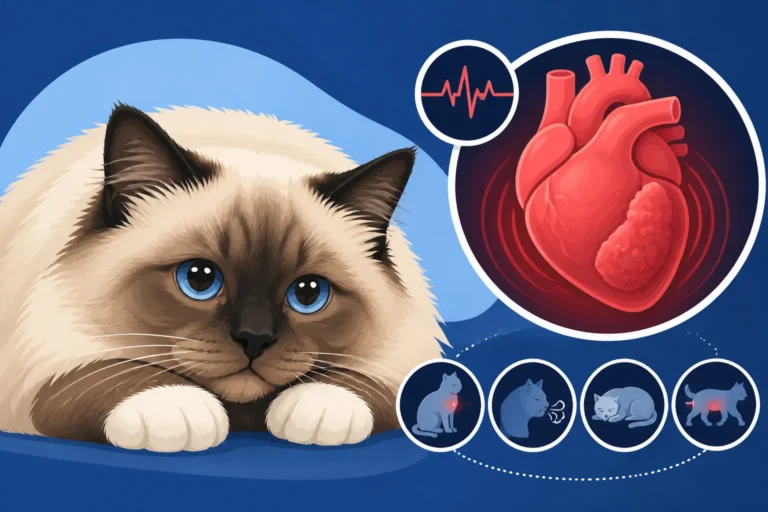
Feline hypertrophic cardiomyopathy in Birmans causes subtle behavioral shifts and decreased activity levels before heart failure occurs.
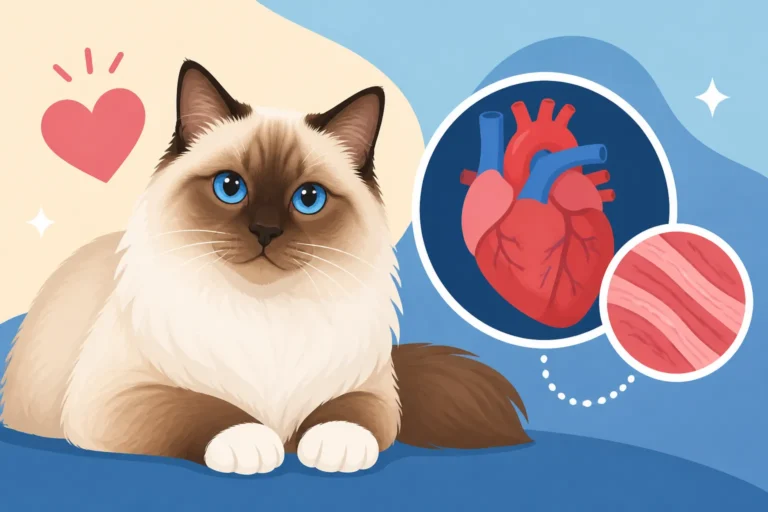
Hypertrophic Cardiomyopathy in Birman cats explains when the heart muscle thickens and causes dangerous health complications.
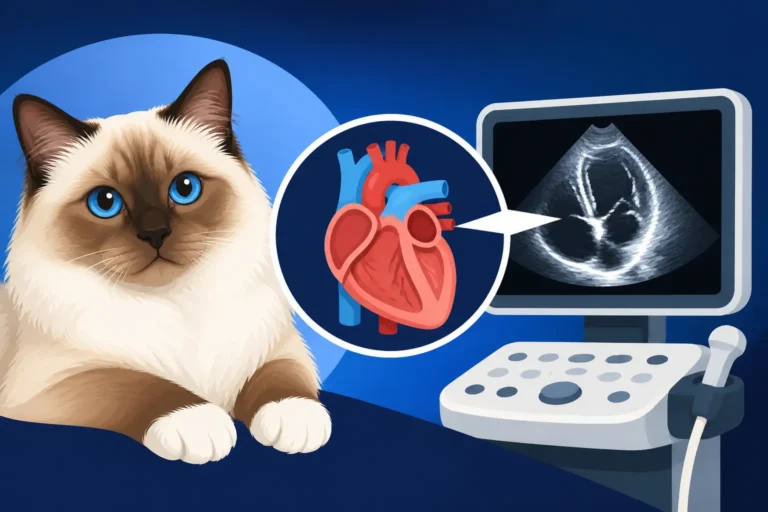
Hypertrophic Cardiomyopathy frequency in echo-scanned Birman lines and how breeders screen for this progressive feline heart disease.