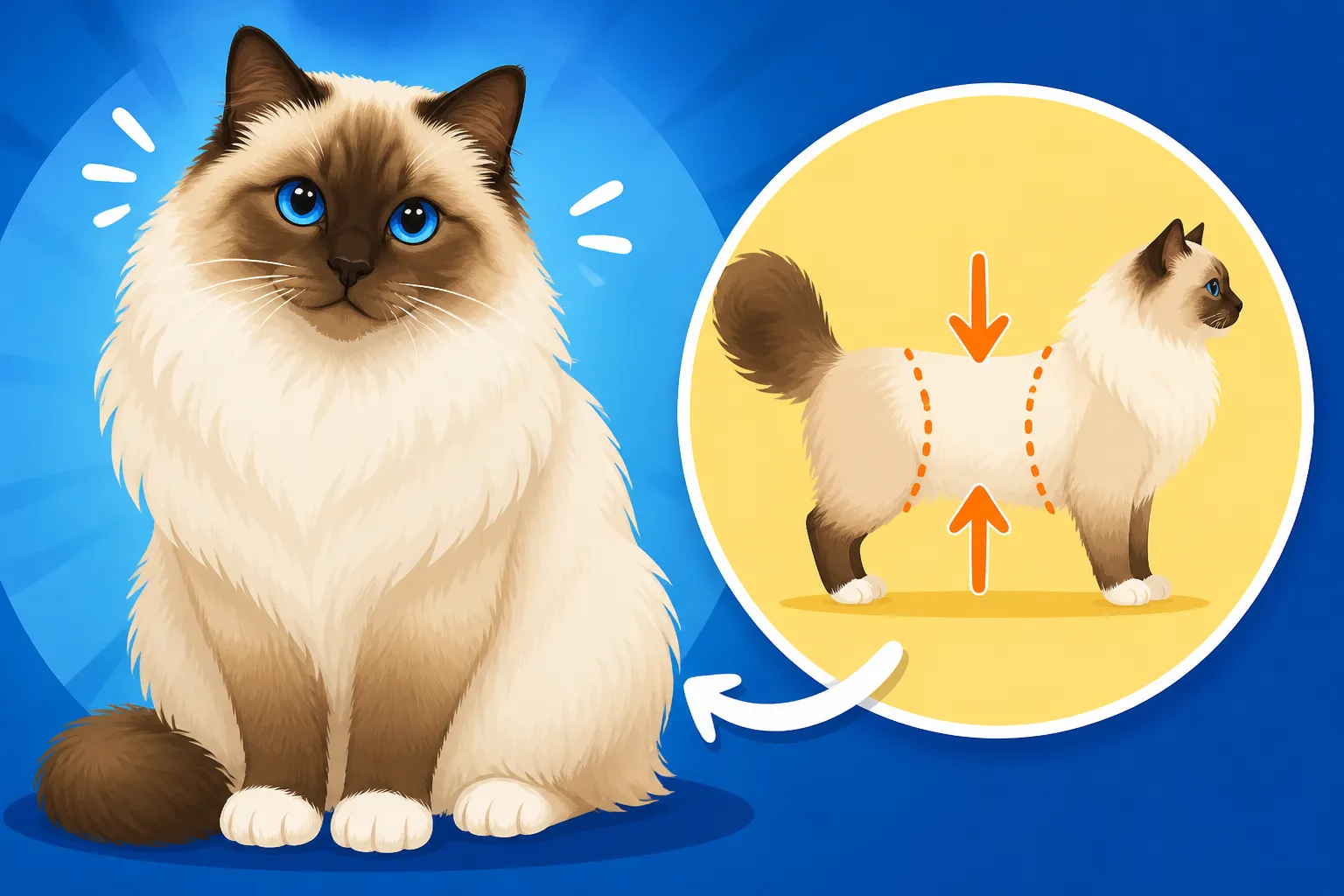
Finding a Birman’s Waist Under That Ruff
It's a common dilemma for Birman cat parents: you look at your beautiful, fluffy companion, and you just know there's a cat in there somewhere, but exactly what shape they're in can be a real mystery. Their glorious, flowing coat and magnificent ruff often make it incredibly difficult to tell if they're carrying a little too much weight or if that generous curve is simply their natural, elegant physique. This guide will walk you through how to truly assess your Birman's body condition, looking beyond the fur to ensure they're staying healthy and happy for years to come.
The Birman's Unique Physique: More Than Just Fluff
Birmans are stunning cats, known for their silky, medium-long coats and that distinctive ruff around their neck, often likened to a lion's mane. This very beauty, however, can be a master of disguise when it comes to assessing their weight. It's not like looking at a shorthair cat where every curve and angle is on display. With a Birman, you're dealing with layers of softness, which means a subtle weight gain can go unnoticed for far too long.
The Luxurious Coat and Elusive Body Shape
Unlike some other long-haired breeds, the Birman has a single coat, meaning it lacks a dense, woolly undercoat. This is fantastic for grooming, making them less prone to matting than, say, a Persian, and easier for you to manage. You can read more about this in No Undercoat Is What Makes a Birman Easy to Groom. However, this silky texture drapes beautifully over their body, effectively smoothing out any bumps or bulges that would be obvious on a shorter-coated feline. The fur simply hangs, concealing the actual contours beneath. Their prominent ruff, which is often the longest hair on their body, also adds to this visual deception, making their neck and chest area appear broader than it might actually be. You might think your Birman looks perfectly proportioned, but their coat can easily add an inch or two to their perceived girth.
How Their Long, Rectangular Frame Contributes to the Illusion
Birmans are not cobby, compact cats; they possess a long, rectangular body frame, which means their weight tends to distribute differently. Instead of rounding out significantly in the middle like some breeds, an overweight Birman might just look "fuller" or a bit more substantial all over. This linear body shape means that weight gain can sneak up on you, gradually adding to their overall volume without a dramatic change in a specific area, such as a bulging belly. You might notice their hindquarters seem a bit wider, or their elegant waistline seems to have vanished, but it’s often a slow, insidious process that the coat readily covers. Understanding What a Birman's Long Rectangular Frame Should Weigh can help you set realistic expectations for their size, but even then, the fur can make visual assessment challenging.
Why "Finding the Waist" Matters for Your Birman's Health
Beyond aesthetics, knowing your Birman's true body condition is paramount for their long-term health. Just like in humans, carrying extra weight puts a strain on virtually every system in a cat's body, significantly increasing their risk for a host of preventable diseases. It's not about vanity; it's about giving your beloved companion the best possible chance at a long, healthy, and comfortable life.
The Hidden Risks of Carrying Extra Weight
When your Birman carries extra weight, even what seems like just a little "fluff," it has serious implications. Overweight cats are at a much higher risk for conditions like diabetes mellitus, a disease that requires daily insulin injections and careful dietary management. They're also prone to debilitating joint problems, such as arthritis, which can significantly reduce their mobility and quality of life, especially as they get older. Imagine a cat that loves to follow you from room to room suddenly struggling to jump onto the sofa, or even into their litter box. Obesity can also exacerbate heart conditions, putting additional strain on their cardiovascular system. Furthermore, an overweight Birman might struggle with grooming themselves, particularly reaching their lower back or hindquarters, which can lead to matted fur and skin issues. This is why Why an Overweight Birman Stops Grooming Itself is often a tell-tale sign of weight issues.
Early Detection: Preventing Larger Health Problems
The good news is that weight-related health problems are often preventable or manageable with early intervention. By regularly checking your Birman's body condition, you can catch weight gain early, before it escalates into more serious and difficult-to-treat conditions. It's far easier to adjust their diet and activity levels to shed a pound or two than to manage full-blown diabetes or severe arthritis. Regular assessment allows you to be proactive, working with your vet to implement small changes that can have a huge impact. It's about being a vigilant advocate for your cat's well-being, understanding that what's under the fur truly matters.
Hands-On Assessment: How to Feel for Your Birman's True Shape
Given the Birman's deceptive coat, visual cues alone are simply not enough. You need to get hands-on and feel their body condition to truly know what's going on beneath all that beautiful fur. This isn't about rough handling; it's a gentle, methodical palpation that becomes second nature with practice.
The "Rib Check" Method: A Simple Palpation Guide
This is the most reliable way to assess your Birman's body condition. It might sound a bit intimidating at first, but it's really quite simple:
- Preparation: Find a quiet moment when your Birman is relaxed, perhaps when they're purring on your lap or settled next to you. Gently stroke their side for a moment to get them comfortable with your touch.
- Locate the Ribs: Place both your hands flat on either side of their chest, just behind their front legs. Your fingers should be pointing towards their spine.
- Feel for Definition: Gently run your fingertips along their rib cage. You should be able to feel each individual rib bone with light pressure, almost like feeling the knuckles on your hand. You shouldn't see them, but you should definitely feel them without having to press hard.
- Assessing the Spine: Move your hands to their back, along their spine. Again, you should be able to feel the individual bumps of the vertebrae without much difficulty, though they might be slightly more padded than the ribs.
- Checking the Waist (or lack thereof): As you move your hands back towards their hindquarters, you're looking for that gentle "tuck" or narrowing behind their ribs. From above, you should see a discernible waistline, not just a straight line from chest to tail, even with the fur. You can read more about this technique in How to Feel a Birman's Ribs Under a Silky Coat.
- Pelvic Bones: Gently feel around their hips. You should be able to feel the pelvic bones with a bit of palpation, but they shouldn't be sharply protruding or completely obscured by fat.
A healthy Birman should have ribs, spine, and pelvic bones that are easily palpable without being prominent, and a visible waist when viewed from above. If you have to press firmly to feel the ribs, or if you can't feel them at all, your Birman is likely overweight. If you can see the ribs, spine, and hip bones without touching, they might be underweight.
Visual Cues Beyond the Fur: What to Look For
While feeling is crucial, there are still some visual cues that can hint at a weight problem, even through that thick coat. Pay attention to changes in how your Birman moves and grooms. An overweight Birman might move with less enthusiasm, struggling with jumps they once made effortlessly. You might notice them having trouble reaching certain areas when grooming, leading to matted or dull patches, especially around their hindquarters or lower back. They might also appear more sedentary, preferring to rest rather than engage in play. What an Old Birman Slows Down From First can give you an idea of age-related changes, but a young cat slowing down could signal a weight issue.
Maintaining a Healthy Birman: Diet, Exercise, and Regular Checks
Keeping your Birman at a healthy weight is a continuous effort, but it's a rewarding one that directly contributes to their longevity and quality of life. It involves careful attention to their diet, encouraging appropriate activity, and making sure your vet is part of the team.
Tailoring Nutrition to Your Birman's Needs
Diet is the cornerstone of weight management. Many cat parents fall into the trap of free-feeding, leaving a bowl of kibble out all day. While Birmans are generally not prone to begging for food like some more vocal breeds—Why a Birman Will Not Tell You It Is Hungry—they will often quietly eat whatever is available. This can easily lead to overconsumption. Instead, opt for measured meals, typically twice a day. The specific amount will depend on your cat's age, activity level, and current weight, so it's best to consult your vet.
Consider a high-quality wet food diet. Cats naturally get a lot of their hydration from their food, and wet food helps them feel fuller while providing essential moisture, which is especially important for a breed with a Why a Birman's PKD History Makes Water Intake Matter. Weight-management wet foods and fresh, portion-controlled meals tailored to your cat's caloric needs are both worth exploring. Avoid excessive treats, or opt for low-calorie, healthy alternatives. Remember, How Many Calories a Ten Pound Birman Burns a Day can be surprisingly low for an indoor cat, so every treat counts!
Encouraging Gentle Activity and Play
Birmans are known for their placid, gentle nature. They're not typically high-energy, boisterous cats that will tear through the house for hours. This means their exercise needs are different from, say, a Siamese. However, even a calm Birman needs regular, engaging play to stay active and maintain muscle tone. Think short, interactive play sessions with wand toys that mimic prey movement. They often enjoy carrying small, soft toys around, or batting at things that move gently. You might find them enjoying a bit of chasing after a laser pointer (just remember to end with a tangible reward!).
Puzzle feeders can also be a great way to combine mental stimulation with a slow release of food, making them work a little for their meal. Even just getting them to walk from room to room to follow you, or gently enticing them to climb a low cat tree, contributes to their daily calorie burn. It’s about consistent, gentle encouragement rather than forcing intense activity.
The Role of Regular Vet Visits and Professional Advice
Your veterinarian is your best partner in ensuring your Birman maintains a healthy weight. During their annual check-ups, your vet will perform a thorough physical exam, including a body condition score, and track any weight changes. This is also the time to discuss any concerns you have about your Birman's diet or activity level. They can provide precise recommendations for food types and portion sizes, and rule out any underlying medical conditions that might be contributing to weight gain.
For Birmans specifically, regular vet checks often include monitoring other health parameters. For example, Why a Birman's Kidneys Are Checked Before Any Anesthetic is crucial, and overall health monitoring supports a healthy weight. If you're struggling to help your Birman lose weight, your vet can offer guidance on a tailored weight loss plan, including prescription diets if necessary. They can also advise on appropriate grooming tools, available through retailers like Amazon, to keep their beautiful coat in top condition, which can be an uphill battle if they’re carrying extra pounds and can't groom themselves properly. These regular visits are fundamental for catching problems early and providing the best quality of life for your cherished Birman.
Disclaimer
This article is for general informational purposes only and does not constitute professional advice. Laws, prices and regulations vary by location and change over time. Consult a qualified professional for guidance on your specific situation.