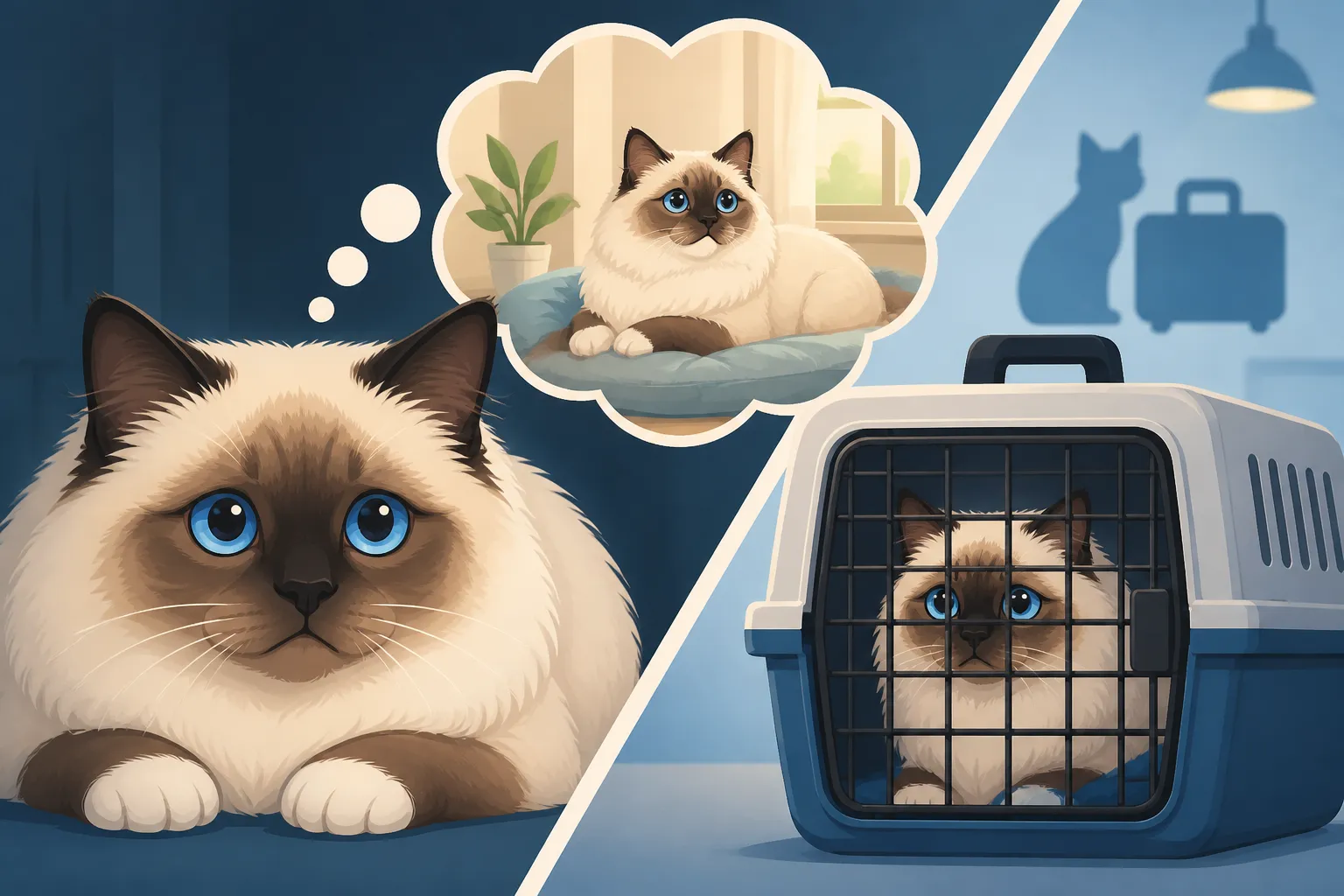
Why Boarding Unsettles a Birman More Than Most Cats
We all face that moment: a planned trip, a family emergency, or simply a need to be away from home for a few days. For cat owners, especially those of us with Birmans, the thought of leaving our beloved felines in an unfamiliar boarding facility can fill us with dread. It's not just about missing them; it's about knowing their unique temperament and how deeply unsettling a change in routine and environment can be. This guide will delve into precisely why Birmans often struggle more with boarding than other cat breeds and offer practical advice to make any necessary separation as smooth as possible for your precious companion.
The Birman's Deep-Seated Need for Stability and Routine
Birmans are famously gentle, placid, and utterly devoted to their human families. They thrive on predictable routines and the comforting presence of their people. This isn't just a preference; it's woven into their very being, a reflection of their calm and companionable nature. When this stability is removed, even temporarily, it can create significant distress.
How Their Affectionate Nature Ties Them to Home
Unlike some more independent cat breeds, Birmans truly see themselves as part of the family unit. They are the cats who follow you from room to room, How a Birman Follows You Room to Room, sitting nearby rather than on your lap, but always keeping you in sight. This constant, gentle presence means they form very strong bonds, often with every member of the household, but particularly with one or two individuals. When their primary human companions disappear, even for a short while, it creates a void that a room full of new toys or even other friendly cats simply cannot fill. They might not vocalize their distress with loud yowls like a Siamese, but a quiet, withdrawn Birman is often a very unhappy one. Why a Quiet Birman Is Easy to Misread.
Their affection isn't demanding, which can sometimes make their suffering harder to spot for those unfamiliar with the breed. They won't always scratch at the door or loudly protest. Instead, they might retreat, hide, or simply stop engaging with their surroundings. This quiet grief is a hallmark of their personality; they internalize their upset rather than externalizing it. It’s this deep emotional connection that makes a disruption to their home life so profoundly impactful.
The Disruption of Familiarity and Predictability
Birmans are creatures of habit. They learn when meal times are, where the best sunbeams hit the floor, and the specific sounds of your home. They know the scent of their own bedding, their scratching posts, and their litter boxes. Every object in their territory contributes to their sense of security. When they are placed in a boarding facility, this entire world is overturned. The bed they sleep on, the bowls they eat from, the ambient noises, and even the air itself smells completely different.
This isn't just an inconvenience; it's a fundamental challenge to their sense of safety. Cats, as territorial animals, rely heavily on familiarity to feel secure. For a Birman, who is already predisposed to a calm, settled existence, this sudden shift can be overwhelming. They might become hesitant to eat or drink, or they may struggle to use a new litter box because it doesn't smell "right." This loss of control over their environment, combined with the absence of their trusted people, often manifests as acute stress. What a Stressed Birman Does. Imagine being dropped into a completely foreign country with no language skills and no familiar faces; that's akin to what your Birman experiences.
The Sensory Overload and Social Strain of a Boarding Facility
Beyond the loss of routine, a boarding facility presents a barrage of new sensory experiences that can be particularly challenging for the sensitive Birman. The constant presence of other animals and unfamiliar humans, combined with a cacophony of new sights and sounds, can turn a typically placid cat into an anxious mess.
Unfamiliar Sights, Sounds, and Smells
Think about the quiet hum of your home, punctuated by familiar sounds like the refrigerator, your voice, or the rustle of a turning page. Now imagine being in a room filled with the unfamiliar meows, hisses, and growls of other cats, the barking of dogs, and the constant footsteps and chatter of facility staff. This is the reality of many boarding environments. For a Birman, whose placid temperament means they usually prefer a peaceful existence, this level of sensory input can be truly overwhelming. Why a Birman Never Inherited the Siamese Voice. They are not generally a highly vocal breed, and they certainly aren't accustomed to a bustling, noisy atmosphere.
Furthermore, a boarding kennel carries the distinct scent of many animals, disinfectants, and general "otherness" that immediately registers as foreign to your Birman's keen sense of smell. Cats rely heavily on scent to understand their world, marking their territory and recognizing safe spaces through their own unique odor signature. Being immersed in a space saturated with hundreds of unfamiliar scents can make them feel vulnerable and displaced, unable to find a comforting olfactory anchor. This constant assault on their senses can lead to heightened anxiety, making it difficult for them to relax, eat, or even sleep soundly.
The Challenge of Constant New Human and Animal Interactions
While Birmans are known for being friendly and generally welcoming to visitors, How a Birman Behaves With Visitors, they thrive on established, trusting relationships. In a boarding facility, they are handled by numerous unfamiliar staff members, each with different voices, movements, and scents. While these caregivers are often dedicated and kind, they are not your people. For a Birman, who picks one person and still likes everyone, Why a Birman Picks One Person and Still Likes Everyone, this constant rotation of unfamiliar faces can be unsettling, preventing them from forming a new bond quickly enough to feel secure.
Moreover, the proximity to other boarded animals, even if separated by kennels, can be a significant source of stress. Birmans generally do well with other animals, even dogs, when introduced properly into their home environment. Why a Birman Settles Next to a Dog Within a Week. However, forced proximity in a confined space, with no ability to escape or properly socialize on their own terms, is very different. They can sense the anxiety of other cats, hear their vocalizations, and be unable to establish the safe social distances they normally would. This can lead to them feeling cornered and anxious, even if no direct negative interaction occurs. This lack of agency over their social environment exacerbates their feelings of vulnerability.
Preparing Your Birman for a Stress-Free Stay (or Alternative Care)
Understanding why your Birman might be unsettled by boarding is the first step. The next is to explore strategies to mitigate that stress, whether through careful preparation for boarding or by choosing alternative care arrangements. Your goal is to keep their world as predictable and comforting as possible.
Crucial Steps Before Boarding Day
If boarding is unavoidable, there are several things you can do to make the experience less traumatic for your Birman. Start by researching facilities thoroughly. Look for places that offer spacious, individual cat condos rather than small cages, and inquire about dedicated cat-only areas to minimize exposure to dogs. Ask about their staff-to-cat ratio and how much one-on-one attention each cat receives daily. Some facilities even have "cat cams" so you can peek in!
Before the actual stay, gradually introduce your Birman to their carrier by leaving it out as a normal piece of furniture, perhaps with a soft blanket and treats inside. Practice short car rides to get them accustomed to the journey. Pack familiar items: a blanket or bed that smells like home (and you!), their favorite toys, and enough of their regular food to avoid dietary changes. A sudden change in diet on top of environmental stress can lead to digestive upset. Don't forget their grooming tools, like their favorite comb for their silky coat, Which Comb Gets Through a Birman's Ruff Without Pulling, as familiar routines can be comforting.
Provide the boarding facility with detailed instructions on your Birman's routine, personality quirks, and any specific needs. If your Birman is particularly shy, let them know so they can approach them gently. Consider trying a pheromone spray or diffuser designed for cats in their carrier and at the boarding facility (if allowed) to help create a more calming atmosphere.
Exploring Alternatives to Traditional Boarding
For many Birman owners, the best option might be to avoid traditional boarding altogether. The ultimate goal is to maintain as much of their familiar environment and routine as possible.
- Pet Sitter in Your Home: This is often the gold standard for Birmans. A pet sitter comes to your home, feeds your cat, cleans the litter box, and spends quality time with them in their own territory. Your Birman remains in their familiar surroundings, surrounded by their own scents and objects, and maintains their established routine. This minimizes stress significantly. Why a Sitter in the House Suits a Birman Better. A reputable sitter can also send you daily updates and photos, giving you peace of mind.
- Friends or Family: If you have a trusted friend or family member who understands Birmans and is willing to stay at your home, this can be another excellent solution. Someone familiar to your cat who lives in their space keeps everything as normal as possible.
- Bringing Them Along: While less common for cats, if your Birman is particularly well-traveled and the destination is suitable, bringing them with you could be an option. However, this is only advisable for Birmans already accustomed to travel and new environments, which is rare for such home-loving cats. How Quiet a Birman Is on a Long Car Journey
No matter which option you choose, always have a backup plan and ensure your chosen caregiver knows your vet's contact information and any medical history. It's wise to have pet insurance from providers like Healthy Paws, which can help cover unexpected vet bills if your Birman does fall ill due to stress or any other reason while you're away.
Supporting Your Birman's Well-being Post-Boarding
The return home doesn't always mean instant relief for your Birman. They might be a bit distant, withdrawn, or even overly clingy for a few days. This is completely normal as they readjust. Give them space if they need it, but also make sure to engage in gentle, familiar interactions. Spend quiet time with them, offer their favorite treats (perhaps from Chewy, where you can easily stock up on their preferred brands), and get back into your regular routine as quickly as possible.
Observe their appetite and litter box habits closely. If they remain withdrawn, stop eating, or show any signs of illness beyond a day or two, consult your vet. Stress can sometimes trigger underlying health issues or lead to changes in behavior that require professional attention. Ensure they have access to plenty of fresh water, perhaps even encouraging them with a cat fountain, as stress can sometimes affect hydration. Your patience and consistency during this reintegration period are crucial to helping your Birman settle back into their happy, placid self.
| Aspect | Standard Boarding Facility Challenges | Birman-Specific Sensitivities | Mitigation Strategy |
|---|---|---|---|
| Environment | Unfamiliar sights, sounds, smells, small spaces | Deep need for stable, predictable territory; sensitive to noise | Choose quiet, cat-only facility; bring familiar bedding/toys |
| Social Interaction | Multiple new handlers, proximity to other animals | Strong bond with owners; prefers peaceful co-existence | Hire in-home pet sitter or trusted friend; provide detailed care notes |
| Routine & Food | Changed feeding times, different food | Highly routine-oriented; sensitive stomach issues from stress | Provide own food; instruct facility on strict schedule |
| Emotional Impact | Anxiety, loneliness, withdrawal | Internalizes stress; quiet sadness; needs consistent affection | Daily check-ins from sitter; post-boarding cuddles |
| Health & Safety | Exposure to illness; stress-induced issues | Can hide illness when stressed; predisposed to specific conditions | Ensure vet access; consider pet insurance (e.g., Healthy Paws) |
Disclaimer
This article is for general informational purposes only and does not constitute professional advice. Laws, prices and regulations vary by location and change over time. Consult a qualified professional for guidance on your specific situation.