Why a Birman’s Coat Is Lighter Than a Maine Coon’s
It's quite common for new Birman parents, or even just cat enthusiasts, to compare the luxurious coats of different longhaired breeds. You might have seen a stunning Birman and then a magnificent Maine Coon, and found yourself wondering why one looks inherently "lighter" than the other, even if both are, say, seal points. It's not just your imagination; there are very real, fundamental differences in their coat structure, texture, and genetics that make a Birman's coat appear distinctly lighter in density and overall visual weight compared to the robust, shaggy mane of a Maine Coon. This guide will walk you through exactly why these two beautiful breeds present such different feline fashion statements.
The Fundamental Difference: Single vs. Double Coat
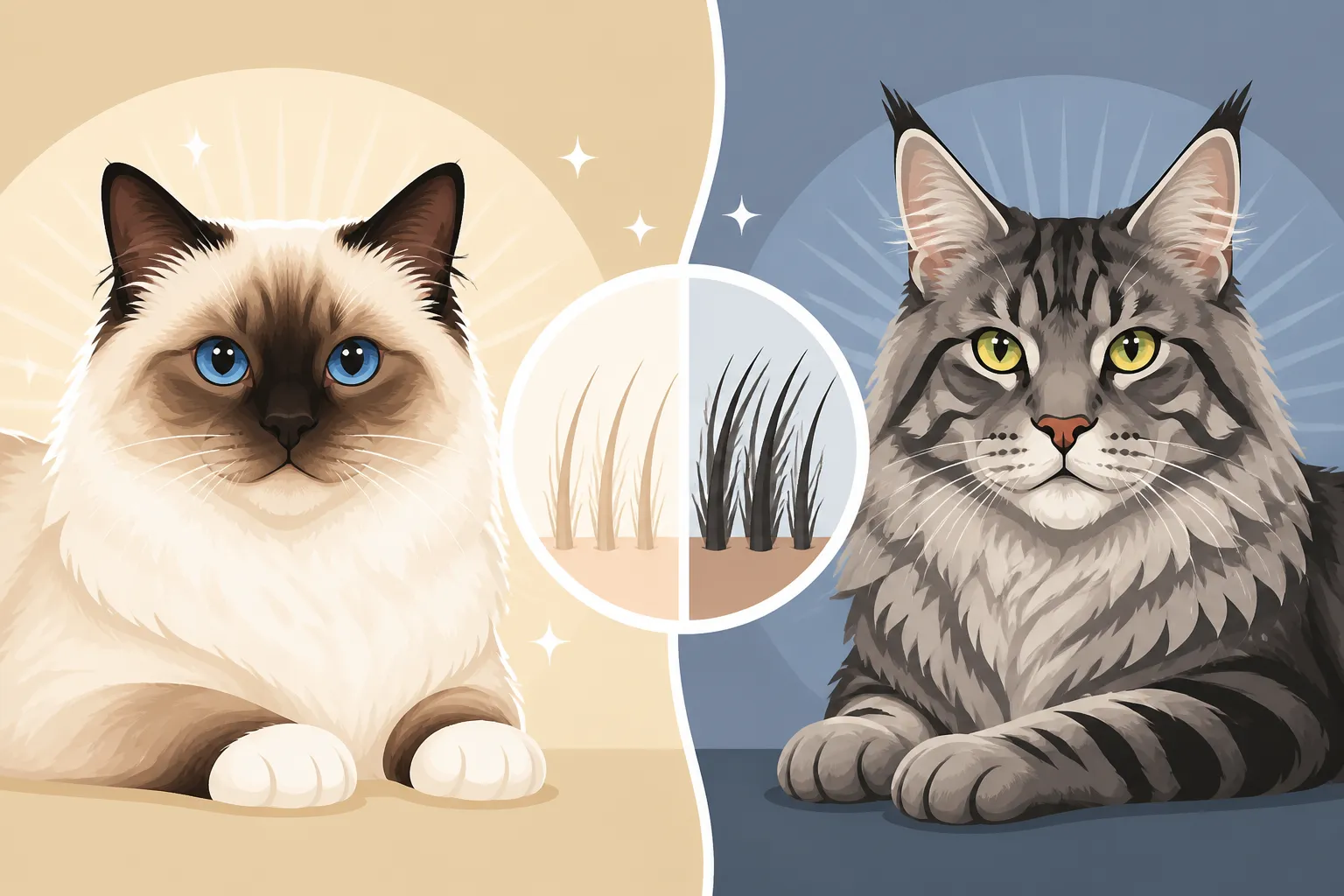
The core reason behind the visual "lightness" of a Birman's coat compared to a Maine Coon's lies in their fundamental coat structure. It's a tale of two very different approaches to keeping a cat warm and protected, evolved over centuries.
Birman: The Silky Single Layer
The Birman cat is renowned for its incredibly soft, silky fur that feels almost like a cool stream running through your fingers. This luxurious texture is primarily due to its "single coat" nature. Unlike many other longhaired breeds, Birmans lack a dense, woolly undercoat. Their fur consists almost entirely of guard hairs – those longer, finer strands that give the coat its flowing appearance. This single layer is a game-changer when it comes to how the coat looks and feels. Without that thick, insulating undercoat, the Birman's fur lies closer to its body, giving it a sleek, less voluminous profile. It doesn't puff out in the same way a double-coated cat's fur does.
This characteristic single coat is also why you'll find that a Birman's fur is surprisingly easy to manage. When we talk about how a cat's coat differs from others, the lack of an undercoat means less matting and easier grooming, which directly contributes to its overall neat, 'lighter' appearance. No Undercoat Is What Makes a Birman Easy to Groom is something many Birman owners celebrate. The individual strands are fine, allowing light to reflect differently and creating an ethereal, almost floating quality to their fur, rather than the heavy, dense look of a truly thick coat.
Maine Coon: The Robust Double Layer
Now, let's turn our attention to the magnificent Maine Coon. These gentle giants hail from harsher, colder climates, and their coat is built for resilience. A Maine Coon boasts a formidable "double coat," a thick, multi-layered marvel designed to protect them from the elements. This means they have two distinct types of fur: a soft, downy undercoat that provides insulation, trapping air close to the body for warmth, and longer, coarser guard hairs on top that are water-repellent and protect the undercoat from tangles and debris.
This combination creates a coat that is immensely thick, shaggy, and incredibly voluminous. The undercoat pushes the guard hairs out, giving the Maine Coon its characteristic lush, full, and somewhat wild appearance. When you run your hands through a Maine Coon's fur, you're feeling both layers working in tandem, creating a much more substantial and visually "heavy" texture. This double layer is what gives them their majestic ruffs and bushy tails, making them look even larger and more robust than their already impressive size. The sheer amount of fur, packed densely, contributes significantly to the visual impression of a "darker" or heavier coat, even if the individual hair strands are light in color.
Texture, Volume, and Visual Density
Beyond just the number of layers, the actual texture and the resulting volume of each breed's coat play a huge role in why one appears lighter than the other. It's all about how the individual hairs are structured and how they behave together.
The Birman's Flowing, Fine Strands
A Birman's fur is truly a unique tactile experience. It's often described as feeling like silk or spun glass, incredibly fine and soft to the touch. Each individual hair strand is delicate, which means that even with a decent length, the coat doesn't create a lot of bulk or density. When you run your hands through it, it parts easily and falls back into place smoothly. This fine texture allows the coat to drape elegantly over the body, rather than standing out stiffly. This is a huge part of Why a Birman's Coat Runs Through Your Fingers so easily.
The lack of an undercoat also means there's less "fluff" or "loft" pushing the outer hairs away from the body. As a result, the Birman's coat appears less dense, almost weightless. This visual lightness is enhanced by how light interacts with the fur. The silky, individual strands reflect light in a way that makes the coat shimmer and appear luminous, rather than absorbing light and looking heavy. Even a Birman with dark points, like a seal point, will have a body coat that feels and looks lighter due to this fine, flowing texture. It’s a beautifully minimalist approach to long hair, giving the cat an almost ethereal presence.
Maine Coon's Shaggy, Thick Appearance
In stark contrast, the Maine Coon's coat is designed for ruggedness and warmth. Its guard hairs are coarser and more substantial than a Birman's, providing that characteristic shaggy, almost wild look. Beneath these, the dense undercoat adds immense volume and body, making the fur stand out from the cat's physique. This isn't just about length; it's about the sheer quantity and thickness of the hair. The coat has a lot of "loft," creating a full, bushy effect that makes the Maine Coon appear larger and more substantial.
The texture itself feels denser and more robust. When you stroke a Maine Coon, you feel the resistance of both layers of fur. This thickness makes the coat appear visually heavy, almost like a wool blanket. The way light hits a Maine Coon's coat is also different; the dense, sometimes slightly oily guard hairs and the sheer volume tend to absorb more light, giving the coat a deeper, more profound color and a heavier visual impression, regardless of the actual shade. It’s a coat built for endurance and presence, making the cat look sturdy and powerful.
Color and Pattern Influence
While coat structure is paramount, the genetic coding for color and pattern also plays a significant, albeit often overlooked, role in how "light" or "dark" a cat's coat appears overall.
Birman Pointed Genetics
The Birman is a pointed breed, which means its color genetics dictate that pigment is concentrated at the coolest parts of the body – the "points": face, ears, paws, and tail. The body itself, being warmer, produces less pigment and is consequently a much lighter shade, often cream, fawn, or even almost white, especially in kittens. You might remember that Why a Birman Kitten Is Born Almost White is a common topic of discussion because their points haven't developed yet.
Even a dark-pointed Birman, like a seal point, will have a substantial amount of very light fur across its back, flanks, and belly. This vast expanse of lighter body color, combined with the silky, less dense fur texture, inherently makes the Birman's entire coat appear "lighter" than a cat with uniform, darker coloring across its body. The contrast between the dark points and the light body fur accentuates the overall impression of lightness, as the eye is drawn to the predominant pale areas. This unique color distribution is a signature trait that adds to their delicate, ethereal aesthetic.
Maine Coon's Diverse Color Palette
Maine Coons, on the other hand, come in an astonishing array of colors and patterns, many of which feature rich, dense pigmentation spread across their entire body. From solid blacks and blues to vibrant reds, creams, and a multitude of tabby patterns (classic, mackerel, patched), the Maine Coon's coat can be uniformly dark or boldly patterned with deep hues.
Even with lighter colors, like cream or silver tabby, the sheer density of their double coat and the uniform distribution of color across the body create a heavier visual impact. Many Maine Coons also sport intricate tabby markings, which involve bands of darker pigment that add to the perceived density and depth of the fur. When you combine this comprehensive color coverage with their voluminous double coat, the result is a cat that looks profoundly more substantial and "darker" than a Birman, even if a Birman’s points are the same shade. The absence of the Birman's contrasting light body fur means there's less visual "breathing room," making the Maine Coon's coat seem more commanding and weighty.
Grooming and Maintenance Differences
The way we care for a cat's coat can also influence its perceived lightness or heaviness, and the inherent differences in Birman and Maine Coon coats lead to very different grooming routines.
Birman's Easier Upkeep, Lighter Look
One of the truly wonderful aspects of owning a Birman is their relatively low-maintenance coat. Because they lack that dense undercoat, their fur is far less prone to matting and tangling. This means that while regular combing is still essential to remove loose hairs and keep the coat in pristine condition, it's generally a quicker, less arduous task. Many Birman owners find that How Many Minutes a Week a Birman's Coat Takes is surprisingly low. A few sessions a week, perhaps ten minutes each, is often all that's needed to keep their silky fur flowing beautifully. When we discuss What Makes a Birman's Coat Silky Rather Than Woolly, it's precisely this texture that allows for such straightforward care.
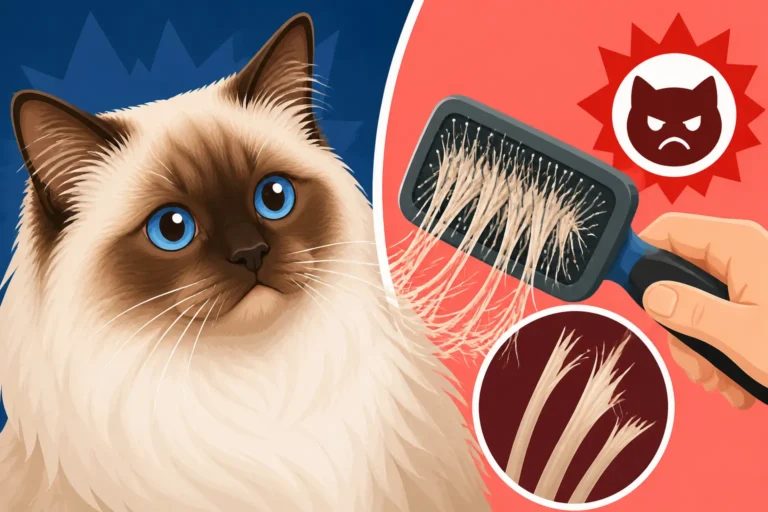
This ease of maintenance means a Birman's coat naturally stays smooth, clean, and free from the snarls and knots that can make a double coat appear dull and heavy. Regular combing helps the fine hairs lie flat and reflect light, maintaining that characteristic luminous, "light" appearance. Using the right tools, like a good quality metal comb, is key for working through their delicate fur without damaging it. Which Comb Gets Through a Birman's Ruff Without Pulling is a question many new owners ask, and the answer almost always points to wide-toothed metal combs over harsh slicker brushes. A well-maintained Birman coat always looks airy and elegant, reinforcing its inherent visual lightness.
Maine Coon's Intensive Grooming for Volume
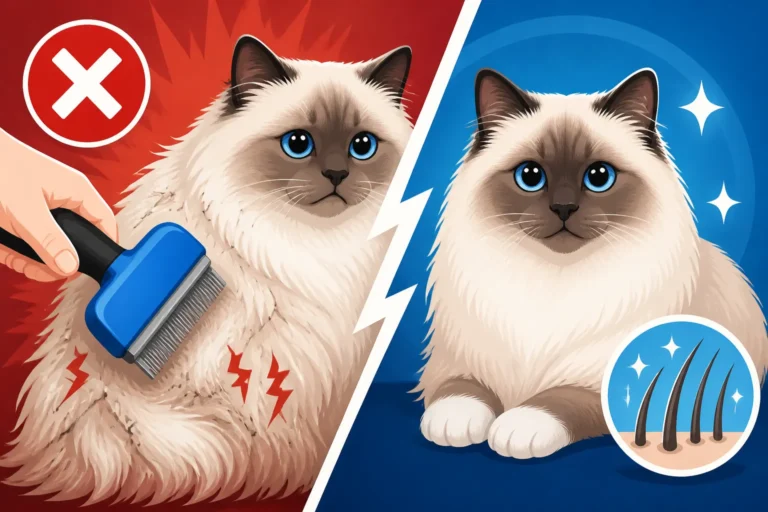
The Maine Coon's spectacular double coat, while beautiful, demands a much more rigorous grooming routine. Their dense undercoat, combined with longer guard hairs, is a recipe for mats if not regularly tended to. These mats can form deep within the fur, pulling on the skin and becoming quite painful. To keep their voluminous coat healthy, fluffy, and free of tangles, Maine Coons typically require daily or at least every-other-day brushing sessions. This is a stark contrast to the Birman; Why a Birman Needs Three Combings Where a Persian Needs Seven highlights the difference even with other longhairs, and Maine Coons often need even more than Persians.
The goal of Maine Coon grooming isn't just to remove loose hair; it's also to detangle the undercoat, prevent mats, and distribute natural oils to keep the fur soft and healthy. While you might find many grooming tools available on Chewy or Amazon specifically for longhaired breeds, selecting the right brush – often a sturdy slicker brush or an undercoat rake – is crucial for a Maine Coon. Without this consistent effort, their coat can quickly become matted and dull, looking even heavier and more unkempt. A well-groomed Maine Coon maintains its impressive volume and shaggy beauty, which are inherent characteristics that contribute to its visually “heavy” and robust aesthetic. Good nutrition for coat health can help, but manual grooming is still vital for a Maine Coon's thick fur.
Coat Comparison: Birman vs. Maine Coon
To truly appreciate the differences, let's lay out a quick comparison of their key coat characteristics:
| Feature | Birman Coat | Maine Coon Coat |
|---|---|---|
| Coat Type | Single coat (no undercoat) | Double coat (dense undercoat, coarser guard hairs) |
| Texture | Silky, fine, soft, flowing | Shaggy, thick, robust, substantial |
| Volume | Low, lies close to the body, elegant drape | High, stands out from body, voluminous, bushy |
| Matting Risk | Low | High |
| Shedding | Moderate, fine hairs | Moderate to high, dense hairs |
| Grooming Needs | 2-3 times/week, gentle combing | Daily/every-other-day, intensive brushing |
| Color Pattern | Pointed (light body, dark extremities) | Wide variety of solid colors and tabby patterns |
| Visual Density | Appears light, airy, luminous | Appears heavy, dense, commanding |
| Key Attribute | Elegance, softness | Resilience, grandeur |
This table clearly illustrates why, despite both being longhaired breeds, a Birman's coat is fundamentally lighter in appearance than that of a Maine Coon. The differences are not just aesthetic; they are deeply rooted in their genetics, purpose, and the care they require.
Ultimately, the perceived "lightness" of a Birman's coat compared to a Maine Coon's is a beautiful interplay of several factors. It's the Birman's elegant single coat, with its fine, silky texture that allows light to play across its surface and makes How Long a Birman's Coat Actually Is seem almost weightless. It's their unique pointed color genetics, leaving much of their body in delicate, pale hues. And it's the relatively simpler grooming routine that helps maintain this sleek, airy appearance. The Maine Coon, with its formidable, dense double coat, shaggy texture, and diverse, often deep, color patterns, presents a powerful, heavy visual presence by design. Both are stunning in their own right, but they offer dramatically different longhaired experiences for their devoted human companions!
Disclaimer
This article is for general informational purposes only and does not constitute professional advice. Laws, prices and regulations vary by location and change over time. Consult a qualified professional for guidance on your specific situation.