Working a Comb Through a Birman’s Ruff in Sections
That majestic ruff on your Birman, the one that frames their sweet face like a lion's mane, is undoubtedly one of their most striking features. But let's be honest, trying to comb through it can sometimes feel like navigating a delicate silk scarf that occasionally catches on something unseen. This guide is here to unravel the mystery of managing that glorious fur, teaching you how to work through your Birman's ruff in gentle, effective sections, ensuring comfort for both of you and a continually stunning coat.
Understanding Your Birman's Magnificent Ruff
Before we even pick up a comb, it's really helpful to understand what makes your Birman's ruff so special and why it sometimes presents a unique grooming challenge. It's not just "more hair"; it's a particular kind of hair with its own characteristics. Knowing this helps you approach grooming with empathy and the right technique.
The Unique Texture of a Birman's Coat
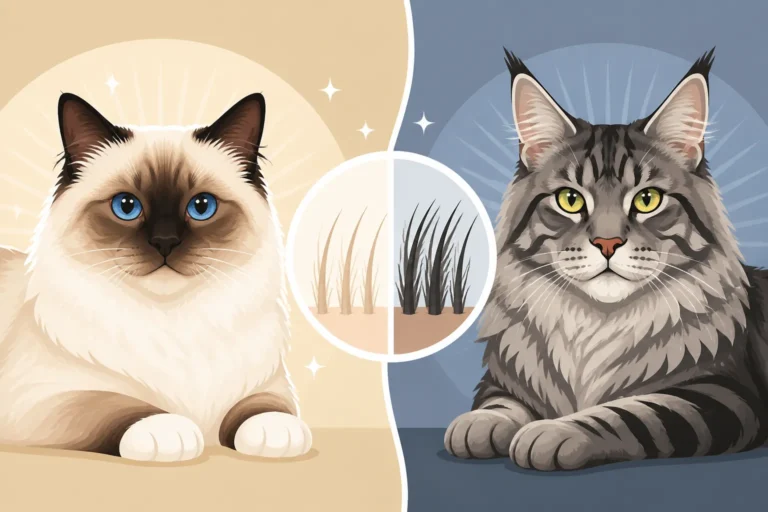
Unlike some other long-haired breeds, the Birman has a single coat, meaning it lacks the dense, woolly undercoat that can be a nightmare for tangles and shedding. This is a huge blessing! Instead, their fur is wonderfully silky, flowing, and surprisingly easy to maintain most of the time. The texture feels incredibly soft and luxurious to the touch, almost like spun silk. This single-coat characteristic is a major reason why No Undercoat Is What Makes a Birman Easy to Groom. However, while the body fur tends to lie flat and resist matting, the ruff is a different beast entirely. It's longer, thicker, and often experiences more friction from movement, head turning, and even just sleeping.
The hairs in the ruff are also prone to accumulating a bit more debris. Think about how many times your Birman rubs their head against your leg, or dips their chin while drinking, or even just wrestles playfully with a toy. All these actions can contribute to slight tangles forming. Because the ruff is meant to be so prominent, framing their face, the individual strands here are exceptionally long and fine, which means they can knot together more easily if left unattended. This isn't a flaw in their coat; it's just how this particular luxurious feature behaves.
Why the Ruff Needs Special Attention
The ruff is essentially the "collar" of longer fur that encircles your Birman's neck and chest. While the rest of their body might tolerate a quick brush-over, the ruff demands a more methodical approach. Its length and density, especially in mature Birmans, make it a prime area for subtle tangles to develop into full-blown mats if neglected. Imagine trying to comb all the hair on your head in one sweep after a windy day; it's just not practical or comfortable. The same principle applies here.
Moreover, a healthy, well-groomed ruff contributes significantly to the Birman's overall regal appearance. A neglected ruff can look dishevelled, pulling on the skin and causing discomfort, even pain. Because Birmans are generally so placid and undemanding, they might not outwardly complain even when a small mat starts to tighten. This makes it even more important for us as their caregivers to be proactive and attentive to this area, understanding that it requires a little extra finesse compared to their smoother body coat. It's often the first place new owners notice an issue, precisely because it's so visible.
Common Ruff Challenges: Mats and Tangles
Despite their relatively low-maintenance single coat, mats and tangles are still a possibility, particularly in the ruff. These usually start as small knots where hairs have intertwined, often due to friction, static, or just the natural shedding process. A Birman's ruff is its longest fur (Why a Birman's Ruff Is Its Longest Fur), making it prone to these knots. If these small tangles aren't gently worked out, they can quickly consolidate, pulling more hair into a dense, felt-like clump that can be painful to remove and difficult to comb through.
The areas most susceptible to matting within the ruff are often behind the ears, under the chin, and along the chest where the front legs meet the body. These are high-friction zones where the fur repeatedly rubs against itself or against furniture, collars, or even your Birman's own movement. Detecting these early is key. A mat isn't just an aesthetic problem; it can restrict movement, cause skin irritation, hide skin issues, or even lead to infections if the skin underneath becomes chafed or moist. Regular, sectional combing is your best defense against these tricky situations.
Essential Tools and Preparation for Ruff Grooming
Grooming shouldn't be a battle; it should be a bonding experience. Having the right tools and creating a calm environment can make all the difference in ensuring your Birman cooperates and even enjoys their pampering sessions.
Choosing the Right Comb
The market is flooded with grooming tools, and it can be overwhelming to know what to pick. For your Birman's delicate ruff, steer clear of slicker brushes, which can tear their silky guard hairs, and anything too coarse that will pull. The absolute best tool for a Birman's ruff is a good quality metal comb with both wide and fine-toothed sections. The wide teeth are perfect for initial detangling, while the finer teeth help ensure every strand is smooth.
Look for a comb with smooth, rounded teeth to avoid scratching your cat's skin. Brands like Chris Christensen offer high-quality grooming combs that are gentle yet effective. You might find a good selection on Chewy or Amazon. A wider tooth spacing is ideal for the bulk of the ruff, while the narrower spacing can be used for the delicate areas around the ears and face. Some owners also swear by a small, soft bristle brush for the final polish, but the comb is your primary weapon against tangles. Which Comb Gets Through a Birman's Ruff Without Pulling provides more detail on selection.
Setting Up a Calm Grooming Space
Your Birman is a creature of habit and comfort. The ideal grooming spot should be quiet, well-lit, and free from distractions. A raised surface, like a sturdy table with a non-slip mat, can be helpful as it saves your back and gives you better control. However, if your Birman is more comfortable on your lap or a favorite blanket on the floor, that's perfectly fine too. The key is consistency and making it a positive experience.
Ensure all your tools are within easy reach before you begin. You don't want to be fumbling around, as this can make your Birman restless. Keep a few favorite treats handy and maybe a favorite quiet toy. Soft music or a calm voice can also help set a relaxed tone. Avoid noisy environments or times when there's a lot of activity in the house. This dedicated calm space helps your Birman associate grooming with peace and positive attention rather than stress.
Getting Your Birman Ready and Willing
Before you even touch a comb to their fur, make sure your Birman is in a relaxed mood. Don't ambush them mid-nap or when they're intensely playing. Choose a time when they are already settled and receptive to attention. Start with gentle petting and praise, working your way towards the ruff area. You want to make it feel like a continuation of affection, not a sudden imposition.
If your Birman is new to grooming or has had negative experiences, start with very short sessions – just a minute or two – and gradually increase the duration. Always end on a positive note, even if you only managed a small section. Treats, gentle praise, and some extra cuddles are crucial rewards. Remember, Birmans are incredibly trusting, and you want to foster that trust. For a kitten, starting this process early is invaluable; How to Start Combing a Birman Kitten is a great resource. If they associate the comb with good things from a young age, you'll have a much easier time down the road.
A Step-by-Step Guide to Sectional Ruff Combing
Now that we're prepped and ready, let's dive into the actual technique. The secret to a mat-free ruff is breaking it down into small, manageable sections. This prevents pulling, minimizes discomfort, and ensures no spot is missed.
Dividing the Ruff into Manageable Sections
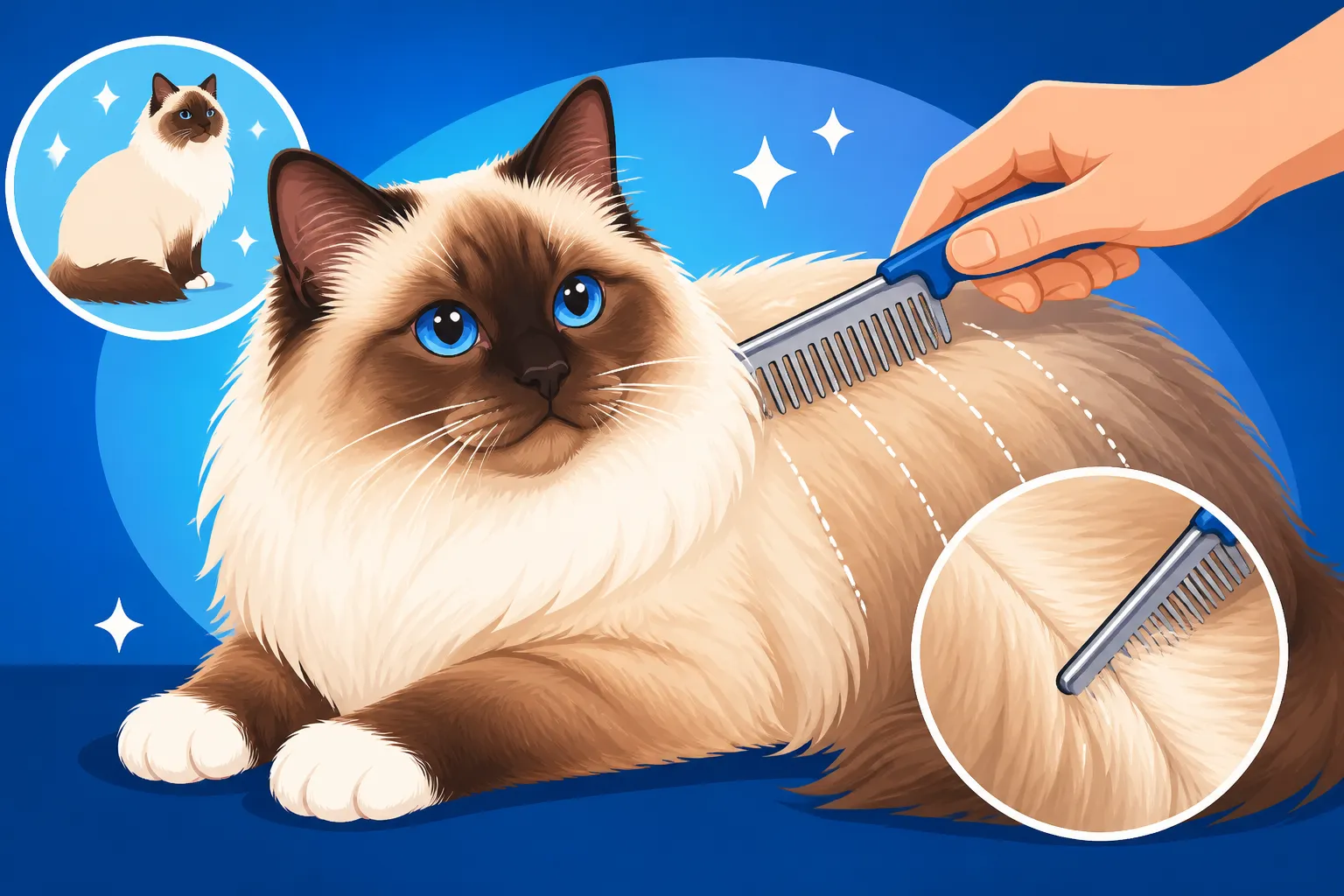
Think of your Birman's ruff as a series of concentric circles or layers. You'll want to work from the outside in, or from the bottom layer up, just like a hairstylist might section human hair. Begin by gently separating a small section of fur, perhaps near the shoulders or chest. You can hold the top layer of fur out of the way with one hand, or even use a soft hair clip if your Birman tolerates it. The goal is to isolate a small, workable amount of fur that you can focus on without pulling on the surrounding areas.
Start with the fur closest to their body, near the skin. This is where mats often begin to form, hidden beneath the longer, outer layers. Working in small, horizontal or vertical strips, about an inch or two wide, allows you to thoroughly check each area. Move systematically around the neck and chest, taking one section at a time. It's a bit like peeling back layers of an onion – you want to get to the core of the problem before it grows. This methodical approach might seem slow at first, but it's far more efficient and comfortable than trying to tackle the whole ruff at once.
The Gentle Combing Technique, Section by Section
Once you have a small section isolated, take your metal comb (using the wider-toothed side first if available) and start at the very end of the fur, slowly working your way up towards the skin. This is critical! Never start combing from the skin outwards, especially if there are any tangles, as this will just tighten them and cause pain. Instead, gently comb out any tangles at the tips, then move an inch closer to the skin, comb, and repeat. It's a "line brushing" or "pin brushing" technique for combs.
When you encounter a small knot, don't yank. Instead, hold the fur at the base of the tangle firmly against the skin with one hand to minimize pulling, and then use the very tips of your comb teeth to gently tease apart the knot. Work slowly, patiently, and with a light touch. If it's a particularly stubborn spot, a tiny drop of cat-safe detangling spray can sometimes help, but use it sparingly. Continue this process for each small section, ensuring each one is completely free of tangles before moving on to the next. Remember, the key is small, slow strokes, always starting at the ends. Why a Birman Lies Still While You Comb It highlights how their placid nature can really help here.
Finishing Touches and Positive Reinforcement
Once you've worked your way around the entire ruff, section by section, and you're confident there are no more tangles, you can give the whole area a final, smooth comb-through. Use the finer-toothed side of your comb now, or even a soft bristle brush, to really make the fur lie beautifully. This final step enhances the shine and ensures a perfectly groomed finish. It's a lovely way to admire your hard work and your Birman's stunning appearance.
Throughout the entire process, lavish your Birman with praise. “Good kitty!” “Such a brave cat!” A gentle stroke, a quiet purr, and, of course, whatever yummy treats your Birman loves best are all essential. Ending on a positive note reinforces the idea that grooming is a pleasant experience. If you notice your Birman getting restless or showing signs of discomfort, don't push it. Take a break, offer a treat, and try again later, even if it means splitting the ruff grooming into two shorter sessions. Consistency and positive association are far more important than speed.
Troubleshooting and Maintaining a Healthy Ruff
Even with the best intentions and techniques, you might encounter a few hiccups. Knowing how to troubleshoot common issues and maintain a consistent routine will ensure your Birman's ruff stays gorgeous and healthy long-term.
Dealing with Stubborn Mats
Sometimes, despite your best efforts, a mat forms that's just too stubborn to comb out gently. This is when you need to be extra cautious. First, re-evaluate the mat's size and location. If it's small and loose, you might be able to carefully work it apart with your fingers, then use the tips of your comb teeth. Always support the skin at the base of the mat. However, if the mat is large, tight against the skin, or causing obvious discomfort, attempting to cut it out yourself can be incredibly dangerous. Cat skin is thin and easily nicked, especially when hidden beneath a dense mat.
In these situations, it's always best to consult your veterinarian or a professional groomer who has experience with Birmans. They have specialized tools and techniques, and they can safely shave out the mat without injuring your cat. Don't feel like a failure if you need to do this; ensuring your cat's safety and comfort is always the priority. Prevention truly is the best medicine here, which is why regular sectional combing is so important. How to Get a Mat Out of a Birman's Coat offers more specific advice on mat removal.
Incorporating Grooming into Your Routine
Consistency is key for maintaining your Birman's ruff. While their single coat means Why Three Combings a Week Is Enough for a Birman for general body maintenance, the ruff might benefit from a quick check and comb every other day, especially if your Birman is active or prone to small tangles. It doesn't have to be a full-blown session each time; a 5-minute targeted comb of the ruff can make a world of difference.
Establishing a regular grooming schedule, perhaps while you're watching TV in the evening, helps make it a predictable and pleasant part of your Birman's life. Think about it as quality bonding time. The more frequently you address the ruff, the less likely large mats are to form, and the quicker and easier each session will become. You can easily find high-quality combs and other grooming essentials on Amazon or Chewy to stock up your grooming kit, making sure you always have the right tools ready.
When to Seek Professional Help
While many Birman owners are perfectly capable of managing their cat's grooming at home, there are times when professional help is invaluable. As mentioned with stubborn mats, a vet or professional groomer can safely address issues you can't. If your Birman develops severe matting, skin irritation, or shows extreme resistance to grooming, a professional can often provide a fresh start and offer advice on managing specific behavioral challenges.
Furthermore, a professional groomer can offer insights into coat health, identify potential skin issues you might miss, and even demonstrate advanced techniques. Don't hesitate to reach out to them if you're feeling overwhelmed or if your Birman's coat seems to be beyond your current capabilities. They are there to help, ensuring your beautiful Birman remains comfortable and stunning, from the tip of their nose to the end of their magnificent, silky ruff.
Disclaimer
This article is for general informational purposes only and does not constitute professional advice. Laws, prices and regulations vary by location and change over time. Consult a qualified professional for guidance on your specific situation.