Where a Birman’s Mats Usually Form
Even with their famously silky, single coat, finding a mat on your beautiful Birman can feel like a personal affront. You were told they were "easy to groom," that their glorious long fur didn't tangle like a Persian's woolly undercoat. And it’s true, mostly! But every Birman owner eventually discovers those sneaky, stubborn tangles that seem to appear out of nowhere, often in places you least expect. This guide is here to pinpoint exactly where those mats love to hide and equip you with the knowledge to keep your Birman's coat pristine.
The Birman's "Easy Care" Coat: A Closer Look at Why Mats Still Form
It's a common misconception that because Birmans lack an undercoat, they simply don't mat. While it's certainly easier to manage than a double-coated breed, their fur isn't entirely mat-proof. The key lies in understanding the unique texture and length of a Birman's coat, combined with their daily activities and even their personality.
The Silky Paradox: Long Hairs Still Tangle
Imagine a silk scarf – it's smooth and flowing, right? But if you wear it often, especially around the neck where it rubs against clothing, or if it gets wet and dries awkwardly, it can develop snags and knots. A Birman's coat is much the same. Its single layer means fewer individual hairs to create a dense tangle, but the hairs themselves are long and fine. These long, fine strands are susceptible to friction, static, and even just the cat's natural movements, which can cause them to intertwine. When these intertwined hairs become compressed and tight, especially with a bit of moisture or debris, a mat begins to form.
Think about the difference between a Birman's coat and, say, a Maine Coon's. A Maine Coon has that thick, dense, water-repellent undercoat that acts like insulation but also loves to clump. Your Birman's coat, however, is all about that luxurious, flowing top layer. It's truly a delight to run your fingers through, but don't let its apparent simplicity fool you. That long, flowing hair will catch on itself, especially in high-movement areas or where it gets squashed or wet. No Undercoat Is What Makes a Birman Easy to Groom is certainly true from a comparative standpoint, but it doesn't mean "no mats ever."
Factors That Contribute to Mat Formation
Several elements conspire to create mats in a Birman's otherwise glorious coat. Understanding these can help you be more proactive in your grooming routine.
- Friction: This is perhaps the biggest culprit. Areas where the coat rubs against itself, bedding, furniture, or even your Birman’s own collar are prime matting spots. Every time your cat lies down, rolls over, or stretches, friction is at play, subtly working those long hairs into a tangle.
- Moisture: Water, whether from a bath, dampness after drinking, or even humidity, can make a Birman's hair more prone to clumping as it dries. If a spot gets wet and isn't thoroughly dried and brushed, those hairs can bind together.
- Debris: Tiny bits of litter, food crumbs, dirt, or anything else your Birman picks up can get caught in their long fur, acting as a nucleation point for a mat. This is especially true for those pristine white gloves.
- Lack of Grooming: Even though they're "easy care," Birmans still need regular combing. Skipping even a couple of sessions, particularly during shedding periods, can allow small tangles to escalate into full-blown mats. Combing a Birman Three Times a Week isn't just a suggestion; it's a preventative measure.
- Diet and Health: A healthy coat reflects a healthy cat. A poor diet lacking essential fatty acids can result in dry, brittle hair that's more likely to break and tangle. Illness or discomfort can also lead to a decrease in self-grooming, allowing mats to form, especially in hard-to-reach areas.
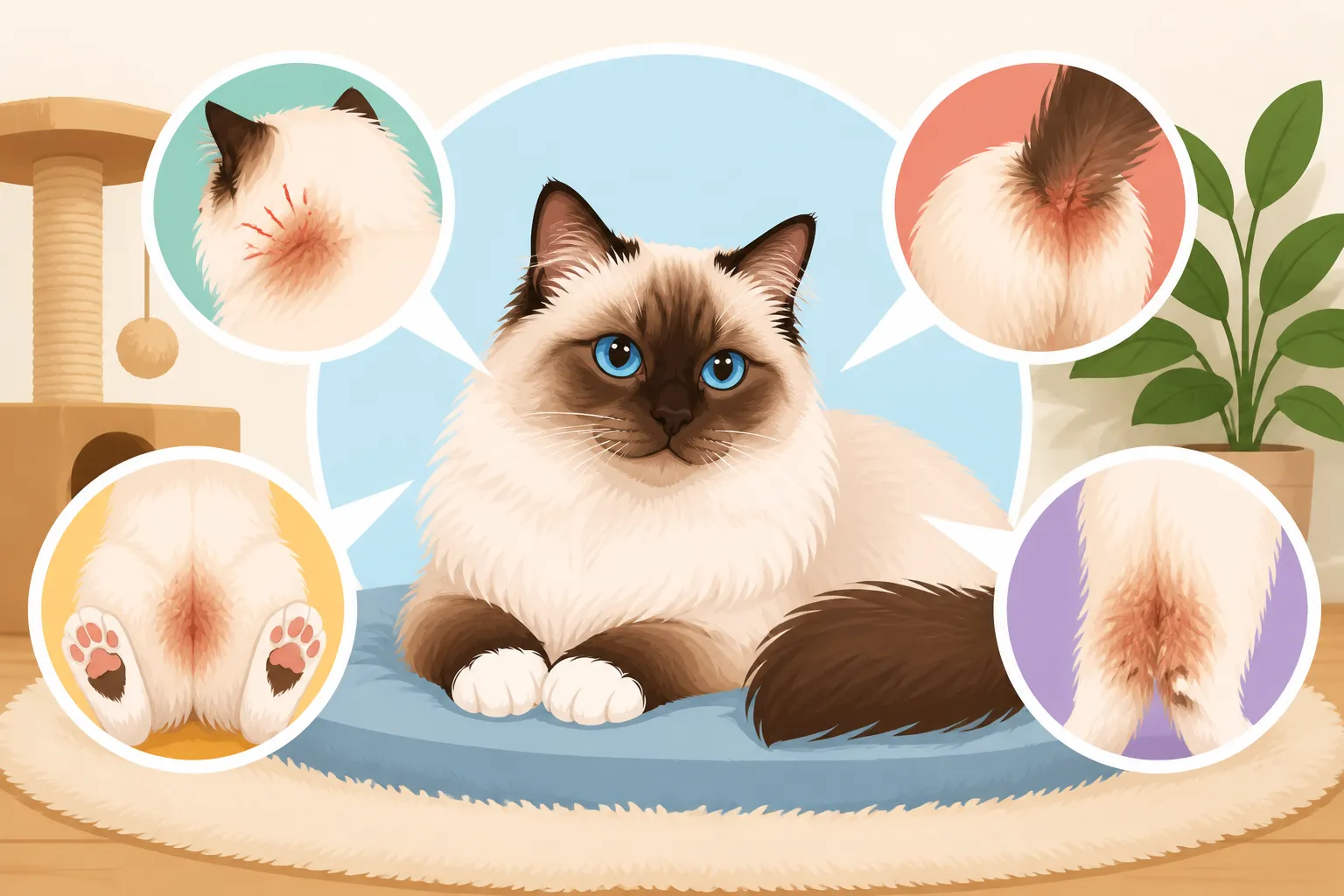
Prime Matting Hotspots: The Usual Suspects
When you start your grooming session, these are the areas you should always prioritize. They are the most common places where mats like to set up residence, turning what seems like a minor tangle into a tough, painful knot if left unattended.
The Majestic Ruff
The Birman's beautiful ruff, that luxurious mane around their neck and chest, is undeniably one of their most striking features. It's also, unfortunately, one of the most common places to find mats. Why a Birman's Ruff Is Its Longest Fur explains why this area is so magnificent, but also why it's a mat magnet.
- Why It Mats Here: The ruff is subjected to constant friction. When your Birman lowers their head to eat, drink, or simply lounge, this long hair rubs against everything. Collars, even soft ones, can also contribute significantly to matting in this area, creating a tight band of fur that’s difficult for your cat to reach with their tongue. If your Birman wears a harness, that’s another source of friction.
- What It Looks Like: Mats in the ruff often start as small, dense knots close to the skin. They can feel like hard lumps beneath the soft surface fur. Sometimes, you'll see a section of the ruff looking "clumped" or less flowing than the rest. These mats can quickly grow, sometimes forming a solid collar of matted fur that can be very uncomfortable, even painful, for your cat.
- Grooming Approach: When combing your Birman, always start with the ruff. Use a wide-toothed comb first to gently tease apart any surface tangles, then move to a finer-toothed comb, like a metal greyhound comb. Work in small sections, always supporting the skin at the base of the hair to avoid pulling. If you encounter a mat, try to work from the outside in, gently separating hairs with your fingers or the very tips of your comb. Remember, patience is key here.
Behind the Ears and Under the Chin
These might seem like smaller areas compared to the ruff, but they are notorious for developing surprisingly tight, stubborn mats. They're often overlooked because they're a bit out of sight.
- Why It Mats Here: The skin behind a cat's ears is thin and delicate, and the fur here is often finer and softer, making it more prone to tangling. When your Birman scratches their ears, or when their head rubs against bedding, these areas experience a lot of micro-friction. Under the chin, it's a combination of friction from eating/drinking and moisture (especially if they're not the tidiest drinker!).
- What It Looks Like: These mats tend to be flat and pancake-like, often adhering very closely to the skin. You might not see them until you gently lift the fur behind the ears or run your fingers under the chin. They can feel surprisingly solid and, because of their proximity to the delicate skin, are particularly painful if they become tight.
- Grooming Approach: Be extra gentle in these sensitive areas. Use your fingertips to feel for any bumps or changes in texture first. Then, use a small, fine-toothed comb, or even a child's toothbrush, to carefully work through the fur behind the ears. For under the chin, lift the head slightly and comb outwards. If your Birman squirms, take a break and try again later. Treats and praise can go a long way in making these sessions more tolerable.
Hidden Trouble Zones: Don't Forget These Areas
Beyond the obvious, Birmans have a few other sneaky spots where mats love to form. These areas might be less visible, but they can quickly become painful if ignored. Integrating checks of these zones into your regular Combing a Birman Three Times a Week routine will pay off immensely.
The Armpits and Inner Thighs
These areas are often forgotten because they're not immediately visible, but they are high-friction zones that suffer greatly if overlooked.
- Why It Mats Here: Every time your Birman walks, stretches, or jumps, the fur in their armpits (or "axilla") and inner thighs rubs together. This constant motion creates friction, and the fine, soft hair in these spots is particularly susceptible to matting. Plus, these are areas a cat often struggles to groom themselves effectively, especially as they age or if they become a bit overweight.
- What It Looks Like: Mats in the armpits can be quite dense and can restrict your cat's movement. Imagine having a tight knot under your own arm! On the inner thighs, they might be flatter but can cover a larger surface area, sometimes forming a "skirt" of matted fur if allowed to progress. You might notice your Birman moving a little stiffly or seeming reluctant to stretch if these mats are present.
- Grooming Approach: This requires your Birman to be cooperative, ideally lying on their side. Gently lift their leg and carefully examine the armpit area. For the inner thighs, gently spread their back legs apart, always respecting their comfort level. Use a fine-toothed comb or a small mat splitter if necessary, working with extreme caution. The skin in these areas is very thin and easily nicked, so if you're unsure, a professional groomer or vet might be needed. Consider using a de-matting comb, which you can find on sites like Chewy or Amazon, but only if you know how to use it safely.
The Britches (Pants) and Tail Plumage
The glorious "britches" on a Birman's hind legs and their magnificent tail are beautiful, but they come with their own set of challenges.
- Why It Mats Here: The britches, or the long fur on the back of the hind legs, are constantly in motion and collect debris. They also get wet when your Birman uses the litter box, and if not dried properly, this moisture can lead to mats. The tail, while often less prone to severe matting, can develop tangles, especially near the base, if it gets caught or sits in damp spots. How Long a Birman's Tail Plume Is certainly adds to the beauty, but also the grooming responsibility.
- What It Looks Like: In the britches, mats can range from small, tight knots to larger, more widespread tangles that can clump with waste if not kept clean. On the tail, you might find small, dense knots forming within the plume, particularly towards the body. These can look like hard little beads if they're left alone for too long.
- Grooming Approach: For the britches, regular, thorough combing is essential. Make sure to separate the hair and comb right down to the skin. If a mat is forming, try to gently work it out with your fingers first. For the tail, use a wide-toothed comb to slowly work through the plume, section by section. Be very gentle near the base of the tail, as this area is sensitive. If the britches are consistently getting soiled, gentle use of pet-safe wipes (available on Amazon) can help keep them clean between combings.
The Paws and Between the Toes
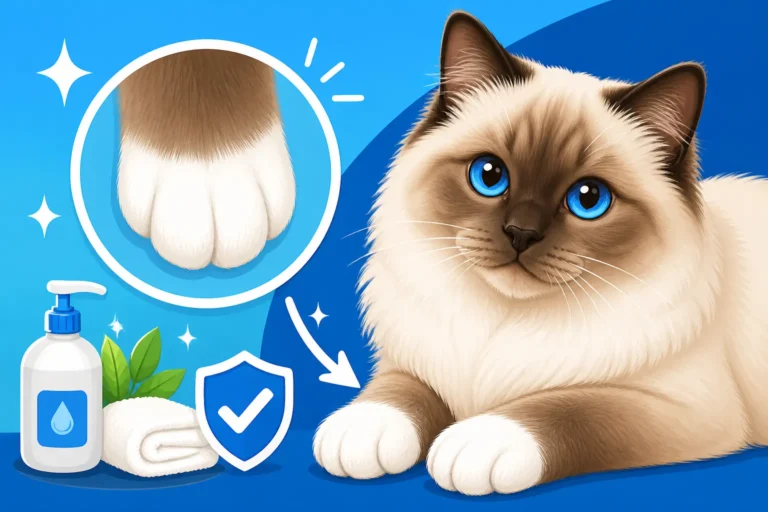
While not usually forming massive mats, the fur on and between a Birman's toes can get surprisingly matted and uncomfortable.
- Why It Mats Here: These are high-traffic zones! Your Birman walks, plays, and uses the litter box with their paws. The long, feathery fur between their toes can pick up litter, dirt, and moisture. This constant exposure to friction, debris, and dampness makes it a prime spot for small, tight tangles. Plus, Why a Birman's White Gloves Go Yellow often starts with litter staining the toe tufts.
- What It Looks Like: You'll typically find small, dense, pebble-like mats right between the paw pads. They can also appear as sticky, matted clumps on the tops of the paws, especially if they've stepped in something sticky. These mats can be quite painful, making walking or jumping uncomfortable for your Birman.
- Grooming Approach: This requires a gentle touch and possibly a tiny comb or even just your fingers. Regularly check How Often to Check Between a Birman's Toes. Gently spread the paw pads apart and look for any matted fur. If you find one, try to carefully tease it out. If it's too tight or your Birman is uncomfortable, a professional groomer can carefully trim the fur in this area to prevent future matting. For everyday cleaning, pet wipes can be a lifesaver.
| Matting Location | Why It Mats | Appearance of Mats | Grooming Strategy |
|---|---|---|---|
| Ruff (Neck & Chest) | Constant friction from movement, collars, eating/drinking. | Dense, hard lumps close to the skin, clumping of fur. | Start with wide-toothed comb, section by section, support skin. Prioritize this area. |
| Behind Ears & Under Chin | Fine hair, friction from head movement, self-scratching. | Flat, pancake-like knots adhering tightly to skin. | Use small, fine-toothed comb; be extra gentle. Check frequently. |
| Armpits & Inner Thighs | Friction from walking, stretching, difficulty self-grooming. | Dense knots restricting movement, flat widespread tangles. | Gently lift legs, use fine comb, extreme caution with delicate skin. Consider professional. |
| Britches (Hind Legs) | Motion, litter debris, moisture from litter box. | Small, tight knots to larger matted clumps, can collect waste. | Thorough, regular combing right to the skin. Keep clean with pet wipes. |
| Tail Plumage (Base) | Friction, sitting in damp spots, occasional debris. | Small, dense knots within the plume, near the body. | Wide-toothed comb, section by section, very gentle near the base. |
| Paws & Between Toes | High traffic, litter, dirt, moisture, walking friction. | Small, pebble-like mats between pads, sticky clumps on top. | Gently spread toes, tease out with fingers or tiny comb. Trim if needed by a professional. |
Prevention is Always Better Than Cure
The best approach to mats is to prevent them from forming in the first place. This means consistency, the right tools, and knowing your Birman's unique needs.
Regular Combing: Your First Line of Defense
As we've discussed, a Birman's coat, while not as demanding as some, still requires consistent attention. Aim for at least three thorough combing sessions a week. This isn't just about appearance; it's about comfort and health. These sessions are also a wonderful bonding opportunity, strengthening the trust between you and your feline companion.
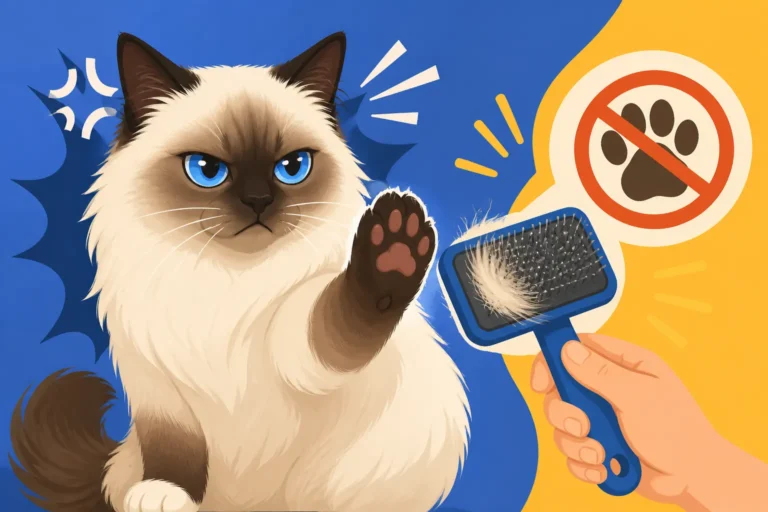
- The Right Tools: Don't just grab any brush. A Birman's silky coat benefits most from a metal comb with both wide and fine teeth. A pin brush can be good for general surface detangling, but avoid slicker brushes unless you are very gentle, as they can pull and damage the delicate guard hairs. You can find excellent quality combs and brushes on Chewy or Amazon that are specifically designed for long-haired cats with fine coats. Which Comb Gets Through a Birman's Ruff Without Pulling is an excellent resource for choosing the right tools.
- Routine and Technique: Establish a routine. Choose a quiet time when your Birman is relaxed, perhaps when they're sleepy or enjoying some lap time. Start at the head and work your way down, sectioning the fur. Always comb with the grain of the fur, and gently lift sections to comb from the skin outwards. Pay special attention to all the "hotspot" areas mentioned above. If your Birman tolerates it, try to work them onto their back for a moment to get their belly and armpits.
Beyond the Comb: Other Preventative Measures
Grooming isn't just about the comb; it's also about environmental factors and overall health.
- Dietary Support: A high-quality diet rich in Omega-3 and Omega-6 fatty acids can contribute to a healthy, strong coat that is less prone to breakage and matting. Look for cat foods with good protein sources and healthy fats. Talk to your vet about supplements if you're concerned about your Birman's coat health. What Feeding a Birman for Coat Condition Costs is worth considering as part of your overall budget.
- Keep Them Clean and Dry: If your Birman gets wet, make sure they are thoroughly dried and combed afterwards. This is especially true for those precious white gloves and the britches. Use dust-free litter to prevent it from clinging to their paws and causing mats between the toes.
- Regular Health Checks: An unwell cat might stop grooming themselves, leading to mats. Regular vet check-ups are crucial, especially as your Birman ages, to ensure they're healthy and comfortable. Caring for an Old Birman That Cannot Reach Its Back can offer further insights into how matting can become a bigger issue as cats get older and less flexible.
- Collar and Harness Checks: If your Birman wears a collar or harness, ensure it fits properly and isn't rubbing or causing friction. Regularly remove it to check for any hidden mats underneath.
Catching mats when they are small is always easier and less painful for your Birman. The moment you feel a slight tangle, take the time to gently work it out. Ignoring it, even for a day or two, can transform a minor knot into a solid, painful mat that might require professional intervention. Your Birman's comfort and health are always paramount, and a little consistent effort in grooming goes a very long way in keeping their coat beautiful and mat-free.
Disclaimer
This article is for general informational purposes only and does not constitute professional advice. Laws, prices and regulations vary by location and change over time. Consult a qualified professional for guidance on your specific situation.