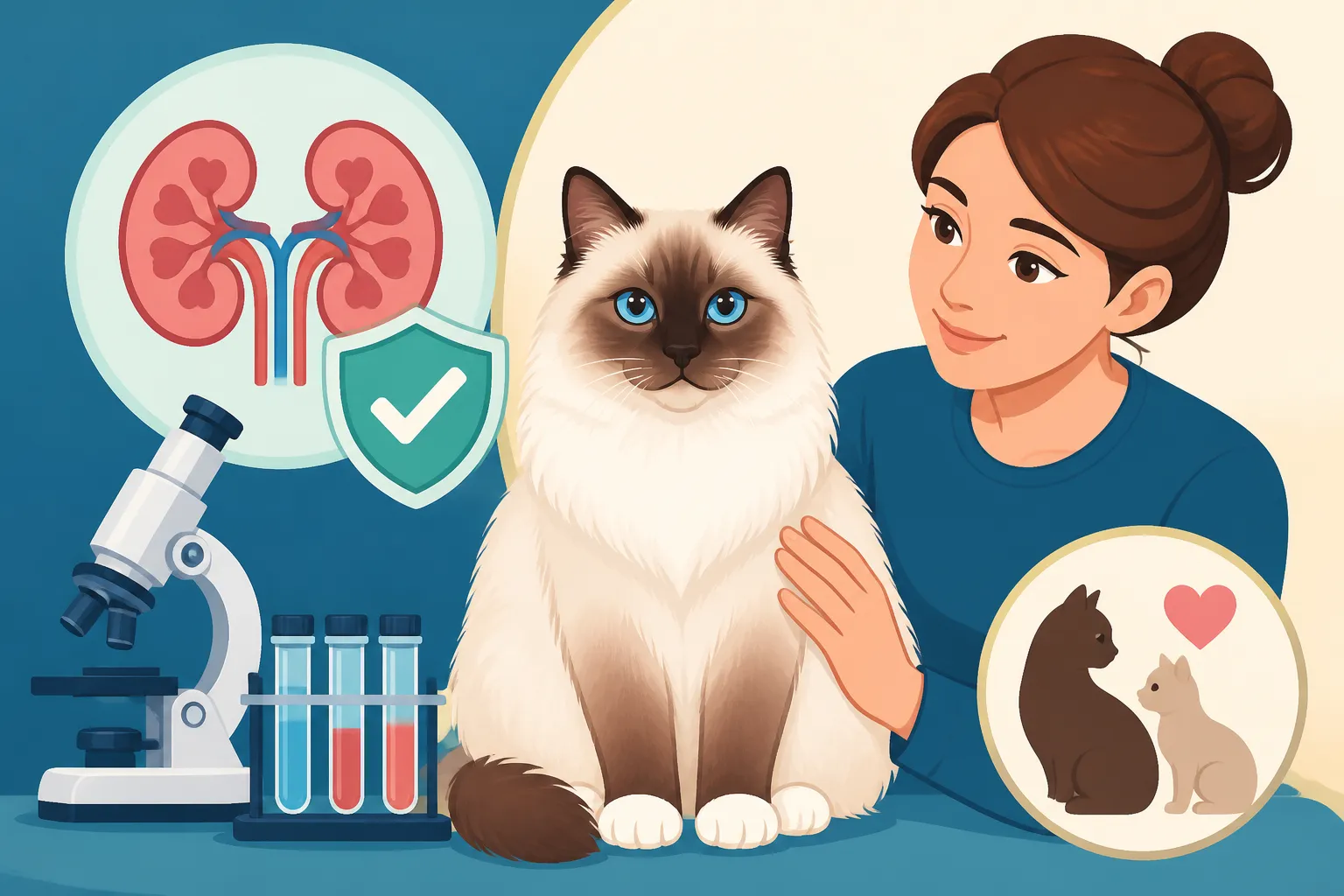
Why a Birman Breeder Still Tests for PKD
The thought of your cherished Birman suddenly facing a serious health challenge is enough to make any cat parent’s heart sink. Especially when it comes to a condition like Polycystic Kidney Disease (PKD), which can quietly progress for years before symptoms become obvious, leaving owners feeling helpless and blindsided. This comprehensive guide is here to shed light on PKD in the beautiful Birman breed, explaining precisely why dedicated breeders remain vigilant with testing and how understanding this disease is vital for every Birman family.
Understanding Polycystic Kidney Disease in Cats
Polycystic Kidney Disease, or PKD, is a genetic disorder that leads to the development of numerous fluid-filled cysts within the kidneys. These aren't just a few harmless bubbles; over time, these cysts grow in size and number, progressively replacing healthy kidney tissue. Imagine your kidneys, vital organs responsible for filtering waste from the blood, slowly being taken over by these non-functional sacs. It's a silent and insidious process that can ultimately lead to kidney failure.
What is PKD and How Does it Affect Cats?
At its core, PKD is a progressive disease. Kittens are born with tiny cysts, often too small to detect without advanced imaging. As the cat ages, these cysts gradually enlarge and multiply. While some cats might live a relatively normal lifespan with mild cyst development, for many, the expanding cysts compromise kidney function, leading to chronic kidney disease. This can manifest in a range of symptoms, including increased thirst, more frequent urination, weight loss, lethargy, poor coat quality, and a diminished appetite. Sadly, by the time these signs become apparent, a significant amount of kidney function has usually already been lost.
The impact of PKD isn't immediate, which is one of the most frustrating aspects for owners. A cat might appear perfectly healthy for years, only for kidney issues to suddenly emerge in middle age or later life. This delay means that without proactive testing, the disease can go undetected until it reaches an advanced stage, making management more challenging. Understanding What Kidney Cysts Do to a Birman is crucial for appreciating the gravity of this condition and the importance of early intervention, even if that intervention is simply careful monitoring.
The severity of PKD can vary greatly even among cats with the same genetic mutation. Some Birmans might develop kidney failure in their early years, while others might live into old age with mild or moderate kidney compromise. This variability makes clinical diagnosis based solely on symptoms difficult and highlights the necessity of genetic testing to identify affected cats long before any physical signs appear. The cysts themselves are not cancerous, but their sheer volume and disruptive presence are what cause the damage, slowly robbing the kidneys of their essential filtering capabilities.
The Genetic Basis of PKD in Felines
PKD in cats is caused by a specific mutation in the PKD1 gene. This gene normally provides instructions for making a protein called polycystin-1, which plays a critical role in the development and function of kidney tubules. When this gene is mutated, the protein doesn't function correctly, leading to the formation of cysts. The crucial aspect of this disease is its inheritance pattern: it's an autosomal dominant trait.
What does "autosomal dominant" mean for your Birman? It means that a cat only needs to inherit one copy of the mutated PKD1 gene from either parent to develop the disease. Unlike recessive conditions where two copies are needed for the disease to manifest, one copy is sufficient. If a cat inherits two copies of the mutated gene (one from each parent), the condition is often much more severe, sometimes leading to early death, though this is rare as responsible breeders would avoid such matings. This inheritance pattern makes genetic screening incredibly powerful for breeders, as a single test can determine if a cat carries the gene and will pass it on.
The identification of the PKD1 gene mutation has revolutionized breeding practices. Before DNA testing became widely available, breeders had to rely on ultrasound screenings, which could only detect cysts once they were large enough to be visualized, usually around six months to a year of age. This meant that affected cats might have already been bred, unknowingly passing on the gene. With a simple DNA test, a breeder can definitively know a cat's genetic status regarding PKD1 at any age, even as a kitten, allowing for informed breeding decisions that protect future generations.
Why PKD is Particularly Relevant to Birman Ancestry
The Birman breed's unique history plays a significant role in why PKD remains a concern. While Birmans are not as commonly associated with PKD as Persians, the disease found its way into the Birman gene pool through historical outcrossing. After World War II, the Birman breed faced near extinction, with only a handful of individuals remaining. To save the breed, outcrossing with other long-haired cats, most notably Persians and possibly other breeds like Siamese, was essential to broaden the gene pool and prevent further inbreeding depression.
Unfortunately, at that time, the genetic underpinnings of PKD were not understood, and widespread testing was non-existent. Many Persians, a breed known to have a significant prevalence of PKD, were unknowingly carriers of the mutated PKD1 gene. When these Persians were bred with the few remaining Birmans, the PKD1 gene was inadvertently introduced into the Birman lines. This historic bottleneck and subsequent efforts to rebuild the breed, while successful in saving the Birman, left a genetic legacy that requires ongoing vigilance.
The genetic contributions from these outcrosses meant that even though the Birman breed itself might not have originated with PKD, it acquired the gene through these crucial yet unvetted infusions. Therefore, for every Birman breeder and owner, understanding this historical context is key to appreciating why proactive screening for PKD remains an indispensable part of responsible ownership and breeding today. The breed's beautiful appearance and gentle temperament were preserved, but at a cost that still needs careful management.
The Legacy of PKD in the Birman Breed
It’s easy to assume that if a disease is more commonly associated with one breed, others might be entirely free of it. However, the intertwined history of cat breeds, particularly those that shared ancestors or underwent outcrossing, means that genetic conditions can spread. For the Birman, this is precisely the case with PKD. Despite their serene demeanor and distinct appearance, Birmans carry a genetic echo of their past, particularly from the critical period of breed reconstruction.
Tracing PKD Back to Persian Outcrosses
The story of how PKD entered the Birman gene pool is a classic example of unintended consequences in animal breeding. As mentioned, the Birman breed nearly vanished during and after World War II. Breeders in Europe worked tirelessly to save the breed, and this monumental task involved outcrossing with other long-haired cats to bring in genetic diversity and restore numbers. The Persian cat, with its luxurious coat and calm temperament, was a natural choice for some of these outcrosses.
What breeders at the time couldn't have known was that a significant percentage of the Persian population carried the dominant gene for PKD. This was before the era of widespread genetic testing or even reliable ultrasound for identifying kidney cysts in young animals. So, as the Persian blood helped rebuild the Birman, it also inadvertently introduced the PKD1 mutation. These initial outcrosses were vital for the Birman's survival, but they created a lasting genetic vulnerability that conscientious breeders must now address. Understanding What the Outcrossing Brought Into the Birman helps us appreciate the historical challenges and the ongoing efforts to manage inherited conditions.
This isn't to say that all Birman lines have PKD, or that every Persian passed it on. But the risk was significant enough that the gene became established in various Birman pedigrees. Today, thanks to advances in genetic science, we can pinpoint these historical connections and understand the necessity of screening. The task for modern Birman breeders is to carefully navigate this genetic legacy, ensuring that the health and longevity of the breed are paramount.
Why the Birman Didn't Naturally Escape PKD
Given that the Birman is often lauded for its robust health and relatively few genetic issues compared to some other purebreds, it might seem puzzling that PKD remains a concern. The reason lies in the nature of dominant inheritance and the success of the post-war reconstruction efforts. Even if only a few of the outcrossed Persians carried the PKD1 gene, because it is dominant, every Birman kitten that inherited just one copy from those matings would develop cysts. And critically, those affected Birmans would then pass the gene on to approximately half of their offspring.
This means that the gene, once introduced, could propagate through several generations before its clinical effects became widely recognized. The slow, progressive nature of PKD also meant that cats could breed and produce multiple litters before showing any signs of kidney disease themselves. This silent spread made it particularly difficult for early breeders to identify and remove affected individuals from their breeding programs using only observation or basic veterinary exams. Furthermore, the limited number of founding cats meant that any introduced genetic issue could quickly become widespread within the recovering population.
The focus during the post-war period was, understandably, on simply restoring the breed's numbers and ensuring its distinctive traits, like the beautiful gloves and point coloration, were preserved. Health screening for genetic diseases was a concept that was still decades away from its current sophistication. Therefore, the "natural escape" from PKD was not truly possible until the genetic cause was identified and a reliable test developed, allowing breeders to intentionally select against the mutation.
The Importance of Selective Breeding in PKD Eradication
For modern Birman breeders, the fight against PKD isn't just about identifying affected cats; it's about actively working towards its eradication from the breed. This is achieved through highly selective breeding practices informed by genetic testing. The ultimate goal is to ensure that all breeding Birmans are genetically clear of the PKD1 mutation.
Breeders who are committed to this ideal will test all their breeding stock for PKD1. If a cat tests positive for the PKD1 gene (meaning it has one copy and will develop cysts), ethical breeding dictates that this cat should ideally not be used for breeding. However, if an affected cat possesses truly exceptional qualities that are rare and valuable to the breed, a very careful decision might be made to breed it only with a cat that is genetically clear (N/N) for PKD1. In such a scenario, every kitten produced would need to be tested, and all PKD1-positive offspring would be desexed and placed as pets, never entering a breeding program. This is a very rare and ethically challenging decision, as the preference is always to breed clear to clear.
The long-term strategy involves gradually replacing all PKD1-positive breeding cats with genetically clear individuals, ensuring that over generations, the prevalence of the gene diminishes to zero. This requires diligent record-keeping, transparency, and a strong commitment within the breeding community. Responsible breeders share their test results and work collaboratively to safeguard the breed's future. This rigorous approach is the only way to ensure that future generations of Birmans are truly free from the burden of PKD.
The Breeder's Role in PKD Testing and Prevention
Responsible breeding is a multifaceted commitment that goes far beyond simply producing beautiful kittens. It encompasses meticulous health screening, genetic understanding, and an unwavering dedication to improving the breed's overall well-being. When it comes to Polycystic Kidney Disease, Birman breeders play an absolutely crucial role in preventing its spread and eventually eradicating it from their lines. Their efforts directly impact the health and longevity of every Birman cat.
The DNA Test for PKD1: How it Works
The DNA test for PKD1 is a game-changer for Birman breeders. It's a simple, non-invasive procedure that provides definitive results about a cat's genetic status concerning the PKD1 mutation. Typically, the test involves collecting a buccal swab – a fancy term for gently rubbing a small brush or cotton swab on the inside of the cat's cheek to collect cells. This sample, containing the cat's DNA, is then sent to a specialized veterinary genetic testing laboratory.
Once at the lab, the DNA is extracted and analyzed to look for the specific PKD1 gene mutation. The results will typically fall into one of three categories:
- N/N (or Clear): This means the cat does not carry the PKD1 mutation and is genetically clear. It will not develop PKD due to this mutation and cannot pass the gene on to its offspring. This is the ideal result for breeding stock.
- N/PKD1 (or Carrier/Affected Heterozygous): This means the cat carries one copy of the PKD1 mutation. As PKD is an autosomal dominant disease, this cat will develop kidney cysts and is considered affected, though the onset and severity can vary. It will pass the mutation to approximately 50% of its offspring.
- PKD1/PKD1 (or Affected Homozygous): This means the cat carries two copies of the PKD1 mutation (one from each parent). This is extremely rare because cats with two copies often have severe, early-onset disease and may not survive to breeding age, or would be detected early and removed from breeding programs.
The accuracy of this DNA test is exceptionally high, making it a reliable tool for breeders. Unlike ultrasound, which relies on cysts being large enough to see, the DNA test detects the presence of the gene itself, regardless of the cat's age or the current size of any cysts. This allows breeders to make informed decisions before a cat is even considered for breeding, proactively preventing the spread of the disease.
Why Every Breeding Birman Needs a PKD1 Test
It might seem tedious to test every single cat in a breeding program, especially if there's a belief that a line is "clear." However, the autosomal dominant nature of PKD1 means that even if a cat appears healthy, it could still carry and pass on the mutation if its parents weren't tested. Furthermore, without knowing the full pedigree and the testing status of ancestors, assumptions can be dangerous. This is why a universal testing approach for all breeding Birmans is absolutely critical.
The primary reason is prevention. By testing every breeding cat, breeders ensure that they are not inadvertently contributing to the problem. Mating two N/N cats guarantees that all their offspring will also be N/N and free from PKD, breaking the chain of inheritance. This allows breeders to actively select for PKD-clear lines, moving the entire breed towards a healthier future. Think of it as a quality control measure that benefits not just individual kittens but the entire breed's genetic health. The decision to include Which Tests Belong on a Birman Panel often includes PKD1 due to its prevalence and the availability of a reliable genetic test.
Moreover, testing provides peace of mind for prospective kitten buyers. When a breeder can confidently present certificates showing that both parents are PKD1-clear, it reassures buyers that their new Birman kitten has the best possible start in life, free from the inherited risk of this specific kidney disease. This transparency builds trust and highlights the breeder's commitment to ethical practices and the long-term well-being of their cats.
Interpreting Test Results and Making Ethical Breeding Decisions
Interpreting PKD1 test results is straightforward, but making ethical breeding decisions based on those results requires careful consideration and a deep commitment to the breed's health. For a breeder, the ideal scenario is to only breed cats that are N/N (clear) for PKD1. This eliminates any risk of producing affected kittens due to this specific mutation.
If a breeder finds they have a cat that is N/PKD1 (a carrier/affected heterozygous), the ethical path is generally to remove that cat from the breeding program. However, in very rare circumstances, if the cat is truly exceptional in terms of conformation, temperament, or other rare positive genetic traits that are essential for the breed's diversity, a breeder might consider a single, highly controlled breeding to an N/N cat. This is done with the absolute understanding that 50% of the offspring will also be N/PKD1, and all kittens would need to be tested. Any N/PKD1 offspring would then be spayed or neutered and placed in pet homes, preventing further transmission of the gene. Such decisions are complex and should not be taken lightly, always prioritizing the health of the breed over any individual cat's traits.
Transparency is paramount. Responsible breeders will openly share the PKD1 test results of their breeding cats with potential kitten buyers, often including them in the kitten's health folder. They understand that these results are a testament to their dedication to breeding healthy Birmans. Breeders who avoid testing or are cagey about providing results should raise a red flag for any potential buyer, as a commitment to genetic health is a cornerstone of responsible breeding. This vigilance helps to ensure that Why a Birman Breeder Still Tests for PKD is a question answered with proactive, breed-saving action.
| PKD1 Test Result | Genetic Status | Health Outcome for Cat | Breeding Recommendation |
|---|---|---|---|
| N/N (Clear) | No PKD1 mutation | Will not develop PKD | Ideal for breeding; can be bred with N/N, N/PKD1, or PKD1/PKD1 (though the latter two are undesirable) |
| N/PKD1 (Carrier/Affected) | One copy of PKD1 mutation | Will develop kidney cysts | Ideally, remove from breeding. If exceptional, breed ONLY with N/N, test all offspring, neuter N/PKD1. |
| PKD1/PKD1 (Affected Homozygous) | Two copies of PKD1 mutation | Severe, early-onset PKD; often fatal | Should absolutely NOT be bred. |
Living with a PKD-Positive Birman (Pet Owners' Perspective)
Discovering your beloved Birman is PKD-positive can be a distressing experience. While the immediate reaction might be fear, it's important to remember that a positive diagnosis doesn't mean immediate despair. It means you now have vital information that allows you to take proactive steps, working closely with your veterinarian to manage the condition and ensure the best possible quality of life for your furry family member.
Early Detection and Monitoring
The most significant benefit of early detection, often through genetic testing or even an incidental ultrasound, is that it allows for careful monitoring of your Birman's kidney health long before clinical signs appear. If your Birman is identified as PKD-positive (N/PKD1), your veterinarian will likely recommend a baseline kidney function assessment. This typically includes blood work to check kidney values like BUN (blood urea nitrogen) and creatinine, as well as a urinalysis to check urine concentration and for the presence of protein.
Regular follow-up appointments, often every 6-12 months, will allow your vet to track any changes in these parameters. Ultrasound examinations can also be used periodically to monitor the size and number of the kidney cysts. This proactive approach means that any decline in kidney function can be caught early, allowing for management strategies to be implemented before the disease becomes advanced. A calm and observant nature is typical for Birmans, so sometimes it's hard to tell when something is off; How to Tell a Quiet Birman From an Unwell One might become particularly relevant here.
The aim of this monitoring is not to prevent the cysts from forming, as they are a genetic certainty for an N/PKD1 cat, but to mitigate their impact. By staying ahead of the disease, you and your vet can make informed decisions about diet, medication, and lifestyle adjustments that can significantly slow the progression of kidney disease and extend your Birman's comfortable lifespan.
Managing the Disease: Diet and Medical Care
Once kidney function begins to decline in a PKD-positive Birman, management typically focuses on two key areas: dietary changes and medical support. Diet plays a pivotal role in managing chronic kidney disease. Your vet will likely recommend a prescription renal diet. These diets are specifically formulated to be lower in protein, phosphorus, and sodium, which helps reduce the workload on the kidneys and slow down the progression of the disease. They also often contain increased levels of omega-3 fatty acids, which can help reduce inflammation, and sometimes added potassium.
Encouraging water intake is also crucial. Cats with kidney disease often become dehydrated, exacerbating the problem. Offering multiple water bowls, a pet fountain, or incorporating more wet food into their diet can help keep them hydrated. For some Birmans, this might mean a switch to an all-wet food diet if they were previously on kibble. Which Prescription Diet a PKD Positive Birman Ends Up On will be a specific discussion with your vet.
Medically, depending on the stage of kidney disease, your vet might prescribe medications to manage symptoms like nausea (antiemetics), high blood pressure (antihypertensives), or to bind phosphorus in the gut. Regular blood and urine tests will guide these treatment decisions, adjusting as your Birman's needs change. It's a continuous, collaborative effort between you and your veterinary team. Ensuring your Birman has access to top-notch veterinary care is essential, and considering pet insurance options from providers like Healthy Paws can help manage the costs associated with chronic disease management.
The Progression of Kidney Disease and Quality of Life
Understanding the typical progression of PKD is vital for setting realistic expectations and making compassionate decisions for your Birman. The disease is generally progressive, meaning kidney function will decline over time. However, with careful management, many PKD-positive Birmans can maintain a good quality of life for years. Regular veterinary check-ups, diligent adherence to diet, and medication schedules are all part of this.
As the disease progresses, you might observe subtle changes in your Birman's behavior or physical condition. They might become more lethargic, have a reduced appetite, experience more frequent urination, or even occasional vomiting. How Many Years a PKD Positive Birman Lives With Its Cysts can vary widely, but proactive management aims to maximize comfort and well-being. Keeping a close eye on your cat's weight, appetite, and general demeanor is critical.
Ultimately, maintaining your Birman's quality of life is the paramount goal. There may come a point when, despite all interventions, the disease advances to a stage where your cat's comfort and happiness are significantly compromised. These are incredibly difficult decisions, but having been proactive from the start, you'll have the assurance that you did everything possible. Open communication with your vet about your Birman's daily comfort, energy levels, and overall happiness will guide these final, compassionate choices.
The Future of PKD in the Birman Breed
The journey to eliminate genetic diseases from beloved breeds is a long one, requiring sustained effort and unwavering commitment. For the Birman, the presence of PKD is a historical legacy that modern breeders and owners are actively working to overcome. The future is bright, but it depends on continued vigilance and education within the Birman community.
The Goal: Eradicating PKD from Birman Lines
The ultimate ambition for responsible Birman breeders worldwide is the complete eradication of the PKD1 gene mutation from the breed. This isn't a pipe dream; it's an achievable goal, especially with an autosomal dominant disease like PKD where a clear genetic test is available. If every breeding Birman is tested, and only N/N (clear) cats are used for breeding, it is theoretically possible to eliminate the gene entirely from breeding lines within a few generations.
This eradication effort not only improves the health of individual Birmans but also safeguards the reputation and integrity of the entire breed. It demonstrates a commitment to ethical breeding practices and prioritizes the well-being of the cats above all else. Imagine a future where prospective Birman owners never have to worry about the shadow of PKD hanging over their kitten's health – that's the future breeders are striving for.
Achieving this goal requires collaboration. Breeders must share knowledge, encourage testing, and maintain open pedigrees where health information is transparent. Registries and breed clubs also play a vital role by advocating for mandatory or highly recommended health testing for all registered breeding animals. This collective effort is what drives real, lasting change in breed health.
How Continued Testing Protects the Breed's Health
The impact of continued and widespread PKD1 testing cannot be overstated. Each time a breeder tests a cat and uses that information to make informed breeding decisions, they are contributing to the overall health of the Birman breed. Even in lines that are believed to be clear, periodic testing of new breeding stock or cats with distant, untested ancestors helps to confirm their status and prevent any reintroduction of the gene.
Think of it as building a stronger, healthier foundation for the breed, one generation at a time. As more N/N Birmans enter the breeding pool and N/PKD1 cats are responsibly spayed/neutered and placed in pet homes, the prevalence of the PKD1 gene will naturally decline. This systematic approach ensures that the gains made in previous generations are not lost. It's a continuous process that demands dedication, but the reward is a healthier breed with a longer, happier average lifespan. This continuous testing reinforces How Long a Birman Lives Against Other Longhairs, aiming to push Birmans towards the healthier end of the spectrum.
Moreover, continued testing allows breeders to monitor the success of their eradication programs. If new cases of PKD1-positive cats appear in what was thought to be a clear line, it prompts further investigation into pedigrees and potential new genetic mutations, keeping breeders one step ahead. It's a proactive defense against a disease that can otherwise silently undermine the health of a breed.
The Importance of Transparency from Breeders
For prospective Birman owners, transparency from breeders regarding health testing is non-negotiable. A reputable breeder will not only perform PKD1 testing on all their breeding cats but will also be eager to share those results with you. They will provide documentation, such as certificates from the genetic testing laboratory, for both parents of the kitten you are considering.
This transparency isn't just about providing paperwork; it's about building trust and demonstrating a commitment to ethical breeding. A breeder who is open about their health testing protocols, including for conditions like HCM in a Birman Has No DNA Test Only an Echo and Why a Birman Breeder Still Tests for PKD, shows that they prioritize the long-term health and well-being of their kittens over profit or convenience. They understand that you are making a significant, long-term commitment when you bring a Birman into your home, and they want you to do so with confidence.
Be wary of breeders who are evasive, claim their cats are "presumed clear," or refuse to provide actual test certificates. While some may have legitimate reasons for not having every test on hand, a pattern of avoidance should be a red flag. Asking for these records is not being demanding; it's being a responsible pet owner. A transparent breeder will appreciate your diligence and will be happy to guide you through the health history of your potential new family member.
Disclaimer
Please note that the information provided in this article is for general educational purposes only and should not be considered a substitute for professional veterinary advice. Always consult with a qualified veterinarian for any health concerns or before making any decisions related to your pet's health and treatment.