Whether the Birman Legend Has Any Evidence Behind It
It’s easy to get swept up in the romantic tales surrounding the Birman cat, especially the famous legend of the Temple of Lao-Tsun. This captivating story of divine intervention explains their stunning blue eyes, color points, and those exquisite white paws. For many of us, the idea of our beloved furballs having such a mystical past is incredibly appealing, but it also sparks a natural curiosity: is there any actual evidence to back up this enchanting origin story? This guide will explore the fascinating blend of myth, history, and science to reveal the true lineage of the Birman.
The Mystical Legend of the Temple of Lao-Tsun
The foundation of the Birman's allure often begins with its origin story, a legend that speaks of sacred cats and golden goddesses. This tale isn't just a charming anecdote; it’s deeply woven into the breed’s identity and even explains some of its most distinctive physical traits. It gives the Birman a sense of ancient mystique that few other breeds can claim, which is certainly part of its enduring appeal.
What the Sacred Legend Proclaims
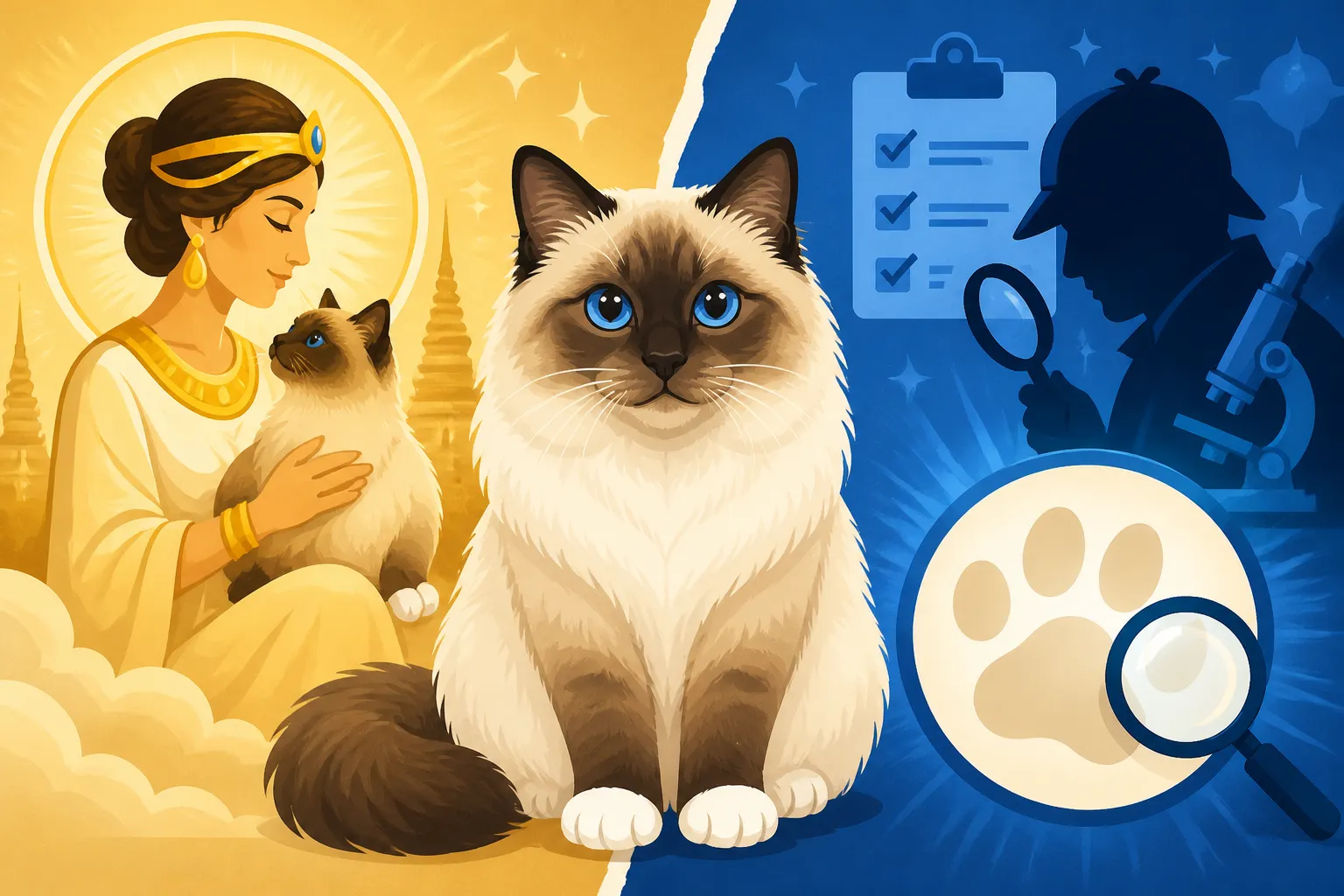
The legend, often referred to as The Birman Is the Sacred Cat of Burma, and the Story Is a Legend, tells of the sacred cats of the Temple of Lao-Tsun, located high in the Himalayas. It describes how these cats, who were companions to the Kittah priests, acquired their distinctive appearance. One night, while the head priest, Mun-Ha, was meditating before the golden goddess Tsun-Kyan-Kse, the temple was attacked by intruders. As Mun-Ha lay dying, his beloved white temple cat, Sinh, placed his paws on his master’s head. In that moment of profound devotion, Sinh was transformed. His eyes became sapphire blue, matching the goddess’s eyes. His white fur turned golden, and his legs and tail darkened to the rich points we know today, marking where his master’s soul entered him. But his paws, where they touched the priest, remained pure white, symbolizing purity and loyalty.
This dramatic transformation then spread to all the other cats in the temple, creating the template for the Birman we cherish today. It's a powerful narrative, brimming with loyalty, devotion, and divine intervention, perfectly encapsulating the serene and gentle nature often attributed to the breed. It’s no wonder this story captured hearts and imaginations, firmly placing the Birman in a realm beyond ordinary feline lineage.
Why the Legend Explains the Birman's White Gloves
The legend isn't just a pretty story; it directly addresses the Birman's most distinguishing feature: its pristine white "gloves" on all four paws. In the tale, these white paws are not just a charming aesthetic; they are a direct physical manifestation of a spiritual event. They represent the unwavering purity and loyalty of Sinh, the first sacred Birman, as he stood by his dying master. This explanation offers a beautiful, poetic reason for a genetic trait that, in reality, is quite unique and complex to breed for consistently.
Without this legend, the white gloves would simply be a desirable physical characteristic. With it, they become a symbol, a testament to the breed's sacred origins and its deep connection to its human companions. This myth elevates the breed from merely beautiful to divinely touched, giving owners a story to share that adds an extra layer of meaning to their cat's appearance. It explains Why the Birman Legend Explains the White Gloves in a way that resonates deeply with those who appreciate the breed's gentle and devoted temperament.
Historical Accounts of the Birman's Arrival in the West
While the legend paints a vibrant picture, historical records offer a more grounded, albeit less mystical, account of how the Birman cat came to be known outside of its supposed Burmese homeland. These records don't entirely contradict the spirit of exotic origin, but they certainly put a different spin on the "divine intervention" aspect.
Early Mentions and Importation into France
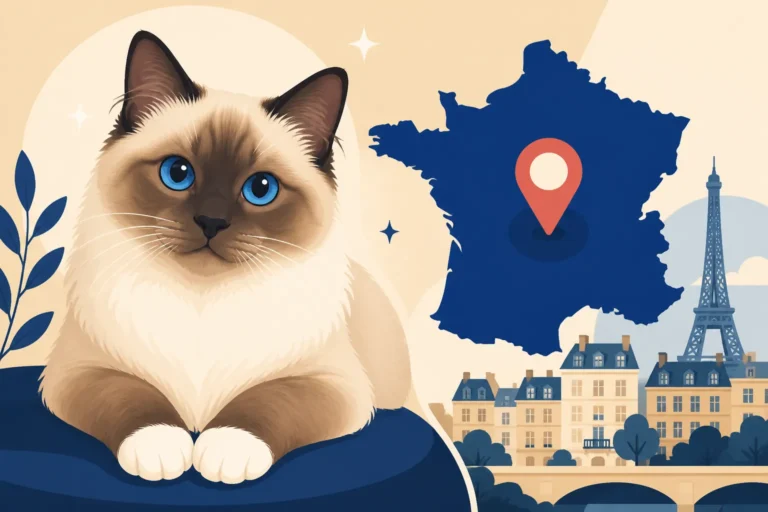
The widely accepted historical narrative suggests that the Birman breed, as we know it today, primarily developed in France in the early 20th century. The earliest concrete reports of Birmans arriving in the Western world date back to 1919. A pair of Birmans was said to have been shipped from Indochina (the former name for much of Southeast Asia, including Burma) to France by an American millionaire, Mr. Vanderbilt, or rather, his companion Major Gordon Russell. Sadly, the male cat, named Madalpour, did not survive the long sea voyage. However, the female, named Sita, was pregnant and safely delivered a litter of kittens in Nice, France.
From these kittens, the breed began its journey. One of Sita’s descendants, a female named Poupee de Madalpour, is often cited as a crucial foundational cat for the breed. This initial arrival marks a significant departure from the ancient temple legend, placing the breed's formative years squarely in Europe rather than solely in the temples of Burma. This period of early development in France is where the breed began to be stabilized and recognized, a far cry from a centuries-old, divinely ordained lineage.
The Role of Post-War Outcrossing in Breed Establishment
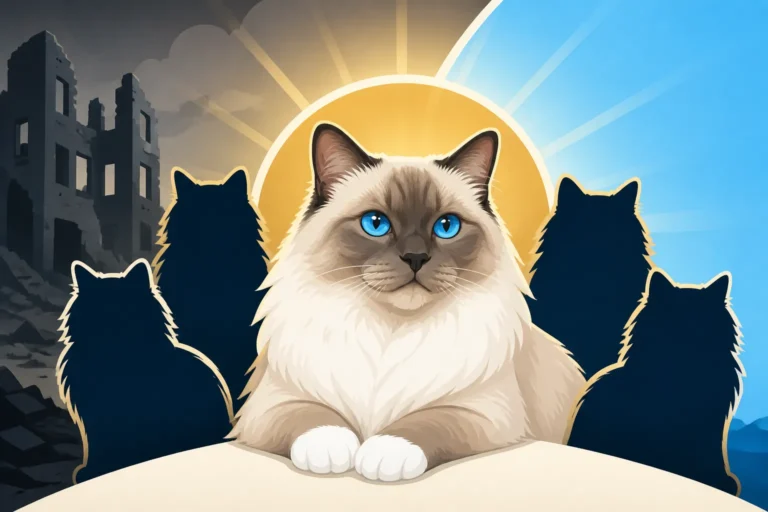
The Birman's journey to modern recognition was not without its challenges. The Second World War devastated many European cat breeds, and the Birman was no exception. By the end of the war, the breed's numbers were critically low, reportedly down to only two known individuals. This catastrophic bottleneck meant that without careful intervention, the breed might have vanished entirely. To save the Birman from extinction, breeders had to make a difficult but necessary decision: outcrossing.
This involved carefully mating the remaining Birmans with other long-haired breeds, primarily Persians and Siamese. The aim was to reintroduce genetic diversity and bolster the population while striving to maintain the distinctive Birman traits. While these crosses were vital for survival, they also mean that The Birman Was Rebuilt From Two Cats and It Shows and its modern genetic makeup reflects this intentional outcrossing rather than an unbroken, ancient lineage. The purity of the original mythical temple cat, if it ever existed, was certainly altered by these necessary genetic infusions. This pragmatic approach to breed survival further separates the historical reality from the romantic ideal of the legend.
Genetic Insights into the Birman's Unique Features
Beyond the captivating stories and historical records, modern science offers a different lens through which to examine the Birman's origins. Genetic studies can trace lineage, identify unique traits, and even shed light on how specific physical characteristics, like those famous white gloves, came to be. What genetics tell us often paints a picture that is more about mutations and selective breeding than ancient blessings.
The Science Behind the White Gloves and Pointed Coat
The Birman's stunning color points and unique white gloves are not a result of a priest's devotion but rather specific genetic markers. The pointed coloration, which means the cat's body is lighter with darker extremities (face, ears, paws, tail), is due to a form of temperature-sensitive albinism. This genetic trait is shared with other pointed breeds like the Siamese and Himalayan. Kittens are born almost entirely white because they develop in the warmth of the womb, and their points only begin to darken as they are exposed to cooler temperatures after birth. This is why A Birman Kitten's First Year, From White to Pointed is a fascinating visual journey as their true colors emerge.
As for the distinctive white gloves, genetic research points to a specific gene mutation. It's now understood that a particular variant on the KIT gene is responsible for the white spotting pattern seen in Birmans. Interestingly, every Birman carries two copies of this gloving gene, and it's fixed within the breed, meaning it's always present. However, the expression of these white markings – the precise length and symmetry of the gloves and laces – is influenced by other modifier genes, making perfect gloving notoriously challenging to achieve in breeding. This scientific understanding provides a concrete, biological explanation for a feature the legend attributed to divine magic. You can find many specialized grooming products for keeping those white gloves pristine on sites like Chewy.
What Genetics Say About the Birman's Origin
When we consider What Genetics Say About the Birman's Origin, the picture becomes even clearer. Genetic studies, which analyze the DNA of various cat breeds, have provided valuable insights into their relationships and ancestral lines. These studies generally suggest that the Birman breed, like many other modern breeds, is a relatively recent creation in terms of a distinct, standardized breed. Its genetic signature points to a relatively small founder base and a close relationship with other long-haired, pointed cats, particularly those used in its post-war reconstruction.
There is no strong genetic evidence to suggest an unbroken, ancient lineage directly from Burmese temple cats as described in the legend. Instead, the genetic data aligns with the historical accounts of European development and outcrossing. While the precise combination of breeds and the exact timeline before formal registration might be a bit murky, the genetic evidence firmly plants the Birman's roots in Europe, making it a product of careful, intentional breeding rather than a mysterious ancient discovery. This doesn't diminish the breed's beauty or charm, but it does shift its narrative from myth to modern marvel of selective breeding.
The Purpose and Enduring Appeal of Origin Legends
Even if scientific and historical evidence doesn't support the literal truth of the Birman legend, its existence and popularity are fascinating in themselves. Why do such stories take hold, and what purpose do they serve for a breed and its admirers? The truth is, legends often fill a void, add value, and connect us to something larger than ourselves.
Why Myths are Created for Breeds
Myths and legends are a common feature across many purebred animal histories, not just cats. They often serve several key purposes:
- Enhancing mystique and value: A captivating backstory makes a breed more intriguing and desirable. It imbues the animal with a sense of specialness, justifying its unique traits and often, its higher price point. Imagine trying to explain the Birman's specific pattern to someone without the legend; it just doesn't have the same allure.
- Explaining unique features: As we've seen with the white gloves, a legend offers a memorable and often poetic explanation for distinctive physical traits that might otherwise seem arbitrary. It turns a genetic quirk into a narrative masterpiece.
- Providing a cohesive identity: For a relatively newly developed breed, a shared origin story helps unite breeders and enthusiasts, giving them a common heritage and a sense of shared purpose in preserving and promoting the breed. It helps answer the fundamental question, "Where did this cat come from?"
These stories connect us to a romantic past, even if that past is more imagined than real. They tap into our desire for wonder and magic in the everyday, turning our pets into living embodiments of heroic tales.
The Power of Storytelling in Breed Marketing
The power of the Birman legend in what we might call "breed marketing" is undeniable. It's a story that sells. When someone is researching a breed, a compelling narrative often stands out far more than a dry recitation of lineage and genetic markers. What a Century Has Not Changed About the Birman is the devotion and serene temperament, and the legend perfectly frames these qualities. The story paints the Birman as more than just a beautiful cat; it's a sacred companion, a symbol of loyalty, and a creature with a divine spark.
This emotional connection, fostered by the legend, creates a strong bond between prospective owners and the breed. It builds anticipation and a sense of pride in owning a cat with such an extraordinary "heritage." While serious breeders will always emphasize health testing (like for FOXN1 Is the Birman's Own Genetic Disease or HCM in a Birman Has No DNA Test, Only an Echo) and verifiable pedigrees, the legend remains a powerful, engaging hook that draws people into the Birman world. It speaks to our human desire for connection to history, nobility, and the extraordinary, even when it’s wrapped in a beautiful, charming fiction.
Reconciling Myth, History, and Genetics
So, how do we hold these different narratives together? Do we dismiss the legend entirely, or does it still have a place in our understanding of the Birman? The truth is, each perspective offers something valuable, and they can coexist, enriching our appreciation for this magnificent breed.
Embracing Both the Romance and the Reality
For many Birman enthusiasts, the legend of the Temple of Lao-Tsun remains an integral part of the breed's charm. It's a beautiful piece of folklore that adds a layer of mystique and romance to their beloved pets. Knowing the historical and genetic realities doesn't necessarily diminish this appreciation. Instead, it can deepen it, allowing us to admire both the human ingenuity in developing and preserving such a stunning breed, and the cultural richness of the stories we weave around our animal companions.
Think of it like appreciating a classic work of fiction: we know it's not literally true, but its themes, characters, and narrative still resonate deeply and hold profound meaning. The Birman legend functions similarly, a testament to the human-animal bond and our desire to imbue our pets with significance. It highlights that while Whether the Birman Legend Has Any Evidence Behind It might lead to a negative conclusion on a purely factual basis, its impact on the breed's identity and popularity is very real.
The Modern Birman: A Testament to Dedicated Breeding
Ultimately, the modern Birman cat is a testament to the dedication of breeders who, over generations, have worked tirelessly to establish and maintain its unique characteristics. From those initial imports to the careful outcrossing after the war, and the ongoing efforts to breed for health and type, the Birman is a triumph of selective breeding. Resources from places like Chewy are invaluable for owners looking to properly care for their Birmans today.
While the legend tells of divine transformation, the reality is one of human passion and perseverance. Breeders have navigated challenges like a What a Narrow Founder Base Left in the Birman and the need for Why Post War Outcrossing Was Unavoidable for the Birman, ensuring that the Birman’s distinctive appearance – those striking blue eyes, the plush coat, and of course, the iconic white gloves – continues to grace our homes. This journey, from a few cats in France to a globally recognized and beloved breed, is perhaps even more remarkable than any myth.
| Aspect of Birman Origin | The Legend's Narrative | Historical & Genetic Findings |
|---|---|---|
| Founding Event | Divine transformation of a temple cat (Sinh) | Early 20th-century importation to France, subsequent breeding |
| Location of Origin | Ancient Buddhist temples in Burma (Southeast Asia) | Largely developed and standardized in Europe (primarily France) |
| Source of White Paws | Sacred touch of a loyal cat, divine blessing | Genetic mutation (KIT gene variant) for white spotting |
| Genetic Lineage | Unbroken line from sacred temple cats | Small founder population, significant post-WWII outcrossing with Persians and Siamese |
| Age of Breed | Ancient, mystical lineage | Relatively modern breed, formally recognized in 1920s-1960s |
| Purpose of Story | Spiritual explanation of traits, cultural heritage | Enhances mystique, explains traits poetically, aids breed identity |
Disclaimer
This article is for general informational purposes only and does not constitute professional advice. Laws, prices and regulations vary by location and change over time. Consult a qualified professional for guidance on your specific situation.