Why Only One of the First Two Birmans Survived
The story of the Birman cat, often called the Sacred Cat of Burma, is steeped in mystique and historical challenges. Many of us know the beautiful cat with its distinctive white paws, but few truly understand the incredible journey and the sheer stroke of luck that allowed this breed to survive and thrive. This guide dives deep into the breed's formative years, unraveling the dramatic tale of how, against all odds, only one of the very first pair of Birmans shipped from their homeland actually survived, laying a precarious foundation for all future Birmans we cherish today.
The Whispers of Origin: Legend Meets Reality
When we talk about the Birman, it's impossible not to touch upon the enchanting legends that surround its origins. These stories add to the breed's allure, painting a vivid picture of ancient temples and sacred guardians. However, separating the poetic myth from the harsh realities of early 20th-century cat transport is crucial to understanding the Birman's true beginnings.
The Mythical Journey of Sinh
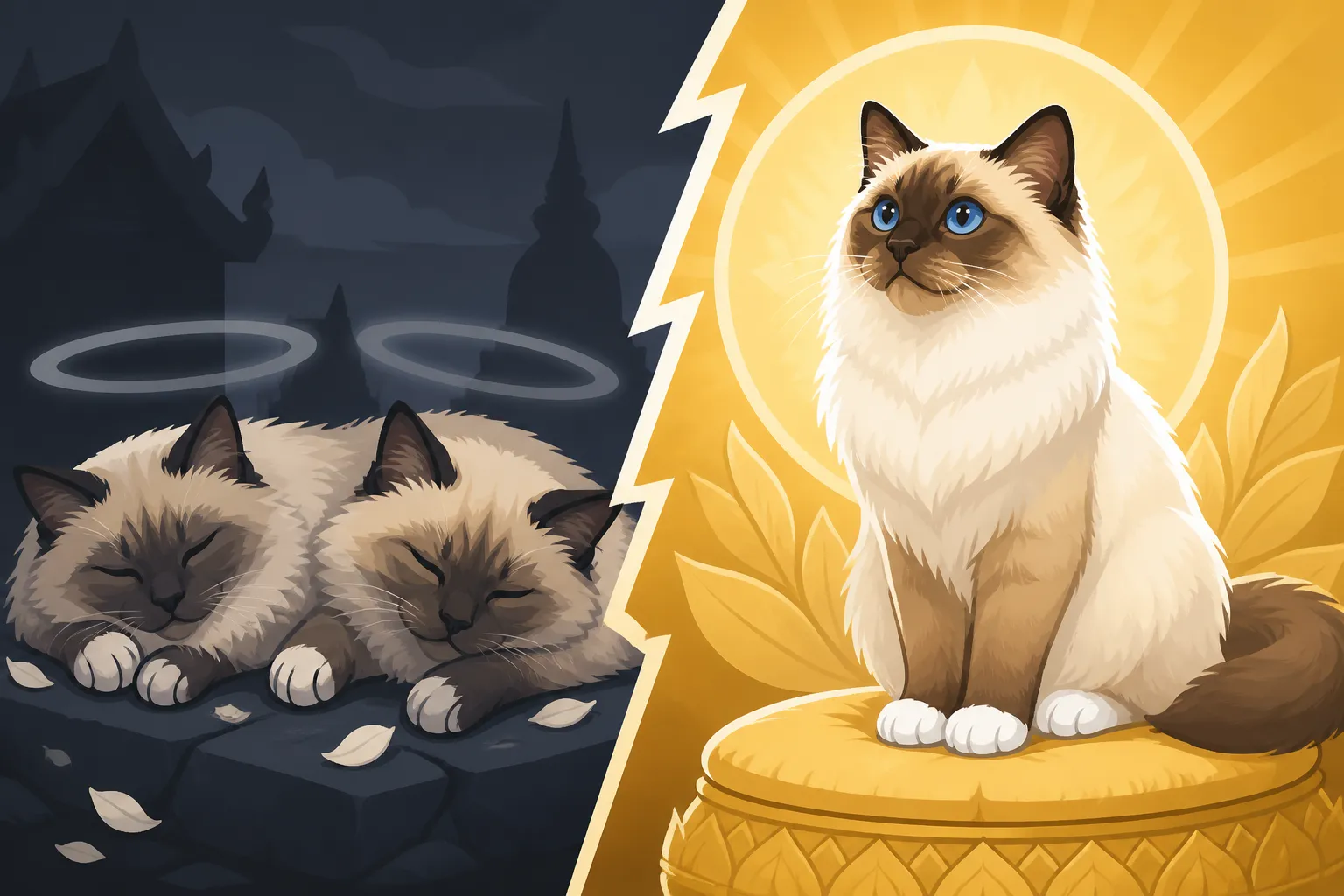
The most beloved legend speaks of the Temple of Lao-Tsun, high in the mountains of Burma, where golden-eyed goddesses watched over white temple cats. One such cat, Sinh, was the devoted companion of the revered high priest, Mun-Ha. When invaders attacked the temple and killed Mun-Ha, Sinh transformed, acquiring the priest's sapphire blue eyes, a golden sheen to his fur, and the distinctive white "gloves" on his paws, forever marking him as a sacred guardian. This transformation, the legend says, was passed down to all the temple cats, giving us the Birman we know today. It's a beautiful tale, full of reverence and magic, explaining the very features we adore in the breed.
While this legend is captivating and truly defines the Birman's mystique, it doesn't offer a factual account of their arrival in the Western world. These romantic narratives often serve to elevate a breed's status and create a compelling backstory, especially in a time when exotic animals were highly prized. Breeders in France, who were instrumental in the Birman's early establishment, likely embraced and propagated such tales, adding to the mystique and desirability of these rare cats. It certainly makes for a better story than a dusty cargo hold, though both are part of the Birman's rich tapestry.
Unpacking the Historical Account
The historical consensus, supported by early breeding records and anecdotal accounts, places the Birman's true origin story firmly in early 20th-century France. While their ancestral roots undoubtedly lie in Burma or neighboring regions, the breed as we recognize it today was developed in Europe. The actual import of the first documented Birmans is often attributed to a French explorer or diplomat, possibly a Major Gordon Russell or a Mr. Vanderbilt, though records are somewhat hazy. What is clear is that a pair of these magnificent cats began a perilous journey from Southeast Asia to France around 1919. This was not a quick, comfortable flight; it was a long, arduous sea voyage fraught with dangers, a stark contrast to the serene temple life imagined by the legend.
This historical journey, while less romantic than a divine transformation, is far more dramatic in its implications for the breed's survival. The conditions of transport in those days were rudimentary, to say the least. Animals were often kept in cramped, unsanitary conditions, exposed to extreme temperatures, poor nutrition, and the constant threat of disease. Imagine the stress on these cats, plucked from their familiar environment and thrust into such an alien, hostile one. The journey itself was a trial by fire, and the fact that any animal survived it is a testament to their resilience and perhaps a touch of good fortune. Who Shipped the First Birmans to France is a fascinating dive into the shadowy figures behind these initial imports.
The Perilous Voyage to the West
The journey from what was then known as Burma to France was not just a matter of distance; it was a grueling test of endurance that few animals could withstand. This era predates modern veterinary medicine and humane animal transport, making the survival of any creature a remarkable feat.
The Dangerous Passage of the Early 20th Century
Imagine the conditions: several weeks or even months at sea, in the cargo holds of ships, battling not just the elements but also the rampant diseases that could decimate animal populations in close quarters. There were no climate-controlled environments, no carefully monitored diets, and certainly no routine veterinary checks during the voyage. Cats would have been susceptible to dehydration, malnutrition, stress-related illnesses, and infectious diseases, any one of which could prove fatal. For an animal known for its placid yet sensitive nature, such a journey would have been terrifying and deeply traumatic.
This context is vital because it explains why the survival rate was so low. It wasn't just bad luck; it was the inherent risk of the time. The individuals responsible for transporting these precious felines were venturing into uncharted territory, bringing a rare and exotic species halfway across the world. Their dedication, even if lacking in modern animal welfare standards, was probably immense, recognizing the value of their living cargo. Still, the odds were stacked heavily against the cats.
The Names Behind the First Birmans
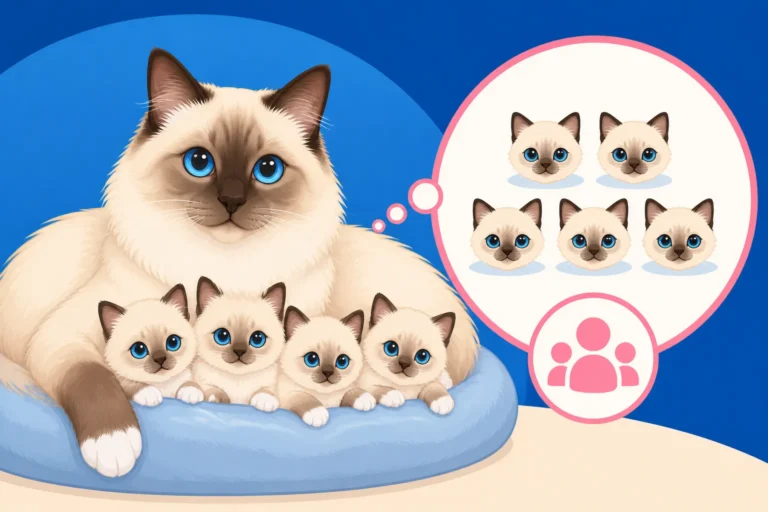
The specific cats attributed to this initial, fateful voyage are a male and a female. The male cat tragically perished during the journey. The female, named Sita, however, remarkably survived. Her arrival in France marked the true beginning of the Birman breed in the Western world. Accompanying her, it is said, was a female who was already pregnant, possibly by the male who died, or perhaps another cat from Burma. This pregnant female, often referred to as a "sister" or simply another companion, gave birth to a litter shortly after arrival. One of these kittens, a female named Poupee de Madalpour, would become the actual foundational queen for the entire modern Birman breed, alongside Sita.
The details are a little murky with time, but the consensus points to this critical pair: the imported female Sita, and her offspring Poupee de Madalpour. It's truly incredible to think that all the beautiful Birmans we see today, with their silky coats and striking blue eyes, trace their lineage back to these two courageous females. You can find many wonderful Birman supplies on Chewy, from specialized combs for their unique coats to puzzle feeders they might enjoy, but none of these could have helped those pioneering cats on their voyage. Which Two Cats Every Birman Descends From delves further into these crucial ancestors.
The Tragic Loss of the Male Birman
The death of the male Birman during transit was not merely an unfortunate incident; it was a significant blow that profoundly impacted the breed's genetic foundation from its very inception in Europe.
Circumstances of the Male's Demise
While the exact cause of the male Birman's death remains speculative, given the lack of detailed records from that era, we can infer some likely scenarios. As mentioned, the long sea voyage presented numerous health risks. Disease, exacerbated by stress and poor hygiene, was a constant threat. Malnutrition, through inadequate or unfamiliar food, could have weakened his immune system. Physical injury during rough seas or accidental confinement cannot be ruled out either. Imagine being confined to a small crate for weeks on end, enduring the pitching and rolling of a ship, with limited human interaction and potentially fluctuating temperatures.
The loss of this male, presumed to be a magnificent specimen, was a devastating setback. He represented half of the initial genetic diversity brought from Burma. His unique characteristics, whatever they may have been, were lost to the fledgling European breeding program. This event immediately created a genetic bottleneck, meaning that the entire future of the breed would rely on a much smaller gene pool than originally intended. Why the Male Birman Died at Sea offers further insights into this sad chapter.
The Immediate Impact on the Breeding Program
The loss of the male Birman meant that any subsequent breeding efforts would be severely limited in their initial scope. Breeders now had only one original imported female, Sita, and her offspring, to work with. This drastically reduced the genetic variation available to them. In animal breeding, genetic diversity is like a robust foundation for a house; the more diverse it is, the stronger and more resilient the population. A narrow foundation, however, leaves a breed more susceptible to certain genetic issues and makes it harder to maintain vigor.
This immediate bottleneck meant that early Birman breeders in France faced an enormous challenge. They had to be incredibly careful with their breeding choices, striving to perpetuate the unique Birman traits while trying to avoid the pitfalls of excessive inbreeding. This pressure would define the early decades of the breed's establishment, pushing them towards careful selection and, later, necessary outcrossing to introduce new bloodlines. What Two Founder Cats Did to the Birman's Inbreeding Figure explores the genetic consequences of this early loss.
Sita's Indispensable Legacy: A Queen Alone
In the face of adversity, the survival of Sita and her progeny became nothing short of miraculous, making her an indispensable matriarch for the entire breed.
Sita, the Surviving Matriarch
Sita's survival was paramount. She carried the direct genetic blueprint from Burma, embodying the traits that fascinated Europeans: the stunning blue eyes, the semi-long coat, and, crucially, the unique white gloving. Without her, or at least her immediate offspring, the Birman breed as we know it might never have taken hold in the West. She represented hope, the living embodiment of the "Sacred Cat." Her resilience, having endured the harrowing voyage, speaks volumes about the sturdy constitution of these early imports.
Her story is a testament to the sheer determination of nature and the dedicated (if perhaps a little reckless) individuals who believed in establishing this breed. Her genes, combined with those of her presumed daughter Poupee de Madalpour, would become the very bedrock upon which all future Birmans would be built. Every Birman pedigree, if traced far enough back, leads to these two extraordinary queens.
The Birth of the First European Birman Litter
Upon arrival in France, whether Sita herself was pregnant or the unnamed companion cat, a pivotal event occurred: the birth of the first Birman litter on European soil. Among these kittens was Poupee de Madalpour, a female who would quickly rise to prominence. This litter was the first glimpse Europeans had of Birman kittens, tiny bundles of white fluff (as all Birman kittens are born) that would gradually develop their striking point coloration. This moment marked the transition from exotic import to a recognized, breeding population.
Poupee de Madalpour, often mentioned alongside Sita as a foundational cat, played a critical role. She likely carried the desirable traits of both her imported parents, offering a crucial second generation of breeding stock. The successful rearing of this first litter would have been a massive relief and an encouraging sign for the enthusiastic breeders. It proved that these cats could not only survive the journey but also successfully reproduce in a new environment, igniting the dream of establishing the Birman breed. Where Sita Gave Birth in 1920 and Who Owned Poupee de Madalpour provide more context on this exciting period.
Establishing the Breed in France
With Sita and Poupee de Madalpour forming the core, French breeders embarked on the monumental task of establishing the Birman breed, navigating both the unique genetic challenges and the formal recognition processes.
The Role of French Breeders and Registries
French breeders, captivated by the Birman's beauty and gentle temperament, took on the responsibility of developing and standardizing the breed. These weren't casual hobbyists; they were dedicated fanciers, often with significant resources, who understood the importance of careful selective breeding. They worked tirelessly to refine the distinctive traits: the long, silky coat, the deep blue eyes, the pointed coloration, and of course, the iconic white gloves and laces. They meticulously recorded pedigrees, attempting to track the lineage and ensure the preservation of the unique Birman look.
Their efforts led to formal recognition. In 1925, France officially recognized the breed as the "Sacré de Birmanie." This was a monumental achievement, solidifying the Birman's status as a distinct and valuable breed. Registration meant that the breed now had a formal standard, guiding breeders in their selection and ensuring consistency in future generations. This early recognition in France was crucial for the breed's eventual spread across Europe and beyond. When France Registered the Sacre de Birmanie details this significant milestone.
Navigating Early Genetic Bottlenecks
Despite the initial success, the narrow genetic foundation remained a persistent challenge. Relying on essentially two founding females (Sita and Poupee) meant a limited gene pool, which could lead to increased inbreeding coefficients and a higher risk of perpetuating undesirable genetic traits or health issues. To combat this, early breeders strategically introduced outcrosses. This meant carefully breeding Birmans with other long-haired breeds, such as Persians, or possibly even Siamese, which contributed to the pointed pattern and body type.
These outcrosses were vital for increasing genetic diversity and ensuring the breed's vigor, but they also introduced other challenges. Breeders had to work diligently to re-establish the pure Birman type and eliminate any undesirable traits brought in by the outcrosses, such as different coat textures or eye shapes. It was a delicate balancing act: broadening the gene pool without losing the essence of the Birman. This period underscores the incredible dedication required to save and build a breed from such a precarious beginning. Many cat owners today rely on trusted brands like Chewy for their cat's health needs, from specialized diets to supplements, illustrating how far our understanding of feline genetics and care has come.
The Lasting Echoes in Modern Birmans
The story of the first Birman's survival and the subsequent breeding challenges echoes strongly in the genetics and characteristics of the modern Birman cat. It's a testament to resilience and careful stewardship.
A Narrow Foundation and Its Genetic Implications
The fact that the Birman breed was essentially rebuilt from such a tiny genetic base – primarily Sita and Poupee de Madalpour, with carefully managed outcrosses – means that all Birmans today share a relatively common ancestry. This narrow founder base, though expanded over decades, inevitably leaves certain genetic fingerprints. It means there's a higher degree of genetic relatedness among Birmans compared to breeds with a broader and more diverse origin. What a Narrow Founder Base Left in the Birman explains this concept in greater detail.
One of the key implications of a narrow genetic foundation is the potential for certain recessive genes to become more prevalent. If a particular trait or predisposition existed in the founding cats, even if it was rare, it had a higher chance of being passed down and potentially amplified through generations of breeding within a limited pool. This isn't necessarily a bad thing, as it also helps fix desirable traits, but it requires diligent health screening and responsible breeding practices to manage potential genetic health conditions. For example, knowing the breed's history guides breeders in prioritizing tests for conditions like HCM or PKD, even if those specific issues weren't known problems in the 1920s.
How Every Birman Carries This History
Every Birman cat alive today carries within its DNA the echoes of that perilous journey and the foundational efforts of those early French breeders. The very genes responsible for their beautiful blue eyes, their unique point coloration, and especially their distinctive white "gloves" can be traced back to those original cats. This shared heritage is what makes a Birman unmistakably a Birman. It's a living legacy, walking around our homes, purring on our laps.
Breeders today continue the work of those early pioneers, meticulously selecting breeding pairs, conducting genetic tests, and maintaining detailed records to ensure the continued health and integrity of the breed. This includes monitoring inbreeding coefficients and making careful choices to maintain genetic diversity while preserving the Birman standard. When you look at a Birman, you're not just seeing a beautiful cat; you're seeing a survivor, a testament to a dramatic journey and the dedication of generations of fanciers. It's a reminder of The Birman Was Rebuilt From Two Cats and It Shows and the remarkable recovery the breed made.
| Aspect | Detail | Significance |
|---|---|---|
| Origin Point | Burma (Southeast Asia) | Ancestral home, source of unique traits |
| Year of Import | Circa 1919 | Beginning of European establishment |
| Number of Imports | Two (one male, one female) | Initial genetic pool for the breed |
| Male Birman's Fate | Died during the sea voyage | Created immediate genetic bottleneck, reduced diversity |
| Female Birman's Fate | Sita, survived the journey | Primary foundational matriarch for the breed |
| Key Offspring | Poupee de Madalpour (Sita's daughter) | Second foundational queen, crucial for perpetuation |
| First European Recognition | 1925, France ("Sacré de Birmanie") | Formal establishment and breed standardization |
| Genetic Impact | Narrow founder base, necessity for outcrossing | Shaped modern Birman genetic health and characteristics |
| Modern Connection | All Birmans descend from these few individuals | Shared heritage, unique genetic markers |
The Birman's Enduring Appeal and Modern Care
The remarkable backstory of the Birman cat only adds to its enduring appeal. Knowing the sheer effort and serendipity involved in its very existence makes these cats even more special. Today, Birman owners are part of a lineage of care that spans over a century, contributing to the health and happiness of a breed that literally rose from the brink.
Modern Birman care builds on this history by focusing on specific needs. Their luxurious, single coat, for instance, requires regular but not overly intensive grooming, as discussed in No Undercoat Is What Makes a Birman Easy to Groom. Responsible breeders continue to prioritize health testing, especially given the breed's historical genetic bottlenecks. Tests for conditions like Hypertrophic Cardiomyopathy (HCM) and Polycystic Kidney Disease (PKD) are crucial, ensuring that the breed remains as robust as possible. You can read more about these efforts in Why a Birman Breeder Still Tests for PKD and HCM in a Birman Has No DNA Test, Only an Echo.
Furthermore, the Birman's famed placid and gentle temperament, which allowed the early cats to endure such a difficult transition, makes them wonderful companions in modern homes. They thrive on companionship and calm environments, a trait that has undoubtedly been selected for through generations. Providing them with a loving, stable home, a high-quality diet (you might find some excellent options on Chewy), and regular veterinary check-ups is the best way to honor their incredible journey and ensure their bright future. It's a far cry from a cramped cargo hold, offering these "Sacred Cats" the truly privileged lives they deserve.
Disclaimer
This article is for general informational purposes only and does not constitute professional advice. Laws, prices and regulations vary by location and change over time. Consult a qualified professional for guidance on your specific situation.