What Poupee de Madalpour Passed to Every Birman
It's easy to look at a Birman today – with those stunning blue eyes, luxurious silky coat, and, of course, the distinctive white "gloves" on all four paws – and not fully grasp the incredible journey this breed took to get here. Many cat lovers are fascinated by the stories behind their beloved breeds, but the specifics of how a cat like the Birman bounced back from near extinction can often feel shrouded in mystery. This guide aims to pull back that veil, specifically shedding light on the immense legacy of one particular queen, Poupee de Madalpour, and what she passed down to every Birman we cherish today.
The Birman's Precarious Origins and Near Extinction
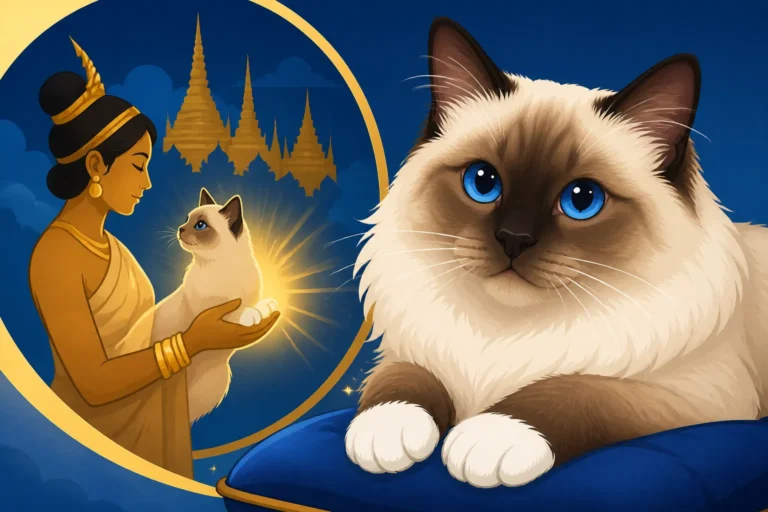
Before we dive into Poupee's specific impact, it's crucial to understand the very narrow genetic bottleneck the Birman breed faced, not once, but twice. The initial tale of the Birman cat is often steeped in legend, speaking of temple cats in Burma (now Myanmar) whose transformation from golden to pointed, with sapphire eyes and pure white paws, was a divine gift from a goddess. While the romanticism of this origin story certainly captures the imagination, the breed's verifiable history begins with its arrival in Europe.
A Glimmer of Hope from Southeast Asia
The story goes that the first Birman cats left Burma for France around 1919. A pair was supposedly shipped, but tragically, the male cat, named Maldapour, did not survive the journey. His pregnant companion, Sita, however, did, and she gave birth to a litter of Birman kittens in Nice. These early cats, with their striking point coloration, long coats, and pure white paws, immediately captivated enthusiasts. The French officially recognized the "Sacré de Birmanie" in 1925, and the breed began to establish a small, but growing, presence across Europe. But this nascent popularity was soon to face an unimaginable challenge.
The Post-War Bottleneck
The ravages of World War II were devastating for many European cat breeds, and the Birman was no exception. With catteries struggling, food scarce, and travel impossible, many breeding programs simply ceased to exist. By the end of the war, the Birman breed was on the brink of complete annihilation. It's truly heartbreaking to think that a lineage so unique and beautiful could have been lost forever. In fact, historical records indicate that only two Birman cats survived the war in Europe: a male named Orloff de Kaabaa and a female named Poupee de Madalpour. The entire genetic future of the breed rested squarely on their shoulders, a responsibility almost too immense to comprehend. You can read more about How Two Cats in 1945 Shaped the Birman's Health.
Poupee de Madalpour: A Pillar of the Rebuilt Birman
When we talk about foundational cats, few have carried such monumental weight as Poupee de Madalpour. She was not just a survivor; she was one half of the entire genetic pool that would restart the breed. Without her, and her male counterpart, Orloff, the Birman as we know it simply would not exist.
Her Role in the Reconstruction Effort
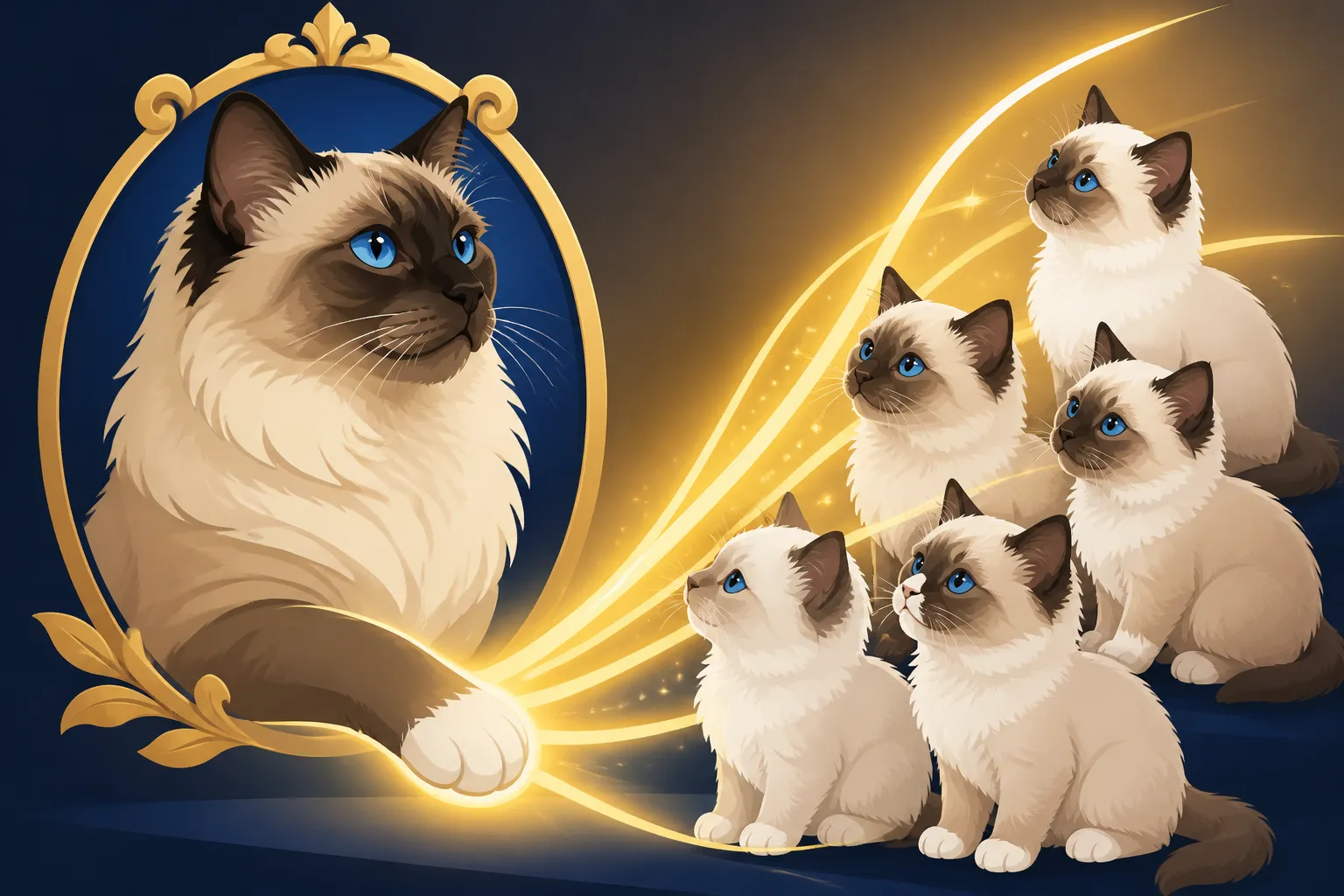
Following the war, the handful of dedicated breeders who remained faced an almost impossible task: to rebuild a healthy, viable breed from just two individuals. Orloff de Kaabaa and Poupee de Madalpour became the literal Adam and Eve of the modern Birman. Their genetics were the raw material. To expand the severely restricted gene pool and ensure genetic diversity, these two cats, and their immediate offspring, were carefully outcrossed to other longhaired breeds, predominantly Persians and sometimes Siamese. This was a critical, albeit risky, move. The goal was to reintroduce healthy genes while meticulously working to preserve and re-establish the distinctive Birman characteristics that made the breed so special. What the Outcrossing Brought Into the Birman dives deeper into this complex period.
The Genetic Blueprint She Carried
Poupee de Madalpour, along with Orloff, carried the genetic blueprint for all future Birmans. This isn't just about general cat genes; it's about the very specific traits that define the breed.
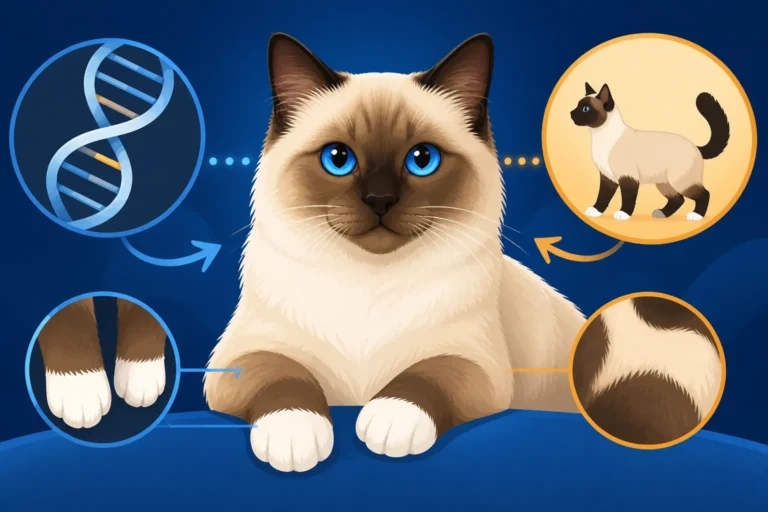
- The Pointed Pattern: Like all Birmans, Poupee exhibited the pointed gene, which results in darker coloration on the cooler extremities (ears, face, paws, tail) and a lighter body. This temperature-sensitive gene is what gives Birmans their characteristic look, making them What a Birman Kitten Is Born Almost White.
- The Unique Silky Coat: One of the Birman's most appealing features is its long, silky coat that lacks a dense undercoat, meaning it's less prone to matting than many other longhaired breeds. Poupee passed on the genetic markers for this specific coat texture, a trait that makes Birmans comparatively easier to groom. Why a Birman Mats Far Less Than It Looks Like It Should explores this further.
- The Defining White Gloves: This is perhaps Poupee's most iconic genetic contribution. The white gloving, or KIT gloving variant, is what sets the Birman apart. It's not just random white spots; it's a specific pattern of white on the paws, ideally symmetrical on the front feet and extending into a "lace" or "gauntlet" on the back legs. Poupee de Madalpour carried the genetic information for these gloves, and every Birman today inherits this trait from her and Orloff. The careful breeding and selection in the decades following the war were dedicated to refining and consistently reproducing this unique marking, which directly came from these two founding cats. You can learn more about The Gloving Gene Every Birman Carries Two Copies Of.
The Enduring Legacy: Poupee's Influence on Today's Birman
Poupee de Madalpour's impact isn't just a historical footnote; it's visible in every Birman you see today. Her genetic contribution shaped the very essence of the breed, setting the standard that breeders still strive for.
Defining the Birman Look
The breed standard for the Birman cat, upheld by registries worldwide, is a direct testament to the traits embodied by cats like Poupee. When judges assess a Birman in the show ring, they are looking for the precise manifestation of these inherited characteristics.
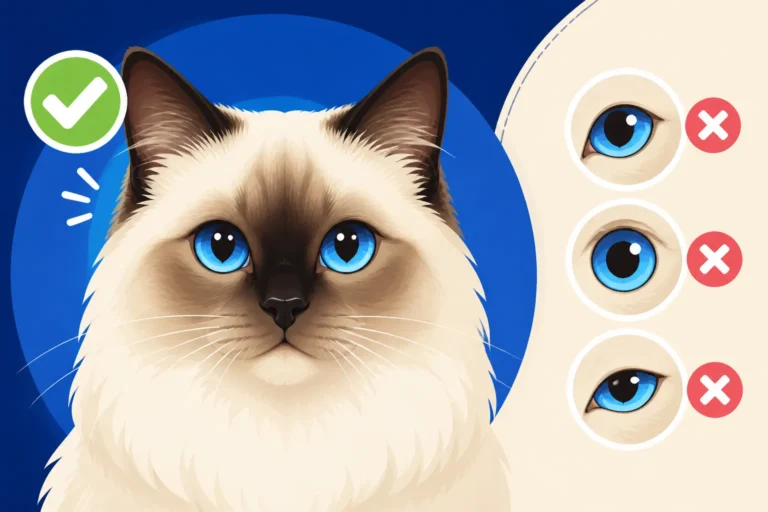
- The Perfect Gloves: The white gloves are paramount. They must be symmetrical on the front paws, ending in an even line, and on the hind paws, they should extend higher up the back of the leg, forming a "lace" or "gauntlet" that ideally ends in a distinct "V" shape. This precise pattern, a genetic gift from Poupee and Orloff, is notoriously difficult to achieve perfectly in every kitten. Breeders dedicate generations to trying to perfect these markings, understanding that even slight variations, like "gauntlets" that extend too far or uneven front gloves, can mean a cat is designated as "pet quality" rather than "show quality." What Judges Look For on a Birman's Paws First delves into these specifics.
- Coat Texture and Length: The luxuriously silky, single coat, a hallmark of the Birman, is also part of her legacy. It's a coat that feels wonderful to the touch and contributes significantly to the breed's elegant appearance. The emphasis on a coat that is long but flows and doesn't mat easily is a direct reflection of the physical traits established by these original two cats.
Health and Temperament Connections
While it's challenging to pinpoint specific health predispositions to one individual cat from so long ago, the very act of rebuilding a breed from such a small founder base has inherent implications for genetic health.
- The Gentle Temperament: Birmans are renowned for their incredibly placid, sweet, and gentle nature. They are often described as "dog-like" in their devotion and their tendency to follow their humans from room to room. This calm, affectionate demeanor is deeply ingrained in the breed's character, and it's highly probable that this temperament was a strong characteristic of the founding cats, including Poupee. Breeders since have actively selected for and reinforced these desirable behavioral traits. Why a Birman Follows You Without Demanding Anything and Why a Birman Is the Cat Families Are Told to Get speak to this wonderful aspect of the breed.
- Genetic Considerations: The tight genetic bottleneck, even with outcrossing, means that understanding the lineage of Poupee and Orloff is vital for modern breeders. While the outcrosses helped widen the gene pool, some genetic predispositions could still exist. Responsible breeders today are diligent about health screening, particularly for conditions that might have arisen or been concentrated due to the limited founder stock.
| Trait Contribution | Description | Origin from Poupee/Orloff | Modern Birman Expression |
|---|---|---|---|
| Pointed Coloration | Darker pigment on extremities (ears, face, paws, tail); lighter body. | Direct | Essential part of the Birman's classic appearance. |
| Silky Single Coat | Long, flowing fur without a dense undercoat; less prone to matting. | Direct | Easy grooming; contributes to elegant, plush look. |
| White Gloves/Laces | Distinctive white markings on paws, symmetrical on front, higher on back. | Direct | The defining characteristic; crucial for show standard. |
| Placid Temperament | Gentle, affectionate, loyal, and quiet nature. | Inherited/Reinforced | "Dog-like" devotion; ideal family pet. |
| Blue Eye Color | Deep sapphire blue eyes. | Direct | Stunning feature, intensifies the pointed appearance. |
| Body Type | Medium to large, long, sturdy body, neither cobby nor slender. | Direct | Well-balanced and strong, reflecting ancient lineage. |
Understanding the Birman's Pedigree Today
For serious Birman enthusiasts and, most importantly, responsible breeders, understanding the lineage and the role of foundational cats like Poupee de Madalpour isn't just an academic exercise – it's crucial for the health and future of the breed.
Tracing the Lineage
Every registered Birman cat today can, in theory, trace its pedigree back through the generations to Orloff de Kaabaa and Poupee de Madalpour. This unbroken line of descent is a testament to the dedication of early breeders. For a modern breeder, studying a cat's pedigree isn't just about knowing its ancestors; it's about understanding the genetic landscape of their breeding lines. Which Two Cats Every Birman Descends From is a key resource for this. Knowing which cats contributed to a particular line can give insights into potential genetic strengths and weaknesses. It helps them make informed decisions about pairings, aiming to maximize desirable traits while minimizing the risk of inherited conditions.
Responsible Breeding Practices
The legacy of Poupee de Madalpour underscores the importance of responsible breeding. Because the breed started from such a narrow base, maintaining genetic diversity and screening for potential health issues is paramount.
- Genetic Health Testing: While Poupee herself existed before modern genetic testing, her legacy means that today's breeders must be diligent. This includes DNA tests for known Birman-specific conditions, such as the FOXN1 gene, which can lead to a condition called hypotrichosis, and screening for Polycystic Kidney Disease (PKD1) which was introduced through the Persian outcross. Why a Birman Breeder Still Tests for PKD and What Testing a Birman for FOXN1 and PKD1 Together Costs are important considerations.
- Heart Screening: Hypertrophic Cardiomyopathy (HCM) is another concern across many purebred cats, and Birmans are routinely screened via echocardiogram. While not directly linked to Poupee in a simple way, the careful management of a closed gene pool means every health measure counts. How Often a Breeding Birman Needs Scanning and How HCM Shows Up in a Birman provide more detail.
- Preserving the Standard: Responsible breeders are not just creating kittens; they are custodians of a legacy. They work tirelessly to produce Birmans that exemplify the breed standard – from the perfect white gloves to the serene temperament and healthy constitution, all of which originated from that critical post-war pair. This dedication ensures that Poupee de Madalpour's contributions continue to flourish for generations to come, allowing future cat lovers to enjoy the unique beauty and companionship of the Sacred Cat of Burma.
Disclaimer
This article is for general informational purposes only and does not constitute professional advice. Laws, prices and regulations vary by location and change over time. Consult a qualified professional for guidance on your specific situation.