Why a Birman’s Blood Type Matters at Mating
It’s a scenario no Birman breeder or loving owner ever wants to face: a litter of seemingly healthy, vigorous kittens born, only to fade away one by one in the first few days of life, often without any clear explanation. The heartbreak and confusion can be immense, leaving you questioning what went wrong. This deeply frustrating and often devastating condition, known as neonatal isoerythrolysis (NI), is directly linked to the blood types of the Birman parents. Understanding and testing for blood type compatibility is a non-negotiable step for responsible Birman breeding, and this guide will walk you through why it's so vital, how to prevent it, and what to do if you find yourself in a high-risk situation.
Understanding Feline Blood Types and Their Importance
Just like humans, cats have different blood types, and while the system might seem a little less complex at first glance, its implications in breeding can be far more immediate and catastrophic. Ignoring blood types in breeding is akin to playing Russian roulette with an entire litter, and for a breed like the Birman, which can carry specific blood types, awareness is paramount.
The ABCs of Cat Blood Groups
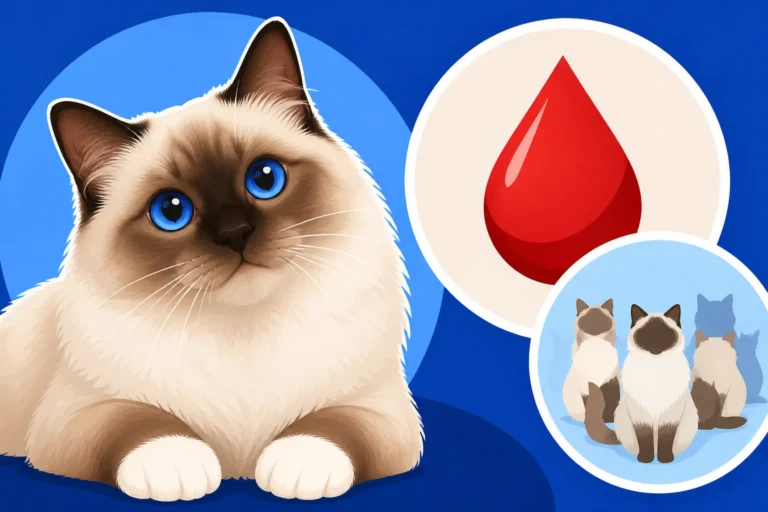
The feline blood group system is primarily divided into three types: Type A, Type B, and the very rare Type AB. Type A is the most common blood type found across the general cat population and in many breeds. Type B, while less prevalent overall, is significantly more common in certain specific breeds, and yes, the Birman is one of them. Other breeds where Type B is notably found include British Shorthairs, Cornish Rexes, and Devon Rexes. Type AB is a bit of an enigma, present in very few cats and exhibiting characteristics of both A and B, but it's not typically implicated in neonatal isoerythrolysis in the same way as a Type B queen.
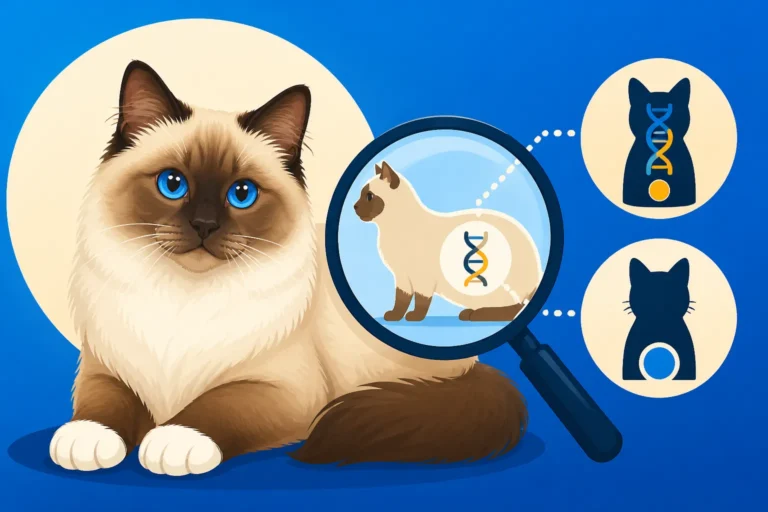
The genetics are fairly straightforward: Type A is dominant over Type B. This means a cat can be genetically A/A (homozygous A, expressing Type A blood), A/b (heterozygous, carrying both A and B genes but expressing Type A blood), or b/b (homozygous B, expressing Type B blood). The prevalence of Type B in some Birman lines means that a breeder needs to know exactly How Many Birmans Have Blood Type B in their particular lineage to make informed decisions, rather than just assuming every cat is Type A.
Why Blood Type Mismatch is Unique to Cats
Now, here's where feline blood types diverge significantly from what many might know about human blood types and why the risks are so much higher in cats. In humans, a mother typically only develops antibodies against her baby’s blood type (like Rh factor incompatibility) if she's been previously exposed to that blood type, often through a prior pregnancy or transfusion.
Cats, however, are different. Type B cats are genetically predisposed to always have very strong, naturally occurring antibodies against Type A red blood cells, even if they've never been exposed to Type A blood before. Think of it like a cat's immune system being permanently "on alert" for Type A, specifically if they are Type B. On the flip side, Type A cats may have weak anti-B antibodies, but these are generally not strong enough to cause the same level of devastating reaction.
This crucial difference is why the problem is so insidious and often catches new or uninformed breeders off guard. You wouldn't intuitively think that a cat's immune system is inherently primed to attack another cat's blood without prior exposure, but with Type B queens, that's exactly the case. This biological quirk creates a dangerous predisposition that responsible Birman breeders simply cannot ignore, making pre-mating blood typing an absolutely essential step to prevent heartache.
The Silent Threat: Neonatal Isoerythrolysis
Neonatal isoerythrolysis, often abbreviated to NI, is a devastating condition that can wipe out an entire litter of kittens. It's particularly heartbreaking because the kittens often appear perfectly healthy at birth, only to succumb within hours or a few short days, leaving owners and breeders bewildered and grief-stricken. The insidious nature of NI is that it targets the most vulnerable, the newborn, through what should be their source of life-giving nutrition: their mother's milk.
How NI Devastates a Birman Litter
The sequence of events leading to NI is a tragically predictable one once you understand the blood type dynamics. It begins with a specific, incompatible pairing: a Type B queen (the mother) mated with a Type A tom (the father). When these two blood types come together, their kittens can inherit the Type A blood gene from their father, making them Type A or Type AB.
Here's the critical part: because the queen is Type B, her body naturally produces a high concentration of very strong anti-A antibodies. These powerful antibodies are then passed to her kittens through her colostrum, which is the rich, antibody-packed first milk produced immediately after birth. For those Type A or AB kittens, ingesting this colostrum is like receiving a dose of poison. The anti-A antibodies in their mother's milk attack and destroy their own Type A red blood cells, leading to severe anemia.
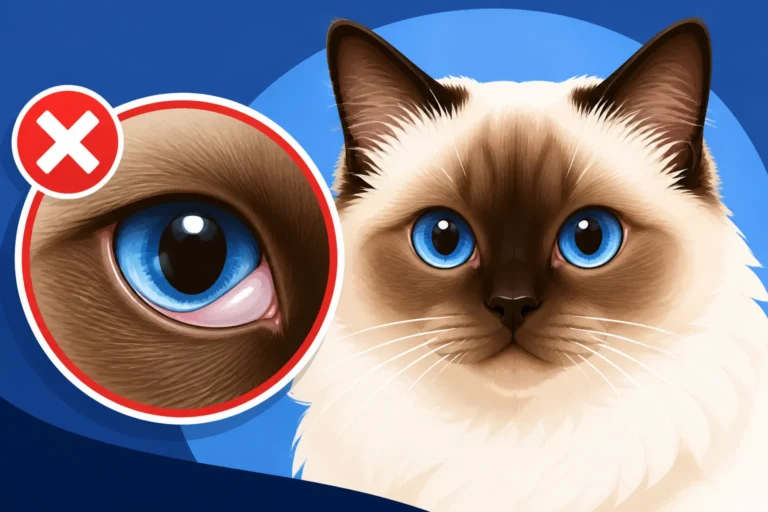
The signs can be subtle at first, adding to the frustration and confusion. You might notice kittens becoming lethargic, weak, and reluctant to nurse. Their gums can become pale (a sign of anemia), their urine might darken (due to hemoglobin from destroyed red blood cells), and they can develop jaundice, giving their skin and mucous membranes a yellowish tint. In the most severe cases, which are alarmingly common, kittens simply fade away and die within hours or a few days of birth. It's an agonizing loss, made worse by the feeling of helplessness when you don't immediately know the cause. To learn more about this devastating condition, you can explore resources like What Neonatal Isoerythrolysis Does to a Birman Litter. The sheer heartbreak of watching healthy kittens decline so rapidly is a profound frustration that every breeder strives to avoid.
The Genetic Mechanism Behind the Danger
Delving a little deeper into the genetics helps to solidify why certain matings are so risky. As mentioned, the feline blood type gene has two primary alleles: A (dominant) and b (recessive).
- A cat with genotype A/A will have Type A blood.
- A cat with genotype A/b will also have Type A blood (because A is dominant). This cat is a carrier of the Type B gene.
- A cat with genotype b/b will have Type B blood.
The danger arises specifically when a Type B queen (genotype b/b) is mated with a Type A tom (genotype A/A or A/b).
- Type B Queen (b/b): Her immune system always produces strong anti-A antibodies. This is her natural biological state.
- Type A Tom (A/A or A/b):
- If the tom is A/A, all kittens will inherit at least one A gene from him and will be Type A (A/b).
- If the tom is A/b, roughly half the kittens will be Type A (A/A or A/b) and half will be Type B (b/b).
In either scenario where the tom carries the A allele, any kittens that inherit Type A blood will be at risk. The queen, being Type B, will pass her potent anti-A antibodies into her colostrum. When her Type A kittens ingest this colostrum, their red blood cells are targeted, leading to NI.
It's critical to understand that the problem isn't the kittens' blood type itself, but the interaction with the mother's antibodies via the colostrum. A Type A kitten born to a Type A mother would be perfectly fine. The issue is purely the incompatibility through the mother's milk. This is precisely why Why a Type B Birman Queen Is a Problem in breeding programs needs to be understood thoroughly and addressed proactively to safeguard future generations.
Identifying Blood Types in Birmans: Prevention is Key
Given the devastating potential of neonatal isoerythrolysis, blood type testing is not just a recommendation, it's an absolute necessity for anyone breeding Birmans. You simply cannot afford to guess or assume when the lives of an entire litter are at stake. Prevention, in this case, is not just better than a cure; it's often the only option that avoids heartbreak.
The Essential Blood Type Test for Birmans
Testing your Birman's blood type is a straightforward process that provides invaluable information for safe breeding. It typically involves a simple blood sample taken by your veterinarian. This sample is then sent to a specialized veterinary diagnostic laboratory for analysis. Some well-known labs that perform feline blood typing include UC Davis Veterinary Genetics Laboratory in the United States and Langford Vets in the UK, but your local vet can advise on the best accredited lab in your region.
The test identifies whether your Birman is Type A (and if so, whether they are A/A or A/b, which is important for males), Type B, or Type AB. Knowing this for all breeding cats, both queens and toms, is the cornerstone of preventing NI. For a thorough understanding of the process, you might want to look into How a Birman's Blood Type Is Tested.
The cost of blood typing is a minimal investment when you consider the potential financial and emotional cost of losing a litter. It's often bundled with other genetic health tests, and while What Testing a Birman for FOXN1 and PKD1 Together Costs can vary, adding blood typing is usually a small additional expense for comprehensive peace of mind. Many responsible breeders will perform this test on all their Birmans before they even consider a mating, ensuring they have a clear understanding of their cats' genetic profiles. This proactive approach ensures healthier kittens and reduces the incidence of unforeseen complications that could lead to costly emergency veterinary care, though pet insurance providers like Healthy Paws are there for unexpected health challenges.
Interpreting Test Results and Planning Matings
Once you have your Birman's blood type results, the next step is to interpret them and use this information to plan compatible matings. This is where responsible breeding truly comes into play, balancing genetic diversity with the health and safety of the future litter.
Here’s a simple breakdown of compatible and incompatible pairings:
| Queen's Blood Type | Tom's Blood Type | Kitten Blood Type Risk | Risk of NI | Breeding Recommendation |
|---|---|---|---|---|
| Type A (A/A or A/b) | Type A (A/A) | All Type A | No | Safe pairing |
| Type A (A/A or A/b) | Type A (A/b) | Type A, some Type B | No | Safe pairing |
| Type A (A/A or A/b) | Type B (b/b) | Type A, some Type B | No | Safe pairing |
| Type B (b/b) | Type B (b/b) | All Type B | No | Safe pairing |
| Type B (b/b) | Type A (A/A) | All Type A | HIGH | AVOID |
| Type B (b/b) | Type A (A/b) | 50% Type A, 50% Type B | HIGH for Type A kittens | AVOID if possible; manage carefully |
| Type AB | Any | Varies | Low | Generally safe, consult vet |
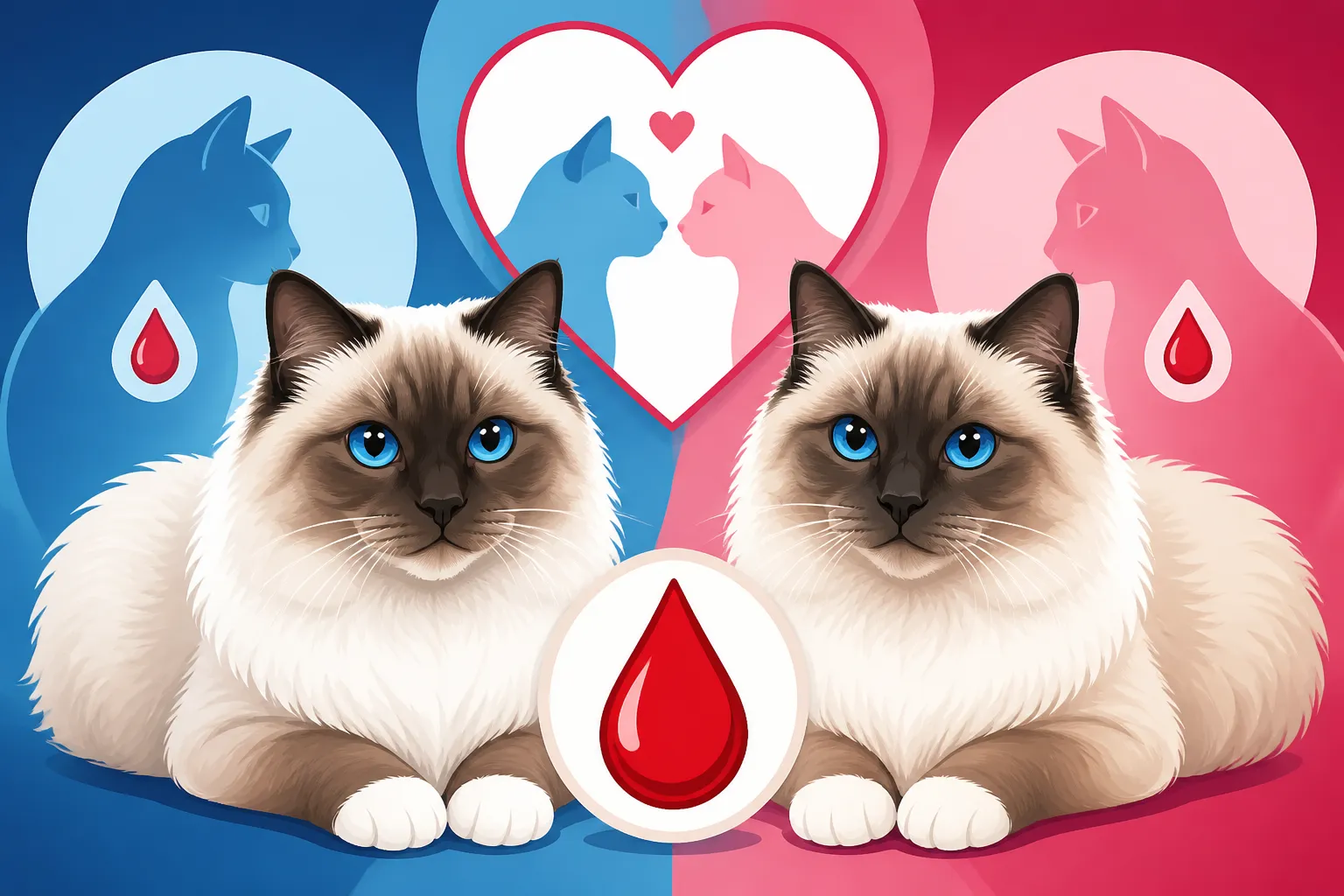
As you can see, the critical danger zone is a Type B queen mated with any Type A tom, whether he is A/A or A/b. In these pairings, there's a high risk that the kittens will inherit Type A blood and subsequently suffer from NI after ingesting their mother's colostrum.
Responsible breeders will ideally avoid these high-risk pairings altogether. If you have a Type B queen, the safest and most responsible choice is to only mate her with a Type B tom. This ensures that all kittens will be Type B (b/b) and will therefore not be affected by the queen's anti-A antibodies.
If you have an A/b tom (a Type A cat who carries the Type B gene), he can be safely bred to a Type A queen. Some of their kittens may be Type B, but because the mother is Type A, she doesn't produce the dangerous anti-A antibodies. However, you should never breed an A/b tom to a Type B queen, as this again creates the dangerous scenario for Type A kittens.
The responsibility of the breeder here cannot be overstated. By understanding these results and meticulously planning matings, you actively contribute to the health and well-being of the Birman breed. This forethought drastically reduces the chances of needing emergency intervention for sick kittens, though having comprehensive pet insurance, like Healthy Paws, is always a wise decision for any unexpected health curveballs.
Managing At-Risk Pairings and Protecting Kittens
Sometimes, despite a breeder's best intentions, an at-risk pairing might occur, or perhaps a rescue situation presents you with a pregnant Type B queen whose mate's blood type is unknown. In these scenarios, knowing how to manage the situation to protect the newborn kittens is absolutely critical. It requires immense dedication, vigilance, and often, a lot of sleepless nights, but it can be done.
Strategies for a B-Type Queen Mated to an A-Type Tom
This is the highest-risk situation for neonatal isoerythrolysis, as the Type B queen will produce powerful anti-A antibodies in her colostrum. The key to protecting the Type A kittens in such a litter is to prevent them from ever ingesting that colostrum during the critical first 16-24 hours after birth. This is because the kitten's intestinal lining is most permeable to large antibody molecules during this initial period. After this window, the "gut barrier" closes, significantly reducing the absorption of antibodies.
Here’s a detailed plan for managing such a litter:
- Immediate Separation and Colostrum Deprivation: As soon as a kitten is born, it must be immediately removed from the mother and prevented from nursing. This is incredibly challenging as natural instincts are strong, but it's vital.
- Clean the Kittens Thoroughly: Wipe the kittens clean of any maternal saliva that might contain antibodies, especially around the mouth.
- Warmth and Stimulation: Newborn kittens are incredibly vulnerable. They need to be kept warm (ideally in an incubator or with a heat source like a SnuggleSafe heated pad) and stimulated to urinate and defecate, just as their mother would do.
- Alternative Colostrum and Milk:
- Commercial Feline Colostrum Replacer: If available and of good quality, a commercial colostrum replacer designed for cats can be given in the first few hours to provide some passive immunity. However, be cautious; some sources suggest even these may contain trace antibodies, so discuss this with your vet.
- Type A Foster Queen's Colostrum: The ideal scenario, if available, is to obtain colostrum from a Type A foster queen who has recently given birth. This provides beneficial antibodies without the danger of anti-A antibodies.
- Kitten Milk Replacer (KMR): After the initial hours, kittens will need to be fed a high-quality kitten milk replacer. This means bottle-feeding every 2-3 hours around the clock for the first few days.
- Monitoring and Reintroduction: After 16-24 hours, once the gut barrier has closed, the kittens can usually be safely reunited with their mother to nurse. By this time, the risk of antibody absorption has significantly decreased. However, vigilant monitoring is still crucial for signs of distress, weakness, or any symptoms of NI. You will need to carefully observe them for at least a few days to ensure they are thriving. For a deeper dive into the care of such delicate newborns, refer to resources like Why Birman Kittens Are Sometimes Hand Reared for Days. This process is immensely labor-intensive and requires unwavering commitment, but it is often the only way to save the litter in an NI-risk situation.
Ethical Breeding Practices and Long-Term Considerations
While the above strategies can save a litter, they are highly demanding and should ideally be seen as a last resort, not a standard practice. Responsible breeding emphasizes prevention over intervention. Ethically, breeders should strive to avoid creating situations where kittens are born needing such intense, immediate medical intervention just to survive.
The long-term goal for the Birman breed, and indeed for all breeds, is to minimize the incidence of genetic issues. For blood typing, this means:
- Prioritizing Compatible Matings: Whenever possible, Type B queens should only be bred with Type B toms. This eliminates the NI risk entirely for their offspring.
- Careful Management of Carriers: If a valuable breeding tom is Type A (A/b), he can still be used, but only with Type A queens. His offspring will include both Type A and Type B kittens, but none will be at risk of NI from the mother.
- Education and Transparency: Breeders should be transparent about their cats' blood types and educate prospective kitten buyers about any potential risks or necessary care. This is part of the commitment to Which Results a Birman Breeder Must Put in Writing.
- Reducing Type B Prevalence (Considered): Some breeders might aim to reduce the prevalence of Type B cats in their lines to simplify future breeding choices. However, this must be balanced with maintaining genetic diversity within the breed. Drastically reducing a gene simply because it requires careful management can lead to other genetic bottlenecks.
Ultimately, ethical breeding is about making informed decisions that prioritize the health and welfare of every individual cat and the breed as a whole. This proactive and responsible approach minimizes the need for high-stress, emergency situations, which, while supported by pet insurance like Healthy Paws, are best avoided through thoughtful planning and thorough genetic testing. Furthermore, a detailed understanding of how to protect a litter from this specific issue can be found in How a Birman Litter Is Protected From Isoerythrolysis.
Beyond NI: Other Mating Considerations for Birmans
While blood type compatibility is a cornerstone of responsible Birman breeding, it's just one piece of a much larger puzzle. A truly dedicated breeder looks at the whole picture, ensuring that potential parents are screened for a range of genetic health issues to produce the healthiest, happiest kittens possible.
Genetic Health Testing Beyond Blood Type
For Birmans, several other genetic tests are crucial to consider before mating. These tests address prevalent health concerns within the breed and contribute to a more robust and healthy gene pool.
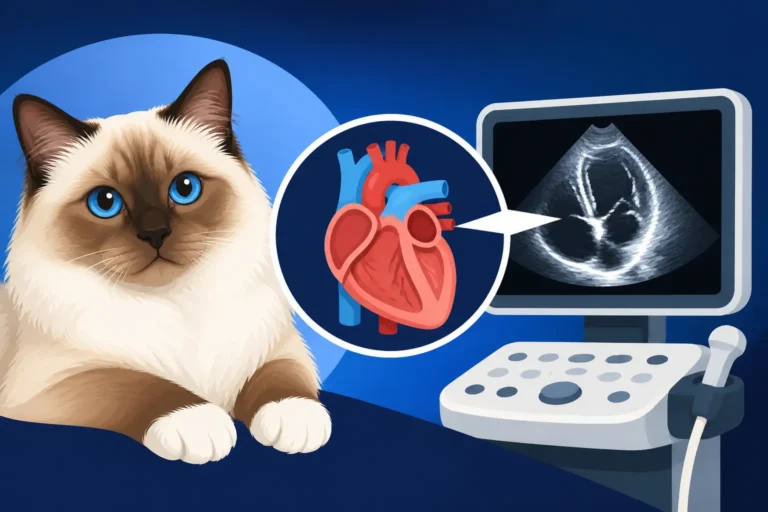
- Hypertrophic Cardiomyopathy (HCM): This is the most common heart disease in cats, leading to thickening of the heart muscle. While there is no definitive DNA test for HCM in Birmans, regular echocardiogram screenings by a board-certified veterinary cardiologist are essential for breeding cats. This helps identify affected cats before they are bred, preventing the passing on of this devastating condition. To understand more about this, you can read HCM in a Birman Has No DNA Test, Only an Echo.
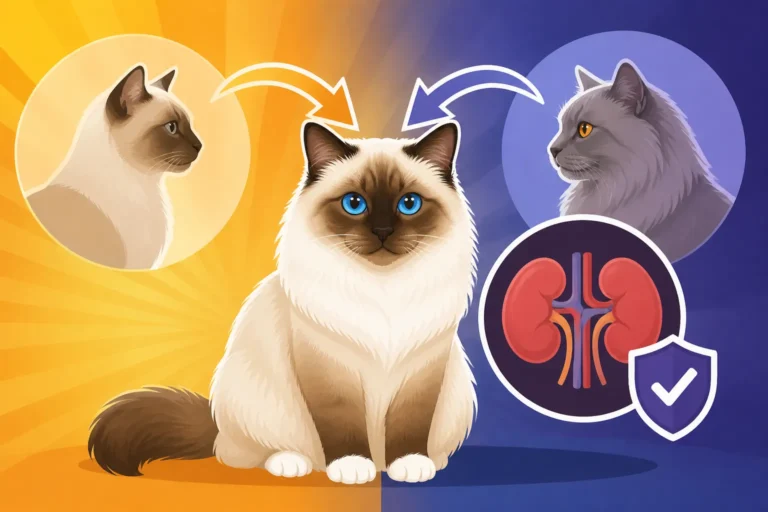
- Polycystic Kidney Disease (PKD): PKD is a genetic condition characterized by the development of fluid-filled cysts in the kidneys, which can eventually lead to kidney failure. Thankfully, a DNA test for PKD1 is available, allowing breeders to definitively identify affected cats and carriers. Why a Birman Breeder Still Tests for PKD is a testament to the importance of this screening.
- Feline Hypotrichosis with Thymic Aplasia (FOXN1 Mutation): Also known as "bald kitten syndrome," this is a rare but lethal genetic disorder in Birmans. Affected kittens are born bald or with very sparse coats and have an underdeveloped thymus, leading to severe immunodeficiency and early death. A DNA test is available to identify carriers. Understanding Which Lab Runs the Birman FOXN1 Test and getting your breeding Birmans tested is crucial to prevent the birth of affected kittens.
A responsible breeder ensures that both prospective parents are clear of these known genetic conditions or, in the case of HCM, regularly screened. This comprehensive approach to health testing goes far beyond just blood types and demonstrates a profound commitment to the welfare of the breed. It also means that while pet insurance from companies like Healthy Paws is a fantastic safety net, these diligent breeders are actively working to reduce the likelihood of their kittens needing major interventions in the first place.
The Breeder's Responsibility and Transparency
The role of a Birman breeder extends far beyond simply pairing cats and raising kittens. It involves a deep ethical responsibility to safeguard the health, temperament, and future of the breed. Transparency is a key component of this responsibility.
Reputable breeders are always open and honest about the health testing results of their breeding cats, including blood types, HCM screenings, PKD, and FOXN1 tests. They will readily provide copies of these certificates and discuss their breeding philosophy with prospective owners. They understand that Which Results a Birman Breeder Must Put in Writing isn't just a formality, but a promise of health and good practice.
Furthermore, responsible breeders take the time to educate new owners about the specific care needs of Birmans, potential health considerations (even for genetically sound lines, as no cat is immune to all ailments), and the importance of regular veterinary check-ups. They will also emphasize the value of pet insurance, like Healthy Paws, to help manage unexpected veterinary costs throughout a Birman's life.
By upholding these standards, breeders ensure that new Birman owners are well-informed and prepared, contributing to a longer, healthier, and happier life for their beloved feline companions. It's a commitment that benefits not just individual kittens and their families, but the entire Birman community.
Disclaimer
This article is intended for informational purposes only and does not constitute veterinary advice. Always consult with a qualified veterinarian for any health concerns or before making any decisions related to your Birman's care, breeding, or health.