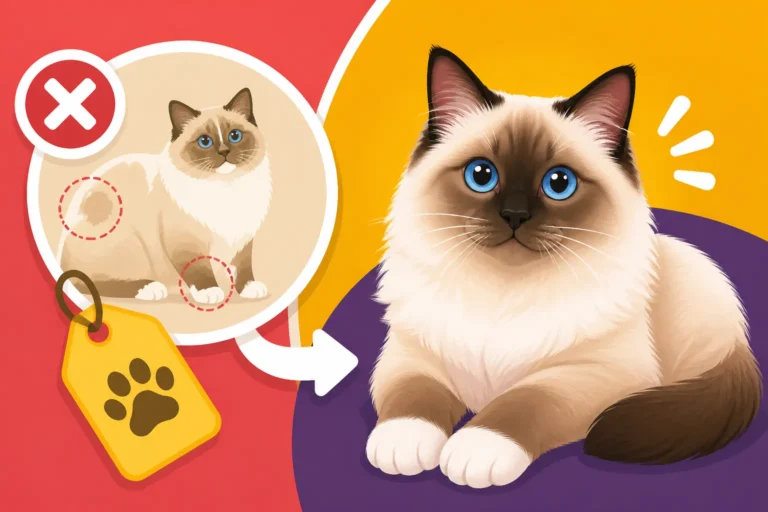
Why a Birman With Four Matching Gloves Costs the Most
Anyone who has fallen in love with the Birman cat knows that picture-perfect image: those stunning blue eyes, the glorious pointed coat, and, of course, the immaculate white "gloves" on all four paws. But what many new enthusiasts discover is that finding a Birman kitten with truly matching gloves, especially ones that meet the stringent breed standard, is surprisingly rare and often comes with a much higher price tag. This guide will delve into why these specific markings command a premium and what goes into breeding such exquisite Birmans.
The Elusive Perfection of Birman Gloves
When you look at a Birman, those pristine white feet are one of its most defining characteristics, almost like dainty slippers. They're often called "gloves" on the front paws and "laces" on the back, and the ideal is for them to be perfectly even, symmetrical, and to stop abruptly at the paw-pad line on the front, extending into a perfect "lace" or "gauntlet" up the hocks on the back. This isn't just a pretty detail; it's a cornerstone of the breed standard.
What Makes a Birman's Gloves "Perfect"?
Imagine drawing a line around each paw. For a Birman's front gloves, this line should be crisp and even, almost as if the cat dipped its paws into a pot of white paint, stopping just above the paw pad. No rogue white hairs creeping up the leg, no uneven splashes. On the hind paws, the white extends further up, forming what breeders call "laces" or "gauntlets" that ideally end in an inverted "V" shape, of equal height on both legs. This precise symmetry and defined boundary is what sets an ordinary Birman apart from a show-quality one.
It’s an incredibly strict visual criterion, and when you see a Birman with four perfectly matching gloves and laces, it's truly a sight to behold. This level of aesthetic perfection is what makes those particular kittens stand out in a litter and why they are so highly prized. Breeders spend generations trying to achieve this ideal, and it's a testament to their dedication when they succeed.
Common Glove Markings and Their Impact on Price
The reality is that perfect gloves are rare. Most Birman kittens, even from top lines, will have some variation in their markings. You might see "bootie" marks where the white goes too high, or "runners" where a stripe of white extends up a leg unevenly. Some might have "jewels" – tiny spots of color in the white – or "skunk stripes" where the white extends too far down the paw. All of these variations, while making the cat no less lovable as a pet, are considered faults in the show ring and can significantly affect the kitten's price.
For example, a kitten with slightly uneven front gloves might be sold as a pet, still a beautiful Birman, but at a lower price than its perfectly marked sibling. If the white extends too far up the leg, forming "gauntlets" on the front paws or uneven "laces" on the back, it also impacts their show potential and, consequently, their value. What Laces and Gauntlets Mean on a Birman's Price Tag goes into more detail about how these variations specifically influence pricing tiers. The ideal, perfectly symmetrical four gloves, is the pinnacle and naturally commands the highest price because it adheres so closely to the breed's visual ideal.
The Genetics Behind Those Pristine Paws
It's easy to assume that if both parents have good gloves, their kittens will too. But genetics are rarely that straightforward, especially when it comes to specific markings like the Birman's gloves. The "gloving gene" is a complex one, and achieving that sought-after symmetry is far from a simple inheritance pattern.
The Complexity of the Gloving Gene
While every Birman cat carries two copies of the gloving gene (it's fixed in the breed, meaning they all have it), the expression of that gene is influenced by many other "modifier genes" that control exactly where the white patches appear and how symmetrically they develop. It’s not a simple dominant or recessive trait for perfection. This is why even experienced breeders, mating two Birmans with excellent markings, can produce a litter where some kittens have perfect gloves, others have good pet-quality markings, and a few might even have significant faults. How the Gloving Gene Works in a Birman explains this genetic dance in more detail, highlighting just how intricate it is.
The unpredictability of glove genetics means that breeders can't just pick two cats and guarantee a litter of perfectly marked offspring. It takes generations of careful selection, understanding pedigrees, and a good dose of luck to consistently produce cats with ideal markings. This inherent unpredictability directly contributes to the higher cost of a perfectly gloved Birman – it's a rare outcome from a complex genetic lottery.
Why Perfect Symmetry Is So Hard to Achieve
Think about it: nature rarely creates perfect symmetry in individual features. One human hand might be slightly larger than the other, one ear a fraction higher. For a cat to have four paws with not only white markings, but for those white markings to be identical in shape, height, and crispness on opposing paws, is truly a genetic marvel. The subtle interplay of modifier genes can cause minute differences in pigment migration, resulting in a slightly higher lace on one back leg, or a less defined edge on a front glove.
Breeders might aim for generations to refine their lines, always striving for that elusive balance. They might have a cat with fantastic front gloves but slightly less perfect laces, or vice versa. Breeding decisions become intricate puzzles, trying to combine traits that will ideally lead to that overall symmetry. This consistent effort, the sheer number of litters evaluated, and the few kittens that actually meet the highest standard all contribute to the value of those perfectly marked individuals. Why Perfect Birman Gloves Are Almost Impossible to Breed delves deeper into these breeding challenges.
Breeder's Efforts and the Price Tag of Perfection
The price of a Birman kitten isn't just about what you see on the surface; it's a reflection of the immense effort, knowledge, and investment that goes into ethical and responsible breeding. When you're looking at a Birman with four matching gloves, you're looking at the culmination of a breeder's dream and years of work.
The Investment in Achieving Show-Quality Markings
Reputable Birman breeders are deeply invested in the health, temperament, and adherence to the breed standard of their cats. To even have a chance at producing kittens with show-quality gloves, they must start with breeding stock that also exhibits excellent markings. This means acquiring high-quality foundation cats, often at significant cost, from other reputable breeders, sometimes even internationally. These cats themselves represent years of selective breeding.
Beyond the initial investment in breeding cats, there's the ongoing cost of health testing for genetic conditions like HCM (Hypertrophic Cardiomyopathy) and PKD (Polycystic Kidney Disease). What Testing a Birman for FOXN1 and PKD1 Together Costs and What a Birman's Echo Screening Costs are real expenses that add up quickly, ensuring that the health of the lines is paramount. Breeders also invest in high-quality nutrition, veterinary care, show entries, and the time-consuming process of socializing kittens. When a kitten with ideal markings appears, it represents a 'win' in this long-term, high-investment endeavor. This is why Why One Birman Litter Spans Two Thousand Dollars in Price is a topic that resonates with so many, as it speaks to the huge variation even within a single litter.
Why Breeders Hold Back the Best Marked Kittens
It's a common practice for breeders to 'hold back' the kittens in a litter that most closely meet the breed standard, especially those with exceptional glove markings. These are the kittens that might be destined for the show ring to prove the quality of the cattery's lines, or they could become future breeding cats themselves. By keeping and developing these top-tier kittens, breeders continue to improve the breed and their own breeding program.
When a breeder does decide to sell a kitten with exemplary markings, it's often at a premium, sometimes with breeding rights included, which raises the price significantly more. This reflects the potential genetic contribution that kitten could make to the breed, ensuring its desirable traits are passed on responsibly. Even if sold as a pet, the kitten's rarity and adherence to the ideal standard make it a highly desirable companion, reflecting the breeder's dedication and skill. Why a Birman Breeder Holds Back the Best Marked Kitten is a common scenario in ethical breeding programs, demonstrating their commitment to the breed's future.
Beyond the Price: What Matching Gloves Mean for Ownership
While the initial cost of a perfectly gloved Birman is higher, it's important to understand that the "gloves" themselves are purely an aesthetic trait related to showing and breeding. They don't directly impact the cat's health, temperament, or overall lifespan. However, purchasing such a kitten often comes with certain assurances and expectations.
Show Potential Versus Pet Quality
A Birman with four matching gloves is often considered "show quality" because its markings adhere closely to the breed standard. This means the cat has the potential to compete in cat shows, earning titles and showcasing the beauty of the breed. For some owners, this is a huge draw – the pride of owning a cat that embodies the ideal Birman. Breeders will often sell these kittens with specific contracts regarding showing and, if applicable, breeding rights.
However, many perfectly marked Birmans are sold as "pet quality" to individuals who simply appreciate the aesthetic perfection but have no interest in showing or breeding. These cats bring the same loving, placid temperament and beautiful features into a home, but perhaps with a neuter/spay contract. The higher price for these pet-only, perfectly marked Birmans is still a reflection of the rarity and the breeder's efforts, not necessarily their future career in the show ring. How Much a Birman Good Enough to Show Costs highlights this distinction and its price implications.
The Ongoing Care for White Paws
Regardless of how perfectly symmetrical your Birman's gloves are, keeping them pristine requires a little extra attention. White fur, especially on paws that are constantly touching surfaces, can pick up dirt, dust, and discoloration from certain types of litter. Many owners find themselves regularly wiping paws or even needing to bathe their Birman's feet if they get particularly grubby.
Choosing the right type of litter is paramount to keep those beautiful white paws from staining. Clay litters, particularly those with darker granules, can leave residue. Many Birman owners opt for low-dust, lighter-colored, or even paper-based litters to minimize discoloration. It's a small but continuous consideration in the daily care routine that highlights the unique beauty of this breed. Brands like Chewy offer a wide variety of litter options, and it's worth exploring their selection for something that suits your Birman's white feet.
Investing in Long-Term Health and Care
A Birman kitten with perfect gloves, regardless of price, still needs the same dedicated care as any other Birman. This includes high-quality nutrition, regular vet check-ups, and potentially pet insurance. The initial investment in a well-bred Birman is just the beginning of a lifetime of care.
A reputable breeder will have already performed critical health screenings on the parents, but ongoing monitoring for conditions like HCM is important. How Often a Breeding Birman Needs Scanning gives insight into the rigorous health checks breeders undertake, which ultimately protects the health of the kitten you bring home. Investing in a healthy kitten from the start, even if it costs more, can save heartache and significant veterinary expenses down the line. The beauty of their gloves is one thing, but their overall health and well-being are what truly make them cherished family members for years to come.
The Value of Rarity and Dedication
Ultimately, a Birman with four perfectly matching gloves costs the most because it represents a rare combination of favorable genetics and a breeder's dedicated, long-term effort. It's not just about the beauty of the markings, but the commitment to a very specific, challenging standard that takes generations to achieve. When you bring home such a Birman, you're not just getting a beautiful cat; you're becoming a part of a legacy of careful breeding and a testament to the ideal form of this truly sacred cat.
| Glove Marking Type | Description | Impact on Price (Relative) | Show Potential |
|---|---|---|---|
| Perfect Four Matching | White on front paws stops evenly, hind laces are symmetrical and even. | Highest | Excellent |
| Slightly Uneven Gloves | Front gloves or hind laces have minor differences in height or shape. | High to Mid-Range | Limited |
| Gauntlets | White on front paws extends too high up the leg. | Mid-Range | None |
| Runners/Jewels | Streaks of white up the leg, or spots of color within the white. | Lower Mid-Range | None |
| Mismarked | Significant deviations from standard, e.g., missing white on a paw. | Lowest (Pet Price) | None |
This rarity is why these kittens are so sought after, and why breeders rightly place a higher value on them. It’s a combination of aesthetic perfection, genetic luck, and years of tireless work.
Disclaimer
This article is for general informational purposes only and does not constitute professional advice. Laws, prices and regulations vary by location and change over time. Consult a qualified professional for guidance on your specific situation.