When a Birman Kitten’s Points Start to Show
One of the most captivating mysteries of bringing a Birman kitten into your home is watching their pristine, pure white fluff slowly, almost magically, transform. You might find yourself staring at those tiny, pale ears and wonder, "When will their beautiful colors truly emerge?" It's a journey filled with anticipation, a gentle unfolding of the genetics that make this breed so unique, and in this guide, we'll explore exactly when and how those distinctive Birman points begin to show themselves.
The Birman Kitten's Blank Canvas: Born Pure White
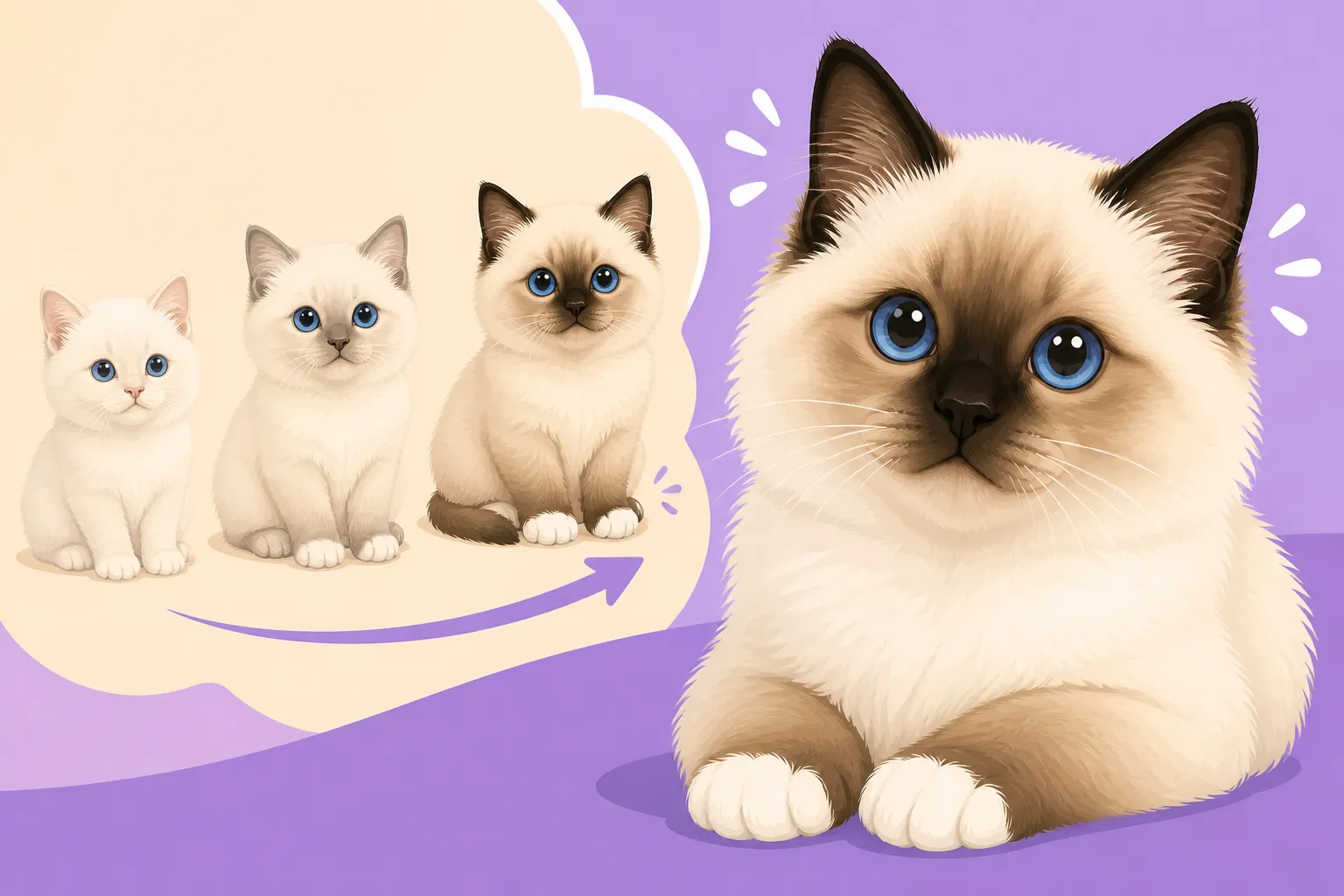
It’s always a little surprising for new Birman parents to see their kitten born completely pure white. You might expect a hint of color, a smudge on the ears, or a faint shadow on the tail, but no – Birman kittens arrive in the world looking like tiny, fluffy snowballs. This pristine white appearance is not just charming; it's a fascinating biological marvel tied directly to their genetics and the very definition of a "point" coloration.
The secret lies in a temperature-sensitive enzyme called tyrosinase. This enzyme is responsible for producing melanin, the pigment that gives hair and skin its color. In Birman cats, and other pointed breeds, this enzyme only functions properly at cooler body temperatures. Inside the queen's warm womb, the entire kitten's body is at a uniform, cozy temperature, which effectively deactivates the enzyme. This means no melanin is produced, and the kitten develops no color in its fur, resulting in that delightful pure white coat. It’s like a biological switch, simply waiting for cooler air to activate it. You can learn more about this initial stage in Why a Birman Kitten Is Born Almost White.
As soon as a Birman kitten is born and exposed to the cooler ambient air outside the womb, the parts of their body that are naturally a few degrees colder – namely the extremities like the nose, ears, paws, and tail – start to activate this pigment-producing enzyme. It’s a slow, subtle process, not an overnight transformation. This scientific explanation often provides a wonderful "aha!" moment for owners, demystifying why their vibrant, richly pointed adult Birman started life looking like a ghost of its future self. Understanding this genetic quirk helps you appreciate the slow, beautiful reveal that is about to happen.
The First Whispers of Color: A Gradual Unveiling
The development of a Birman kitten's points isn't a sudden event, but rather a gradual, almost imperceptible shift that unfolds over weeks and months. It's a process that requires a keen eye and a bit of patience, but the rewards are seeing those first subtle hints of color deepen into the gorgeous shades we expect from the breed. Each kitten is unique, but there’s a general timeline you can anticipate for these exciting changes.
You'll usually start noticing the very first, faint suggestions of color around 5 to 7 days old. The most common place to spot these initial "whispers" is on the nose and ears. Look closely at the nose leather – it might start to develop a faint smudge of pinkish-grey or light brown, depending on the kitten's genetic point color. The tips of the ears might also show a barely-there shadow. These aren’t definite colors yet, but rather a soft, dusky hint that something is beginning to emerge. It’s often easiest to see this change by comparing a new kitten to photos of older ones, or by simply observing their progression day by day.
By the time your Birman kitten is around 1 to 2 weeks old, these hints will become a little more defined. The ear tips will likely have a more noticeable greyish or brownish tint. The tail, especially near the base, might also start to show a very light, diffused shading. The paws, which will eventually sport those iconic white gloves and laces, might remain quite pale at this stage, but the pads of the feet could begin to darken. This is still a very delicate stage, and the colors are far from their adult vibrancy. This is a fascinating period to watch, as the patterns of their future coat slowly begin to paint themselves on their pristine canvas. How a Birman Kitten's Points Come In explains this process in more detail.
As they approach 3 to 4 weeks of age, the color will be undeniably present, even if still light. The ears, nose, and tail should have a definite color, be it a light seal, blue, chocolate, or lilac. The paws are often the last to truly show their point color, given their unique white gloving. You might see a stronger contrast between the growing points and the still-creamy white body. This stage is particularly exciting because you can usually start to distinguish the actual point color your kitten will be – whether they're a seal point, blue point, or one of the dilute colors. However, remember that these colors will continue to intensify significantly over the coming months and even years.
To give you a clearer picture, here’s a general timeline for point development:
| Age Range | Expected Color Development | Notes |
|---|---|---|
| Birth | Pure white, sometimes a very faint hint of pinkish-grey on nose leather. | All Birman kittens are born white due to the temperature-sensitive pigment enzyme. Body temperature in the womb inhibits color development. |
| 5-7 Days | First faint smudges on nose leather and ear tips. | These are extremely subtle and require close observation. Often looks like a light dusting. |
| 1-2 Weeks | Ear tips and nose gain slightly more definition. Faint shading may appear at tail base. | Colors are still very light. Comparing photos from day to day can help you see the progression. The cooler extremities are the first to react. |
| 3-4 Weeks | Distinct, though light, point color on ears, nose, and tail. Paws may show some darkening. | You can typically identify the kitten's primary point color (e.g., seal, blue). Body remains mostly white to cream. |
| 2-3 Months | Points continue to deepen in color. Body coat may develop a slight creamy tint. | The contrast between points and body becomes more apparent. Paws should clearly display white gloves. This is often around the age breeders start evaluating glove markings. How a Birman Kitten's Gloves Change as It Grows explores the nuances of their distinctive markings. |
| 6 Months – 1 Year | Points are well-established and continue to darken. Body color might deepen slightly. | Color continues to intensify, especially in cooler environments. Full depth of color for some points, like the ears and nose, is often achieved. |
| 1-3 Years+ | Point color reaches its mature depth. Body coat may show further warming of tone. | The most striking coloration emerges. Even into adulthood, slight changes can occur with environmental temperature and age. How Many Years a Birman's Points Take to Finish Darkening dives into this long-term process. |
Factors Influencing Point Development in Birman Kittens
While the genetic blueprint for a Birman's point color is set at conception, several fascinating factors can influence both the speed and intensity of their color development. It's not just a matter of "when," but also "how" vividly those points emerge, making each kitten's journey unique. Understanding these influences can help you appreciate the subtle variations in your own Birman's coat.
One of the most significant external factors is temperature. As we discussed, the tyrosinase enzyme works best in cooler conditions. This means a kitten raised in a slightly cooler environment might develop its points a little faster and more intensely than one kept in a consistently warmer room. Think of it like a natural thermostat for pigment production. This effect isn't drastic, but it's noticeable enough that experienced breeders might discuss it. Similarly, as a Birman ages, living in a colder climate can cause its points to darken considerably over its lifetime. How a Birman's Points Darken With Cold delves into this intriguing phenomenon. Don't worry, you don't need to keep your kitten shivering; a comfortable room temperature is perfectly fine, but just know that nature has its ways.
Genetics play a massive role, not just in determining which point color your Birman will have, but also how quickly and deeply it manifests. For instance, a Seal Point Birman (which carries the dense black pigment) often shows its points earlier and with more intensity than a Lilac Point Birman (which carries both dilution and chocolate genes, resulting in a much paler, warmer grey). The genetic makeup dictates the base color and whether it's diluted, which in turn affects the visible timeline of color emergence. If you have a What a Seal Point Birman Looks Like versus What a Lilac Point Birman Looks Like, you'll instantly see the difference in depth.
Additionally, individual variation is always a factor. Just like human children develop at different rates, Birman kittens within the same litter, from the same parents, can show slight differences in when their points first become noticeable and how quickly they deepen. Some might be early developers, flaunting their distinct colors sooner, while others take a bit more time to fully "bloom." This is completely normal and simply adds to the charm of each individual cat. It's why observing your kitten over time is such a joy.
What to Expect as Your Birman's Color Deepens into Adulthood
The journey of a Birman's point coloration doesn't stop once they're a few months old and clearly showing their assigned hue. In fact, it's a dynamic process that continues for several years, slowly deepening and maturing, sometimes revealing surprising nuances you didn't expect. This long-term development is part of the Birman's unique beauty, creating a living work of art that evolves with age.
Typically, a Birman's points will continue to darken and achieve their full, rich depth of color between the ages of one and three years old. The earliest developing areas like the ears and nose might reach a significant depth by six months, but the tail and paws, particularly the delicate "laces" on the hind feet, often take longer to fully mature. You'll notice the color becoming more solid and less diffused over time. The body coat, initially pure white, will also often develop a lovely creamy or golden hue over the years, especially along the back and sides, contrasting beautifully with the darker points. This deepening isn't always uniform, and you might see subtle shifts in tone depending on the season and your cat's environment. For example, some blue points might develop an almost silvery sheen, while chocolate points deepen into a warm, rich tone.
Beyond the initial few years, even an adult Birman's points can continue to darken slightly as they age, especially in cooler climates. This is a common and natural part of the aging process, particularly for senior cats whose metabolism might slow down, affecting body temperature regulation. You might notice an older Birman's points becoming almost black, even if they started as a beautiful blue or chocolate. This phenomenon contributes to the unique character of senior Birmans, giving them an air of wisdom and distinguished maturity. Caring for a Birman Once Its Points Have Gone Dark explains what this change means for your older cat.
It’s important to remember that this color development doesn't affect their health or temperament. Whether your Birman's points come in quickly or take their sweet time, they will still be the same loving, placid companion you adore. Providing a consistent, high-quality diet can support overall coat health and vibrant color development. As always, regular vet check-ups are key, and considering pet insurance from providers like Healthy Paws for comprehensive coverage from kittenhood can offer peace of mind as your Birman grows and changes. Watching this transformation is truly one of the joys of Birman ownership, a daily reminder of their unique elegance.
Disclaimer
This article is for general informational purposes only and does not constitute professional advice. Laws, prices and regulations vary by location and change over time. Consult a qualified professional for guidance on your specific situation.